
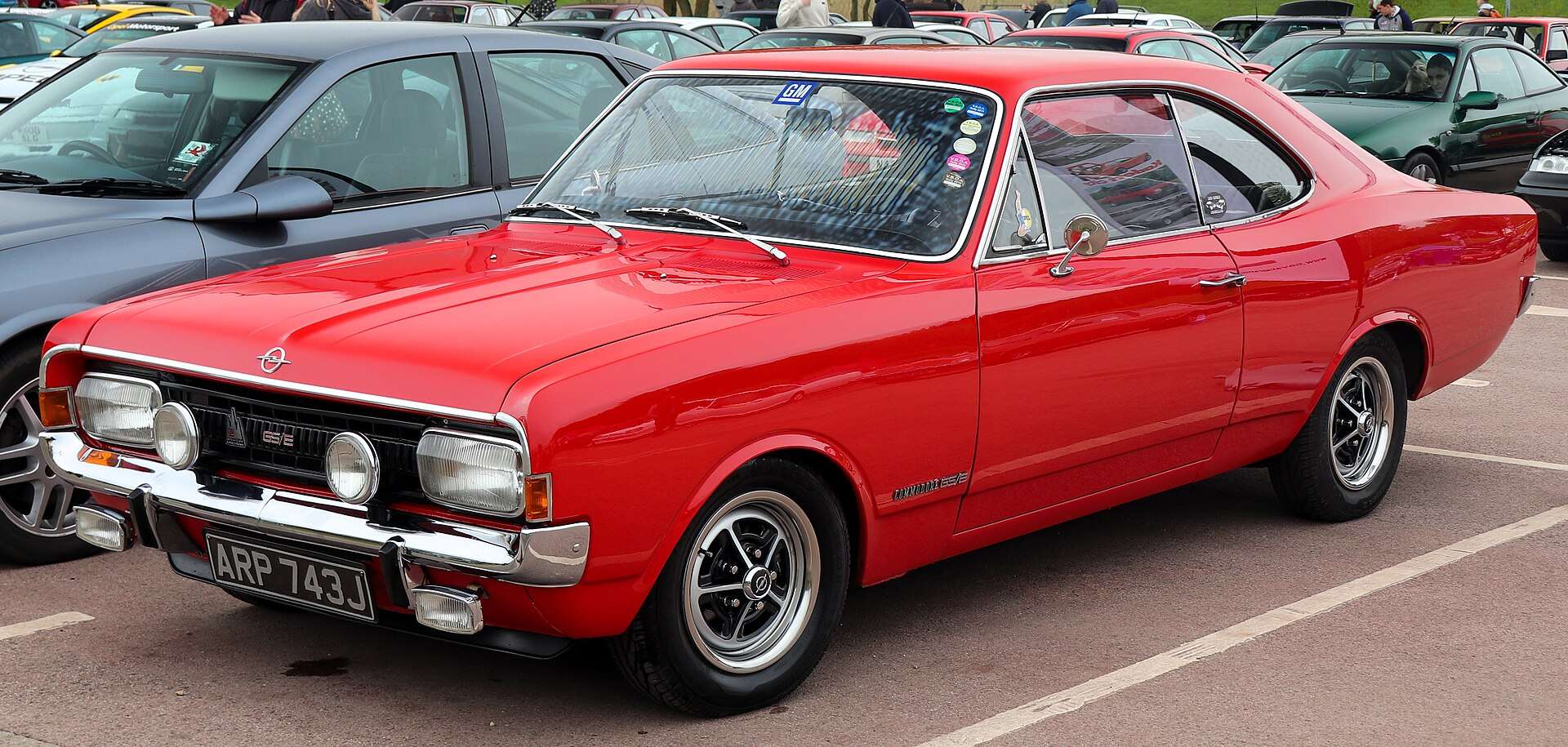
The Opel Commodore A GS/E was one of the most sophisticated sporting Opels of its era. Its elegant Rekord-derived body concealed a fuel-injected 2.5-litre straight-six producing 150PS, giving the coupé genuine long-distance performance and a distinctly continental character.
Quick answer
Built from 1970 to 1972, the Commodore A GS/E used Bosch electronic fuel injection, rear-wheel drive and either a four-speed manual or three-speed automatic gearbox. Opel records show 9,982 GS/E examples within total Commodore A production of 156,497. It was available to British buyers, but UK sales were small.
What is the Commodore A GS/E?
The Commodore sat above the Rekord, pairing familiar body architecture with six-cylinder engines and more luxurious trim. The GS/E was the flagship sporting version. Its 2,490cc engine produced 150PS at 5,800rpm and 200Nm at 4,500rpm, substantial figures for an early-1970s executive coupé.
Most enthusiasts picture the two-door coupé, although the Commodore A family also included saloons. The GS/E’s mixture of discreet appearance, injection technology and autobahn ability gives it enduring appeal.
The UK-market story
The Rekord and Commodore coupés helped establish British awareness of Opel before later Manta and Monza models became better known. Contemporary UK coverage presented the Commodore as a continental alternative to familiar Ford, Triumph and Rover products. A smaller dealer network and relatively high price kept numbers low.
UK survivors therefore deserve careful verification. Some cars have been imported from Europe, while others may be converted or upgraded GS models rather than factory GS/Es.
Specifications
| Engine | 2,490cc inline six |
|---|---|
| Fuel system | Bosch electronic fuel injection |
| Power | 150PS at 5,800rpm |
| Torque | 200Nm at 4,500rpm |
| Gearboxes | Four-speed manual or three-speed automatic |
| Drive | Rear-wheel drive |
What is it like to drive?
The straight-six is the centrepiece: smooth, flexible and muscular, with relaxed high-speed character. Steering is measured rather than sharp and the car feels more grand tourer than sports car. Brakes, dampers and tyres must be in good condition if it is to feel composed.
Common problems
Rust
Check sills, A-posts, floorpans, front chassis rails, suspension mounts, inner wings, rear arches, boot floor and screen surrounds. Coupé roof gutters and lower rear quarters deserve close attention.
Fuel injection
Ageing wiring, poor earths, air leaks, injectors and fuel-pressure faults can cause difficult starting or uneven running. Ensure the injection system is complete; replacing it with carburettors reduces authenticity and value.
Straight-six engine
Listen for timing-chain noise, check oil pressure and inspect the cooling system. Blue smoke or heavy crankcase breathing suggests wear.
Trim and identity
Correct GS/E badges, instruments, upholstery and injection components are difficult to source. Verify chassis and engine details against factory information.
Parts and ownership
Germany and the Netherlands offer the strongest specialist support. Mechanical rebuilding is possible, but model-specific body and trim pieces can take years to locate. A complete, running car with documentary history is worth a substantial premium.
Buying checklist
- Confirm factory GS/E identity.
- Inspect the shell professionally.
- Check cold and hot starting.
- Ensure the Bosch injection system is present and healthy.
- Test gearbox, axle, brakes and cooling system.
- Prioritise completeness over cosmetic shine.
Is it worth buying?
Yes, for a buyer seeking a rare UK-market German grand tourer that sits outside the obvious BMW and Mercedes choices. The GS/E is fast enough to enjoy, handsome enough to display and historically important—but restoration costs make condition critical.
Frequently asked questions
How powerful is the Commodore A GS/E?
Factory data lists 150PS from the 2.5-litre injected straight-six.
Was it sold in the UK?
Yes, through Opel’s British network, although in very small numbers.
How can I identify a genuine GS/E?
Use chassis and engine numbers, factory specifications and period documentation; badges alone are not proof.
Sources and further reading
- Historic Opel production and technical data.
- Opel Commodore model overviews.
- Contemporary British classic-car and sales literature.
Figures can vary by year and market. Verify each car independently before purchase.
ALSO …
 Rare & Performance Opel Cars: Models, UK History & Buying Guides
 Opel Commodore B GS/E: UK History, Specifications, Common Problems and Buying Guide
 Opel Omega Evolution 500: The Rare DTM Special in the Lotus Carlton’s Shadow
 Opel Senator A2 3.0E: UK History, Specifications, Problems and Buying Guide