A Mokka can display “Service Parking Assist” while an inexpensive engine-code reader finds nothing. Parking assistance, ABS and airbags have their own diagnostic questions, and a reader working only in generic OBD2 mode is not a complete check of those systems.
For the first-generation Mokka and its Mokka X facelift, start with the warning you need to investigate. Then check whether the scanner supports the fitted controller on your exact car. A Vauxhall logo in an advert is less useful than that specific answer.
Which Mokka A and Mokka X does this guide cover?
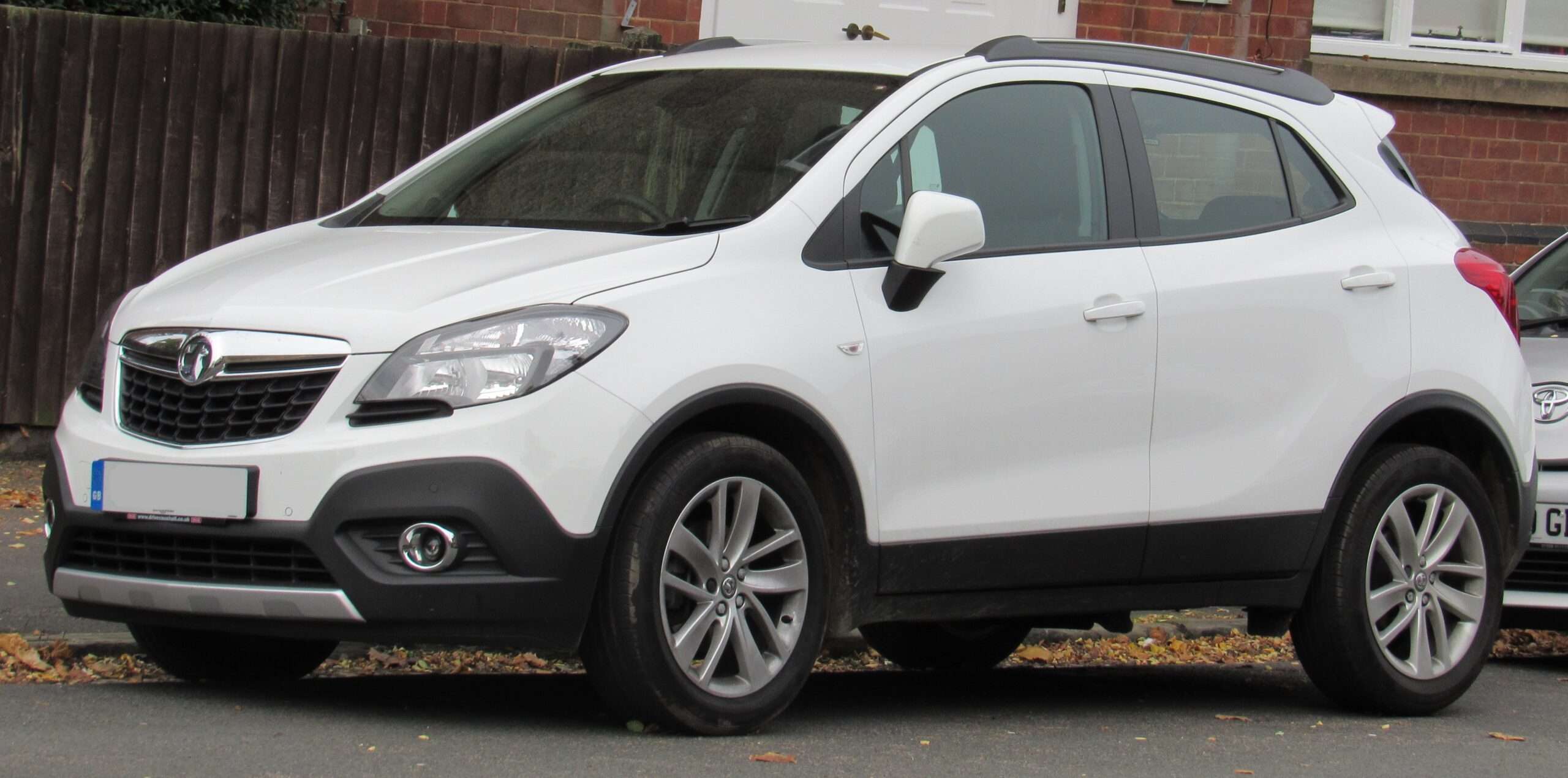
This article covers the first-generation Vauxhall Mokka, often called Mokka A, and the related Mokka X facelift in UK factory petrol and diesel specification. It excludes the later Mokka B and electric Mokka models. The facelift is included as a buying-research subject, not as an assumption that every earlier Mokka diagnostic function carries over unchanged.
Generic OBD2 versus manufacturer-aware diagnostics
Generic OBD2 is useful for supported emissions-related engine codes, freeze-frame information and standard data. It is not a complete inspection of every electronic system. A manufacturer-aware application can reach additional controllers where the vehicle, interface and software support them. A more expensive tool running only its generic OBD mode can still leave the same gaps.
| Diagnostic question | Generic engine reader | Manufacturer-aware route |
|---|---|---|
| Engine-emissions code on a compatible car | Often a useful starting point | May add manufacturer detail and further supported data |
| ABS, airbags or body-system warning | Do not assume access | Confirm the named controller and exact reading function |
| A particular live measurement | Only supported standard parameters | Ask for that exact parameter on the vehicle build |
| Coding, calibration or service operation | Do not infer capability | Separate evidence and requirements; not promised in this guide |
A real Mokka X parking-assist fault missed by a basic reader
An owner of a 2019 Mokka X reported a parking-assist warning after a bumper impact and replacement of a sensor. Their MOTOPOWER MP69035 showed no faults. Later in the discussion, the owner reported that a garage found and repaired a cut wire associated with the impact. That is an owner-reported outcome, rather than an independent Unusual Cars test.
The case shows why the scope of the scan matters. “No engine faults” did not establish that the parking system was healthy, and replacing a visible sensor had not resolved the complaint. It also does not prove that any particular alternative handheld would have diagnosed the car automatically. The relevant buying question is supported parking-assist access on that Mokka X.
Read the owner discussion. Owner accounts are used to identify reader problems; they are not controlled tests or proof of a widespread defect.
Faults and symptoms that need more than an engine-code screen
| Symptom or question | Controller or capability to check | What the extra information can—and cannot—tell you |
|---|---|---|
| Service Parking Assist or unavailable sensors | PACM: parking assist control module, if fitted and supported | Seek the parking-system fault description and status. An impact-related wiring problem cannot be ruled out by a clean engine scan. |
| ABS or stability warning | EBCM: electronic brake control module | Use the brake-controller report and confirm the particular live measurements needed. A warning alone does not identify a wheel sensor. |
| Airbag warning | SRS: inflatable-restraint sensing and diagnostic module | Read the restraint controller rather than treating generic OBD2 as an airbag test. Physical diagnosis requires appropriate expertise. |
| Automatic transmission or four-wheel-drive complaint | TCM or rear differential clutch controller, where fitted | Confirm the actual drivetrain and controller. A menu listing is not a promise about every variant or service function. |
Parking sensors are a separate diagnostic job
Parking assistance is an especially clear example of something outside an engine-emissions scan. A manufacturer-aware application may be able to identify a relevant parking-controller fault, but the tool must first support the controller and the vehicle build. A generic “all systems” headline does not provide that detail.
In the owner example, the impact and earlier sensor replacement are important history for the garage. Preserve that timeline alongside any scan report. A fault description concerning a sensor circuit still needs investigation: it is not automatically a shopping instruction for another sensor. This guide does not give bumper-removal, wiring-repair or sensor-calibration procedures.
Mokka X compatibility needs an explicit answer
The manufacturer lookup checked for this article uses a Mokka entry, with a sample 2015 selection. That is documentary support for the sampled configuration, not proof for every 2019 Mokka X. Ask the supplier to confirm the facelift, engine, transmission and the specific parking, brake or restraint module you need.
If the supplier can confirm only engine-code reading, you have not established a solution for Service Parking Assist. Likewise, a list of model years in a catalogue should not be read as proof that every module, software level or optional feature has identical support throughout those years.
ABS, airbags and drivetrain faults: keep the reports separate
An ABS lamp warrants evidence from the EBCM; an airbag lamp warrants evidence from SRS. The same scanner may reach both in its Opel/Vauxhall application, but that is a different capability from generic OBD2. A report should make clear which module answered and whether a code is current or stored.
On an automatic or four-wheel-drive Mokka, ask about the relevant additional controller before buying for that complaint. The sample menu includes a transmission controller and a rear differential clutch controller, but their presence in a menu does not establish the hardware in your car. Do not infer that a drivetrain warning proves internal mechanical failure, or that reading codes authorises a reset or adaptation.
What the iCarsoft documentation actually supports
We checked the manufacturer’s function lookup on 11 November 2026, using OP V3.0 → Vauxhall → Mokka → 2015. The following entries were expanded rather than inferred from a general product advertisement:
| Sampled controller | Reading evidence in the lookup | Additional limit |
|---|---|---|
| EBCM (Electronic Brake Control Module) | Code reading and live-data categories shown | Module-information category also shown |
| SRS (Inflatable Restraint Sensing and Diagnostic Module) | Code reading and live-data categories shown | Module-information category also shown |
| TCM (Transmission Control Module) | Code reading and live-data categories shown | Module-information category also shown |
These are catalogue observations for that sample selection, not results from connecting the tool to a UK car. A live-data category does not establish every individual parameter, and a controller menu does not prove the hardware is fitted. Functions can vary by vehicle build, module, software, interface and tool version. Catalogue year menus can also include other markets; they should not be used as UK generation dates.
Which diagnostic setup makes sense?
A basic reader for a narrow engine-emissions job
If your only aim is to record a supported engine code, a compatible generic reader may be enough. Keep the full code and any freeze-frame information it offers. Buy it knowing its limits: a blank engine-code result does not answer a brake, restraint or body-system complaint. On older cars, confirm generic communication for the precise engine before ordering.
A standalone Opel/Vauxhall handheld
The iCarsoft OP V3.0 product documentation describes a standalone handheld with a 4-inch display and PC-based update route. It is a candidate to investigate for this guide’s reading tasks, subject to the exact compatibility checks above. Broad claims about all systems or numerous service functions are not guarantees for an individual car.
Check that the listing is specifically the Opel/Vauxhall version. Confirm the seller, update process, computer requirements and support route before buying. The manufacturer advertises free lifetime updates, but verify the current terms for the actual product and seller. No price, stock level, particular repair saving or supported service operation is promised here.
A genuine licensed laptop-based alternative
If you prefer a computer-based setup, ilexa’s genuine VAUX-COM Pro route describes a licensed software and USB-interface package with UK support. Ask the supplier to confirm this exact vehicle and required controllers. The page lists older Windows versions; do not infer current Windows 11 support or exact model coverage from the name alone. An unlicensed clone cable is not equivalent to a supported package.
Five questions to send the seller before you buy
Give the supplier the generation, build year, fuel type, engine details, transmission and the warning or symptom. Then ask these specific questions:
- Can this exact hardware and current software communicate with the fitted controller involved?
- Can it read the complete fault description and status, rather than only engine-emissions codes?
- Does it provide the particular live measurement needed for the investigation?
- What computer, update and licence requirements apply to this exact package?
- What support or return route applies if the required documented reading task is not supported?
Make the first scan useful
Start by recording the symptom, dashboard wording and when it occurs, including relevant recent work. Follow the scanner’s own connection and operating instructions. Keep the selected vehicle profile with the report so that a mistaken generation or engine choice can be spotted later.
Save the original results before clearing anything: controller names, full codes and descriptions, current or stored status, communication failures and available supporting data. Distinguish a controller with no faults from one the tool could not reach. Neither an absent optional module nor an unsupported function should be reported as a confirmed vehicle defect.
Use that evidence to decide what further diagnosis is needed. A code names a detected condition or diagnostic area; it does not automatically identify the part to replace. Clearing information does not repair the cause and can remove useful evidence. If braking, steering, restraints or serious running symptoms are involved, obtain appropriate professional assistance. This is not a guide to safety-system repairs, security access, programming, calibration or active tests.
Love cool cars? Join Unusual Cars Club FREE!
Get forgotten motoring finds, stories, helpful car content and more.
Free to join. No spam. Unsubscribe whenever you like. See our privacy policy.
Frequently asked questions
Why does my Mokka say Service Parking Assist but show no OBD2 codes?
A generic reader may have checked only engine-emissions information. The parking controller is a separate system, and its exact diagnostic coverage must be confirmed.
Does Mokka support automatically include Mokka X?
Do not assume it. Obtain confirmation for the facelift, build, engine, gearbox and the module you need, especially for parking assistance or optional equipment.
Will changing a parking sensor always fix the warning?
No. The owner example ended with a reported wiring repair. A diagnostic description and appropriate investigation are needed before deciding what has failed.
Is this guide for the newer electric Mokka?
No. It covers the earlier first-generation Mokka and Mokka X. Later Mokka B and electric models require a separate compatibility assessment.
More Vauxhall diagnostic guides
Compare other generations in our Vauxhall diagnostic scanner hub, or explore the car diagnostic scanner guides directory. Check the model scope before carrying advice across from another generation.
Sources and research method
Documentary research reviewed on 11 November 2026. Primary product and compatibility evidence: iCarsoft OP V3.0 product documentation, iCarsoft function lookup (the exact sample selection is recorded above), and ilexa VAUX-COM Pro documentation. The linked owner discussion supplies a real-world question, with its uncertainties stated. It does not establish product performance or a repair diagnosis.
Unusual Cars has not independently tested this vehicle, scanner or function. Product details and compatibility can change. Recheck the exact vehicle, requested function and commercial destination before purchase; manufacturer and seller confirmation should be specific to your build.
Photo credit
Vehicle photograph: 2016 Vauxhall Mokka Exclusiv Turbo 1.4.jpg, by Vauxford, via Wikimedia Commons, licensed CC BY-SA 4.0. Resized for web display; thumbnail presentation may crop the frame. The photograph illustrates the generation and does not imply endorsement or independent testing.