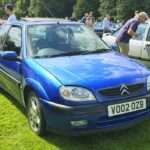
The Citroën Saxo VTR deserves to be bought on its own merits: a light, naturally aspirated, eight-valve hot hatch with accessible performance and an engaging chassis. A good one is about a sound shell, a straight and healthy rear axle, correct maintenance and sympathetic modifications. This UK buying guide covers the 1.6 VTR rather than the 16-valve VTS, with practical viewing checks, parts choices and a maintenance budget.
The buying verdict
Choose the strongest complete shell with a coherent service history and an axle you can assess properly. A standard-looking low-mileage car still needs a lift inspection. A modified car can be enjoyable when the work is documented and sensible, but a low ride height and fresh paint cannot compensate for poor structural repairs.
For a first VTR, prioritise an eight-valve car that starts cold, runs consistently warm, selects cleanly and retains its correct road equipment. Reserve money for belts, fluids, tyres, brakes and findings from the inspection. Buy a project only after establishing the welding, axle and missing-parts costs.
VTR versus VTS: start with the actual engine
The familiar UK VTR uses a 1.6-litre eight-valve engine and five-speed manual gearbox. The UK performance VTS uses a sixteen-valve engine. That distinction affects character, maintenance parts and value. Names and equipment differed overseas, so a badge alone should not decide what an imported or converted car contains.
Earlier and facelift cars also differ in appearance and detail specification. Autocar’s original buying report describes the early VTR at 89bhp, rather than treating all VTRs as one output. Confirm the particular build and engine installation instead of assigning a later figure to every car with revised headlights.
For buying purposes, provenance and condition matter more than one acceleration claim. A later registration does not necessarily identify a later build, and an engine conversion may make the original handbook’s parts references incomplete. Record what is fitted and ask a specialist to reconcile it with the documents.
| Candidate | Reason to consider it | What to establish |
|---|---|---|
| Earlier VTR | Original styling and a potentially attractive driver’s car. | Engine, output specification, body condition, maintenance and correct trim. |
| Facelift VTR | Later appearance and a wider choice of surviving UK examples. | Actual build, engine and equipment. Do not use the front-end appearance as proof of all mechanical details. |
| Modified VTR | May suit an owner wanting a particular road or track setup. | Installed engine, wiring, brakes, suspension, insurance and supporting invoices. |
| Imported or rebadged car | Can be worthwhile when accurately described. | Original market, chassis records, current engine and complete registration history. |
Compare VIN and documents, inspect the identification areas and obtain the history of shell and engine repairs. Seats, arches and wheels can be changed. If the car has had a sixteen-valve conversion, value and inspect it as a converted car; it does not become a factory VTS through an engine swap.
For a comparison with the higher-revving version, read our separate Saxo VTS buying guide. For the models’ development, use the VTR and VTS history feature. This article concentrates on buying and maintaining the eight-valve VTR.

UK Saxo VTR prices: compare condition and evidence
The live Car & Classic search inspected for this guide contained a 2001 car in Wallasey at £2,500 with 147,000 miles stated; a 2002 car in Waltham Abbey at £5,000 with 110,000 miles stated; a 2001 car in Canterbury at £6,495 with 63,676 miles stated; and a 2003 Sheffield example at £6,990 with 44,622 miles stated. Another 2003 car was advertised at £7,995 with 29,500 miles stated.
These are seller asking prices and attributed mileage descriptions, not completed sales or independent condition assessments. The search also contained an overseas example. Do not combine all results into a UK market average, and do not interpret the highest ask as evidence of what every low-mileage VTR is worth.
Construct comparisons around the actual shell, axle, originality, history and recent work. A cosmetically clean car with old belts, a visibly tired axle and concealed welding can be expensive to establish. A higher-mileage example with documented repairs may deserve a place on the shortlist even when it is less appealing in a single photograph.
Keep period price guides in their period. Autocar’s July 2020 prices are historical context and should not be carried into a current offer as though the market were unchanged. Use current comparable cars and completed results where available, separating asking price, estimate, sold figure and fees.
Make the offer from the whole entry cost
Add inspection, collection, overdue maintenance, immediate safety work and diagnosed repairs to the purchase price. Put unresolved investigation on a separate line. A discount equivalent to a small bearing kit does not cover an axle refurbishment, fitting and additional worn components.
For a project, obtain a bodyshop assessment before buying. A readily running engine cannot compensate financially for several major structural repairs. Establish who will take the job, when they can do it, what transport is needed and whether the car can be stored safely while work is planned.
Keep the advert and written description of agreed work. If a seller offers to repair something before collection, confirm the scope and evidence expected, then check the result. A verbal promise that the axle or airbag light will be sorted is not the same as a completed repair.
Corrosion: inspect the shell before the paint
Arrange a lift inspection, concentrating on the sills, jacking areas, floors, rear arches, suspension mounting areas and accessible structural seams. Look beyond outer panels and plastic trim. An inspector should distinguish surface deterioration from weakened metal and explain where further access is needed.
Autocar’s inspection report specifically draws attention to metal beneath the ECU and fuse-box areas and around the rear arches. Those are useful starting points, rather than a complete list. Examine the surrounding structure and the quality of previous repairs. An apparently small external blemish may not show the full scope beneath it.
Check for overlapping patches, fresh coatings without preparation photographs, inconsistent seams and corrosion around existing welds. Ask whether repairs removed affected metal and reached sound structure. Do not assume that every welded car is a poor buy; competent, documented repairs are preferable to cosmetic concealment.
Inspect engine-bay structure and accessible front and rear crash areas for distortion, disturbed mountings or inconsistent sealant. Compare panel gaps, paint texture and shut faces. A clean commercial history report cannot establish that a car has never been damaged.
Read MOT records alongside physical repairs
Recurring corrosion, brake-pipe, axle and suspension advisories deserve an explanation and invoices. A missing advisory at the next test may reflect a repair, but it does not show how the repair was done. Match the record to the car and inspect the completed work.
For a restoration, obtain photographs before cutting, during metal replacement and after protection. Include removal and refitting of trim, damaged clips, seals, paint and cavity treatment in the estimate. A low panel price is not a finished structural repair.
Check carpets, seat areas and the luggage compartment for damp. Water may remain in insulation beneath a clean surface. Investigate seals, washer plumbing and body repairs as appropriate. Drying a carpet or replacing a headlining is not a cure for the source of water entry.
Love cars you don’t see every day?
Get forgotten cars, surprising motoring stories and the most interesting finds from Unusual Cars by email.
Free to join. No spam. Unsubscribe whenever you like. See our privacy policy.
Rear axle: recognise symptoms without pretending to diagnose from a photograph
The Saxo’s trailing-arm bearings and bearing surfaces deserve particular attention. Look at rear wheel stance, tyre wear and clearances, then have the axle checked on a lift. Notice knocking, stiffness or inconsistent ride behaviour. A visible lean or worn inner tyre is a warning to investigate, not a complete diagnosis of every component.
Do not assume a lowered car’s rear stance is intentional and healthy. Ride-height changes and bearing wear can coexist. Have someone familiar with these axles assess arm movement, bearing surfaces, tube and shaft condition, mounts and the installed brakes.
Ask what a previous “rebuilt axle” invoice means. Bearings alone, repaired bearing surfaces, new shafts, seals and a fully refurbished exchange unit are different jobs. Confirm who did the work, the mileage afterwards and the warranty. A resprayed axle is not evidence of renewed internal components.
Disc brakes, ABS and exchange terms
Identify the actual axle and braking arrangement before ordering. IM Axle lists a VTR/VTS disc-brake unit with or without ABS; its ordinary drum-brake Saxo product is a separate item. The seller or installer should confirm the exact configuration and any previous conversion.
Exchange services need a suitable donor. Ask whether a damaged, incomplete or different-type axle will be accepted, who pays transport and when a deposit is refunded. A quote that assumes an acceptable exchange unit can change if the old axle is unsuitable.
Check rear calipers, discs, handbrake cables, hoses, lines, mounts and fasteners as part of the fitted scope. Several of those items may not come with the refurbished beam. Seized or corroded fittings can add work. Avoid booking a car for a nominal swap without asking what is included.
Compare VTR rear axle options once the configuration is confirmed. Read the contents, exchange surcharge, warranty and delivery terms. A repair bearing set, bare beam and complete ready-to-fit assembly should not be compared as equivalent purchases.
Eight-valve engine: timing history and a cold-to-hot assessment
Ask for the engine to be cold at the viewing. Identify the actual engine and inspect oil and coolant safely before starting. Watch warning-lamp operation, starting speed, idle, persistent smoke and visible leaks. A short smooth idle cannot establish oil history or prove that the cooling system is healthy.
Read service invoices for dates, mileage and the correct fluids. Ask about oil consumption over a measured distance. A seller’s “they all use a little” is not a useful measurement. Establish the cause of leaks rather than assuming the price of one gasket covers diagnosis and access.
Timing belt, pump and tensioning components
The VTR’s eight-valve engine uses a timing belt. Obtain an invoice showing what was changed, not just a sticker under the bonnet. The date, mileage, kit, tensioning components and water-pump work should be clear. Do not order a sixteen-valve VTS kit because a marketplace title contains Saxo.
Confirm the applicable schedule and sensible age-based plan with a workshop using the actual engine and build information. A low-mileage car still ages while stored. If records are missing or the job’s scope unclear, agree a baseline replacement plan before regular use and consider transport if advised.
Ask the installer to confirm coolant, fasteners, seals and any related work. A kit supplied with one brand or pump arrangement is not automatically identical to another quotation. The repair should use the correct procedure and tensioning, not merely parts that look similar.
Search eight-valve VTR timing belt and pump kits after identifying fitment. Modern Citroën wet-belt products, VTS kits and unrelated TU engine parts can appear in broad results. The search wording narrows the field but does not guarantee compatibility.
Cooling, head-gasket concerns and misfire
Inspect the radiator, hoses, thermostat area and pump region for staining, deterioration and improvised repairs. Ask about overheating, repeated top-ups and the reason for any recent coolant work. Check warm behaviour in ordinary traffic as well as at road speed.
Unexplained coolant loss, contamination or persistent smoke needs diagnosis. Do not label every symptom a head gasket or accept a cheap-sensor explanation without evidence. A specialist can recommend pressure, combustion-gas or other testing and explain what the results establish.
Have a misfire investigated using ignition, intake, fuelling and mechanical findings. Compare VTR ignition components only after diagnosis. Previously replaced parts do not prove that the original problem was cured.
Never open a hot cooling system or reach near moving drives and fans. If a car overheats during the viewing, stop the test and investigate. A promise that it is normal for an old Saxo is not an acceptable substitute for a working cooling system.

Gearbox, clutch, linkage and driveshafts
Assess the clutch pedal, take-up, selection and noises cold and warm. Test all forward gears and reverse appropriately. Do not dismiss difficult engagement automatically as normal wear; controls, clutch operation, mounts and internal gearbox condition can create similar symptoms.
Ask whether previous work renewed the clutch, release components, cable or linkage, and which symptoms it addressed. Excessive movement at the lever may need linkage attention, but a linkage repair cannot cure worn internal components. A seller should support a cheap diagnosis with findings.
Inspect gearbox leaks, driveshaft boots, joints and mounts on a lift. Listen for clicking, vibration or noise under normal load and on overrun, without abusive launches or attempts to provoke failure. A specialist should establish the source before an assembly is condemned.
Compare VTR clutch kits and VTR linkage components with the actual installation. Include fluid, seals and any related work in the fitted quote. A clutch plate alone is not a complete installed clutch job.
Steering, front suspension and brakes
A healthy VTR should feel coherent and predictable, rather than simply low or stiff. Note wandering, steering play, knocks, braking vibration and inconsistent ride height. Tyres, bushes, joints, geometry and impact damage need to be assessed together.
Inspect front springs, dampers, mountings, arms and bushes, plus steering components and lines. Confirm which parts suit the VTR instead of assuming the VTS or an ordinary Saxo uses the same setup. Check any non-standard power-steering equipment or wiring against the conversion records.
Examine both faces of discs, pad material, calipers, hoses, rigid pipes and rear brake operation. Test the handbrake. A fresh front pad set does not establish that the rear calipers or old brake lines are healthy. Investigate recurring MOT imbalance or corrosion comments.
Check tyres across the full width, including age, cracking, correct specification and evidence of contact. Wheels should be sound and fitted with appropriate fasteners. A freshly refurbished set carrying old mismatched tyres is not a complete chassis improvement.
Useful searches include VTR brake discs and pads and VTR suspension components. Compare quantities and actual dimensions, particularly where a car has been converted.
Modified Saxos: buy the complete installation
Request a full specification for suspension, rear ride height, wheels, brakes, intake, exhaust, engine and management. Ask who fitted the parts and why. A well-developed car can be enjoyable, but individual branded components do not prove that the whole package works.
Inspect ground clearance, suspension travel, tyre contact and the route of wiring and hoses. A lowered rear axle should have been set appropriately, not used to hide bearing wear. A geometry report supports setup but cannot certify the strength of a previously repaired shell.
For an engine conversion, establish donor identity, management, cooling, brakes, wiring and documentation. Check roadworthiness and insurance for the actual car. A sixteen-valve conversion should not be priced or described as a factory VTS.
Track preparation adds another set of questions: seat and harness installation, mounting strength, cage fitting, changes to airbags or road equipment and event history. A competition car’s purpose may differ from comfortable road use. Price reinstating the equipment you need before buying.
Ask for retained original parts and inspect their condition. Returning several systems to standard can require refurbishment, paint and small fittings as well as major components. Do not assume a box of spares makes the conversion reversible at no cost.
Cabin, electrics and everyday use
Test windows, locks, keys, lights, washers, wipers, heater and all fitted equipment. Check warning-lamp operation rather than merely whether the dashboard is dark after starting. An airbag or ABS warning needs appropriate diagnosis; do not treat disabling a lamp as a repair.
Inspect seat frames, tilt mechanisms, latching, belts, trim and signs of damp. Correct interiors can be harder to restore than routine mechanical items. Check that modifications have not left sharp edges, loose wiring or insecure seats.
Autocar’s UK report notes the absence of factory air conditioning on right-hand-drive hot Saxos. Check what the individual car actually has rather than rejecting it because a generic equipment listing suggests a missing feature. An aftermarket installation deserves records and a functional test.
For slow starting or charging problems, test the battery, connections and circuit before shopping for VTR alternators. Confirm the exact part identification, mounting, output and exchange terms. Used, remanufactured and new units have different risk and warranty propositions.
Maintenance: UK parts, labour and fitted costs
These references separate a refurbishment service, an exchange part and a fitted repair estimate. Confirm current prices and suitability with the actual registration. Quoted scopes differ, and neither an axle advert nor a general 1.6-litre estimate automatically covers every VTR configuration.
| Job | Parts / service reference | Labour and fitted context |
|---|---|---|
| Rear axle refurbishment | Spoox publishes £588 including tax, ready to fit; £125 plus VAT surcharge without a donor/exchange unit. | Fitting quoted separately. Do not present £588 as an installed price. Compare VTR refurbished axle options by scope. |
| Exchange disc-brake axle | IM Axle lists £650 including VAT and a £70 refundable exchange surcharge; it was out of stock when checked. | Confirm availability, ABS configuration, donor acceptance, transport and fitting. A theoretical net after refund is not the initial amount payable. |
| Timing belt and water pump | ClickMechanic’s 2003 1.6 row allows £96–£223 for parts. Compare eight-valve VTR kits separately. | 3–4 hours; independent fitted estimate £259–£349, franchise £412–£520. Model/year estimate, not a VTR-specific confirmed quote. |
| Clutch or brakes | Correct installation-specific components. | Quote after inspection for parts, labour, fluids, associated wear, VAT and warranty. |
| Routine service | VTR filters and plugs with the correct oil specification. | Define the scope. An oil change does not automatically include belts, every filter or brake fluid. |
| Corrosion repair | Panels and fittings priced for the actual shell. | Bodyshop assessment including access, metalwork, paint, protection and reassembly. |
ClickMechanic describes its figures as estimates derived from combined sources; actual providers can charge outside the range. Do not subtract a cheap online kit from its fitted estimate and call the difference a verified labour bill. Scope, quality, coolant, fasteners and warranty can differ.
For an axle job, obtain a written list of what is transferred or renewed, including brakes and mounting hardware. Ask how additional seized or damaged parts will be handled. For any major repair, establish the total payable and approval process before work begins.
Hidden ownership costs
Repairing the shell before modifying it. Welding, paint and protection can exceed the cost of the performance parts that initially attracted you. Structural work should be assessed first.
Axle exchange and fitting. Deposits, transport, donor acceptance and brake work can sit outside the advertised refurbishment figure. Price the complete job.
Returning a car to standard. Suspension, wheels, exhaust, wiring and interior changes may each require work. Confirm availability of the correct parts before assuming originality can be restored cheaply.
Several deferred items. Belts, tyres, brakes, cooling and a clutch can all need attention together. Keep a reserve that survives the purchase.
Insurance and storage. Declare modifications, obtain a quote before buying and budget fuel, tax, secure parking and time-related servicing. Confirm any emissions-zone eligibility by registration.
Build a first-year plan
Ask the inspection workshop to divide findings into immediate safety work, overdue maintenance, diagnosis and cosmetic improvements. That makes a long report useful. A weak sill, fuel leak and worn seat bolster should not all have the same priority.
If records are incomplete, establish a baseline after purchase and keep dates, mileage, fluid specifications and part identification. Document any engine or axle conversion. Future maintenance becomes easier when the car’s actual configuration is clear.
Consider three candidates differently: a sound car with one diagnosed repair may be sensible; a shiny car with unresolved structural questions needs more investigation; an incomplete project needs workspace, transport and a credible completion budget. Compare each total with the price of a better finished example.

Saxo VTR viewing checklist
- Confirm eight-valve VTR identity, build, engine and modification history.
- Obtain belt, axle, clutch, cooling and welding invoices before travelling.
- Arrange cold start, warm drive and a lift inspection.
- Inspect sills, floors, front inner structure, arches and mounting areas, including previous repairs.
- Have rear axle, brakes, tyre stance and any lowering assessed together.
- Test clutch, gearbox, cooling, charging, warning lamps, keys and all equipment.
- Price complete fitted work, confirm insurance and retain a reserve before agreeing the purchase.
Saxo VTR buying questions
Is the VTR just a slower VTS?
It has its own eight-valve character and parts requirements. Buy the version you want, but do not apply VTS timing or engine advice indiscriminately.
Does a painted rear axle mean it was rebuilt?
No. Ask for the scope, parts, workshop and warranty. Bearings alone and a comprehensively refurbished assembly are different jobs.
Is a low-mileage VTR the safest purchase?
Only when the shell, maintenance and inspection support it. Storage and age can leave belts, tyres, brakes and cooling overdue.
Can lowering explain rear wheel lean?
It should not be used to dismiss possible wear. Have the axle and setup inspected by someone familiar with the design.
What should stop the purchase?
Unexplained identity discrepancies, hidden structural work, refusal of inspection or a major symptom without a diagnosis you can budget.
Sources and related reading
Original published inspection reporting: Autocar, July 2020; its old prices are not used as current valuations. Refurbishment scope and price: Spoox. Exchange specification and availability: IM Axle Specialists. Model/year labour and fitted estimates: ClickMechanic. Current asking-price examples: Car & Classic. Advertised condition and mileage are seller descriptions. Images illustrate the model rather than the advertised cars. Featured photograph: Calreyn88 / Wikimedia Commons, CC BY-SA 4.0, resized.
Some parts links are eBay affiliate links. We may earn a commission from qualifying purchases. Search results are comparisons, not a fitment guarantee or an endorsement of every seller. Confirm the engine, part number, condition and kit contents before ordering. Prices and availability change.
Citroën Saxo VTR for sale on eBay UK

See more Citroën Saxo VTR cars on eBay UK
Love cars you don’t see every day?
Get forgotten cars, surprising motoring stories and the most interesting finds from Unusual Cars by email.
Free to join. No spam. Unsubscribe whenever you like. See our privacy policy.