Buying Guides / BMW 335i F30 and F31
The F30/F31 BMW 335i offers a particularly appealing combination: a turbocharged straight-six, proper long-distance comfort and the choice of a discreet saloon or useful Touring. It sits between the older E9x 335i and the later B58-powered 340i, but deserves its own buying decision. A good example is a fast, versatile everyday car. A neglected one can stack cooling, oil-leak, suspension and gearbox bills on top of a seemingly reasonable purchase price.
This guide covers the N55-powered F30 saloon and F31 Touring. It does not treat the E9x N54, the F34 Gran Turismo or the B58 340i as the same car. Shared badges, similar advertisements and overlapping parts searches make those distinctions important. Start with the VIN, build specification and actual installation before discussing upgrades or ordering parts.
The buying verdict
Our choice: a largely standard F30 or F31 with consistent oil maintenance, a healthy cooling system, dry and correctly repaired oil-sealing areas, and a smooth gearbox. Prefer evidence over the most desirable trim. A well-maintained non-M Sport can be a much better purchase than a tired M Sport with attractive wheels and no money spent underneath.
The eight-speed automatic suits the car’s everyday character, while a genuine manual will appeal to buyers seeking more involvement. In either case, buy the actual condition. The Touring’s usefulness can justify paying more if you need its load space; it does not make a neglected example worth rescuing at any price. Reserve money for a specialist inspection and the first year’s maintenance before deciding your maximum offer.
F30 and F31 335i: the specification that matters
The F-generation 335i uses the N55 3.0-litre straight-six: one twin-scroll turbocharger, direct injection, variable cam timing and Valvetronic variable valve lift. “TwinPower Turbo” does not mean two turbochargers. The standard European output is commonly quoted as 306PS, around 302bhp, with 400Nm. A car advertising significantly more needs documented calibration or performance-kit evidence.
| Choice | What it means | Buying priority |
|---|---|---|
| F30 saloon | Four-door body with conventional boot | Condition, equipment and drivetrain history before trim prestige. |
| F31 Touring | Estate body with rear hatch and additional load-area mechanisms | Tailgate, opening rear glass, water ingress, load-area wear and evidence of heavy use. |
| Six-speed manual | Less common in many UK searches | Clutch, flywheel, shift quality and original-market specification. |
| Eight-speed automatic | ZF torque-converter automatic, not the older E9x DCT | Cold/hot operation, leaks and a clearly described fluid/pan service history. |
| xDrive or imported specification | Market and build dependent | Verify through VIN; inspect transfer case and front drivetrain if present. |
| M Sport, adaptive damping and brake upgrades | Appearance packages and mechanical options are different things | Identify the actual brakes, dampers and steering equipment before pricing repairs. |
Do not assume every M Sport has the same brakes, dampers or differential. Painted calipers and a sports steering wheel are insufficient evidence of a particular option. Check the build record and what remains fitted now. Aftermarket replacements, retrofit equipment and accident repairs can change the car substantially from its original description.
The N55 developed during production, including changes to wastegate control and fuel-system components. Do not buy pumps, turbo-related parts or charge plumbing on the assumption that every N55 is identical. Identify the build date, engine and actual part numbers. Registration year is an approximation, and a replacement engine introduces another specification question.
The later 340i’s B58 is not simply an N55 with a new badge. It has its own architecture, cooling and maintenance considerations. Compare purchase and ownership budgets across the two, but do not transplant B58 repair advice into this guide. Likewise, the E9x 335i’s N54 twin-turbo reputation should not be applied wholesale to an F30 N55.
How much is an F30/F31 335i worth?
Start by filtering generations properly. Autotrader’s general 335i page includes many older E9x Coupes and Convertibles whose lower prices do not describe F30/F31 values. In the visible F-generation advertisements checked, a 335i Modern saloon was asking £12,995 and an M Sport Touring automatic £18,250. Those are two asking-price examples, not a market average or proof of completed sale values.
Such a small sample is useful as a starting point only. Compare more like-for-like cars as your shortlist develops, including body style, mileage, condition, options, originality and maintenance. Keep dealer and private advertisements separate and identify the same car when it is relisted. Do not count repeated advertisements as independent evidence of demand.
The correct comparison is purchase price plus the cost to reach the condition you need. List immediate safety work, overdue maintenance and elective improvements separately. Four tyres, front brakes, cooling repairs and a gearbox service can erase an apparently attractive saving. Conversely, a high asking price needs more support than a recently detailed engine bay and a list of factory options.
Ask what makes an expensive Touring better than the alternatives. Documented maintenance, sound structure and a genuinely useful specification are worth examining. Missing history, unexplained modifications and a vague “all common problems done” claim are not. Obtain actual invoices for the significant jobs and investigate any symptoms that remain.
For negotiation, turn each defect into a written scope. A leaking gasket may be a contained repair, but oil on the belt can add a more urgent inspection requirement. A transmission vibration may be a fluid issue, mount, driveshaft or internal fault. An unknown should not be priced as the cheapest plausible explanation.
Identity, history and the evidence behind a good car
Reconcile the VIN, V5C, registration and service records. Check the model and engine through a reliable build record and inspect the physical car. A 335i badge, twin exhaust outlets or an M Sport conversion is not authentication. For imports, establish original market, equipment, mileage units and the quality of any conversion work.
Check finance, theft and recorded insurance-loss history. Review the MOT record for mileage progression and repeated advisories involving tyres, leaks, brakes, steering or suspension. A pass is not a comprehensive mechanical inspection. Nor can an insurance database rule out every unrecorded accident repair.
The iDrive service history is useful, but supporting invoices add the detail needed to evaluate care. Ask which oil and filters were used, when plugs and brake fluid were changed, and whether gearbox, differential or transfer-case work was included. A service reset is not evidence that every maintenance item was completed.
For oil leaks, cooling work, turbo replacement or engine rebuilding, the invoice should explain the original complaint and the completed repair. Ask about subsequent mileage and whether any warranty remains transferable. “New engine” can mean a used replacement, a rebuilt original or a replacement short block with many old ancillaries reused. Those have different risks and values.
Check recall and service-campaign completion through BMW using the VIN. A generic list of campaigns for a model does not establish whether one applies to your car. If the seller claims a campaign resolved a running problem, obtain the record and check present behaviour rather than assuming an update repaired unrelated hardware.
N55 oil leaks: inspect the belt as well as the gasket
Oil-filter housing and cooler seals
The oil-filter housing area deserves particular attention. Ageing seals can leak oil onto nearby components, including the auxiliary belt. FCP Euro’s N55 technical guide describes the serious secondary risk: a contaminated or displaced belt can be damaged at the crank pulley and material can pass the front crank seal, with consequences for the lubrication system.
That is a risk mechanism, not a claim that every small seep has already damaged the engine. It does mean an oily belt should not be ignored or treated purely as a cosmetic leak. Ask the specialist to inspect belt condition, alignment, pulleys and the source of contamination. If a belt has shredded or disappeared, establish what further investigation was undertaken.
A new belt fitted without resolving the leak leaves the cause in place. A new gasket fitted after significant belt damage does not by itself establish that no material entered the engine. Read the repair invoice and ask the workshop to explain its assessment. Avoid a car whose serious belt history is dismissed without evidence.
Cam cover, ventilation and sump
Look around the cam cover and accessible sealing areas for fresh oil, burning smells and residue. The cover incorporates ventilation-related hardware, so a leak or pressure problem may require more than a gasket. A distorted or damaged cover cannot be repaired merely by tightening it harder. Whistling, rough idle or unusual crankcase-pressure behaviour needs diagnosis.
Use a lift to locate the source of oil on the underside. Oil can travel before dripping, and a sump-area stain does not automatically prove that the sump gasket is the origin. Access and labour can differ substantially between configurations. A written diagnosis is more useful than a parts-shop basket assembled from a photograph.
Ask how much oil the owner adds over a known mileage. Low oil at a viewing raises questions about monitoring and previous use. Persistent blue smoke, excessive consumption or suspiciously uneven running may justify compression, leak-down or further investigation. Neither a clean exhaust tip nor a recent oil change establishes internal health.
After oil-system repairs
FCP Euro highlights correct oil-system priming following relevant major repairs, including oil-filter housing work. Ask the workshop whether it followed the current vehicle-specific repair procedure, including any required priming, fastener and sealing instructions. This is a point for a qualified repairer, not a reason to improvise a starting procedure at a viewing.
A good invoice and healthy subsequent running provide more confidence than the words “gaskets done”. Ask whether the belt, tensioner and related components were assessed and whether any oil-pressure or running problems appeared after the work. A recently completed repair should still be inspected on its own merits.
Electric water pump, thermostat and cooling-system inspection
The N55’s electric coolant pump is a significant maintenance consideration. Failure can produce temperature warnings, reduced power or a loud fan, but those symptoms do not prove the pump itself has failed. Wiring, control and other cooling faults require diagnosis. A pressure test and suitable live-data checks help distinguish leakage from circulation or control problems.
Check the reservoir and fluid level only with the system cold. Look for staining around hose connections, the thermostat, radiator and accessible pump areas. Ask about repeated top-ups, warning messages and any history of overheating. A car that has been driven despite temperature warnings needs a more serious assessment than simply pricing a pump.
Ageing plastic fittings and coolant flanges can fail independently of the electric pump. Inspect the surrounding hoses and joints when work is planned. A replacement pump invoice does not establish that every old component in the circuit has been renewed, and a metal replacement flange does not make the rest of the system indestructible.
Ask whether the pump and thermostat were replaced together, why, and which parts were used. Follow the correct installation and bleeding procedure, with appropriate coolant and diagnostic support. Do not choose coolant by colour alone or assume that every blue liquid has the same specification. Confirm the approved product for the car.
A fixed mileage at which every pump supposedly fails is not a useful buying rule. Evidence of sound operation and maintenance matters more than a seller’s claim that the car is safely below an internet threshold. A preventive replacement can be sensible in a particular ownership plan, but should not conceal a misdiagnosed control fault or previous overheating damage.
Charge pipes, turbo, fuel pressure and Valvetronic
The plastic charge pipe can crack or separate, sometimes accompanied by a sudden power loss and drivetrain warning. FCP Euro identifies this as an N55 ageing-plastic issue and distinguishes E- and F-chassis access. Inspect the actual pipe, connections, seals and retaining hardware. A metal replacement can be a sensible reliability measure, but check its fit and whether other changes accompanied it.
Power should build cleanly once the engine is fully warm. Hesitation, surging, misfire or reduced power needs investigation of charge leaks, boost control, ignition and fuel delivery before condemning the turbo. A whistle or a claimed boost figure is not a diagnosis. Check for damaged intake plumbing and improvised repairs.
Fuel-pump specification changed during N55 production. Long cranking and pressure-related faults should be assessed against the installed system, not an N54 parts list. Ask for fault readings and a diagnosis before accepting the seller’s proposed cheap fix. Repeated pump or injector replacement without resolution is a reason for a more detailed inspection.
Valvetronic controls valve lift and has its own motor, mechanism and diagnostic requirements. Starting difficulties, irregular idle or related fault codes can involve more than a basic sensor. Ask a BMW-capable specialist to interpret the stored data and inspect as required. An adaptation procedure is not proof that worn components have been repaired.
The camshafts use a timing chain rather than a conventional scheduled cambelt. Abnormal persistent mechanical noise or timing-related faults require diagnosis. Do not transfer the timing-chain reputation or preventive kit from a four-cylinder N20 into this straight-six. Equally, the lack of a normal cambelt interval does not mean the timing system cannot develop a fault.
For a turbo replacement, ask why the previous unit failed and whether its oil supply, return and associated systems were checked. A new or rebuilt turbo should have clear provenance and suitable warranty terms. A recently fitted larger unit changes the buying proposition and belongs with the tuning evidence, not simply in the “maintenance completed” column.
Manual gearbox, ZF eight-speed automatic and drivetrain
A manual should engage every gear cleanly without forcing the lever. Assess clutch take-up, pedal feel, judder and unusual noise with the clutch engaged and released. A high bite point alone does not price a repair. Slip, difficult release or a pronounced flywheel-related noise requires inspection and a quote that separates clutch, flywheel and associated work.
Use an ordinary legal road test rather than abusive low-speed, high-gear loading. The aim is to establish normal behaviour, not to prove a performance claim. A car with a heavy aftermarket clutch may be working as designed but still be unsuitable for daily traffic. Ask for the exact hardware and try it in the conditions you will use.
The ZF eight-speed is a torque-converter automatic. It should engage drive and reverse consistently and shift smoothly when cold and fully warm. Check gentle manoeuvring, normal acceleration, coast-down shifts and manual selection. A vibration under load may involve the transmission, mounts, propshaft or other drivetrain components; it should not be dismissed as “needs an oil change”.
Ask for the actual scope of any gearbox service: fluid specification, pan/filter, seals, fill procedure and diagnostic checks. A cheap drain-and-fill and a more extensive service are not necessarily comparable packages. A fluid service can be worthwhile maintenance, but it cannot guarantee recovery of a gearbox with internal wear.
For service timing, use the gearbox manufacturer’s applicable guidance and a specialist’s assessment of age, mileage and use. Do not interpret “lifetime” as proof that no fluid maintenance can ever be beneficial. Tuned power, towing, heat and the car’s history affect the discussion. Equally, do not diagnose a major transmission fault by ordering a fluid flush without inspection.
Inspect engine and gearbox mounts, driveshaft boots, differential seals and propshaft-related components. Note clunks when taking up drive and vibration that changes with load or speed. A lift inspection can distinguish a relatively contained mount repair from more involved drivetrain work.
If xDrive is fitted, inspect its additional front drivetrain and transfer case and establish the correct fluid history. Verify tyre compatibility and wear across all four wheels. Do not use a rear-wheel-drive car’s inspection scope to declare an all-wheel-drive example healthy. For unusual imports, confirm the original market and exact mechanical configuration.
F30 chassis, steering, brakes and structure
The F30’s electric steering should be consistent, without unexplained knocks, notches or assistance warnings. Steering feel varies with equipment, tyres and alignment, but that does not make a noisy rack or loose joint normal. Have the rack, mounts, joints and front suspension assessed together rather than replacing parts based on a forum diagnosis.
Check bushes, ball joints, springs, dampers and top mounts. Worn front arms can affect braking confidence and tyre wear; rear suspension wear can make the car feel unsettled. Adaptive dampers need identification and assessment as adaptive components. An aftermarket fixed damper replacing part of a controlled system should be disclosed and evaluated.
Inspect wheels from the inside as well as the attractive outer face. Cracks, buckles, poor repairs and damaged tyres are common ways a smart-looking car acquires an immediate bill. Check inner shoulders, tyre age, matching sizes and the requirements of staggered or xDrive installations. A new pair on one axle may not complete the tyre budget.
Identify the actual brake package through the build record and physical components. M Sport styling does not guarantee a particular brake specification. Compare disc dimensions, calipers, pads and wear sensors before ordering. A retrofit brake kit can be worthwhile, but only with a coherent installation and readily available replacement parts.
On the road, assess straight-line braking, pedal consistency, steering shake and abnormal noises. Judder may involve discs, wheel mounting or worn suspension, so diagnose the complete system. Check parking-brake function and the condition of the rear hardware; a dashboard service indication does not measure every mechanical issue.
Inspect underbody, subframes, mounts, brake pipes and jacking points for corrosion, damage and poor repairs. Compare panel gaps, paint, seams and lamp mountings. The car should tell a coherent story with its documents. Thick fresh underseal or an unusually spotless engine bay warrants questions about what was done and why.

Love cars you don’t see every day?
Get forgotten cars, surprising motoring stories and the most interesting finds from Unusual Cars by email.
Free to join. No spam. Unsubscribe whenever you like. See our privacy policy.
F31 Touring, cabin equipment and electrical checks
On a Touring, test the tailgate and opening rear glass separately, along with the rear wiper, washer, locks and any powered operation. Inspect the load area for water staining, damaged trim and heavy-use wear. Ask about roof-rack or towing use and examine the relevant fittings and structure where present.
Check carpets, boot wells, seals and surrounding electrical areas for moisture. Water ingress can create several apparently unrelated electrical faults. Finding the leak and assessing affected wiring or modules are separate tasks. Drying the carpet or replacing a battery does not necessarily complete the repair.
Operate iDrive, navigation, Bluetooth, audio, parking sensors, cameras, climate control, windows, mirrors, seats and fitted assistance systems. Check that warning lamps perform their normal self-test. Try the equipment for yourself; a seller’s statement that a feature has “never been used” does not prove it works.
Battery replacement should use the correct type and any required registration procedure. Low voltage can produce multiple symptoms, but it should not become an excuse to ignore persistent module faults. A proper diagnostic assessment should distinguish a battery-related event from an active electrical or mechanical problem.
Inspect any aftermarket infotainment, alarm, tracker or tuning wiring for a tidy installation and retained original functions. Poorly fitted accessories can create intermittent faults and drain the battery. Obtain documentation and confirm how you would remove or support the equipment if its installer is no longer available.
Try the car with the passengers and luggage you expect to carry. The Touring’s practicality is valuable only if its load space, seats and access suit you. A saloon may be quieter and simpler for your needs. Choose body style deliberately rather than paying an estate premium because it is the first well-photographed example you find.
Modified F30 335i: the evidence to request
The N55’s tuning popularity creates both useful upgrades and poorly documented cars. Ask for the ECU calibration, installer, fuel requirement and supporting hardware. Identify gearbox software separately. “Stage 1” or “stage 2” is a marketing label whose contents vary between tuners, not a complete technical specification.
A metal charge pipe alone does not mean the engine has been tuned. Conversely, standard-looking hardware does not prove original software. Ask about previous maps and piggyback devices as well as what remains installed. Obtain insurance approval for the complete declared specification before purchasing.
For larger turbos or raised boost, assess intercooler capacity, fuel delivery, cooling and the quality of installation. A dyno printout records a particular test, not long-term mechanical health. Ask about subsequent mileage, misfires, temperature warnings and repairs. Avoid buying a fresh major build solely on its claimed future potential.
Inspect catalyst and exhaust changes and establish present road and emissions compliance. An MOT pass is not a blanket approval of every aftermarket component, especially if the car was tested with a different configuration. Returning to standard can require hardware and software work, so obtain real costs if that is your plan.

F30/F31 335i maintenance, useful parts and UK costs
Affiliate disclosure: our eBay searches use an affiliate campaign and may earn a commission on qualifying purchases. Verify VIN, build date, engine revision and actual fitted equipment. Search results often mix N54, N55, B58 and different chassis; an apparent fit in the title is not enough.
The following are directly attributed UK supplier and specialist figures. They separate parts-only examples from fitted packages. They are not a universal market average, and no unpublished labour split has been invented. Confirm current availability, scope and the final VAT-inclusive quote for your car.
| Job or component | Published price | What it includes or leaves out |
|---|---|---|
| 335i oil-and-filter service | The MINI & BMW Specialist: £220 | Provider states parts, labour and VAT included. |
| 335i service with additional filters and vehicle check | Same provider: £349.99 | Gold package; compare the actual checklist, not the package name. |
| 335i service including spark plugs | Same provider: £500 | Platinum petrol package with the listed filters and check. |
| Front pads, discs and wear sensor | Same provider: £888.96 fitted | Confirm actual brake package before treating it as your quotation. |
| Rear pads, discs and wear sensor | Same provider: £600 fitted | Confirm fitted hardware and any additional work. |
| Brake-fluid flush | Same provider: £100 | Displayed parts/labour/VAT package. |
| ZF eight-speed gearbox service | MJ Modifications: £325 displayed | Workshop service; confirm pan/filter, fluid, quantity, procedure and final tax treatment. |
| Genuine oil-filter housing seal | MJ Modifications: £31.54 displayed | Single parts-only price; not a gasket job’s fitted cost. |
| Pierburg N55 electric pump 7.02881.66.0 | Winparts: £324.07 including VAT, shown unavailable | Parts-only reference; supplier excludes some M Performance applications. Not a promise of stock or fitment. |
Sources: The MINI & BMW Specialist’s 335i menu, MJ Modifications’ ZF service, its housing-seal listing, and the Winparts pump listing. Menus cover the named model but still need individual specification confirmation.
Servicing and the oil-leak budget
Use F30/F31 N55 service kits with the correct approved oil and filter. Follow the vehicle-specific schedule and adapt the ownership plan to age and use. An annual oil-and-filter service is our conservative recommendation for an ageing performance car at low mileage; it is not a claim that every historical BMW service regime was identical.
Compare oil-filter housing and cooler seals and cam-cover parts only after diagnosis. A £31.54 seal does not include access labour, additional seals, fluids, contaminated belt work or any required oil-system procedure. A damaged cover or ventilation fault changes the repair scope.
Ask the workshop for parts, labour hours, VAT-inclusive rate and procedural requirements as separate lines. If the garage publishes only a fitted package, compare the package honestly rather than subtracting an unrelated internet parts price to invent a labour figure. Agree how additional damage or seized components will be authorised.
Cooling, charge pipes and alternators
Electric water pumps and thermostats need chassis and engine-specific selection. The pump-only price above excludes thermostat, fixings, coolant, access labour and bleeding. Confirm the exact part supersession and warranty; avoid using the cheapest result as a universal replacement cost.
For F30 N55 charge pipes, check connection design, seals, retaining clips and clearance. E9x and F-series listings are not automatically interchangeable. A correctly installed reliability upgrade is valuable; an ill-fitting pipe that introduces another leak is not.
Search 335i F30 alternators by the actual unit’s specification and connectors. Charging diagnosis should include battery, wiring and belt-drive condition. Remanufactured units may require a core return or surcharge. Include fitting and any contaminated belt/tensioner work when comparing total bills.
Transmission kits, brakes and timing components
ZF eight-speed service kits should match the actual transmission and fluid requirements. Ask whether your workshop accepts supplied parts and what warranty applies. Do not assume a kit’s fluid quantity covers every proposed procedure or that a service cures an existing internal fault.
Use 335i brake discs, pads and sensors after identifying the fitted package. Wheel diameter and caliper colour are imperfect substitutes for the correct brake specification. Confirm whether the price is per side, per axle or a complete set and whether sensors and fasteners are included.
N55 timing-chain kits are relevant only to a diagnosed repair and the exact engine. There is no conventional cambelt kit to schedule as though this were an unrelated four-cylinder. A complete timing repair needs more than a chain price and should be planned by a specialist.
Service parts and maintenance shopping checklist
Use these BMW 335i F30/F31 searches to compare parts availability. A search result is not a fitment guarantee: confirm the exact vehicle specification and original part numbers before ordering.
| Maintenance item | What to check before buying | eBay parts search |
|---|---|---|
| F30/F31 N55 service kits | Match engine code and production date; compare kit contents and the manufacturer approvals for any included fluids. | Compare f30/f31 n55 service kits on eBay |
| oil-filter housing and cooler seals | Match engine code and production date; compare kit contents and the manufacturer approvals for any included fluids. | Compare oil-filter housing and cooler seals on eBay |
| cam-cover parts | Confirm VIN, engine/version and original part number. Check kit quantities, manufacturer, condition and returns terms before ordering. | Compare cam-cover parts on eBay |
| Electric water pumps and thermostats | Identify the failed component first; match engine and housing references, seals and the correct coolant specification. | Compare electric water pumps and thermostats on eBay |
| 335i F30 alternators | Match the original part number, output rating, electrical connector and pulley; check exchange surcharges. | Compare 335i f30 alternators on eBay |
| ZF eight-speed service kits | Confirm the exact gearbox or coupling code, approved fluid and complete filter/seal contents; these are separate service circuits. | Compare zf eight-speed service kits on eBay |
| 335i brake discs, pads and sensors | Match axle, fitted brake assembly, dimensions and wear sensors; compare a complete axle set and confirm whether hardware is included. | Compare 335i brake discs, pads and sensors on eBay |
| N55 timing-chain kits | Confirm engine code and the diagnosed scope with a specialist. Check tensioners, guides, seals and associated parts; this is not a universal replacement interval. | Compare n55 timing-chain kits on eBay |
Affiliate disclosure: we may earn a commission from qualifying eBay purchases, at no additional cost to you. Listing prices are for the advertised contents only; fitting, diagnosis, fluids and associated work may cost extra. Check availability, seller reputation and returns terms.
Hidden ownership costs
A premium saloon does not become an inexpensive car to maintain simply because depreciation has reduced its purchase price. Tyres, brakes, cooling, oil leaks and several suspension components can fall due close together. A clean MOT does not establish that none of these items will need attention soon.
As an editorial planning example, keeping £2,000–£3,000 outside the purchase price gives useful room for catch-up work. This is not an annual average or a guarantee against an engine or transmission bill. Known serious symptoms need a diagnosis and a written quote, not a hopeful reserve.
Consider inspection, transport, a second key, battery work and the time needed to obtain the right parts. An attractive import or uncommon manual may take longer to research and support. Unusual equipment is a benefit only if you want it and can maintain it.
Obtain registration-specific insurance, tax and emissions-zone information, declaring modifications and import status. Estimate fuel costs using your expected mileage and realistic use rather than a brochure result. Large wheels and tyre choices can influence annual spending as much as modest differences in fuel economy.
For a Touring, allow for tailgate and rear-glass mechanisms, seals and load-area wear. If the car has towed, investigate its actual use and maintenance rather than assuming a towbar proves abuse. The useful question is whether the drivetrain and structure have been properly cared for.
A practical F30/F31 335i inspection checklist
Before travelling
- Confirm F30 or F31, VIN, N55 and gearbox; establish original market and any xDrive fitment.
- Review MOT history, finance/insurance-loss checks, service invoices and recall completion.
- Ask about oil use, coolant top-ups, pump replacement, gasket work and belt damage.
- Obtain modification details and insurance quotations.
- Arrange a cold start, a meaningful road test and a BMW-specialist lift inspection.
At the car
- Match identity and build specification to the car and documents.
- Inspect housing/cover leaks, the auxiliary belt, charge pipe and cold coolant level.
- Listen to starting and idle; scan faults before clearing anything.
- Check inner tyre shoulders, wheel damage, brakes and suspension.
- Test cabin equipment and, on a Touring, the hatch, rear glass, wiper and load area.
On the road and afterwards
- Assess clean acceleration when warm, without misfire or drivetrain warnings.
- Test manual clutch/gears or automatic engagement and shifts both cold and hot.
- Check steering consistency, braking, suspension noise and load-related vibration.
- Recheck for fresh leaks and hot-start problems safely.
- Obtain itemised repair estimates before setting the offer.
Buy when the evidence, mechanical behaviour and budget agree. Investigate a contained fault whose cause is not yet established. Walk away when overheating, oil-contaminated belt damage, serious mechanical noise, transmission faults or structural issues are dismissed and independent inspection is refused.
BMW 335i F30/F31 buying questions
Does the F30 335i have two turbos?
The N55 uses one twin-scroll turbocharger. BMW’s TwinPower wording should not be read as a count of turbochargers. The earlier N54 is a different engine.
Is the 340i simply a facelifted 335i?
It uses the B58 rather than the N55 and needs its own mechanical assessment. Compare the two as buying alternatives, not interchangeable parts or repair specifications.
Is an oil-filter housing leak a cheap fix?
The seal itself can be modestly priced, but diagnosis, access, additional parts and belt contamination change the fitted bill. Check the belt and the quality of any previous repair.
Should a low-mileage car need a water pump?
Age, condition and control-system faults matter as well as mileage. There is no universal safe threshold. Diagnose current symptoms and investigate any overheating history.
Is the automatic the same as an E9x DCT?
No. The F30/F31 eight-speed automatic is a ZF torque-converter transmission. Confirm the actual gearbox, especially on imports, and use its specific servicing requirements.
Is a metal charge pipe a sign of hard use?
Not necessarily; it can be a preventive replacement for ageing plastic. Check installation quality and ask about software and other modifications before drawing conclusions.
Related BMW buying guides
Compare the E9x 335i, the later F30/F31 340i and the 435i/440i 4 Series. This guide keeps the F30/F31 N55 purchase distinct from those alternatives.
Sources, photographs and research method
Mechanical risks are inspection prompts, not measured failure probabilities or remote diagnoses. Advertised vehicles were not independently inspected. Parts-only prices, fitted packages and asking prices have been kept distinct, and provider stock and scope can change.
- FCP Euro’s N55 technical guide: architecture, oil leaks and belt-ingestion mechanism, cooling, charge-pipe ageing, component revisions and oil-system repair considerations. US-market service and cost assumptions are not presented as UK quotations.
- The MINI & BMW Specialist 335i menu: published parts/labour/VAT service and brake packages.
- MJ Modifications: ZF service package; its housing-gasket listing supplies the separate parts reference.
- Winparts: pump-only displayed price, specification limitation and unavailable status.
- Autotrader UK: the identified F-generation asking-price examples; the overall results also contain older cars.
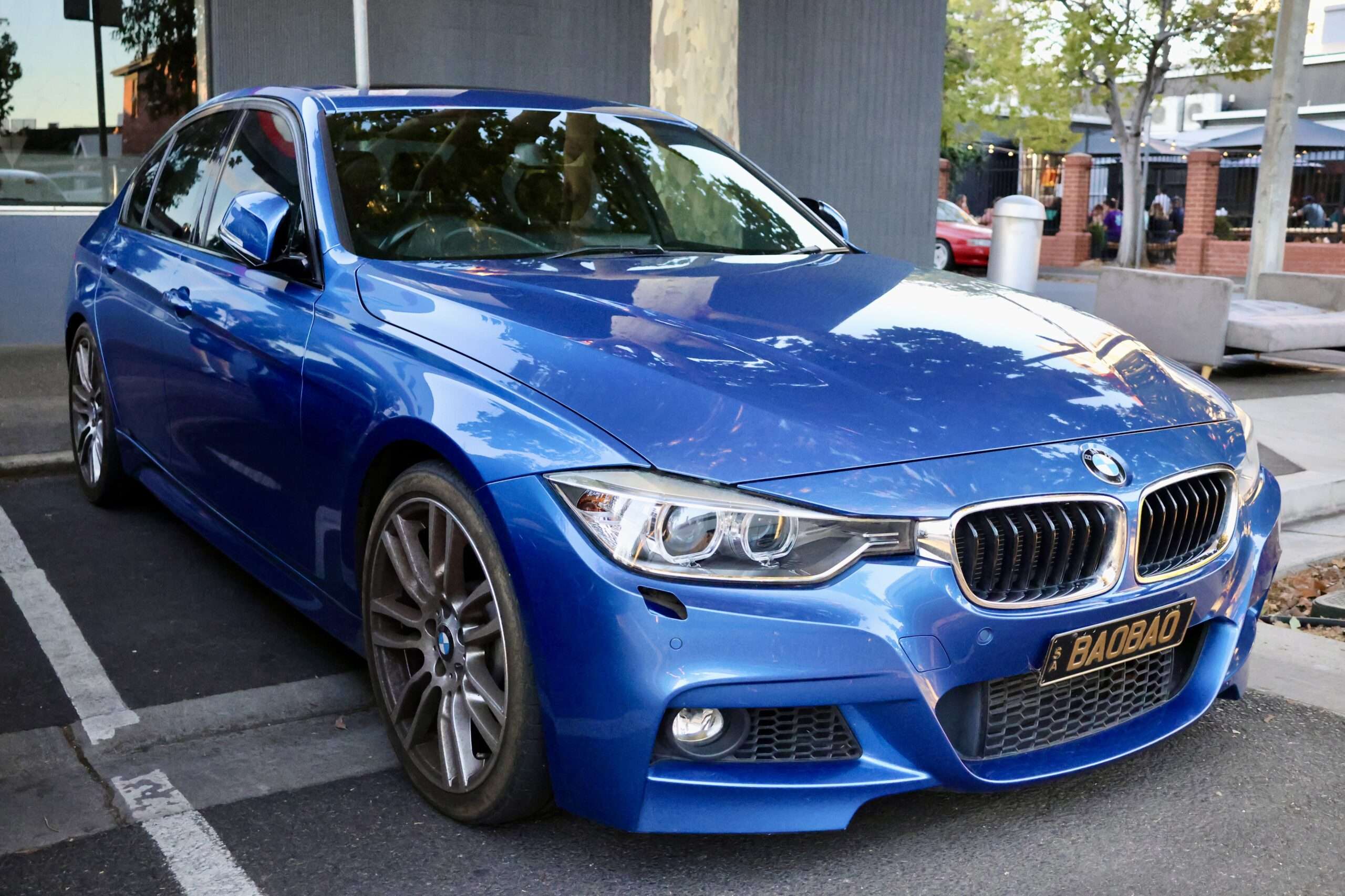
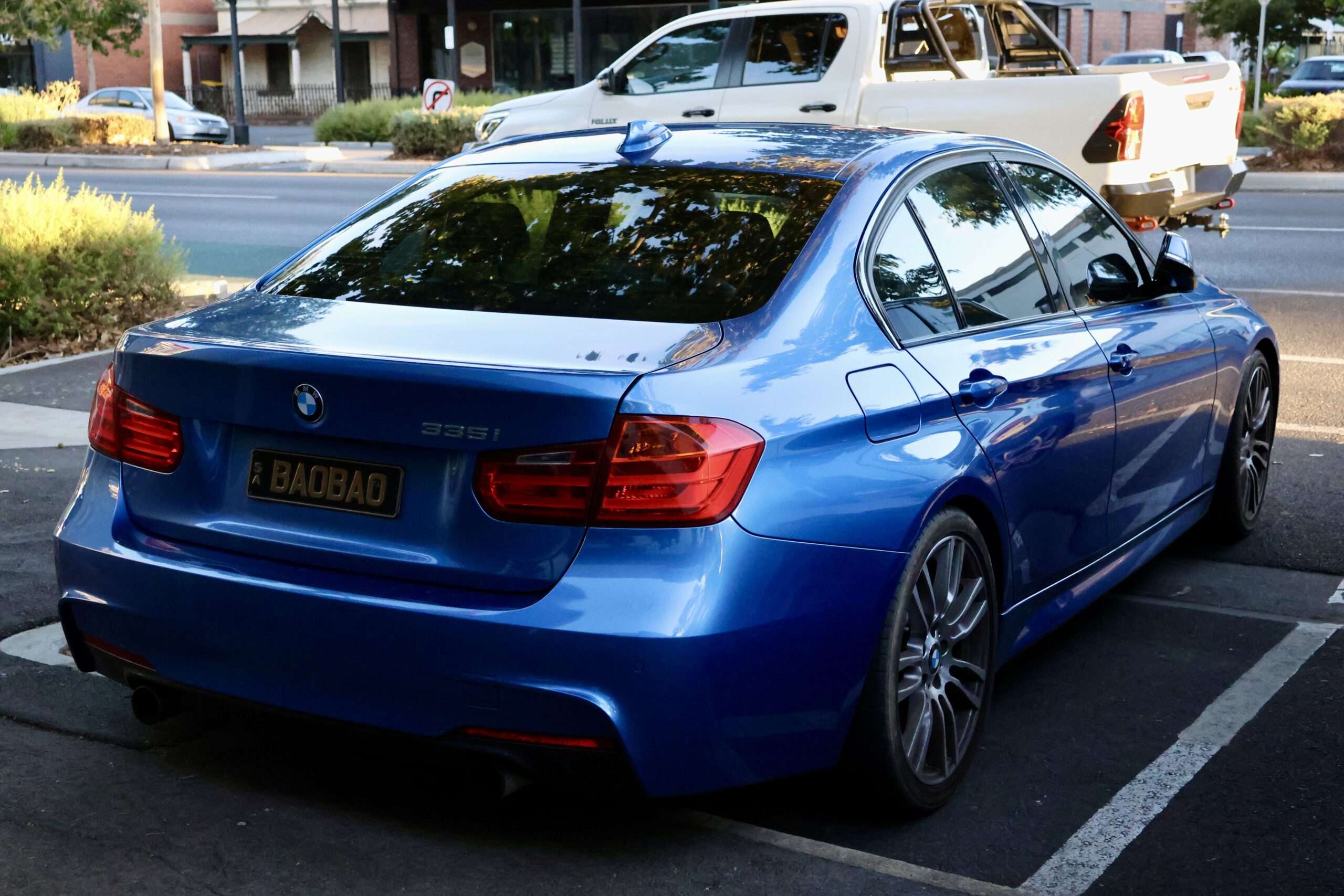
- Featured and second exterior photographs: Pangalau, CC BY-SA 4.0. Paris show photograph: Thesupermat, CC BY-SA 3.0. Fourth photograph: nakhon100, CC BY 2.0. Linked file pages identify the originals. Images are resized for display, with no deliberate content edits, under their respective licences; they are not the cars used for the asking-price examples.
BMW 335i F30/F31 for sale on eBay UK

See more BMW 335i F30/F31 cars on eBay UK
Love cars you don’t see every day?
Get forgotten cars, surprising motoring stories and the most interesting finds from Unusual Cars by email.
Free to join. No spam. Unsubscribe whenever you like. See our privacy policy.