
The BMW 330d and 335d F30 saloon and F31 Touring combine a six-cylinder diesel engine with the eight-speed automatic that made this generation such an effective long-distance car. The buying challenge is separating a genuinely well-maintained example from a fast, polished car carrying deferred engine, emissions and xDrive bills.
This guide covers the 3.0-litre diesel F30/F31, rather than the earlier E90, the F34 Gran Turismo or the later G20. It explains which version to buy, how to investigate the N57 engine and automatic gearbox, what to look for underneath, and how to price the work a seller describes as “just a sensor”.
Some parts links are eBay affiliate links. If you buy through them, Unusual Cars may earn a commission at no extra cost to you. Search results are starting points: confirm the VIN, engine, gearbox and brake specification before ordering.
BMW 330d and 335d: the buying verdict
A standard, rear-wheel-drive 330d with convincing service invoices is our first choice for someone who wants the six-cylinder experience without buying every layer of drivetrain complexity. It has more than enough performance for ordinary UK driving. A 335d makes sense if you specifically want its stronger acceleration and xDrive traction, and can afford the tyres, transmission maintenance and additional turbo hardware that come with it.
Condition changes that recommendation. A carefully maintained 335d is a better purchase than a neglected 330d, and a high-mileage motorway car can be more suitable than a low-mileage diesel that has spent years on interrupted five-minute journeys. Neither mileage nor a row of service-screen entries substitutes for evidence of what was actually replaced.
Our essential conditions are a cold start, an extended drive, a BMW-capable diagnostic inspection and an underside examination. Check outstanding recalls by VIN, particularly the history of EGR cooler work. Walk away from unexplained coolant loss, pronounced metallic timing noise, transmission slip, substantial accident repairs or undocumented emissions modifications. A discount is useful only when you understand the fault being discounted.
330d versus 335d: understand what you are buying
| Version | Core specification | Buying implication |
|---|---|---|
| 330d F30/F31 | 3.0-litre N57 straight-six diesel; 258 PS; eight-speed automatic; rear-wheel drive or xDrive depending on car | The simpler rear-drive version is particularly appealing for lower ownership complexity. Verify drivetrain rather than relying on a badge. |
| 335d xDrive F30/F31 | 3.0-litre N57 straight-six diesel; 313 PS; staged twin-turbo system; xDrive and eight-speed automatic | Extra performance brings additional boost-control hardware and an all-wheel-drive system to assess. |
| F30 saloon | Conventional four-door body | Check boot access meets your needs; a large quoted capacity does not make the opening estate-sized. |
| F31 Touring | Estate body with separately opening rear glass | Inspect the tailgate, glass release, load area and any powered equipment as carefully as the engine. |
BMW’s official summer 2013 announcement identifies the 335d xDrive saloon as the new 313 PS diesel flagship with a standard eight-speed automatic. Its 2015 facelift material confirms 258 PS for the 330d and 313 PS for the 335d. These are metric horsepower figures; some UK adverts convert them to bhp, so a small numerical difference is not necessarily a different engine tune. See the 2013 BMW announcement and BMW’s facelift specification.
Pre-facelift or LCI?
The 2015 facelift, usually called LCI, brought lighting, trim and chassis changes as well as updates across the engine range. Do not assume that every facelift diesel has the same engine family as a facelift 320d: the six-cylinder 330d and 335d need to be identified on their own terms. Nor should a registration date be treated as an exact build date. Check the VIN and factory specification, especially when a car has replacement bumpers, retrofit lights or an M Performance-style body kit.
Choose equipment you will use. Heated seats, sensible wheels and useful parking assistance may improve ownership more than a costly cosmetic package. M Sport trim does not prove the presence of adaptive dampers, upgraded brakes or every advertised option. Compare the actual build specification with the car in front of you, then test each fitted system. Factory equipment and a tasteful retrofit can both be acceptable, but the latter needs an installation history.
Is a diesel right for your journeys?
These cars suit regular longer trips that let the engine and exhaust system reach working temperature. If your normal use is short urban journeys, the appeal of relaxed motorway economy may never materialise. Interrupted regeneration, cold running and repeated battery drain can turn a relatively economical engine into an expensive choice. Buy for the journeys you actually make, rather than the annual holiday that might justify a diesel on paper.
For urban use, check the exact registration with the relevant clean-air-zone authority before paying a deposit. “Facelift”, “Euro 6” and “ULEZ compliant” are not interchangeable descriptions. Emissions equipment and certification depend on the particular car. Treat a seller’s screenshot as something to verify yourself, and consider whether restrictions in places you visit affect the value of the car to you.

How to choose and value a used example
The UK market is broad enough to compare several cars rather than buy the first attractive M Sport. Auto Trader’s 330d listings include different generations, so filter to F30/F31 before making comparisons. Asking prices are evidence of seller expectations, not achieved sale prices. Do not compare a later low-mileage Touring with a high-mileage early saloon and conclude that one is inexplicably cheap.
Build your shortlist around the same body, drivetrain, age range, mileage and history standard. Compare at least a handful of realistic candidates and write down the immediate work for each. One that needs four tyres, front brakes and a gearbox service can consume much of an apparent saving before you tackle any actual fault. The maintenance figures below show why “priced to sell” is not the same as good value.
A premium is easier to justify for a standard car with detailed invoices, coherent mileage records and a specialist inspection than for black wheels and a freshly valeted engine bay. Be cautious about paying heavily for a remap, exhaust modification or retrofitted screen. Those items can reduce your pool of future buyers and do not repay the cost of omitted maintenance.
History questions that reveal more than a stamp
Ask for dated invoices showing the oil specification, mileage and work performed. Check whether gearbox servicing means an actual fluid and filter/pan service or simply a diagnostic reset. Look for the original complaint behind a turbo, DPF or injector replacement: a new component without an identified cause can leave the next owner with the same problem. If the invoice mentions coolant loss, find out whether the cooling system was pressure-tested and the EGR cooler history checked.
Read the MOT history as a sequence. Repeated tyre, brake and suspension advisories suggest how quickly the owner acted on wear. A sudden improvement deserves invoices, not suspicion on its own. Long mileage gaps or an odometer discrepancy need an explanation before you travel. Match the registration, VIN and documents, check outstanding finance and write the agreed condition and included equipment into the purchase paperwork.
N57 engine checks: start with a genuinely cold car
Arrange the appointment explicitly around a cold start. Feel the bonnet and inspect available temperature data before starting; a warm engine removes a valuable part of the inspection. Listen without revving a cold diesel hard. It should settle into consistent running without a prolonged metallic rattle, repeated stalling, heavy smoke or an obvious misfire. A brief observation cannot certify a timing chain, but it can identify a car that needs expert investigation before purchase.
Timing chains: a substantial repair, not a mileage rumour
The N57’s rear-mounted chain arrangement makes access a major part of the job. Specialist BM Diesel Engine Works describes its N57 chain replacement as involving separation of the engine and gearbox, replacement chains, guides and tensioners, timing setup, fresh engine oil and diagnostic checks. Its advertised starting price is £1,350; confirm VAT and the complete written scope for your car.
Metallic noise near the rear of the engine, timing correlation faults or metal in an oil filter warrant investigation. They do not all prove the same failure. Equally, a quiet engine at one viewing is not a lifetime guarantee. Do not apply a four-cylinder N47 internet story indiscriminately to every N57, or claim that all examples fail at a particular mileage. Published workshop repair advice does not establish a failure rate.
If a chain has been replaced, ask which chains and associated components were included, who carried out the job and whether the work followed a failure or was preventative. A chain-only price is different from the cost of repairing consequential internal engine damage. An undocumented claim that “the chain was done” should not add much value. Buying an unusually noisy car on the strength of a cheap kit price is particularly risky because the kit is only part of the repair.
Cooling system and EGR cooler recall history
Check the expansion tank when the engine is cold, look for staining around joints and ask about coolant top-ups. During the drive, monitor temperature behaviour and cabin heat; after the drive, look for leaks without opening a hot pressurised system. Repeated coolant loss is a diagnosis to resolve before purchase, not a normal feature of a powerful diesel.
Use BMW’s official recall checker and ask a BMW Centre to confirm outstanding actions and completed work against the VIN. BMW states that it pays for technical campaigns and safety recalls. A historic EGR cooler invoice does not establish that no later action is outstanding. Conversely, not every cooling fault is an EGR recall issue. Obtain the actual inspection result rather than buying a replacement valve speculatively.
DPF, EGR and operating temperature
A diesel particulate filter warning is the start of a diagnostic process. A useful inspection looks at stored faults, differential pressure behaviour, regeneration history, estimated soot/ash information and engine operating temperature, interpreted together. A single percentage on a generic app is not an authoritative condition report. A sensor, thermostat, glow-system or air/boost fault can interfere with successful regeneration, leaving a replacement or cleaned filter exposed to the original cause.
Ask how the car has been used and whether it has had repeated forced regenerations. Cleaning can address some contamination but cannot repair a physically damaged filter or correct an engine fault. A seller who offers a “motorway blast” instead of diagnosis is transferring uncertainty to you. Avoid cars with a removed DPF, disabled EGR or unexplained emissions software; establish that the emissions system is present, functional and appropriate for the vehicle.
Turbochargers, boost leaks and the 335d’s extra hardware
Both engines should deliver progressive, repeatable acceleration once warm. On the 335d, investigate any abrupt step in delivery, flat spot, surging, limp mode or unusual whistle rather than accepting it as how a twin-turbo diesel behaves. Inspection should separate air leaks and control faults from a worn turbocharger. Hoses, joints, actuators and the control system can all matter; replacing the most expensive component first is poor diagnosis.
Look for damaged charge-air pipes, excessive oil around connections and signs of recent disturbance. A light internal oil film does not establish a failed turbo; substantial leakage or oil consumption requires a proper assessment. Ask whether recent turbo work included checks for oil supply, intake contamination and the reason for failure. Compare actual with requested boost under sensible road-test conditions using a specialist, rather than proving performance with an unsafe full-throttle demonstration.
Fuel system, starting and leaks
Hot starting matters as much as the first cold start. After the drive, switch off, allow a normal pause and restart. Rough idle, prolonged cranking, diesel smell and visible fuel leakage need explanation. Injector correction values can help an experienced technician but should not be treated as a stand-alone pass/fail test; follow up suspicious results with the appropriate tests before authorising an injector set.
Inspect the engine’s sides and underside for oil leaks, using a lift where possible. Undertrays can retain fluid and hide the source, while a recently cleaned engine can conceal seepage temporarily. Ask whether the car uses oil between services and compare the answer with invoices and recorded top-ups. Do not let a reassuring dashboard message replace checking for coolant, oil or fuel losses. A cheap oil seal can still be expensive if access is difficult.
Eight-speed automatic: judge it cold, warm and under light load
Check that selecting drive or reverse produces a prompt, controlled engagement without an excessive delay or heavy thump. During the drive, use gentle acceleration, steady cruising, normal downshifts and safe moderate acceleration once warm. Pay particular attention to shudder at light throttle, engine-speed flare without matching road speed and rough changes after the transmission has heated up. Sport mode should not be used to hide poor behaviour in ordinary driving.
A recent service is valuable evidence of maintenance, not proof that an existing mechanical fault has been cured. Fresh fluid cannot repair every clutch, valve-body or torque-converter problem. Read transmission fault memory and inspect for leaks before accepting an explanation that “they all do that”. A suspicious adaptation reset immediately before sale deserves a discussion and a sufficiently long test drive.
Ask which gearbox is fitted and which fluid, filter/pan and filling procedure were used. The BM Diesel Engine Works gearbox service page specifically lists F30 8HP applications and currently advertises a genuine ZF service from £450. It includes the applicable pan/filter, seals, Lifeguard fluid, temperature-monitored level setting, diagnostics and a road test. Confirm the exact price and VAT status rather than relying on a lower price mentioned elsewhere on the site.
xDrive: tyres are part of the inspection
On a 335d, and any xDrive 330d, record the make, model, size and tread depth of all four tyres. Factory staggered sizes can be legitimate; the important questions are whether the combination is approved and whether wear and rolling circumference are suitable for the system. Four tyres with legal tread are not automatically a well-matched set. A receipt for one recent tyre does not necessarily improve that picture.
At low speed, make gentle turns in an appropriate open area and feel for judder, binding or repeated driveline vibration. Do not confuse every sensation with a transfer-case failure: tyre mismatch, suspension joints, driveshafts and other components need separating by diagnosis. Inspect the transfer case, differentials and driveshaft areas for leaks and damage. Ask for fluid-service invoices and compare any claimed work with the actual component.
If buying primarily for winter traction, include the cost of appropriate tyres in the decision. All-wheel drive cannot compensate for poor tyres under braking. A rear-drive 330d on a sensible tyre setup may suit your use better than an xDrive car whose previous owner has economised on the only contact with the road. Budget for matching tyres rather than replacing one at a time simply because each still passes an MOT.
Love cars you don’t see every day?
Get forgotten cars, surprising motoring stories and the most interesting finds from Unusual Cars by email.
Free to join. No spam. Unsubscribe whenever you like. See our privacy policy.
Suspension, steering, brakes and bodywork
Inspect underneath before being distracted by the quality of the paint. Look at suspension arms and bushes, springs, dampers, brake pipes, subframes and jacking points. Ask the inspector to distinguish cosmetic surface corrosion from deteriorated mountings or damaged structure. A fresh underbody coating is not a substitute for knowing what is beneath it. Uneven ride height, a leaking damper or a broken spring should be costed as a repair rather than described as character.
On the road, listen for knocks over small irregularities and feel for steering vibration during a progressive brake application. Wheel damage, tyre defects, arm wear and alignment can overlap in their symptoms. A steering wheel that sits off-centre is not automatically a cheap tracking adjustment: establish why it is off-centre and whether the car has a coherent accident history. Inspect inner tyre edges, which can be difficult to see with the wheels straight ahead.
Brake specification matters when comparing costs or ordering parts. Photograph the calipers and obtain the correct disc dimensions or VIN-based identification. Trim badges, painted calipers and a seller’s description of “M brakes” are not sufficient. Check disc wear, corrosion on the working surfaces, pad condition, warning sensors and the parking brake. A car that has stood unused can need brake work despite having covered little mileage since its last service.
Wheels, run-flats and ride quality
Inspect the inside of the wheels for cracks, welds and buckling as well as the visible faces for kerb damage. Large wheels can make an attractive car expensive to keep shod and can conceal a poor ride during a short demonstration on a smooth road. Test the car on the roads you normally use. Check whether it is on run-flat or conventional tyres, whether the set is consistent and what puncture provision is included.
Adaptive suspension, where fitted, should be checked for leaks and faults, and the settings should produce credible changes rather than simply alter the display. Lowering springs and wheel spacers require a closer look at clearances, alignment, tyre wear and insurance disclosure. A modified car can be well engineered, but a list of branded parts is not proof that the complete setup works properly.
Accident repair and water ingress
Examine shut lines, paint texture, overspray, lamp dates, exposed fixings and the condition of the boot floor. Lift accessible load-area panels and check for damp, staining and damaged wiring. Look for evidence that bumper, lamp or parking-sensor repairs were finished properly. Cosmetic bumper work is common and need not be a deal-breaker; unexplained structural repair or inconsistent identity is different.
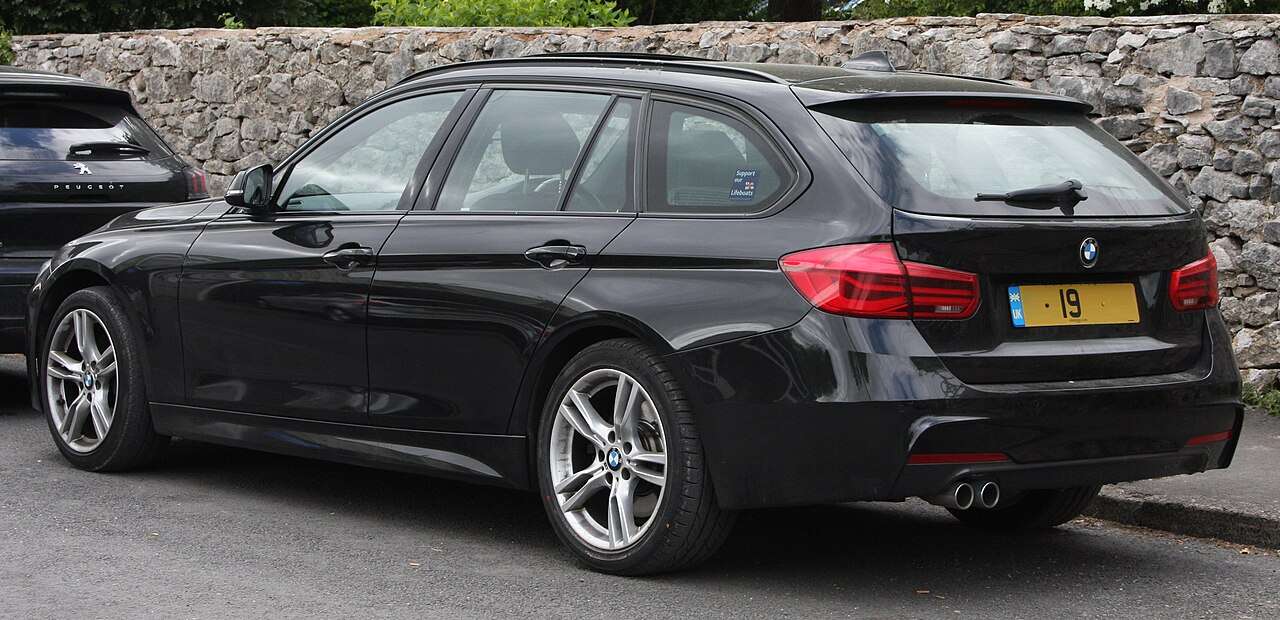
On the Touring, operate the main tailgate and separately opening glass several times. Check the rear wiper, washer, lock and heated rear window. Inspect around the hinges, trim and seals, and make sure water has not collected in concealed luggage-area recesses. If fitted, test a panoramic roof fully and check the headlining and pillars for staining. “It only leaks in heavy rain” is still an unresolved defect.
Cabin, electrical equipment and diagnostic checks
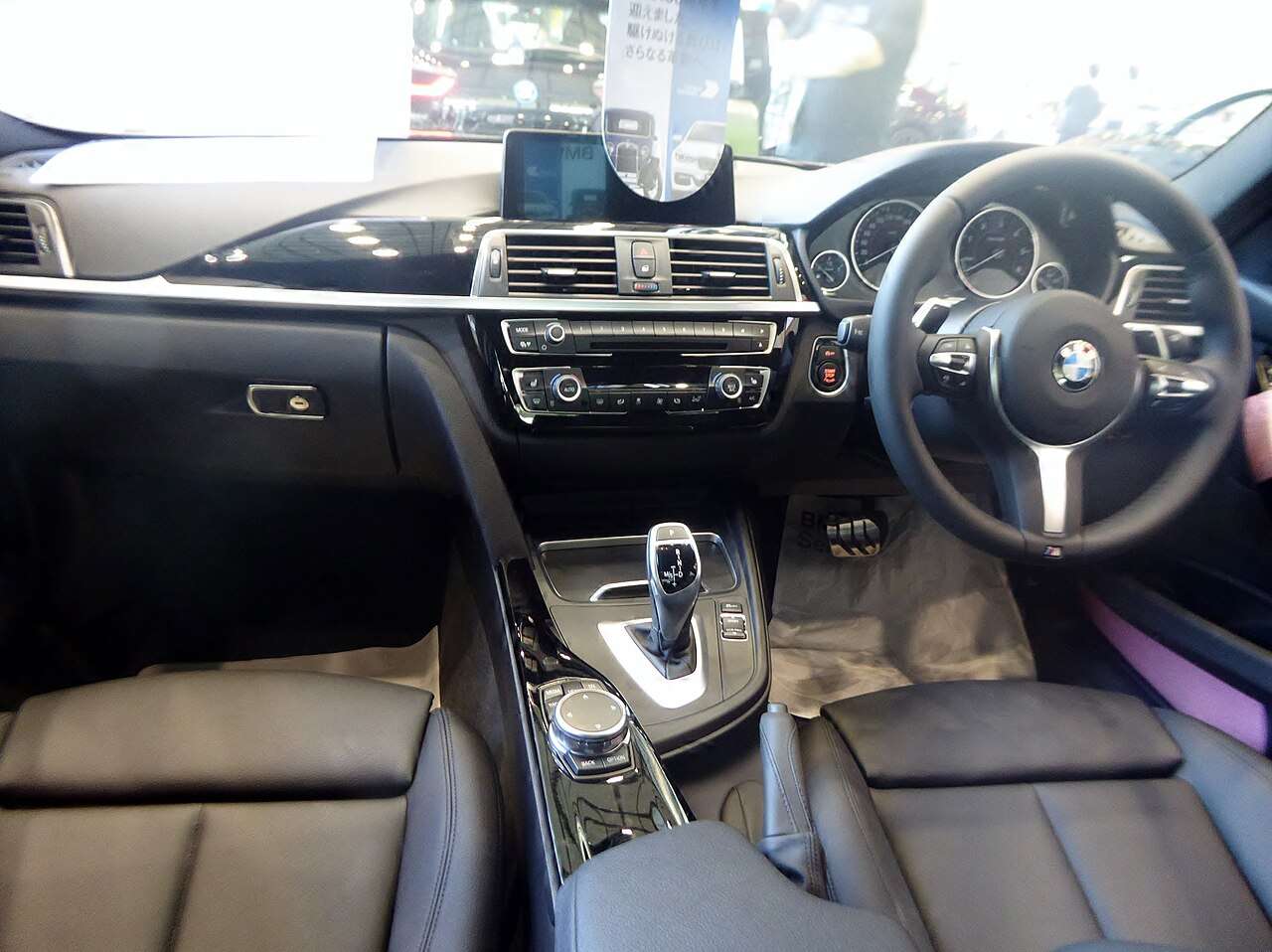
Work through the cabin deliberately, rather than accepting that the screen lights up. Test all windows, locks, mirrors, seat adjustments, heating, air conditioning, parking sensors, cameras and audio sources. Check the iDrive controller in every direction and watch for repeated restarts or missing functions. A replacement screen can look modern while leaving factory parking or vehicle settings awkward to use.
Cold air from the vents should be demonstrated after the system has had time to work. “Just needs a regas” is a claim to verify: a leak, compressor or control fault can cost more than refrigerant. Confirm which refrigerant the particular car uses before comparing menu prices. The same caution applies to a weak battery explanation. A discharged or incorrect battery can generate faults, but that does not prove every stored fault is harmless.
Compare the fitted battery with the required type and capacity and ask for evidence of appropriate battery registration after replacement. Check that both keys operate the car and clarify which connected services still function. An old navigation display and an internet-connected service are separate things; do not pay for an advertised feature that cannot be demonstrated with the current car and account arrangements.
A useful pre-purchase scan covers the engine, transmission, chassis, body and fitted assistance systems. Obtain a written report before faults are cleared. Note the conditions under which faults occurred and whether monitors or histories appear recently reset. Our F30/F31 diagnostic scanner guide explains the importance of BMW-specific coverage. A generic engine-code reader alone cannot inspect the whole car.
UK maintenance, parts and fitted costs
These examples put numbers against common ownership jobs without pretending that one price covers every brake, gearbox or engine variant. The MINI & BMW Specialist’s 335d menu states that its prices include parts, labour and VAT. It covers the model name across cars rather than certifying your exact F30/F31 configuration, so supply the registration and VIN for a confirmed quote. The chain and gearbox prices come from the dedicated BM Diesel Engine Works pages; their VAT treatment needs confirmation.
| Job | Published UK price and scope | What to establish before booking |
|---|---|---|
| Oil and filter service | £220 fitted, including VAT, on the 335d workshop menu | Correct approved oil and required quantity; other filters are separate at this service level. |
| Oil, oil filter and air filter | £250 fitted including VAT on the same menu | Do not compare it with an oil-only kit as if the contents were identical. |
| Gold service | £349.99 including VAT: oil, oil/air/cabin filters and vehicle check | Ask whether fuel-filter work is due separately. |
| Platinum diesel service | £450 including VAT: listed filters include the diesel fuel filter, plus oil and vehicle check | Confirm the full model-specific service list. |
| Front brake pads and sensor | £350 fitted including VAT on the 335d menu | Brake package and the condition of the existing discs. |
| Front discs, pads and sensor | £888.96 fitted including VAT on the 335d menu | Exact disc/caliper specification; this is not a universal F30 brake quote. |
| Rear discs, pads and sensor | £600 fitted including VAT on the 335d menu | Rear brake specification and any additional seized-component work. |
| Brake-fluid change | £100 including VAT on the 335d menu | Confirm this is a fluid replacement rather than a top-up. |
| Diagnostic check | £80 including VAT on the 335d menu | Initial assessment scope; subsequent testing is not automatically included. |
| ZF automatic gearbox service | From £450 at BM Diesel Engine Works; genuine ZF parts/fluid and model-dependent scope | Pan/filter, fluid amount, level-setting procedure, VAT and written final price. |
| N57 timing-chain replacement | From £1,350 at BM Diesel Engine Works, including the listed access work, chains/guides/tensioners and oil | VIN-specific scope, VAT, worn sprockets or other extras, and whether existing engine damage is excluded. |
The sources bundle labour with the fitted job; they do not publish a separate labour-only figure for these repairs. We have therefore not invented hours or subtracted an unrelated retail kit price to manufacture a labour estimate. Ask for an itemised quote showing parts, labour, VAT and possible additional work. That is especially important for a timing repair, turbo replacement or transfer-case fault.
Parts shopping: useful searches and an honest comparison
A live eBay listing for an F30/F31 330d/335d N57 oil-and-filter kit was £60.95 when checked. That is a parts-only retail example, not a £60.95 full service and not proof of fitment for every car. Compare the contents and oil approval using the 330d/335d N57 oil-service-kit search. The fitted £220 menu includes workshop work and its own supply terms; those two prices cannot be used to calculate a reliable labour charge.
Service parts and maintenance shopping checklist
Use these BMW 330d & 335d F30/F31 searches to compare parts availability. A search result is not a fitment guarantee: confirm the exact vehicle specification and original part numbers before ordering.
| Maintenance item | What to check before buying | eBay parts search |
|---|---|---|
| 330d N57 timing-chain kits | and 335d N57 timing-chain kits: check the complete kit and the workshop’s parts policy before buying. | Compare 330d n57 timing-chain kits on eBay |
| 330d alternators | or 335d alternators: match output, connections and part number; include any core surcharge when comparing rebuilt units. | Compare 330d alternators on eBay |
| 330d ZF 8HP service kits | verify the transmission and correct fluid rather than trusting “fits BMW automatic”. | Compare 330d zf 8hp service kits on eBay |
| 335d F31 discs and pads | identify the brakes before ordering, including sensors and fitting hardware. | Compare 335d f31 discs and pads on eBay |
| 330d air, fuel and cabin filters | an oil kit need not contain these. | Compare 330d air, fuel and cabin filters on eBay |
| 335d boost hoses | and 330d thermostats: buy after diagnosis, not as substitutes for it. | Compare 335d boost hoses on eBay |
Affiliate disclosure: we may earn a commission from qualifying eBay purchases, at no additional cost to you. Listing prices are for the advertised contents only; fitting, diagnosis, fluids and associated work may cost extra. Check availability, seller reputation and returns terms.
Cheap incompatible parts can cost more than the saving through repeat labour, downtime and returns. Agree with the garage whether it will fit customer-supplied parts, who handles warranty claims and what happens if a listing’s compatibility table is wrong. For a complicated access job, a workshop-supplied, warrantied package can be the better comparison even if its component price is higher.
A sensible maintenance plan after purchase
Follow the VIN-specific BMW schedule and service indicators, supported by invoices. For an older performance diesel, we would favour a cautious annual oil-service habit rather than stretching an unknown history; that is an ownership recommendation, not a newly invented BMW factory interval. Inspect the old filter and record the oil specification and mileage so the next service begins with useful evidence.
Transmission advice also needs attribution. ZF’s own oil-change guidance discusses oil ageing and a 150,000 km recommendation, approximately 93,000 miles, with operating conditions relevant to oil life. BM Diesel Engine Works recommends 50,000–80,000 miles depending on use. These are different sources and should not be collapsed into a supposed universal BMW 40,000-mile rule. Have an age-, use- and history-based plan agreed for your actual gearbox.
Include brake fluid, filters, coolant condition, auxiliary drive, battery, suspension and xDrive/differential checks in that plan. Do not reset a service indicator without the work, and do not treat a clean MOT as a maintenance programme. Keep the receipts for preventative work as well as repairs: a future buyer can assess a documented gearbox service more easily than the phrase “maintained regardless of cost”.
Hidden ownership costs worth budgeting for
Tyres are a particularly easy omission. Price the actual approved sizes in a suitable matching product, including fitting and alignment where needed. On a staggered-wheel xDrive car, budgeting for only the cheapest single rear tyre is an unreliable way to estimate ownership. Inspect wheels before fitting an expensive set so a cracked or buckled rim does not damage the new tyres or leave vibration unresolved.
Insurance needs to reflect engine software, suspension, wheels and other modifications. Obtain a quote on the exact registration before buying, with modifications declared. Check the actual tax and clean-air-zone position too. A seller’s old tax payment or an online advert’s automatic description is not a personalised quote for your circumstances.
Build a first-year reserve from the inspection report. For example, the sourced £220 oil service, £100 brake-fluid change and £450 starting gearbox service already total £770, before any adjustment for the gearbox quote’s VAT or scope, tyres or repairs. Adding the listed front discs/pads job brings that illustrative bundle to £1,658.96. This is arithmetic from the published examples, not a fixed ownership package. A car needing all of it is materially dearer than its screen price.
Allow for a second key, faulty sensors, damaged undertrays, worn boot trim and missing luggage equipment. Small defects can become expensive when several arrive together. Keep money for independent diagnosis: buying parts for repeated warning lights is rarely a substitute. If you have no financial room beyond the purchase price, wait for a better example or choose a simpler car.
A practical pre-purchase viewing and road-test plan
- Before travelling: obtain the VIN, history summary and photographs of invoices; check MOT history, outstanding finance and recall status. Confirm a cold start and permission for independent inspection.
- With the car cold: inspect fluid levels and visible leaks, listen to startup and idle, watch warning lights and note smoke. Do not let the engine warm while paperwork is discussed.
- Check the specification: confirm rear-drive or xDrive, build date, brake package, options and modifications. Photograph tyre details on all four wheels.
- Inspect body and cabin: examine shut lines, jacking points, boot recesses and headlining; operate every switch and, on the Touring, both rear access openings.
- Drive from cold to fully warm: assess engagement, light-throttle shifts, steady-speed shudder, temperature behaviour, acceleration and braking. Include uneven surfaces and low-speed manoeuvres.
- Recheck after the drive: restart hot, inspect for fresh leaks and smells, check the luggage area and review any warnings.
- Have a specialist scan and lift inspection: request the un-cleared fault report, relevant live data and a written repair estimate. Discuss uncertainty before negotiating.
- Agree the deal in writing: record faults, included items and any work the seller has promised. Make a deposit conditional on the agreed inspection terms where appropriate.
Buy, negotiate or leave?
Ordinary wear with a clear specification and a confirmed quote is negotiable: worn pads, a due service or a missing trim piece can be priced. A diagnosis-dependent fault is different. Do not assign the cheapest possible cause to a gearbox shudder, coolant loss or intermittent limp mode simply to make the purchase add up.
Our preferred car is standard, clean underneath, consistent in its history and available for proper inspection. A seller who permits those checks makes the decision easier. Pressure to buy immediately, refusal of a cold start or an attempt to clear codes before showing you the report should push you towards another car. There are enough examples to justify patience.
Frequently asked questions
Is the 335d worth the extra cost over a 330d?
It is worth considering if you want its stronger performance and standard xDrive. For most buyers, a good rear-drive 330d offers the more straightforward balance. Buy the better-maintained individual car, and price tyres and drivetrain servicing before deciding that the faster badge is only a small step up.
Does an F30/F31 330d have the same engine as a 320d?
No. This guide concerns the six-cylinder 3.0-litre N57 diesel, not the four-cylinder 320d. Engine-family changes elsewhere in the facelift range should not be used to order parts for a 330d or 335d. Use the VIN and actual engine identification.
Should I avoid every high-mileage 330d or 335d?
No, but high mileage needs supporting evidence and a realistic repair reserve. Regular longer-distance use and coherent invoices can be more reassuring than very low mileage with repeated cold starts. Neither pattern excuses timing noise, coolant loss, transmission faults or neglected tyres.
Does an MOT prove the DPF and gearbox are healthy?
No. An MOT is not a detailed engine, transmission or regeneration-history assessment. Keep it as one part of the evidence and commission the BMW-capable diagnostic and mechanical checks needed to understand an expensive fault.
Can an automatic gearbox service cure shudder?
Sometimes maintenance improves operation, but it is not a guaranteed repair. The cause can involve internal wear or another drivetrain component. Diagnose the symptom and inspect the fluid and fault history before buying on the promise of an inexpensive service.
Can I buy parts using only “330d” or “335d”?
No. Those badges span different generations and specifications. Confirm F30/F31, VIN, engine, gearbox, brake package and relevant part numbers. eBay searches in this guide help you find candidates; they do not certify compatibility.
Sources, further reading and photo credits
This guide draws on BMW’s 2013 model announcement, 2015 facelift material and official recall information; ZF’s transmission service guidance; and the primary workshop service/repair pages linked beside the cost and fault discussions. Workshop advice describes inspection and repair practice, not measured failure incidence. Prices are examples subject to specification and change.
Featured image: BMW 330d F30 by Charles, CC0, resized. Inline photo credits accompany each image. For more cars, visit the Buying Guides hub.
BMW 330d & 335d F30/F31 for sale on eBay UK

See more BMW 330d & 335d F30/F31 cars on eBay UK
Love cars you don’t see every day?
Get forgotten cars, surprising motoring stories and the most interesting finds from Unusual Cars by email.
Free to join. No spam. Unsubscribe whenever you like. See our privacy policy.