The MINI Clubman John Cooper Works F54 is an unusually convincing answer to a familiar question: what do you buy when you want a quick, characterful car but need proper rear doors and a useful boot? It combines the Clubman’s distinctive split rear doors with a turbocharged 2.0-litre engine and ALL4 four-wheel drive. The important complication is that the earlier 231 hp and later 306 hp cars are substantially different purchases.
This guide covers the genuine F54 JCW, introduced in late 2016, rather than a Cooper S wearing a JCW styling pack, the smaller F56 hatch or the taller Countryman. It explains the changes in powertrain, the inspection points that matter, sourced UK maintenance costs and the questions to settle before a deposit. B48-powered Clubmans should not be diagnosed using an old R56 timing-chain story.
Quick verdict: an early, well-maintained 231 hp car offers a more affordable route into a practical JCW, including the possibility of a manual gearbox. The revised 306 hp automatic is much quicker and brings more extensive engineering changes. For either version, prioritise a coherent service record, correct tyres, healthy cooling and a clean drivetrain assessment over a long options list or an undeclared remap.
Affiliate disclosure: eBay parts links are affiliate searches. We may receive a commission on qualifying purchases, at no extra cost to you. Search results are not verified fitment advice. Check the VIN, engine version, brake dimensions and part number with the supplier before ordering.
MINI Clubman JCW F54: 231 hp versus 306 hp
The F54 has four conventional side doors and two rear loading doors. It is a five-seat car with a lower, more estate-like stance than the Countryman. The body’s practicality is part of its appeal, but it still needs a real-life test: put your child seats, regular luggage or dog crate in it before deciding that it will replace a larger estate. The rear doors need space to swing out behind the car.
| Version | Key specification | What changes the buying decision |
|---|---|---|
| Earlier JCW, launched 2016 | 2.0 turbo B48, 231 hp, 350 Nm, ALL4; six-speed manual or eight-speed Steptronic automatic | Lower entry price; check the exact gearbox and clutch condition if manual |
| Revised JCW, announced 2019 | 2.0 turbo, 306 hp, 450 Nm; eight-speed Steptronic sports automatic and ALL4 | More extensive engine, cooling, transmission and chassis changes; front mechanical differential lock |
| Cooper S with JCW styling | A different model despite similar trim or badges | Confirm the factory identity; styling does not create a full JCW drivetrain |
The 2019 BMW Group technical release describes a comprehensively revised engine and cooling package, the new sports automatic, front mechanical differential lock and revised ALL4 hardware. Its quoted 0–100 km/h figure for the Clubman is 4.9 seconds. This is more than a software increase on an otherwise identical early car.
Early launch material, reproduced by The Gentleman Racer, describes the 231 hp car’s manual/automatic choice and standard ALL4. Some adverts use bhp and metric horsepower interchangeably. The useful distinction is the original 231/350 specification versus the later 306/450 specification, confirmed through build data, rather than a one-digit difference in an advert.
Registration dates around the change are not enough. A 2019 registration may need closer identification, and later wheels or Union Jack lamps can be retrofitted. Ask for the build date, factory specification and the engine output recorded in the documentation. A claimed 306 hp car with evidence of an earlier remapped engine should be assessed as a modified car, not accepted as the later factory version.
What the transmission names mean
The JCW’s eight-speed Steptronic is a conventional automatic with a torque converter. Do not treat it as the seven-speed dual-clutch gearbox used in some other MINI variants, or as the longitudinal eight-speed transmission familiar from rear-wheel-drive BMWs. Similar branding does not establish the correct oil, filter or service procedure.
The later car’s front differential lock is a mechanical feature integrated with the transmission. Earlier electronic traction functions are not the same hardware. An advert describing every JCW as having the later limited-slip arrangement is imprecise. Confirm the version first, then judge how it drives. The presence of ALL4 does not make tyres, alignment or suspension condition unimportant.
UK buying interest, prices and the right version for you
UK JCW Clubman advertisements recently included 2.0-litre ALL4 examples from around £9,999 to £23,250. These are individual asking-price examples across differing years, mileages and histories, not a valuation range for every F54. Search results may also include the older R55 Clubman, so a headline advert count is not a count of the cars covered here.
Make two shortlists: earlier 231 hp and revised 306 hp. Within each, compare gearbox, mileage, service gaps, tyre make and age, brake condition, accident history and fitted equipment. A later car’s extra performance can justify a premium if that is what you want. It does not justify ignoring cooling-system evidence or accepting a vague history.
For daily use with a firm budget, our first choice would be the best standard or carefully documented example in the version you can maintain comfortably. An early automatic can offer strong value; an early manual deserves particular attention to clutch and flywheel behaviour. The 306 hp is the natural choice when performance is central, but the purchase should leave room for its consumables and any due work.
Use an inspection and itemised estimates to set your reserve. As an editorial planning allowance, keep around £2,000–£3,000 available beyond the purchase price for an otherwise healthy, inspected car, and more if tyres, brakes and a major service are due together. That is not a promise about annual costs or a ceiling on a major repair. An unexplained drivetrain fault should be diagnosed before buying, not absorbed into a generic contingency.
Price insurance on the actual registration, including every declared modification. Check current vehicle tax for that car, not an old road-test figure, and check any expensive-car supplement that may apply. Think about fuel over your real journeys as well. A very quick petrol estate used for short urban trips will not reliably reproduce an official combined-cycle number.
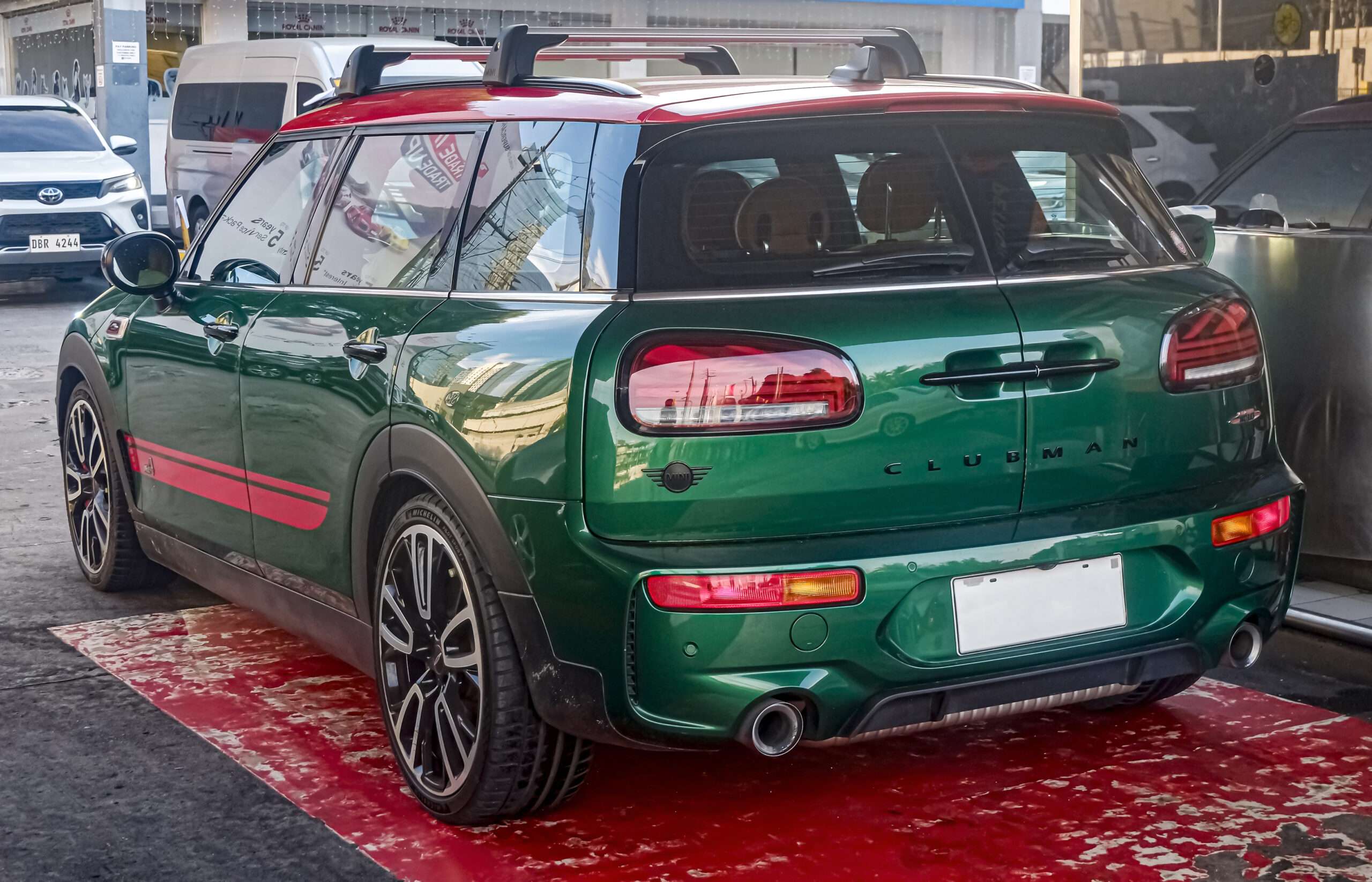
B48 engine: the checks that matter
Oil history, cold starts and warning messages
Start with invoices and the onboard service record. Entries should correspond to dates, mileages and identifiable work. Ask which oil approval was used and whether the car has had intermediate changes in addition to the displayed service requirement. A digital entry can be useful, but it is not a substitute for an invoice showing what went into the engine.
Arrange a cold start and verify that the seller has not warmed the car immediately before arrival. Listen for a persistent abnormal rattle, observe idle quality and note any engine or drivetrain warning. Direct-injection engines make operating noises; a short video or a general claim that all B48s sound alike cannot distinguish normal operation from a mechanical problem. If the noise concerns you, let the inspecting specialist assess it before the test drive continues.
When warm, the engine should deliver progressive power without repeated hesitation, misfire or warning messages. Read stored faults and relevant live data through MINI-capable diagnostics. A dashboard with no warning light is reassuring only in combination with the history and physical inspection. Repeatedly erased codes, recently reset readiness information or a seller who cannot explain a recent warning need further investigation.
Ask about oil consumption in quantities and distance. “Occasional top-up” could describe very different things. Look for leaks around the engine, accessible covers and undertray, and establish whether any previous leak repair has remained dry. Persistent warm smoke, a rough idle or unexplained oil loss requires diagnosis rather than an automatic coil, turbo or timing-chain purchase.
Cooling system and oil-filter housing
Coolant loss should never be treated as a normal running characteristic. Ask how often the reservoir is topped up and check the level only when safe and cold. Look for staining, dampness, a sweet smell, dried deposits and invoices for previous pumps, housings, hoses or related seals. A clean driveway does not rule out a leak hidden by the undertray or evaporating on hot components.
RMP Motors’ workshop discussion explains that the B48’s composite oil-filter housing carries oil and coolant passages and can leak through housing or seal failure. It also emphasises distinguishing this from other cooling leaks. This is engine-family evidence for an inspection point, not a measured failure rate or a mileage deadline for every F54 JCW.
Ask the inspector to examine the housing area, water pump, thermostat and coolant connections as appropriate to the installed engine. A pressure test can help locate a leak. If contamination between oil and coolant is suspected, the investigation and repair scope become more significant than a simple external gasket change. Find the cause and any consequential damage before agreeing a price.
The later 306 hp car has a more elaborate cooling arrangement than the earlier version, including transmission cooling changes described in the factory release. Do not order an early housing, hose or radiator merely because an online listing says B48. Establish the exact part revision and fitment. After a cooling repair, ask whether the correct filling/bleeding procedure and a leak check were completed.
Use Clubman F54 JCW oil-filter housing searches and F54 JCW water pumps and thermostats to compare parts once the fault and reference are known. An aftermarket metal housing is not automatically better simply because of its material. Supplier quality, sealing surfaces, correct application and the installer’s warranty matter more than an “upgrade” label.
Mounts, vibration and what a thump can mean
Check idle vibration through the seat and steering wheel, then compare cold and warm operation. On an automatic, note the feel when selecting drive and reverse with the brake applied. On the road, listen for a repeated thump when taking up or releasing drive. Have the specialist inspect engine and gearbox mounts and the surrounding components rather than assuming the gearbox itself has failed.
A visibly damaged or leaking mount and a diagnostic correlation are stronger evidence than a seller’s opinion. A rough-running engine can also create vibration, while driveshafts, tyres and wheels can cause a different speed-related shake. The distinction affects both the estimate and the parts needed. Avoid stress-testing mounts by applying heavy throttle against the brakes during a viewing.
F54 JCW engine mount listings need checking against the precise engine and production date. The 2019 powertrain update included mounting changes, so a part described as fitting an ordinary Cooper S or early JCW should not be presumed correct for the later car. Ask whether a fitted estimate includes all necessary fixings and any additional mount found worn.
Timing chains, VANOS and modified cars
The B48 uses a timing chain. That does not create a routine cambelt-kit job, nor does it justify importing the N14/N18 inspection narrative from the older R56. Unusual timing noise, a relevant fault code or poor running still needs specialist assessment. Ask what tests support a proposed timing or variable-valve-system repair and what the quote actually includes.
The MINI Specialist’s F54 JCW page recommends closer attention to oil servicing and valve-timing concerns on performance cars, especially modified examples. Its recommendation is workshop advice, not proof that all standard engines have an imminent fault. Do not present a specific oil grade or a universal replacement interval as correct across every build without checking the car’s handbook and current VIN-specific advice.
Look for intake changes, non-standard exhausts, tuning boxes, software invoices and evidence of removed emissions hardware. Ask whether the ECU has been mapped, whether it was returned to standard, which fuel the calibration requires and whether the insurer was told. A car can have standard-looking hardware and altered software. A “stage” label has no consistent technical meaning unless the actual changes are documented.
Do not buy a tuned 231 hp example on the assumption that reaching a similar output makes it a factory 306 hp car. The later car’s engine, cooling and drivetrain changes matter. Where modifications are important to the purchase, use an inspector who understands them and confirm the warranty position in writing. A general service stamp does not certify a tuning installation.
Love cars you don’t see every day?
Get forgotten cars, surprising motoring stories and the most interesting finds from Unusual Cars by email.
Free to join. No spam. Unsubscribe whenever you like. See our privacy policy.
Gearboxes and ALL4: more than a dashboard check
Early six-speed manual
If you want a manual, confirm the car’s identity early in the search. Inspect clutch operation from cold and after the road test, listening for abnormal noises and assessing consistent engagement. The pedal should not stick or change character dramatically as the car warms. Check all gears during normal driving, including a sensible downchange without forcing the lever.
Clutch slip, heavy vibration, difficult selection or significant flywheel noise needs a written diagnosis. A clutch estimate should identify whether it includes the flywheel, release components, seals and labour, and whether those additional items are needed on this particular car. A cheap clutch-kit listing is not a fitted repair price. Do not deliberately abuse a clutch to test it.
For an identified manual car, manual F54 JCW clutch and flywheel searches can help compare components. Results often mix engines and gearboxes, so supply the VIN and verify the actual reference. These components are not applicable to the later automatic simply because both cars say John Cooper Works.
Eight-speed automatic
Try reverse and drive engagement, parking-speed manoeuvres, steady acceleration and manual paddle requests. Repeat these checks when the transmission is fully warm. A good example should not repeatedly bang into gear, hesitate excessively before taking up drive or judder persistently. One unfamiliar sensation deserves interpretation; repeated bad behaviour deserves diagnosis.
Ask for evidence of any transmission maintenance, software work or repairs. Confirm which fluid and procedure were used. Do not call it a DSG service or order a generic ZF kit because an advert says “eight-speed BMW automatic”. The gearbox must be identified correctly by the workshop. An independent preventive servicing recommendation and a manufacturer maintenance requirement are different things and should be explained as such.
Before accepting a costly gearbox verdict, ask whether engine running, mounts, driveshafts, fluid condition and stored faults have been assessed. Conversely, do not accept “just needs an adaptation reset” without evidence. A reset cannot repair worn hardware. A pre-purchase report should explain what is known, what remains uncertain and whether further paid testing is sensible.
ALL4 inspection and tyres
ALL4 uses a front power take-off, propshaft and an electronically controlled rear coupling. The 306 hp update brought specific drivetrain revisions. It is not useful to describe every front-based four-wheel-drive system as mechanically identical to another manufacturer’s Haldex installation, or to copy a different model’s fluid schedule without checking the actual unit.
Have the specialist inspect leaks, propshaft joints/supports, couplings and drive shafts, and scan the relevant control systems. On the road listen for rumble, whine, vibration or a repeat thump under load and on lift-off. A car can drive normally in gentle conditions while a rear-drive fault is stored, so a short dry-road drive alone does not prove that the system is fully healthy.
Inspect all four tyres for correct size, suitable specification, compatible patterns and reasonably consistent wear. Ask about the history of individual replacements. A mismatched set deserves attention even if it passes an MOT. It can also point to maintenance chosen on price rather than the car’s requirements. Have binding, shuddering or unusual turning behaviour diagnosed; do not assume that tyres will cure an existing fault.
Ask the garage to identify the transmission, front take-off and rear-drive/coupling service operations appropriate to the VIN, including their fluid specifications. A single “ALL4 service” line may hide different scopes. Record exactly what was done for the next owner and do not let an engine oil-service entry stand in for drivetrain maintenance.
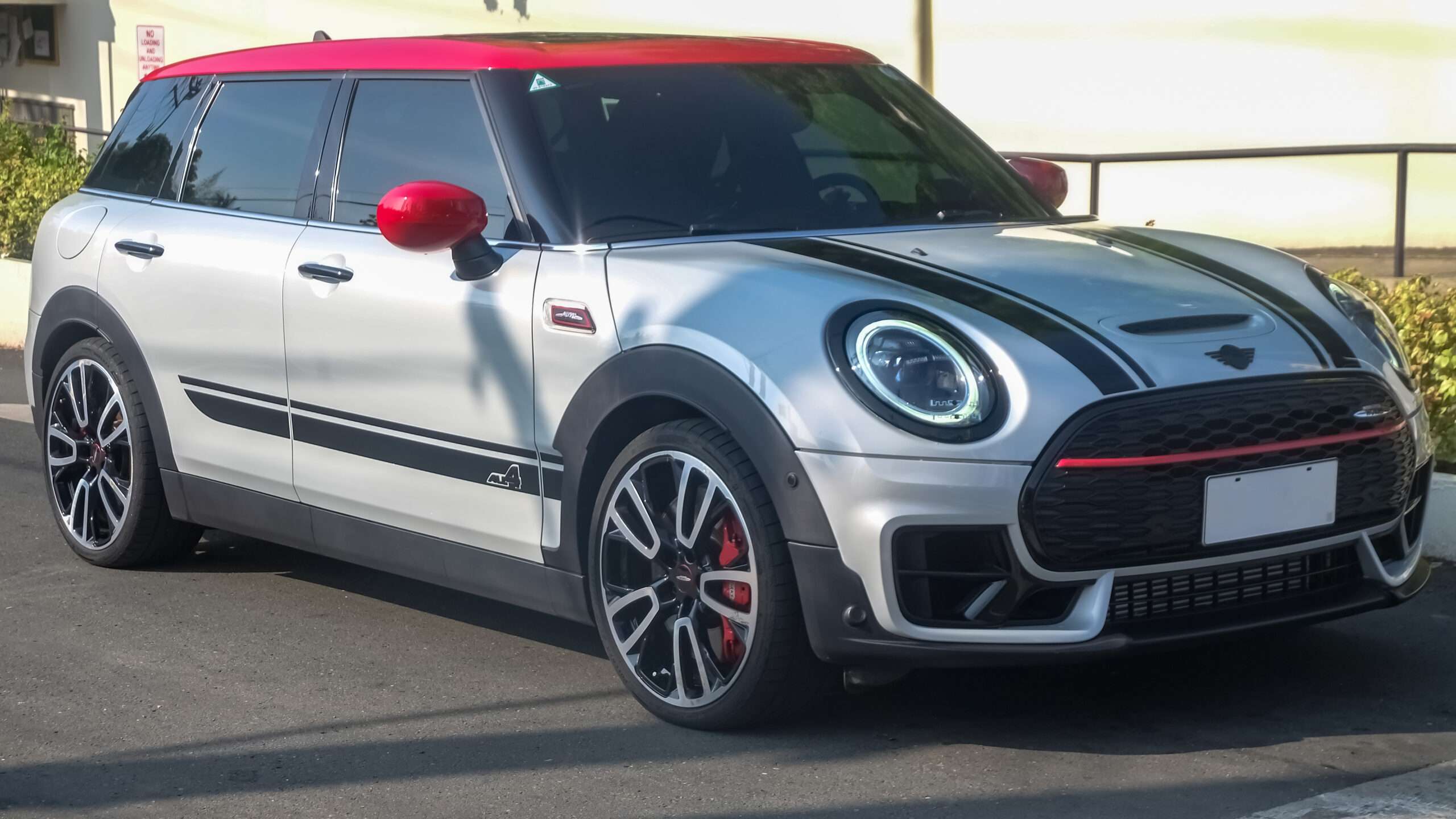
Brakes, suspension, body and the split rear doors
JCW brakes: identify the correct version
The genuine JCW has stronger braking hardware than a styling-pack car, and the later high-output version received larger brakes. Inspect discs for wear and corrosion on both faces, pads for remaining material and the calipers for leaks or damage. The factory’s later release gives front and rear disc dimensions of 360 × 30 mm and 330 × 20 mm respectively; verify what is actually installed before ordering.
Test braking progressively where safe. Pulling, grinding or a repeat pulse through the pedal needs investigation. Also test the electronic parking brake and inspect rear brake condition, particularly where the car has had gentle or infrequent use. A dashboard estimate of pad life does not measure disc thickness or establish that the caliper is moving properly.
306 hp F54 JCW brake discs and pads should be matched to the car’s equipment. A low-priced Cooper kit or F56 JCW kit is not necessarily comparable. Ask whether a fitted quote includes both discs on an axle, pads, sensors, hardware, VAT and any parking-brake procedure. Avoid working on an electronic parking brake without the correct workshop instructions.
Ride, dampers and wheels
Drive the car on the type of roads you actually use. The combination of JCW suspension, wheel choice and tyre construction can feel very different on broken town surfaces from a smooth demonstration route. A harsh ride is not automatically a fault, but knocking, uncontrolled bouncing, wandering or uneven tyre wear should not be dismissed as the sporty specification.
Check whether adaptive damping is fitted rather than assuming the driving-mode switch proves it. Inspect for leaks, broken springs, worn arms and bushes, and signs of previous wheel impact. Car Mechanics’ F54 inspection discussion flags lower-arm bush noise and rear brake wear among checks, but its broad Clubman parts prices should not be transplanted into a JCW brake estimate.
Inspect the inside of each wheel for damage, repairs and corrosion. A speed-related vibration might be a tyre, wheel, bearing or driveline problem, not necessarily a simple balance. Ask for an alignment check after worn components are addressed. A fresh tyre set with worn suspension can soon become an expensive repeat purchase.
Split rear doors and water ingress
The doors are part of the Clubman’s character, so test them properly. Use the handles and remote functions appropriate to the fitted equipment, check both latches, examine seals and wiring areas and make sure the doors close securely. Do not assume the whole door is powered merely because the release is electrical. Test any hands-free opening feature only if the car is equipped with it.
Inspect the lower edges, hinges, seals and painted areas for rubbing or damage. Look beneath the boot floor and at accessible carpets for dampness, staining or a musty smell. If there has been a water leak, ask where it entered, what was repaired and whether electrical equipment was affected. Replacing a seal without tracing the water path may not solve the problem.
Try loading in the space available at home. The swing-out doors need room behind the car and the central division affects the rear view. Check rear wipers, washers, heating and parking aids, because they contribute to everyday usability. Price a broken latch or missing trim before completing the purchase rather than assuming it is a cheap small part.
Cabin and option checks
Work through the seats, heating, air conditioning, displays, controller, speakers, Bluetooth, navigation and phone integration. Screen size alone does not guarantee every connected feature. Demonstrate Apple CarPlay or other functions you need with a compatible phone, and establish whether any service requires a current subscription or account transfer.
Inspect sport-seat bolsters and mechanisms, the steering wheel, switches, panoramic roof where fitted and all four side doors. Use both keys and check comfortable access for every regular passenger. Child seats can change the front passenger’s available legroom, so test the actual arrangement. A five-seat registration does not tell you whether your family will be comfortable.
Have the 12V battery and charging system tested if start/stop is unavailable or electrical warnings are present, but do not blame every fault on a battery. Establish the correct replacement specification and any registration procedure. Compare F54 JCW AGM battery listings only once capacity, case size and terminal layout are confirmed.
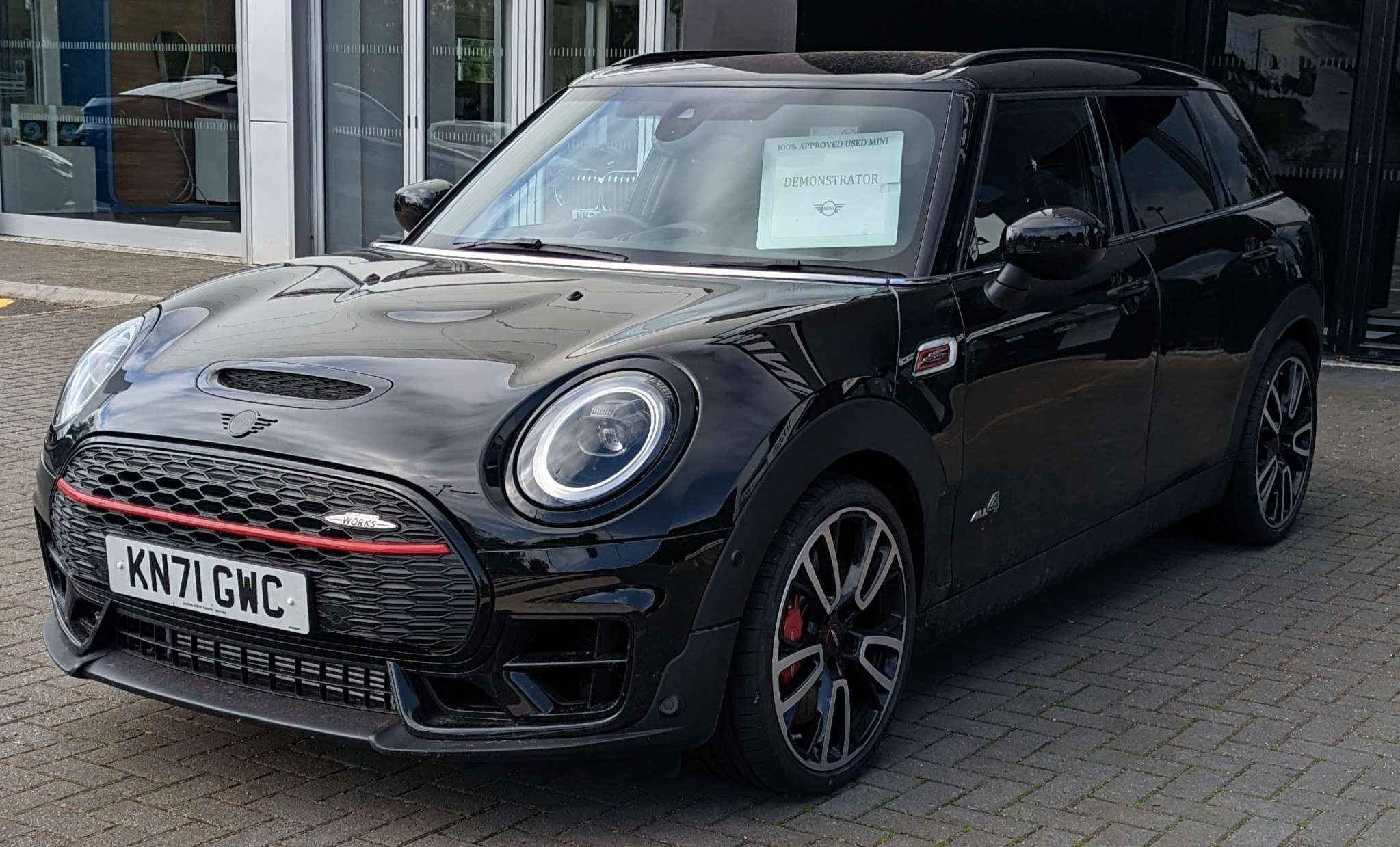
Maintenance and sourced UK service costs
The MINI Specialist’s F54 JCW menu explicitly states that its prices include parts, labour and VAT, and discusses both power versions. These published fitted prices offer a useful starting point; confirm the current price against your VIN, especially the brake specification. They are not a guarantee of the same quote at every garage.
| Job | Published fitted price | Scope / buying use |
|---|---|---|
| Oil and filter | £220 | Basic scheduled work; check oil approval |
| Oil, filter and air filter | £250 | Compare like-for-like service scope |
| Oil, air/cabin filters and vehicle check | £349.99 | Does not include plugs in this package |
| Package adding spark plugs | £500 | Confirm items due for the actual car |
| Front pads and sensor | £350 | Discs extra unless named |
| Front discs, pads and sensor | £888.96 | Confirm early/later hardware |
| Rear pads and sensor | £280 | Inspect discs and calipers too |
| Rear discs, pads and sensor | £600 | Axle package, not all four brakes |
| Brake-fluid change | £100 | Separate time-based service item |
| Diagnostic check / major inspection | £80 / £145 | Agree pre-purchase scope and access first |
For a parts-only comparison, Lohen advertises genuine MINI front replacement discs for the 306 hp F54/F60 at £500. That listing is not a fitted brake job: confirm pack contents, VAT, delivery, pads and sensors before comparing it with a workshop package. See equivalent F54 JCW 306 front-disc searches using the verified references. Source: Lohen’s model-specific product listing.
The menu does not split each job into a separate parts price and labour charge, so we have not created a fictional breakdown. Ask for an itemised written quote if comparing a parts-only purchase with a fitted service. Confirm whether diagnostic time, extra seized hardware, additional leaks or fluid replacement beyond the listed package would be charged separately.
Use the onboard service requirements and the correct schedule as your baseline. For a performance car, discuss an annual or roughly 10,000-mile oil-change approach with the specialist; The MINI Specialist recommends that more cautious pattern on its page. Treat it as independent preventive advice, not a universal manufacturer interval. Use the correct approval for your exact engine rather than choosing oil by viscosity or a generic B48 forum recommendation alone.
Keep invoices for spark plugs, air and cabin filters, brake fluid, drive belt and any transmission or ALL4 work. An oil-service reset does not prove these were all changed. Check dates as well as mileage: a lightly used car can still need age-related servicing. When a seller says “full service”, ask for the actual job list.
For price comparison, use F54 JCW oil filters and service kits, JCW F54 spark plugs, Clubman JCW auxiliary belts and tensioners and F54 JCW alternators. Confirm pack quantities, genuine/OE/aftermarket status, VAT and delivery. A kit may omit oil, plugs or a filter that your garage’s package includes.
There is no ordinary cambelt-change line to add to this B48’s routine servicing. Timing-system work is a separate diagnosis and potentially substantial repair. Likewise, air-conditioning recharge is not evidence that a leak has been repaired. Require a fault-specific estimate when the car needs more than scheduled maintenance.
Hidden ownership costs
A complete tyre set. Price the fitted sizes before buying, including balancing, valves and disposal. The cheapest single tyre search will not describe the cost of restoring a mismatched set. If changing between run-flat and conventional tyres, consider the car’s specification, insurance requirements, puncture provision and ride as a complete decision.
Service and brakes arriving together. The menu above shows how a £500 service, front brakes and rear brakes can create a substantial first-year bill before tyres or faults. Do not calculate an annual budget from the £220 oil change alone. Use the inspection to separate work due immediately, within the next year and genuinely optional improvements.
Cooling-system access. A housing or hose can be modestly priced while dismantling, seals, coolant and testing add significantly to the fitted job. Ask whether the quotation includes all associated work and how any oil/coolant contamination will be addressed. Do not add an internet part price to an invented labour allowance and call it a sourced repair cost.
Equipment and keys. A second key, a broken rear-door latch, damaged LED lamp, missing parcel shelf or failed parking camera may be irritatingly expensive even where the engine is healthy. Test and price these before negotiation. An attractive colour scheme should not distract from a list of non-working daily functions.
Modifications and warranty. A remap, exhaust change, suspension kit or non-standard wheels can affect insurance, warranty and resale. Confirm declarations and coverage in writing. Read the claim ceiling, labour-rate allowance, diagnostic exclusions and rules about pre-existing faults. A generic warranty may be less useful for an ALL4 or transmission problem than the headline suggests.
Downtime. If the Clubman will be your only family car, ask your chosen specialist about booking lead times, parts availability and transport. Even a repair you can afford can disrupt work or school runs. Keeping a reserve means leaving room for those practical costs as well as the workshop invoice.
Viewing and test-drive checklist
Before the viewing
- Obtain the VIN, registration, build date and factory specification. Identify 231 or 306 hp and the actual gearbox.
- Ask for service invoices, not just a photograph of the onboard history.
- Check MOT mileage and recurring advisories, finance, recorded damage and ownership evidence.
- Ask about coolant top-ups, oil consumption, warning messages, previous mount/cooling work and every modification.
- Arrange a cold start, a proper road test and an independent MINI specialist inspection with lift access and diagnostics.
Stationary inspection
Match the car’s identity to its paperwork before assessing the cosmetics. Check panel alignment, paint consistency, lamp condition, windscreen and wheels. Inspect tyre sizes, brands, age and inner shoulders. Use a lift for the underside rather than crawling beneath a vehicle supported by a roadside jack.
Start the engine from cold, observe warning messages and idle quality, and inspect accessible areas for leaks without touching hot or moving components. Test rear doors, side doors, keys and all fitted equipment. Inspect the boot floor and carpets for moisture. Fit your usual luggage or child seats if practicality is central to the purchase.
The road test
Begin gently and allow the drivetrain to warm. Assess steering straightness, low-speed take-up, ride and normal braking. Include a rougher road and a higher-speed section where legal and safe. Listen under acceleration and on lift-off, and compare automatic engagement and shifts once warm. Check a manual’s clutch and selection through ordinary driving rather than a deliberately abusive test.
The later car’s acceleration is not a reason to conduct launch-control demonstrations. You need to establish that it behaves consistently, not measure a brochure time. A warning, persistent misfire, severe vibration or overheating concern should stop the test and trigger diagnosis. Recheck for smells or visible leakage after the drive.
What the specialist report should answer
Ask for the actual engine and transmission identity, stored faults across relevant modules, cooling-system findings, mount condition, brake measurements, tyre and wheel condition, suspension wear and visible ALL4/driveline leaks. The report should distinguish a current defect from a preventive recommendation and explain any test limitations.
A clear fault-code scan cannot measure brake discs or prove that an oil-filter housing is dry. Conversely, a stored low-voltage code needs context rather than automatic rejection. The value of a good inspection is the combination of mechanical findings, diagnostic evidence and a road test. If important questions remain unanswered, resolve them before paying the balance.
When to buy, negotiate or stop
Buy when the identity, condition and history agree and the due-work list fits your budget. Negotiate on diagnosed wear items with written prices. Pause for unexplained coolant loss, a recurring drivetrain warning, significant gearbox problems, emissions tampering, poor accident repairs or refusal of an independent inspection. Do not convert uncertainty into a small discount and assume it has gone away.
MINI Clubman JCW F54 buying questions
Is every Clubman JCW four-wheel drive?
The genuine F54 JCW covered here uses ALL4. A Clubman with JCW styling is not necessarily the full performance model. Check the VIN and factory specification rather than judging by bumpers or badges.
Can I buy a manual 306 hp Clubman JCW?
The revised 306 hp factory model uses the eight-speed sports automatic. The earlier 231 hp car offered a six-speed manual as well as an automatic, so manual buyers should focus on the earlier version and verify the particular car.
Is the JCW automatic a DSG?
No. The eight-speed Steptronic in this application is a torque-converter automatic. Do not apply the service kit or repair advice for a different MINI’s seven-speed dual-clutch transmission.
Does the F54 have the old MINI timing-chain problem?
The JCW uses the B48 engine rather than the R56’s N14/N18. Inspect any abnormal noise or timing fault properly, but do not assume that an older engine’s fault pattern proves a defect in this car.
Is the 306 hp car just remapped?
No. BMW’s technical release describes revised engine components, cooling, transmission and ALL4 hardware, plus the front mechanical differential lock. A tuned early car is not the same factory package even if its claimed output is similar.
What should I budget for servicing?
The cited specialist lists fitted prices from £220 for oil and filter to £500 for a more extensive package including plugs, with brakes and fluid separately priced. Use the car’s due-work list and exact hardware to obtain a current quotation rather than treating the smallest service as the annual ownership total.
Is it a good family car?
It can be a distinctive and useful one if the rear-seat space, ride and split-door loading arrangement suit you. Test those features with your actual passengers and luggage. Practicality is personal, and the Clubman’s unusual doors are something to try before buying.
Our verdict
The F54 JCW makes a strong case for a fast, usable car with a personality of its own. The earlier car and the 306 hp revision each have a clear appeal; the mistake is treating them as the same specification at different prices. Establish which one you want, verify its history and cooling/drivetrain health, and buy with enough budget left to keep the whole car working properly.
Browse the buying guides by make.
Research and sources
- BMW Group: 2019 JCW engine, cooling, transmission, ALL4 and chassis technical release.
- The Gentleman Racer: reproduced 2016 launch material for the earlier car.
- The MINI Specialist: F54 JCW fitted servicing menu and workshop advice.
- RMP Motors: B48 housing construction and leak-diagnosis discussion.
- Car Mechanics: broader F54 inspection context; non-JCW prices not applied here.
- Auto Trader: changing UK JCW Clubman asking-price examples.
Featured photo: Ethan Llamas, CC BY-SA 4.0; resized.
Service parts and maintenance shopping checklist
Use these MINI Clubman JCW F54 searches to compare parts availability. A search result is not a fitment guarantee: confirm the exact vehicle specification and original part numbers before ordering.
| Maintenance item | What to check before buying | eBay parts search |
|---|---|---|
| Clubman F54 JCW oil-filter housing searches | Match engine code and production date; compare kit contents and the manufacturer approvals for any included fluids. | Compare clubman f54 jcw oil-filter housing searches on eBay |
| F54 JCW water pumps and thermostats | Identify the failed component first; match engine and housing references, seals and the correct coolant specification. | Compare f54 jcw water pumps and thermostats on eBay |
| F54 JCW engine mount listings | Confirm VIN, engine/version and original part number. Check kit quantities, manufacturer, condition and returns terms before ordering. | Compare f54 jcw engine mount listings on eBay |
| manual F54 JCW clutch and flywheel searches | Match engine and transmission codes and flywheel type; confirm release hardware, seals and installation requirements. | Compare manual f54 jcw clutch and flywheel searches on eBay |
| 306 hp F54 JCW brake discs and pads | Match axle, fitted brake assembly, dimensions and wear sensors; compare a complete axle set and confirm whether hardware is included. | Compare 306 hp f54 jcw brake discs and pads on eBay |
| F54 JCW AGM battery listings | Match voltage, case size, terminal layout, capacity and required battery technology; establish whether registration or coding is needed. | Compare f54 jcw agm battery listings on eBay |
| equivalent F54 JCW 306 front-disc searches | Match axle, fitted brake assembly, dimensions and wear sensors; compare a complete axle set and confirm whether hardware is included. | Compare equivalent f54 jcw 306 front-disc searches on eBay |
| F54 JCW oil filters and service kits | Match engine code and production date; compare kit contents and the manufacturer approvals for any included fluids. | Compare f54 jcw oil filters and service kits on eBay |
| JCW F54 spark plugs | Match the engine and ignition specification. Diagnose running faults before replacing components; modified cars may need a different approved specification. | Compare jcw f54 spark plugs on eBay |
| Clubman JCW auxiliary belts and tensioners | Confirm engine, belt routing, length and tensioner/pulley specification; distinguish the auxiliary drive from engine timing. | Compare clubman jcw auxiliary belts and tensioners on eBay |
| F54 JCW alternators | Match the original part number, output rating, electrical connector and pulley; check exchange surcharges. | Compare f54 jcw alternators on eBay |
Affiliate disclosure: we may earn a commission from qualifying eBay purchases, at no additional cost to you. Listing prices are for the advertised contents only; fitting, diagnosis, fluids and associated work may cost extra. Check availability, seller reputation and returns terms.
MINI Clubman JCW F54 for sale on eBay UK

See more MINI Clubman JCW F54 cars on eBay UK
Love cars you don’t see every day?
Get forgotten cars, surprising motoring stories and the most interesting finds from Unusual Cars by email.
Free to join. No spam. Unsubscribe whenever you like. See our privacy policy.