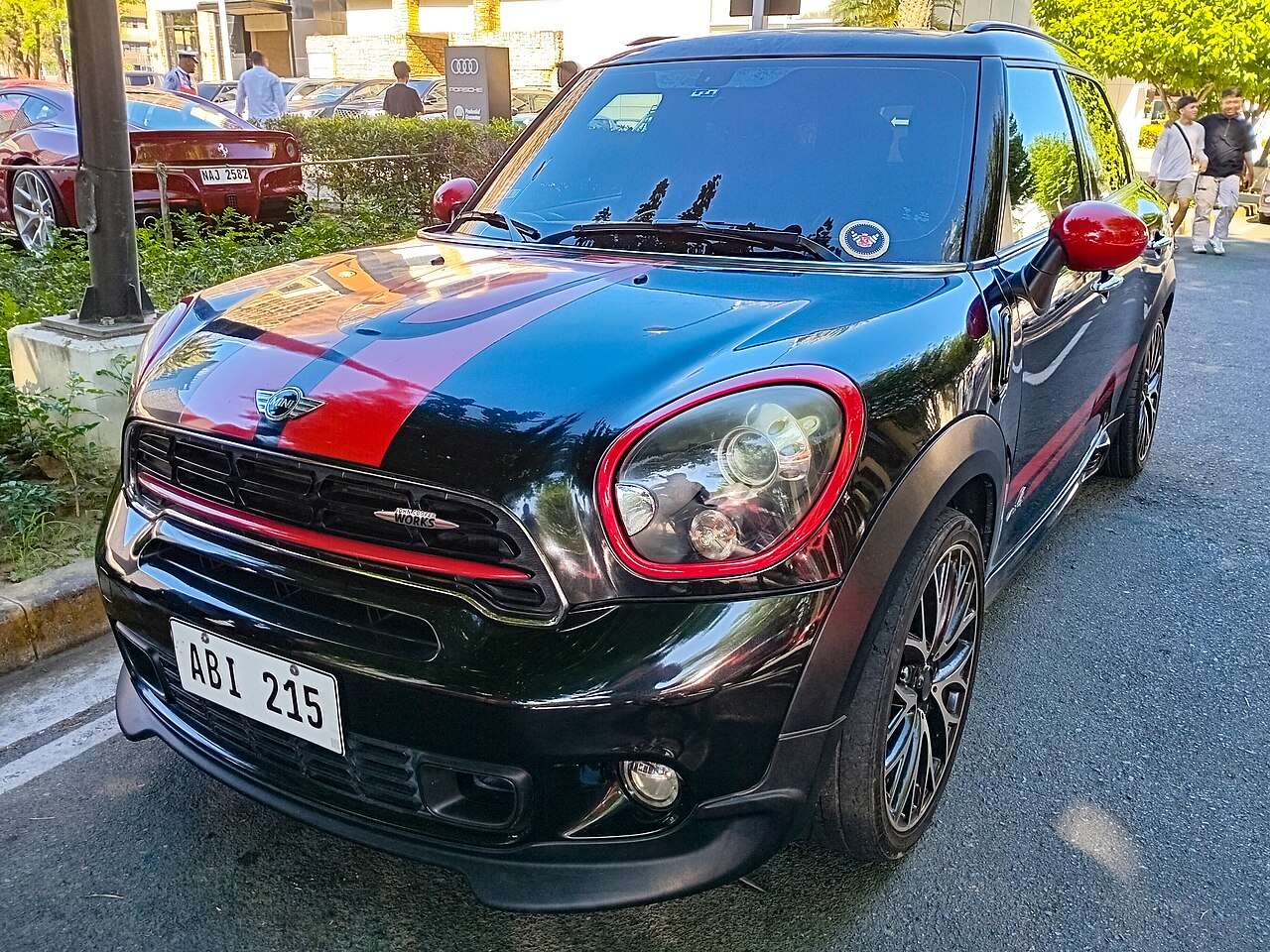
The MINI Countryman John Cooper Works F60 is an unusually convincing answer to a familiar problem: you want something entertaining, but also need rear doors, usable luggage space and a driving position that does not turn every school run into an exercise in climbing. It has real performance credentials, yet it is a heavier, more complicated proposition than the three-door MINI its badge evokes.
The most important buying decision is between the earlier 231hp version and the extensively revised 306hp car. That is more than a software distinction. Choose the right generation, establish its service history and inspect it as an all-wheel-drive performance car, rather than pricing it like an ordinary family crossover.
This guide covers the 2017–2023-era F60 JCW with the 2.0-litre B48 petrol engine, including cars registered later from remaining stock. It excludes the earlier 1.6-litre R60 and the subsequent U25. Registration dates and dealer dropdowns are unreliable substitutes for checking the VIN, engine output and actual equipment.
Is a used F60 Countryman JCW a good buy?
Yes, if you want its particular blend of character and practicality and can afford performance-car consumables. Our starting point would be an unmodified example with convincing invoices, a clean diagnostic inspection and four suitable tyres. A less fashionable colour or lower specification is a sensible compromise; unexplained coolant loss, drivetrain warnings or missing maintenance are not.
The 231 suits someone who values the shape and JCW feel without needing the later car’s acceleration. The 306 makes more sense for a buyer specifically seeking a very quick all-weather family car. Its extra power, revised cooling and transmission hardware make it a distinct purchase. Do not pay the later car’s price for an earlier model described merely as “2019 JCW”.
It will not have the delicacy or low running costs of a lightweight hatch. Firm suspension, large wheels and a busy cabin can also divide opinion. Drive the exact car over the roads you use, fit your child seats and put your usual luggage in the boot. A test drive that answers those questions is more useful than another equipment list.
231hp versus 306hp: understand what you are buying
| Version | What matters | Buying implication |
|---|---|---|
| Earlier F60 JCW | 2.0 turbo, 231hp and 350Nm; ALL4 | Often the lower entry cost. Check the actual transmission and original build specification rather than borrowing later-car specifications. |
| 2019 power upgrade | 306hp and 450Nm; eight-speed Steptronic, revised cooling, mechanical front differential lock | A substantial hardware change. Verify output and production details on transition-year cars. |
| 2020 facelift onwards | Updated appearance and equipment, retaining the high-output JCW proposition | The facelift and the power upgrade are separate events. A pre-facelift car can already have 306hp. |
BMW Group’s 2019 technical release describes a 75hp increase, revised engine components and cooling, an eight-speed automatic and a front differential lock. It quotes 5.1 seconds from 0–100km/h for the Countryman. Those details explain why an “easy remap to the same power” is not an equivalent purchase. The factory package includes more than a peak-power number.
Be particularly careful with advertisements mixing JCW, Sport and Cooper S. Styling packages and red trim do not establish that a car is a factory John Cooper Works. Match the VIN-derived build record to the V5C and the physical car, then confirm the engine output with MINI. If the seller cannot establish whether it is a 231 or 306, pause the transaction.
The later eight-speed Steptronic is not a dual-clutch DSG. Equally, the familiar “ZF eight-speed service” advertised for longitudinal BMW models is not automatically the correct job for a transverse-engine Countryman. The invoice should name the actual transmission and the fluid used. A workshop that identifies it properly is worth more than a generic fixed-price promise.
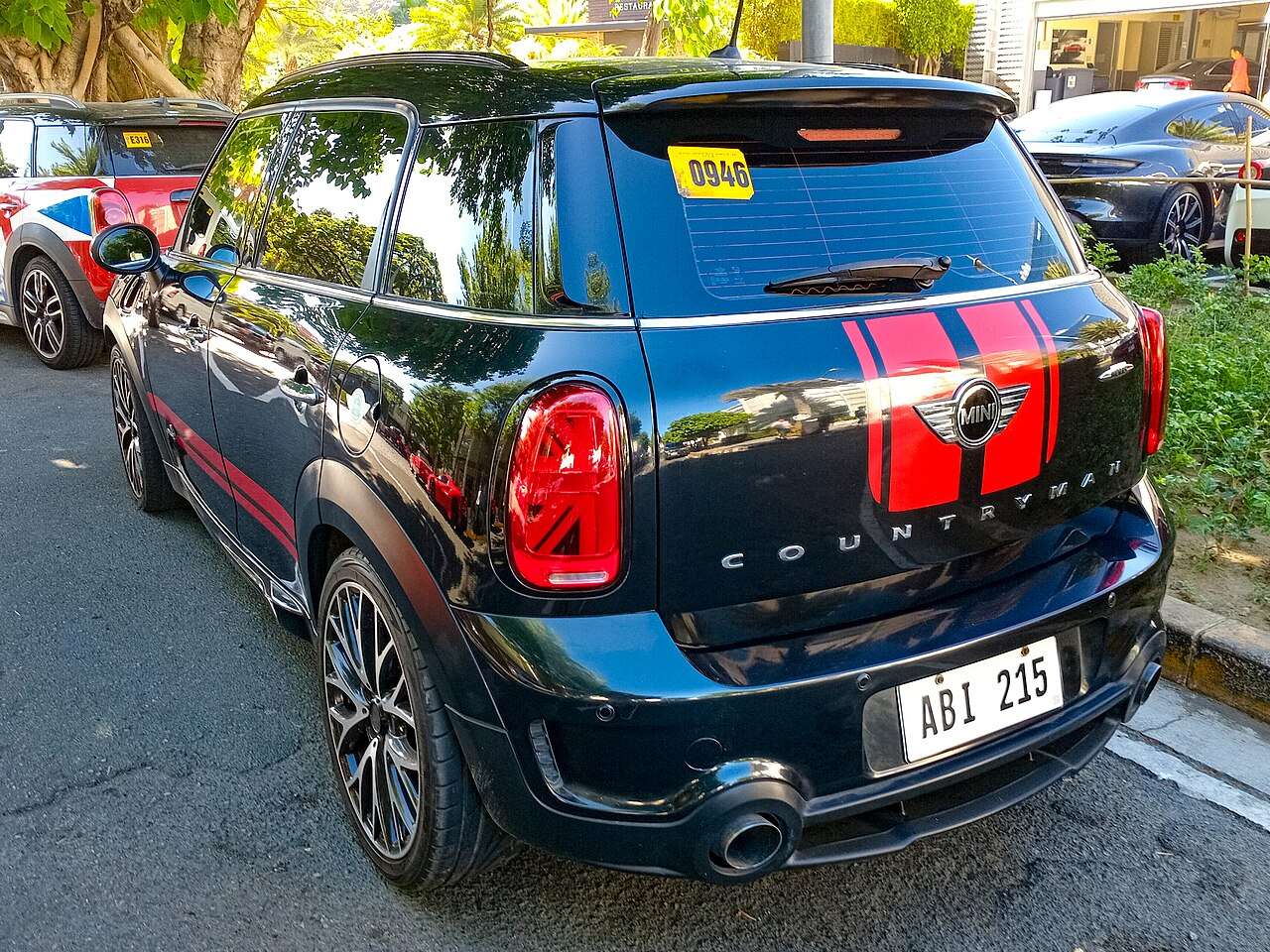
UK prices: compare like-for-like cars
Use advertised prices as a shopping map, not a valuation guarantee. The Cazoo JCW results checked for this guide mixed R60, F60 and U25 cars, so their overall average was unsuitable for valuing an F60. Individual F60-era examples included a 2021 2.0 automatic at £18,995 with roughly 63,000 miles, a 2022 example at £21,950 with 65,882 miles, and a 2023 car at £26,998 with 14,322 miles. These are asking prices, not completed sales or endorsements of those vehicles.
That spread illustrates why mileage, generation, condition and selling channel need separating. A cheaper car can be the stronger purchase if its brakes, tyres and servicing have just been done properly. A low-mileage car with repeated short trips, old tyres and little maintenance evidence may require immediate expenditure. Ask for registration and VIN before travelling, and compare at least five genuinely equivalent examples.
For each candidate, calculate a realistic entry cost: purchase price, inspection, overdue servicing, tyres, brakes, insurance and any warranty exclusions. Keep a reserve after buying. An arbitrary £1,000 discount is little comfort if a diagnostic inspection finds several unrelated faults. Obtain written estimates and decide whether the adjusted total still beats a cleaner car.
Options influence everyday enjoyment more than they reliably recover their original cost. Heated seats, parking aids, useful lighting and a functioning navigation or phone interface may matter more than the largest wheels. Treat panoramic roofs, adaptive suspension and elaborate audio as desirable only after checking that they work and suit your priorities.
History, identity and recalls: the checks to do before a visit
Ask for the service record and supporting invoices, not just a dashboard photograph showing green service indicators. The record should explain when oil, filters, plugs, brake fluid and any drivetrain work were carried out. Cross-reference mileage with the government MOT history and invoices. A long gap needs an explanation even if the car has covered very few miles.
A digital entry can establish that a service was recorded; it does not prove the correct oil, plugs or supplementary work were used. Look for workshop details, dates, mileages and part numbers. If the history was added retrospectively, ask for the original paperwork. Changing owners is normal; changing explanations about servicing is a reason to investigate further.
Check outstanding safety campaigns using MINI’s VIN-based recall process and ask a MINI retailer to confirm completion. A model name or online forum list cannot settle an individual vehicle’s campaign status. Check the government recall service too, and retain the result with your purchase documents. A clean MOT does not establish that manufacturer campaigns have been completed.
Commission a finance, theft and insurance-loss history check and match the VIN on the body and documents. Inspect the seller’s identity and their right to sell. An outstanding finance agreement or unexplained identity discrepancy should be resolved before any deposit. For an imported car, establish its original market, local registration history and any equipment or warranty differences.
Bodywork, water ingress and accident repairs
Start with a slow walk around in daylight. Sight along the doors and rear quarters for differences in reflection, overspray and uneven shut lines. Check the bumpers and lower trims for signs of repeated parking damage, and inspect the underside of the front spoiler. Cosmetic repairs are not automatically a problem, but they should be consistent with the seller’s account.
Look at the wheelarches and sill edges behind the decorative trim where visible, the tailgate aperture and the lower door seams. Check the boot floor and tool well for water or disturbed seams. A luggage mat can hide dampness, so lift it with permission. A fresh air freshener does not answer a musty smell; establish whether it comes from a simple spill or a leak.
On a panoramic-roof car, inspect the headlining corners, pillar trims and carpets. Operate the roof and blind through their normal travel, checking for hesitation, grinding or signs of previous sealing work. Do not force a reluctant mechanism. Water inside the cabin can affect wiring and modules well beyond the visible damp patch, making diagnosis more important than a promise to “clear the drains”.
Check the windscreen, camera area, headlamps and parking sensors for repairs. A replacement windscreen or repaired bumper may require associated calibration depending on equipment. Ask for the invoice and calibration record where relevant. With the tailgate open, operate its switches and locking functions; repeated intermittent faults can be awkward to reproduce after purchase.
B48 engine checks: cold start, cooling and oil leaks
Arrange to see the engine genuinely cold. Feel for residual warmth before starting and ask why it is warm if you agreed otherwise. Watch the warning lamps complete their normal checks, listen for persistent metallic noise and observe whether the idle settles cleanly. A brief change in cold-start sound does not diagnose a timing-chain fault; sustained rattling, misfiring or a warning message needs proper investigation.
The B48 uses a timing chain, not a routine timing belt. Do not buy an unrelated MINI belt kit because an online listing includes the Countryman name. There is no justification for presenting chain replacement as a scheduled belt service. If noise, correlation faults or an uncertain repair history raises concern, obtain a model-specific diagnosis and an itemised quote before buying.
Check the coolant only when safe and cold. Look for a sensible level, staining around joints and housings, fresh residue on the undertray and evidence of repeated topping up. Ask directly whether the car consumes coolant and whether any pump, thermostat or housing work has been done. Low coolant needs an explanation, even if the temperature display appears normal during a short drive.
Inspect around the oil-filter housing and accessible cooling connections, then have a specialist inspect the areas hidden by the intake and undertray. Oil and coolant leaks can travel before dripping, so the wettest low point may not be the origin. Freshly cleaned engine bays are not proof of trouble, but they reduce the evidence available: a longer road test and inspection become more valuable.
Ask about oil consumption in measurable terms: how much is added over what distance? Check invoices for the oil approval specified for that particular build, rather than assuming one viscosity suits every B48. A correct service reset does not establish the correct lubricant was used. A tuned car, repeated high-load use and a car with uncertain intervals deserve especially careful scrutiny.
On the road, build load gradually after the engine has warmed. It should accelerate without repeated hesitation, sudden loss of boost, persistent smoke or a drivetrain warning. A fault may arise from ignition, fuel, cooling, boost control or sensors; replacing a guessed coil or clearing a code is not a diagnosis. Scan all modules before and after the road test, retaining the report.
Check the upper engine mounting and the movement felt when taking up drive. Excess vibration can have several causes, including mounts and misfires. The inspection should distinguish them. Do not accept an otherwise rough idle as “just what a performance MINI does”, especially if the car shakes, smells of unburnt fuel or stores misfire faults.
Love cars you don’t see every day?
Get forgotten cars, surprising motoring stories and the most interesting finds from Unusual Cars by email.
Free to join. No spam. Unsubscribe whenever you like. See our privacy policy.
Gearbox, ALL4 and the differential: test them warm
Test reverse and drive selection from rest with the brake applied. Engagement should be controlled, with no prolonged delay or heavy impact. In ordinary traffic, check light-throttle shifts, an incline, a low-speed turn and a safe higher-speed acceleration. A five-minute lap of an industrial estate cannot establish how the transmission behaves once fully warm.
Ask whether transmission fluid has been serviced, exactly what was done and why. A fluid change, a repair and a software adaptation reset are different jobs. Seek a specialist recommendation for the fitted gearbox, its mileage and usage. Generic claims that every automatic needs the same service at the same interval should not override the correct technical procedure.
On an earlier manual example, if present, check clutch take-up, changes under load and slip in a suitable higher gear without abusing the car. Confirm its original transmission from the build record, because online adverts can contain obvious gearbox errors. A 306 described as a factory manual needs particularly careful verification.
ALL4 should operate without binding, repeated shuddering or warning messages. Inspect the drivetrain for leaks, damaged boots and impact damage. Drive gentle tight turns in a suitable open area, listening for clunks and feeling for unusual resistance. Tyre mismatch, mechanical wear and control faults can produce overlapping symptoms, so do not jump straight to an expensive component diagnosis.
Inspect all four tyres by exact model, size, load rating and wear pattern. Matching tyres with reasonably consistent wear are a useful sign of sympathetic ownership. A mixture of cheap tyres and one recent replacement warrants investigation. Ask a MINI specialist what tread differences are acceptable for the fitted ALL4 arrangement instead of applying a rule borrowed from another manufacturer.
The 306’s front mechanical differential lock is a reason to inspect it as a complete performance drivetrain. A modified suspension, inappropriate wheels or aggressive remap can change loads and behaviour. For most buyers, a standard car with documented maintenance is the easier ownership proposition. If considering modifications, obtain the insurer’s agreement before purchase and price the cost of returning it to standard.
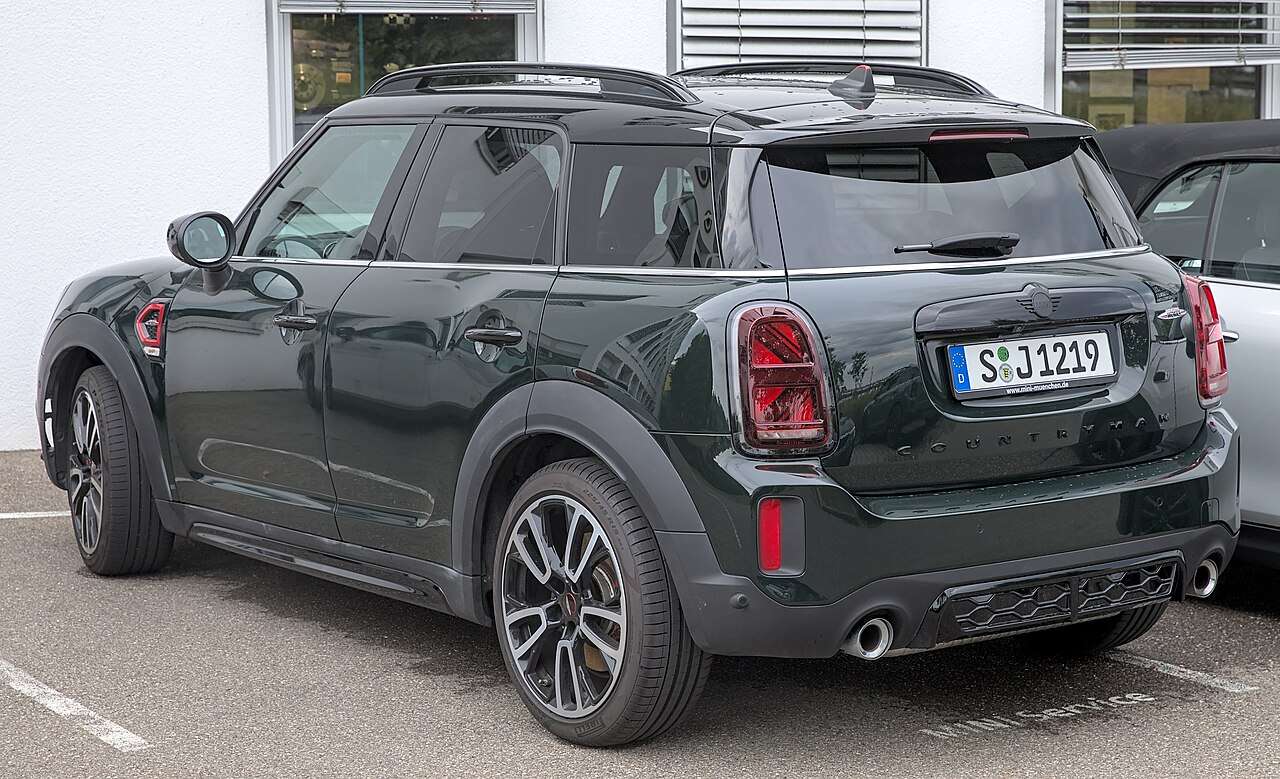
Suspension, steering, brakes and wheels
Check wheels for inner-rim damage as well as visible kerbing. Larger wheels can look straight from outside while being bent or cracked on the inner barrel. A steering vibration at speed may involve tyre damage, wheel balance, alignment or suspension wear. Price a diagnosis rather than treating every vibration as an inexpensive balancing job.
Drive a rough but safe road at normal speeds. Listen for knocks over small sharp bumps and feel whether the car tracks cleanly without constant correction. Inspect suspension bushes, links, spring condition and damper leakage on a lift. If adaptive dampers are fitted, check their functions and fault memory; do not assume all JCWs have identical suspension.
Examine brake-disc lips, corrosion and uneven pad wear. The high-output car’s braking package differs from the earlier version, so order by VIN and measured hardware. A generic F60 brake price is not sufficient evidence that a kit fits a 306 JCW. Ask a workshop to identify the discs, pads and sensors before committing to a fitted price.
During a safe brake test, the car should slow progressively without pronounced steering pull, repeated pedal pulsation or grinding. Parking-induced surface rust can clear, whereas heavy pitting and a poor contact pattern may require replacement. Check the parking brake and its warning messages too. A recent MOT pass does not mean the consumables have plenty of life remaining.
Cabin, electronics and everyday usability
Work through every switch rather than admiring the specification. Test seat adjustment and heating, air conditioning at both sides, windows, mirrors, locks, parking aids, cruise functions, audio and phone connection. Bring your own phone and cable. A seller’s paired device proves less than making your own call and checking audio navigation prompts.
Look for seat-bolster damage, sagging trim, heavy pedal wear and rattling luggage-area fittings. Condition should broadly match mileage and usage. A worn family interior is negotiable; electrical faults accompanied by damp carpets need investigation. Check both keys and establish the cost of supplying and coding a missing replacement before agreeing a price.
Try the rear seats with your actual passengers and child seats. Check access, seatbelt reach and the boot with the seats in the position you would use. Sliding or folding arrangements and storage fittings should operate smoothly. Load-space numbers do not reveal whether a particular buggy, dog crate or suitcase fits under the parcel shelf.
If towing or carrying bikes matters, verify the individual car’s approved capacities, towbar installation and electrical operation. Do not infer a towing limit from another Countryman engine or an overseas brochure. Roof equipment needs checking against the appropriate handbook too. Buying the right hardware is cheaper than discovering your intended use is incompatible after purchase.

Maintenance: UK parts, labour and fitted costs
The following are budget references, not a quote for your registration. The Mini & BMW Specialist’s F60 JCW menu publishes VAT-inclusive parts-and-labour totals. It does not split labour from parts, so we have not invented a labour breakdown. Its front brake menu must be confirmed against the 231/306 hardware before booking. Current parts listings are separate examples and cannot simply be subtracted from a workshop total.
| Job | Parts reference | Fitted reference / what to check |
|---|---|---|
| Oil and filter | Compare suitable service kits; a broadly listed 2.0 F60 Bosch/filter-and-oil kit was £140.63. | Specialist Bronze service £198 including parts, labour and VAT. Confirm oil approval and exact contents. |
| Oil, filters, plugs and check | Find VIN-correct spark plugs; verify plug specification for output and any tuning. | Published Platinum service £450. Labour is included, not separately itemised. |
| Front brakes | Compare JCW front discs and pads; verify diameter, thickness and version. | Menu £250 for pads/sensor or £420 including discs. Obtain explicit confirmation for the fitted brakes, especially the 306. |
| Rear brakes | Compare rear brake kits; an explicitly advertised 306hp rear disc/pad kit was £117.95. | Menu £220 pads/sensor or £380 with discs; ask for a VIN-specific quote. |
| Brake fluid | Correct fluid and bleed procedure required. | Published £100 fitted. Establish when it was last done. |
| Alternator | Check alternator listings; broad aftermarket listings around £150–£160 and a used unit at £36 show why condition and part number matter. | No verified JCW-specific fitted menu obtained. Request parts, access time, VAT and diagnosis separately; a battery or charging-control fault can mimic alternator failure. |
| Timing chain diagnosis | Compare B48 timing-chain components only after diagnosis and engine-code confirmation. | No routine timing-belt service. Obtain a written quote if symptoms justify investigation. |
| Diagnostic inspection | No speculative parts replacement required first. | Published diagnostic check £80; Major Inspection £145 including a diagnostic report. Confirm pre-purchase scope and road test. |
Disclosure: eBay links are affiliate links using campaign 5339238906. We may earn a commission from qualifying purchases. Search results are not fitment guarantees; confirm VIN, original part number, supplier, specification and returns terms.
For ALL4 oils, automatic transmission servicing, cooling repairs and adaptive dampers, obtain an itemised quote from a workshop familiar with the F60. Ask whether fluids, filters or seals, diagnostic checks, service-record updates and VAT are included. There is no benefit in supplying a bargain part that the workshop cannot warrant or that turns out to fit a different model.
Service scheduling should follow the individual car’s handbook and condition-based requirements, adjusted with professional advice for its actual usage. Repeated short trips, long periods standing and heavy use change the ownership picture. Prefer evidence of sensible preventative attention over an owner who treats the longest possible interval as a target.
Hidden ownership costs to budget before buying
Tyres and alignment: price a complete suitable set in the fitted size, including valves, fitting and disposal. A slightly cheaper car on worn mismatched tyres can lose its price advantage immediately. Investigate uneven wear before fitting replacements, or the new tyres may repeat the same pattern.
Insurance and modifications: obtain a registration-specific quote before paying a deposit. Disclose remaps, exhausts, wheels and suspension changes. Factory options and aftermarket changes should not be conflated. An insurer’s refusal or large premium can alter the purchase decision more than a modest fuel-economy difference.
Tax and original list price: check the government vehicle record and the current VED rules for that registration, including whether an additional expensive-car charge still applies. Used purchase price does not establish the original list-price treatment. Avoid relying on a seller’s copied annual-tax figure.
Fuel: calculate an annual budget from your mileage and realistic consumption, not the most favourable test-cycle number. As an illustration, 8,000 miles at 30mpg and £1.50 per litre costs about £1,818; at 25mpg it is roughly £2,182. These are assumptions for planning, not a consumption claim or a current fuel-price quote.
Deferred options: a panoramic roof, headlamp, adaptive damper or infotainment repair can be expensive compared with an ordinary service. Ask for a written estimate before negotiating over a fault. A warranty may exclude wear, diagnostics, leaks or pre-existing symptoms; read the claim limit and labour-rate cap.
First-year catch-up: combine inspection, servicing, tyres, brakes and small faults into one total, then leave an additional reserve. The right reserve depends on the inspected car. Spending your entire budget on the purchase price leaves no room for the very maintenance that makes a used JCW enjoyable.
Choosing between the 231 and 306 for your own use
Mostly urban family driving: try the earlier car before paying more for the 306. The lower purchase price can leave more room for tyres, servicing and insurance. Check how easy the fitted seats are to climb into, whether the suspension suits broken urban roads and how the gearbox behaves during parking. More engine output will not improve any of those things.
Longer journeys with passengers: assess the car at normal cruising speed with the audio off. Listen for tyre roar, wheel-bearing-type hum and wind noise around roof rails or seals. Then test the climate control, seat comfort and luggage arrangements. Noise that changes with road surface may be tyre-related; a persistent mechanical hum still needs investigation. A short drive on smooth roads can hide both ride discomfort and wear.
You specifically want the 306: buy the factory high-output package on its own merits. Verify the front differential, cooling specification, gearbox and correct brakes through the build details and inspection. Ask a workshop to quote the actual consumables before comparing it with a 231. An earlier car advertised with a remap and later-style trim should not be valued as the same product.
You want an earlier manual: establish that the car genuinely has the original transmission and inspect its clutch operation as carefully as its engine. A manual may suit your preferences, but rarity is not evidence of good condition. Compare the total cost of a car needing clutch work against an equivalent healthy example, using a written quote for the precise repair scope.
What a useful specialist inspection should answer
Ask for findings in four groups: immediate safety work, faults requiring diagnosis, maintenance due now and work likely within the next year. That makes the report useful for a buying decision. “Some suspension wear” is vague; an identified component, severity and estimate lets you judge the real cost. Ask the inspector whether any required part is a special-order item.
The report should also distinguish an engine complaint from transmission or mounting behaviour. For example, vibration when engaging drive could be interpreted very differently from a misfire that occurs under load. A scan, physical inspection and road test should support the conclusion together. Paying for a list of fault codes without interpretation may leave you no closer to a decision.
Finally, ask whether the car can be maintained within your annual budget with the fitted options. A sound 306 with expensive wheels and adaptive suspension may be excellent, but it still needs a different reserve from a simpler car. The best version is the one you can keep properly maintained, not simply the quickest example you can initially afford.
A practical viewing and test-drive checklist
- Before travelling: establish VIN, 231/306 output, gearbox, service evidence, MOT history, recall status, insurance and finance history.
- At arrival: confirm a cold engine, inspect body repairs and glass, compare all four tyres and check for dampness beneath the boot floor.
- Before driving: check safe fluid levels, warning lamps, keys, roof, climate control and every expensive option.
- During the drive: test gentle take-up, urban shifts, steering, rough-road noises, safe braking and progressive acceleration once warm.
- After the drive: check for leaks, hot-start problems, smells and fresh warning messages. Do not open a hot coolant system.
- On a lift: inspect engine and drivetrain leaks, mounts, boots, suspension, brakes, inner wheels and accident evidence.
- With diagnostics: scan before and after driving; ask what each relevant fault means and whether it returned.
- Before paying: collect an itemised repair estimate and agree what will actually be completed, with invoices, before handover.
Buy, investigate or walk away?
Buy: a correctly identified car with coherent history, a clean specialist inspection, sound tyres and brakes, and equipment that suits you. A high-mileage example with careful maintenance may be preferable to an apparently pristine car with gaps in its story.
Investigate: minor cosmetic damage, one missing key, an overdue routine service or a diagnosed repair with a clear written cost. These are negotiable only when the rest of the car checks out and the adjusted total remains sensible.
Walk away: unresolved identity or finance issues, refusal of an independent inspection, unexplained coolant loss, persistent drivetrain warnings, rough running dismissed without diagnosis or a seller who clears codes and discourages another scan. There are other Countrymans; you do not need to fund an unknown repair programme.
MINI Countryman JCW F60 FAQs
Is every 2019 Countryman JCW a 306hp car?
No. The power upgrade arrived during 2019, while the visual facelift followed separately. Confirm output and production specification by VIN. Registration year and bumper appearance are not sufficient.
Does it have a timing belt?
The 2.0 B48 uses a timing chain. It should not be sold a routine timing-belt replacement. Persistent noise or relevant faults need professional diagnosis rather than an assumed mileage-based kit purchase.
Is the later eight-speed gearbox a DSG?
No. The 306 uses an eight-speed Steptronic automatic, with a different operating and servicing context from a dual-clutch DSG. Identify the actual gearbox when requesting fluid work.
Is the 306 simply a remapped 231?
No. BMW’s technical release describes changes to engine hardware, cooling, transmission and traction equipment. A tuned earlier car is not interchangeable with a factory 306 for maintenance, insurance or valuation.
Can it be an everyday family car?
Yes, provided its ride, rear-seat access and luggage space suit your household. Test these with your own passengers and belongings. Budget for performance tyres, brakes and fuel rather than ordinary small-car costs.
Which would we choose?
For value, a well-kept standard 231 deserves consideration. For the full fast-family-car brief, seek a documented 306 and allow room for its upkeep. Condition and evidence come before colour, wheels or a long options list.
Sources and photograph credits
- BMW Group technical release: 2019 JCW powertrain, cooling, transmission and chassis changes.
- The Mini & BMW Specialist: F60 JCW servicing menu, including parts, labour and VAT.
- Cazoo UK JCW listings: individual asking-price examples; generations are mixed.
- Government MOT history and vehicle recall checks.
Inspection recommendations are our buying guidance, not a claim that every car develops each fault. Prices and listings change; obtain a current quote for the individual vehicle.
Featured photograph: Ethan Llamas, Wikimedia Commons, CC BY-SA 4.0; resized. Other photographs are credited beneath each image.
MINI Countryman JCW F60 for sale on eBay UK

See more MINI Countryman JCW F60 cars on eBay UK
Love cars you don’t see every day?
Get forgotten cars, surprising motoring stories and the most interesting finds from Unusual Cars by email.
Free to join. No spam. Unsubscribe whenever you like. See our privacy policy.