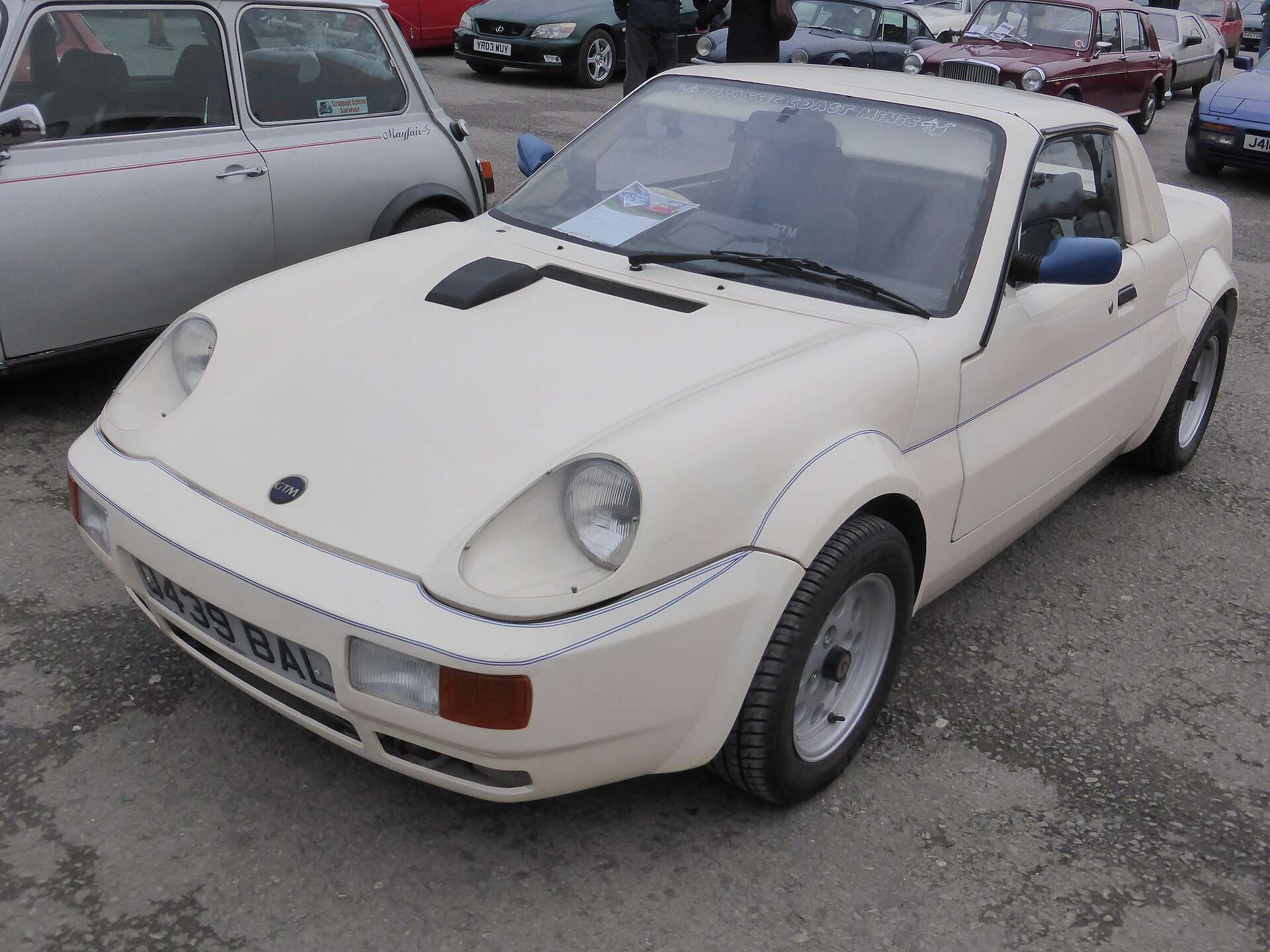
The GTM Rossa takes familiar small-car mechanical parts and puts them into a compact mid-engined sports car. Its appeal is the combination of unusual packaging and approachable donor engineering. Its biggest buying trap is assuming that every Rossa has the same structure, engine and suspension because the body shapes look related.

Mk1, Mk2 and K3 explained
The original Rossa appeared in 1986, using Mini components and a GRP monocoque. The 1989 Mk2 retained the basic mechanical concept but changed the front and rear body styling. The Rossa K3 followed in 1993 with Rover Metro subframes, K-Series power and a five-speed gearbox. The K3 therefore deserves separate mechanical consideration rather than being treated as a cosmetic facelift.
First registration can be years later than the purchase of a kit. Ask for the chassis identification, build invoices and photographs. Identify the engine and suspension directly. Older cars may have acquired later panels, different engines or owner-made modifications, so appearance is only a starting point.
Assessing a Mini-based Rossa
On an A-Series installation, inspect for oil leaks, smoke and evidence of poor maintenance. Listen to the gearbox in each ratio and during acceleration and overrun. Check clutch operation and the quality of the gear linkage. Ask what engine work has been done and whether the invoices identify the unit actually in the car.
Because donor components have been relocated into a different body, pay attention to access and installation. Inspect hoses, fuel lines and wiring for chafing or heat exposure. Establish how the engine bay is ventilated and whether cooling remains stable after a drive. Parts familiarity does not remove the need to assess the individual builder’s work.
Assessing a K3
For a K-Series K3, cooling history and belt servicing deserve early attention. Request an explanation of any previous overheating or cylinder-head repairs. Start from cold, observe the warm-up and check the car again when fully hot. Investigate stains, coolant loss, contaminated fluids or a temperature gauge that behaves inconsistently.
Identify the actual donor suspension and any conversions before asking a garage to order components. Inspect the subframes, their attachments and surrounding structure. Ask how ride height and alignment were last checked. A car sitting unevenly should be examined rather than assumed to need only a quick adjustment.
Body, roof and underlying structure
Inspect the tub and its mounting areas carefully. Cracks around hinges, catches or suspension connections can have very different causes; get a composite specialist’s opinion where the history is unclear. Look underneath as well as around the glossy outer panels. Steel subframes, brackets and fasteners can corrode even when the body itself cannot rust.
Check removable roof equipment, door seals, glazing and window operation. Water marks, a persistent musty smell or saturated trim suggest storage or sealing issues. Verify that all model-specific trim and roof parts are present before taking on a project. A cheap car with missing glass or incomplete panels may be much harder to finish than one needing ordinary donor-car servicing.
Driving and ownership
Try the cockpit before arranging a long journey to collect the car. Confirm seat adjustment, pedal clearance and your view through the screen. A short drive should reveal whether the controls work together: the clutch should be usable, the gears selectable and the brakes consistent. Check for steering pull and abnormal noises over bumps.
Build your budget around the actual condition rather than a generic Rossa valuation. Allow for tyres, recommissioning and professional assessment of an unknown build. The best example is one whose specification can be explained and maintained. An owner’s folder of part numbers and photographs may prove more useful than a long list of enthusiastic claims.
Two donor philosophies beneath related styling
The Mini-based Rossa and the K3 share the idea of putting a compact transverse powertrain behind the occupants, but the donor change is fundamental. GTM’s history describes the K3 as using two Rover Metro front subframes attached to a new composite monocoque, with the engine and five-speed gearbox in the rear assembly. Its body resembled the Mk2, yet the mouldings were new. Buying K3 parts for an earlier Rossa simply because the shape looks similar is therefore an expensive way to learn the difference.
The owners club’s Mk1/Mk2 specification lists A-Series power, a conventional four-speed gearbox, Mini rubber-cone suspension and a fibreglass monocoque incorporating marine-plywood reinforcement. Its K3 page instead lists K-Series power and Metro Hydragas suspension. These are reference descriptions, not a substitute for checking a modified car. They give you the first questions to ask: which tub, which subframes, which engine and which suspension system are actually present?
Make a short specification sheet before travelling. Ask for photographs of the engine bay, subframes, suspension and identification details, along with the roof equipment. A seller who cannot identify a component may still have a good car, but you need to resolve the uncertainty before ordering parts or assigning a value. Treat claims such as “all Mini underneath” or “MGF converted” as a starting point for investigation, not a complete engineering description.
Inspecting the early Rossa’s composite structure
The early Rossa’s plywood reinforcement means that a rust-free-looking body is not the end of the structural inspection. Ask how the car has been stored and whether water has entered through the roof, doors or fixings. Examine accessible reinforced areas and mounting surroundings for damage, movement or previous repair. Have doubtful areas assessed by someone who understands this construction rather than assuming a cosmetic fibreglass repair will address the whole problem.
Look for evidence of repeated dampness inside the car: staining beneath removable trim, a persistent smell and repairs around penetrations. These observations do not prove that every reinforced area has deteriorated, but they are reasons to inspect further. Do not drill exploratory holes or strip bonded material at a viewing. Agree appropriate access and a professional assessment where the condition cannot otherwise be established.
Ask for photographs of structural work before it was covered. A restoration file should explain the original damage, how it was assessed and the repair method. A seller saying that the floor was “made stronger” does not answer those questions. The relationship between reinforcement, laminate and the attached mechanical assemblies matters more than a description of how much new material was added.
Consider body and mechanical access together. If repairs or modifications have made it difficult to reach a mounting, hose or service item, future maintenance becomes more expensive. A tidy exterior should be accompanied by an understandable installation. The most useful inspection is one that explains both current condition and how the car can be kept sound.

Subframes: familiar parts with unfamiliar surroundings
A steel subframe can corrode while the surrounding composite remains attractive. Inspect both assemblies, their mounting points and any repairs, including areas that are awkward to see with the car on the ground. Ask whether the subframes were replaced, repaired or merely cleaned during a rebuild. Fresh paint is useful protection after proper preparation, but it is not evidence of the metal’s condition beneath it.
Check the interface with the tub as well as the subframe itself. Sound donor metal does not resolve damage around its attachments, and a healthy tub does not make a corroded subframe acceptable. Have the complete load path assessed where a car has suffered an impact or an uncertain repair. The aim is to understand how the assemblies are secured, not simply to confirm that all the bolts appear to be present.
Record the parts fitted to each end separately. A front-wheel-drive donor assembly installed behind the occupants may involve changes to steering-related components and controls. Those details need appropriate inspection and documentation. Do not assume a donor workshop diagram describes every part of the finished Rossa, especially on a car that has been modified by several owners.
Enjoy cars you don’t see every day?
Get unusual car stories, kit-car guides and interesting finds from Unusual Cars by email.
Free to join. Unsubscribe whenever you like. Read our privacy policy.
Mini-based engines and gearboxes: buying for condition
An A-Series Rossa offers the attraction of widely understood mechanical parts in an unusual package. Begin by identifying the engine capacity and what has been changed internally. A seller may quote a rebore size, a modified cylinder head or a tuning company’s name; ask for the corresponding invoice and establish whether the specification still matches it. An old build sheet does not account for later replacement parts.
Cold starting, idle quality and behaviour under modest load are useful observations. Check for smoke and leaks, and ask about oil consumption between services. Listen to the gearbox through its ratios and on gentle changes between acceleration and overrun. An unusual noise should be diagnosed by a knowledgeable specialist rather than written off as something every mid-engined Mini installation makes.
Test the gear linkage and clutch once the car is warm. The mechanical condition of the gearbox and the quality of its remote controls are separate issues. A vague or obstructive lever may have more than one possible cause, and a cheap-looking linkage repair should not be assumed until the installation is examined. Make sure reverse can be selected reliably and that the driving position allows full clutch travel.
Before commissioning a more powerful engine, assess what the existing car needs. Good cooling, sound mounts, correct fuelling and predictable controls often improve enjoyment more than an immediate capacity increase. Keep the original parts record when changes are made, and document which components now differ from the donor specification. That allows future servicing to follow the car as it exists rather than a generic Mini catalogue.
K3 Hydragas: ride height is only part of the story
Hydragas needs to be understood before a low or harsh-riding K3 is priced as an easy fix. Specialist Hydragas and Hydrolastic Service explains that the displacers gradually lose nitrogen with age. Simply adding fluid to restore height can leave a gas-depleted unit riding harshly. Low mileage or old unused stock does not avoid an ageing process that occurs over time.
Ask whether the units have been inspected or re-gassed and request the relevant invoices. Also establish whether the system retains its original arrangement or has been modified. A specialist should identify the fitted units and assess leaks, condition and the correct setup for the car. Do not copy pressure or ride-height figures from an unrelated Metro or MGF installation without checking their applicability.
If coil springs or other suspension components have replaced Hydragas, inspect that as a conversion. Ask who designed the mounts, what dampers and springs were selected and whether the geometry was checked afterwards. The presence of adjustable components does not itself establish a better setup. The quality of the engineering and the car’s predictable behaviour matter more than the number of adjustments available.
On the test drive, assess the ride over ordinary road imperfections at sensible speed. A car that crashes over small bumps or sits unevenly needs investigation. Keep suspension condition, tyre condition and alignment as separate questions until the causes are understood. Changing tyres or altering the visible ride height should not be used to disguise a mechanical problem.

K-Series and MGF conversions: follow the actual parts
The K3’s K-Series installation brings different servicing priorities from the A-Series cars. Establish the engine code, belt-maintenance history and any previous overheating. Ask why cylinder-head work was undertaken and what else was checked. Evidence that the cooling fault was identified and resolved is more useful than a bare statement that a replacement gasket has been fitted.
Owners have documented K3s converted with MGF components, including changes to subframes, brakes, gearbox controls and wiring. One owner account describes a conversion involving all of those systems. That demonstrates why an “MGF upgrade” is not just an engine change, but it does not define a standard kit of parts that every converted K3 will use. Inspect the individual installation and obtain its component list.
Ask about clutch operation, gear selection, ECU support and access to diagnostics where electronic management is fitted. If donor security components remain relevant, establish how the car is started and what replacement keys or controls would require. A working car with no documentation can become surprisingly difficult to repair when its electrical installation is unique and the original builder is no longer available.
Pay particular attention to the relationship between engine performance and the rest of the car. A higher-output engine should come with a credible account of the supporting work, not just a list of donor badges. Brakes, cooling, shafts, mounts and controls need to function together. A moderate, well-developed K3 may be a better road companion than an ambitious conversion still awaiting its final adjustments.
Cooling pipes, access and cabin heat
A mid-engined Rossa needs a cooling system suited to the finished layout. Ask the owner to explain the circuit, fill point and bleeding procedure, then inspect the accessible pipes and hoses. Look for secure support, abrasion protection and sensible routing away from hot or moving parts. Long pipe runs and hidden joints deserve attention because leaks may not leave an obvious puddle directly below the engine.
Observe temperatures through a complete warm-up, a normal drive and a hot restart. Ask whether the owner regularly tops up coolant and whether that has changed recently. A manual fan switch may be a deliberate additional control, but it should not be an unexplained workaround for an unreliable automatic system. Have inconsistent gauge readings checked rather than assuming either the instrument or the cooling system must be at fault.
Assess service access realistically. Identify how filters, plugs, belts where applicable, and fluid checks are reached. An engine installation can look neat while making routine jobs difficult. Ask whether panels can be removed without disturbing unrelated systems and whether the owner has a record of bespoke hoses or fabricated parts. Those details reduce the risk of an ordinary service turning into a prolonged identification exercise.
Roof equipment, glazing and restoration completeness
A Rossa advertised with hard and soft roof equipment should be viewed with those items fitted, not merely laid beside it. Check catches, seals, fabric condition and the completeness of the mounting hardware. Establish whether the roof can be stored or transported as you intend. Missing small fittings may require as much research as a larger mechanical component.
Check the windscreen and door glass carefully for damage and confirm a replacement route if needed. The club identifies a specialist spares contact for Mk1/Mk2 cars, while its K3 page says the kit is no longer available. Neither statement is a promise that every panel or piece of glazing is in stock. Make a specific enquiry about the generation and part before committing to an incomplete restoration.
For a dismantled project, inventory the car in systems: structure, subframes, drivetrain, suspension, brakes, electrical equipment, glazing and weather protection. Establish what has actually been trial-fitted together. Boxes of familiar donor parts can create the impression of completeness while the model-specific pieces that determine whether the car can be finished are absent.
Choosing the Rossa that suits your ownership
The early cars appeal to someone who enjoys Mini-derived mechanical character and wants to understand a compact, unusual special. A K3 offers a different donor generation and its own strengths and maintenance requirements. Neither is automatically the better purchase. Compare condition, completeness and the quality of the records before deciding which specification best matches your plans.
Budget for an initial service and inspection based on what is known, not on the optimism of a seller’s restoration estimate. Include tyres, suspension work, transport and outside labour where required. Resolve identity and major structural questions before spending on trim or engine upgrades. A car whose most important missing pieces have no confirmed supply route should be valued as a genuinely uncertain project.
After buying, create a parts file with photographs and numbers for both donor and bespoke components. Add invoices and setup records as work is completed. That turns the Rossa’s unusual packaging from an obstacle into something you can maintain confidently. The most rewarding example is one you can use and understand, rather than one whose attractive body conceals a fresh puzzle at every service.
Sources and further reading
- GTM Owners Club: Mk1/Mk2 specification and spares information
- GTM Owners Club: K3 specification
- Hydragas and Hydrolastic Service: ageing displacers and re-gassing
- Owner account of an individual MGF-based K3 conversion
More kit-car advice
Explore the Kit Cars hub, our donor-vehicle guide, used-car inspection checklist and UK registration and IVA guide. For an unfinished or substantially modified car, establish the applicable registration route before budgeting for completion.
Join the Unusual Cars email list for more unusual cars and specialist buying guides.
Kit cars for sale on eBay UK
Browse kit cars from different makers, from unfinished projects to road-going builds.

Browse more kit cars on eBay UK
Enjoy cars you don’t see every day?
Get unusual car stories, kit-car guides and interesting finds from Unusual Cars by email.
Free to join. Unsubscribe whenever you like. Read our privacy policy.