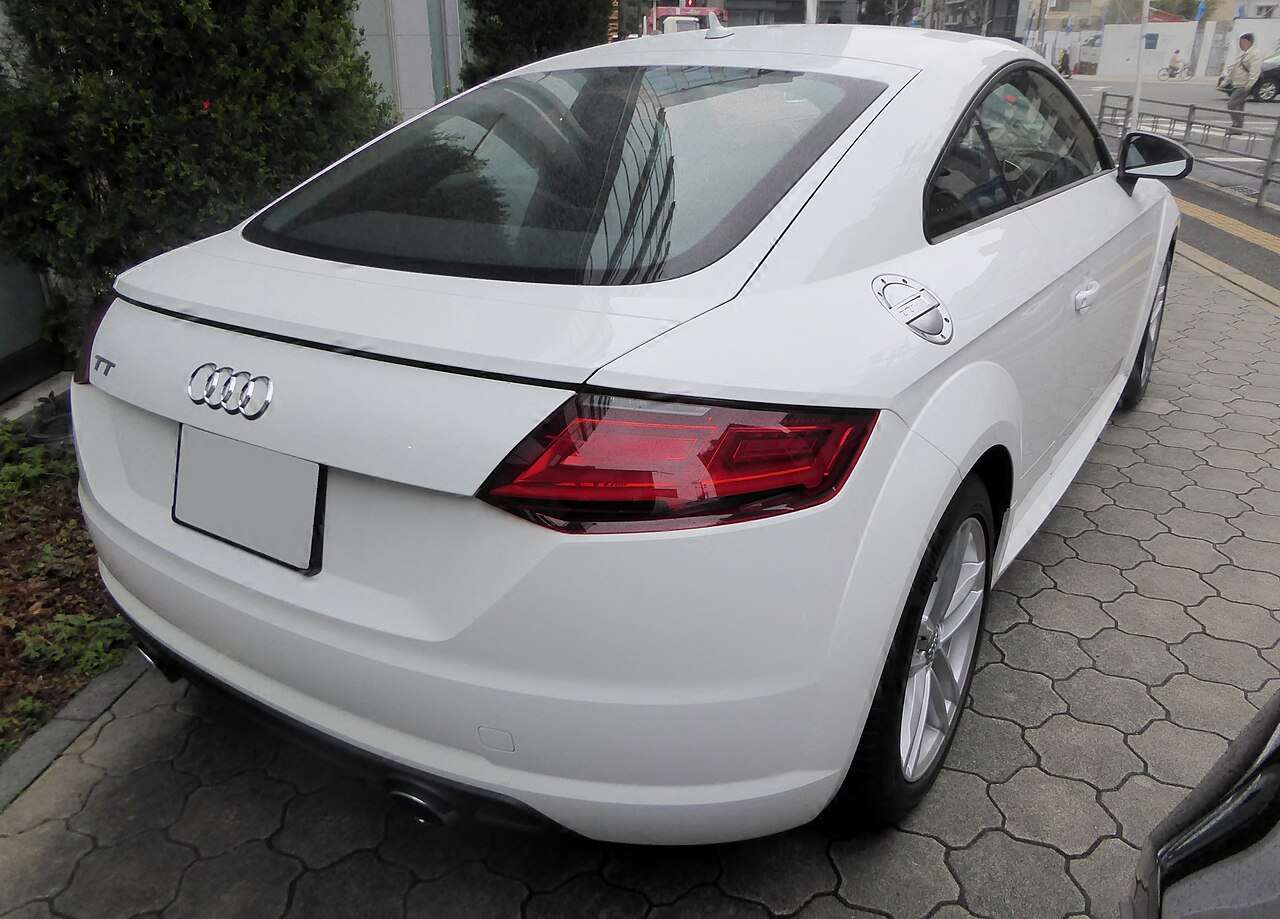
The Audi TT Mk3, also known as the 8S, offers a distinctive shape, a genuinely useful coupé hatch and a driver-focused cabin without requiring TTS or TT RS money. The ordinary petrol models deserve attention in their own right: a well-kept 1.8 TFSI or 2.0 TFSI can be an enjoyable everyday car, provided its condition and maintenance match the advert.
The difficult part is identifying exactly which TT you are buying. Early and facelift engines, manual and S tronic gearboxes, front-wheel drive and quattro, and Coupé and Roadster bodies all change the ownership picture. “S line automatic” is not a complete mechanical specification.
This guide covers non-S/RS Mk3 petrol TTs: the earlier 1.8 TFSI and 2.0 TFSI, and the later 40 TFSI and 45 TFSI. Diesel, TTS and TT RS versions have different requirements. For those performance models, see our TTS 8S guide and TT RS 8S guide.
Which Audi TT Mk3 would we buy?
Start with a standard, well-documented 2.0 TFSI Coupé on wheels and tyres suited to your roads. Choose the transmission and driven wheels you actually want, then buy on condition. A healthy front-wheel-drive manual is a better purchase than a neglected quattro S tronic bought for its specification alone.
The 1.8 TFSI makes sense when lower purchase cost matters more than outright acceleration. A later 40 TFSI offers another relatively accessible route into the facelift car. The higher-output 2.0 and 45 TFSI are attractive if you want more performance, while the Roadster suits buyers who value open-air driving enough to inspect and maintain its roof properly.
We would prioritise coherent invoices, stable coolant and oil levels, correct gearbox maintenance, suitable tyres and a clean specialist inspection. We would compromise on colour or an optional audio system before accepting unexplained coolant loss, gearbox warnings or a damp cabin. Keep enough of your budget for the first year, rather than spending everything on the purchase.
Engines, facelift and badges: identify the actual car
| Version | Buying appeal | What to establish |
|---|---|---|
| Earlier 1.8 TFSI, 180PS | Lower-cost entry to the petrol Mk3 | Build, transmission and maintenance requirements; do not copy Mk1 1.8T advice onto this engine. |
| Earlier 2.0 TFSI, 230PS | Strong all-round performance | Front-wheel drive or quattro, manual or S tronic, engine and gearbox codes. |
| Facelift 40 TFSI, 197PS | Later appearance and equipment without the highest output | It is a 2.0-litre engine, replacing the 1.8 in the facelift range. |
| Facelift 45 TFSI, 245PS | More performance, with specification varying through the model run | Actual drivetrain and gearbox, rather than assumptions based on the 45 badge. |
| S line or Black Edition | Styling, wheels, seats and equipment | Trim does not make the car a TTS or identify its complete mechanical specification. |
Audi’s UK facelift release confirms the replacement of the 180PS 1.8 with the 197PS 2.0, and the increase from 230PS to 245PS for the higher-output 2.0. It also records the introduction of petrol particulate filters on the updated engines. Registration year alone will not settle which car you have: stock can be registered after a specification change, and adverts can contain copied information.
Ask for the registration and VIN before travelling. Match them to the V5C and physical car, then obtain the engine, gearbox and build specification from reliable records. Check the actual options rather than treating a seller’s dropdown list as definitive. A car described as “fully loaded” may lack equipment that matters to you.
The virtual cockpit is central to the Mk3 cabin, but navigation, phone integration, audio and other features still need checking individually. Larger wheels and lower suspension may look attractive while worsening the ride on your roads. Drive the exact car and verify what is fitted, including any aftermarket changes.
Coupé or Roadster?
The Coupé is the more practical choice for luggage and occasional use of its small rear seats. Treat those seats as something to test, not a promise that adults or your child seats will fit comfortably. Put the driver’s seat in its normal position before assessing the space behind it.
The Roadster is a two-seat car with an additional mechanism to inspect. A working roof, dry cabin and sound seals matter more than a photograph taken with the top down. Consider where it will be parked and whether you can maintain the roof and drains appropriately. Both bodies should be tried with your usual bags before buying.
UK prices: compare like-for-like TTs
Broad TT searches mix three generations, petrol and diesel, ordinary cars and TTS/RS models. Their overall averages are unsuitable as a Mk3 petrol valuation. Current Cazoo examples checked during research included a 2018 1.8 manual Sport at £12,990 with 28,648 miles, a 2018 2.0 automatic Sport at £14,475 with 52,724 miles, and a 2021 2.0 automatic S line at £20,299 with 40,934 miles.
These are individual asking prices, not completed-sale values, independently inspected recommendations or a promise of availability. They illustrate why you must separate output, body, mileage, drivetrain, age and selling channel before deciding what represents value. Check the original advert and build details yourself.
Use a shortlist with columns for service dates, gearbox and quattro work, tyres, brakes, keys, roof condition and immediate repairs. A slightly dearer car with recent quality consumables and a convincing history can cost less overall than a cheap car needing several jobs at once. Do not value an unresolved symptom at the price of the cheapest vaguely related part online.
Special editions and desirable colours can attract premiums, but establish exactly what makes the car special and whether the equipment is original. A fixed spoiler, large wheels and badges can be retrofitted. For most ordinary buyers, a clean standard example with the right transmission is a stronger purchase than a questionable car carrying a fashionable description.
History, identity and recalls
Read the maintenance record in date and mileage order. Compare invoices with the public MOT history and ask a specialist to identify the schedule for the VIN. An electronic service entry does not automatically prove which oil, filters, plugs or transmission operations were included.
Ask specifically about oil top-ups, coolant loss, cooling-system repairs, gearbox work, quattro servicing and warning messages. Request invoices before travelling if possible. A seller who gives measurable answers and supporting paperwork is easier to assess than one who repeatedly says that a symptom is normal.
Check outstanding manufacturer campaigns through Audi using the VIN and the government recall service. Model-level lists and overseas recall discussions are not enough to establish an individual UK car’s status. Retain confirmation of completed work with the purchase paperwork.
Obtain a finance, theft, mileage and insurance-loss history check, and investigate physical evidence of repair even if the history report is clear. Not every accident is recorded. Verify the seller’s right to sell and resolve finance or identity discrepancies before paying a deposit.
For an import, establish its original market, registration history, equipment, instruments, lighting and insurance acceptability. A superficially identical engine badge does not prove every UK service procedure or part applies. Photographs in this guide illustrate the model; the inspected car must be checked on its own specification.
TFSI engine checks: start cold and test properly warm
Arrange a genuinely cold start. Check for residual warmth when you arrive and ask why the car is warm if you agreed otherwise. Watch the warning lamps, listen as the idle settles and look for persistent smoke or rough running. Direct injection has characteristic sounds, but persistent rattling or misfiring should be diagnosed rather than dismissed.
Check oil level using the handbook procedure. Ask how much the owner adds over a stated distance and look for supporting evidence. “A little between services” is less useful than an actual quantity. Repeated top-ups can involve external leaks, ventilation, turbocharging or internal condition; do not assume the cheapest possible explanation.
Inspect the correct oil approval, not just the viscosity written on a receipt. The relevant specification depends on the engine and service regime. A generic kit for every 2.0 TFSI is not proof of suitability. Long gaps, uncertain servicing and undocumented tuning increase the value of a specialist inspection.
On the road, wait until the engine is warm before progressively increasing load. It should respond cleanly without repeated hesitation, sudden power reduction or persistent smoke. A misfire under boost can have several causes. Replacing coils or plugs without understanding the fault may leave the real problem unresolved.
Cooling pump and thermostat housing
Inspect coolant only when safe and cold. Check level, staining, dampness and residue around accessible connections. Ask whether the car has needed topping up or had pump, thermostat or housing work. A clean engine cover can hide leaks lower down, making an undertray-off inspection useful.
Have any coolant loss pressure-tested and traced before buying. Pump, thermostat, housing, seals and related components may be sold in different combinations. An invoice should explain which assembly was fitted, why and whether the system was checked afterwards. A second leak after an undocumented repair needs a fresh diagnosis.
Monitor temperature behaviour and heater output during the drive. Stop if the car reports overheating or a serious coolant warning, and never open a hot pressurised system. A normal temperature display during a short run is not proof that an intermittent leak is harmless. Buying an overheated engine is a different risk from buying a diagnosed external leak.
Timing chain, breathing and ignition
The petrol engines covered here use timing chains; do not apply a TDI cambelt schedule or an older TT engine’s belt-kit listing to them. Persistent timing-related noise or fault codes require a specialist assessment, including relevant mechanical checks. A scan description alone does not identify every worn component.
Inspect the separate auxiliary belt, tensioners and pulleys where accessible. A receipt saying “belt done” is not a timing-drive history. Charging noises, a whistle, rough idle or unusual crankcase behaviour can justify checking ventilation, accessories and air leaks, but these symptoms can overlap. Avoid improvised demonstrations presented as definitive engine tests.
Ask for a full-system scan before and after the road test, retaining the report. Recently cleared faults reduce what a clean scan tells you. Pending codes, repeated misfire records and warning suppression deserve explanation. The best inspection connects symptoms, diagnostic evidence and physical checks rather than selling a guessed replacement part.
Manual, S tronic and quattro: separate the maintenance jobs
On a manual, check clutch take-up, gear selection and operation under normal load. It should not repeatedly crunch, jump out of gear or slip. Investigate vibration and rattles rather than assuming every noise comes from the flywheel. Ask for a quote that states whether the clutch, flywheel, release components and associated labour are included.
“S tronic” is a marketing description rather than a complete gearbox identification. The range changed through production, so obtain the fitted gearbox code before applying an interval or ordering a service kit. Do not assume all six- or seven-speed units use the same procedure, fluid or filter arrangement.
Test drive and reverse engagement, gentle parking manoeuvres, urban progression, normal changes and warm operation. Repeat low-speed checks after traffic. Persistent shudder, delayed engagement, a heavy impact or warnings require diagnosis. A fluid change is maintenance and may not repair clutch, mechatronic or mechanical wear.
A credible transmission invoice should name the gearbox, fluid and operations. Ask about temperature-controlled filling and any required checks. An adaptation reset, software update and mechanical repair are different jobs. A seller should be able to explain what was actually done rather than describing all three as “serviced”.
Quattro and the rear drivetrain
Check that the car actually has quattro and that the system works, rather than relying on a badge or lack of warning lamps. A specialist can assess relevant fault memory and operation safely. Inspect for drivetrain leaks and damaged boots, and investigate unusual noises or binding during gentle manoeuvres.
Treat the coupling service, gearbox service and rear final-drive work as separate items. Ask whether the relevant pump gauze or strainer was inspected or cleaned where appropriate. An invoice for one fluid does not establish that all drivetrain maintenance is current. Follow the VIN-specific requirements and discuss additional preventative work with the workshop.
Compare all four tyres by exact model, specification and wear. Suitable tyres with compatible rolling characteristics help both handling and drivetrain assessment. A car on mixed bargain tyres may feel poor for reasons unrelated to its original chassis design. Investigate uneven wear and wheel damage before simply fitting another set.
For most buyers, quattro should be chosen because it suits their use, not because every front-wheel-drive TT is presumed inferior. A good manual front-driver can be simpler to budget for. The correct comparison is the total condition and maintenance of the actual cars available.
Love cars you don’t see every day?
Get forgotten cars, surprising motoring stories and the most interesting finds from Unusual Cars by email.
Free to join. No spam. Unsubscribe whenever you like. See our privacy policy.
Suspension, wheels and brakes
Drive over the sort of surface you use daily. Check for knocks, steering vibration, pulling and repeated tyre noise. Large wheels and low suspension can dominate the ride, so compare similar specifications before deciding what is acceptable. A sporty setup should still feel controlled and mechanically sound.
Inspect springs, dampers, bushes, links and joints on a lift. Establish whether any adaptive damping is fitted and whether it functions properly. Do not automatically apply TTS equipment descriptions to an ordinary TT. If the suspension has been changed, check quality, alignment, insurance disclosure and the cost of returning to standard.
Look at inner wheel barrels as well as visible kerbing. Cracks, welds or distortion need a different assessment from cosmetic scuffs. Check inner tyre shoulders, sidewalls, age and load/speed ratings. A steering wheel that sits off-centre or a car that wanders needs diagnosis before alignment is treated as the complete solution.
Inspect both faces of the discs and remaining pad thickness. Brake size depends on the actual specification; wheel size and S line trim are not enough to order parts. During a safe test, braking should be progressive and straight, without grinding or pronounced pulsation. Test the parking-brake functions and ask how previous rear brake work was carried out.
Roadster roof: test the complete sequence
Operate the roof according to the handbook while stationary in a suitable place. Watch the full opening and closing sequence, listen for hesitation or unusual noise and verify that the windows and latches behave correctly. Do not force a reluctant mechanism or accept an incomplete demonstration as normal.
Inspect fabric, stitching, seals and the rear-window area for damage or separation. Look for staining around the headlining, behind the seats and in the luggage area. Feel beneath mats where accessible. Water can affect wiring and modules beyond the visible damp patch, so drying carpets is not a complete repair.
Ask about drainage maintenance and previous water ingress. A workshop familiar with the roof should identify the actual source rather than immediately ordering a motor or seal. Roof-related diagnosis, mechanical parts and damaged electronics can be separate costs. Obtain a written repair scope before negotiating over a fault.
On the road, listen for abnormal wind noise and check heater and climate performance. Examine the roof stowage area for objects that could obstruct movement. If an accessory such as a wind deflector is important to you, establish that it is present and undamaged before handover.

Bodywork, virtual cockpit and everyday equipment
Inspect paint and panel gaps in daylight, especially bumper corners, sill edges and the hatch or boot aperture. Look for overspray, disturbed fasteners and inconsistent trim. The TT’s body construction makes a knowledgeable accident-repair inspection useful when the evidence is unclear. A history report cannot replace that assessment.
Test every door, window and lock, and listen for wind noise around the seals. Check the boot floor for dampness and verify that the hatch closes cleanly. Missing load covers, trim and tools can add expense. Put your actual luggage in the car rather than relying on brochure figures.
Use the virtual cockpit and infotainment as you would on a normal journey. Check navigation if fitted, audio, microphone, controls and your own phone connection. Establish exactly which connectivity functions are present and supported. A digital instrument display does not mean every modern phone feature is included.
Try the climate controls integrated into the cabin’s distinctive vent layout, seat adjustment and heating, parking sensors and any camera. Check both keys and ask about replacement or coding costs if one is missing. A premium specification only adds value when it works and suits your use.
A weak battery can contribute to electrical symptoms, but it is not a diagnosis of every warning. Check battery health, charging output and wiring before buying an alternator. Ask whether a replacement battery required adaptation and whether it was completed. Aftermarket audio or screen work deserves inspection for wiring quality and battery drain.

Modified TTs: decide what evidence is enough
Ask whether engine or gearbox software has ever been changed, even if the car is now described as standard. Inspect intake, exhaust, suspension, wheel spacers and brakes. A dyno printout is not a durability assessment, and returning visible parts to standard does not establish the car’s previous usage.
Check invoices, installer details, insurance acceptance and the reason for each change. Removed emissions hardware, suppressed warning lights and vague claims about “safe power” should not add value. For an everyday purchase, a standard car with clear records is the simplest baseline.
If you want a modified car, have a specialist assess it as a package. Consider cooling, tyres, braking and transmission loads rather than just peak output. Price restoration of poor work before making an offer. A bargain that immediately needs standard parts and diagnostic time may be poor value.
TT Mk3 maintenance costs: parts, labour and fitted references
These are research anchors, not quotes for your registration. Audi Specialists’ published S3/TT menu combines models and generations; confirm 8S petrol applicability, VAT, parts brands and included operations. VAG Manchester publishes gearbox-specific prices. Neither menu provides a labour split for every job, so we have not invented one or subtracted unrelated eBay parts from a fitted total.
| Job | Parts-only evidence | Published fitted reference / scope |
|---|---|---|
| Oil and filter | Compare 8S petrol service kits; a listed oil-service kit was £91.78. Fuller oil/filter/plug packages were £146.99–£164.97. | S3/TT menu: 10K service £241; basic 20K inspection £344. Confirm the actual scheduled items and 8S application. |
| Spark plugs | Find the correct petrol plugs by engine code. | Published four-cylinder plug fitting reference £135. Confirm specification and inclusion in any larger service. |
| Water pump / thermostat | Compare pump and thermostat assemblies; a new genuine-labelled 8S listing was £329.99 before coupon. Used assemblies around £149–£150 are not equivalent. | S3/TT petrol water-pump menu £778, with regulator if specified. Ask exactly which assembly, seals and coolant are included. |
| S tronic service | Research gearbox-code-correct service kits. | VAG Manchester: DQ250 £265; DQ381 £260. Identify the fitted unit and confirm scope, VAT and the manufacturer schedule. |
| Quattro coupling | Compare coupling service parts where applicable. | S3/TT menu £183, with later pump gauze cleaning noted. Confirm correct work for the VIN. |
| Front / rear discs and pads | Check brake parts by specification. | S3/TT menu: front £394, rear £264. Confirm the actual disc sizes and included hardware. |
| Brake fluid | Correct fluid and procedure required. | Published menu £58 fitted; confirm current price and requirements. |
| Alternator | Compare 8S alternators; a used 8S-labelled 140A unit was £78.70 plus delivery. | Diagnosis and fitting additional. Check original number, output, condition and exchange terms; older-generation listings appear in the same search. |
| Timing chain diagnosis | Research timing-chain components only after diagnosis. | No routine petrol cambelt job. Obtain an itemised quote for a confirmed fault. |
Affiliate disclosure: eBay links use campaign 5339238906. We may earn commission from qualifying purchases. Search results do not guarantee fitment or quality; confirm VIN, engine, gearbox and original part numbers, supplier and returns terms.
For labour budgeting, ask the workshop for its rate, estimated or booked time, VAT treatment and diagnostic allowance. Its service menu also lists a cruise-control example of two hours at £172 plus kit and VAT, but that is not a book-time promise for an unrelated TT repair. A written quote for the actual job is the meaningful comparison.
Follow the service requirements for the individual build, with professional advice for severe or unusual use. The workshop’s generic interval recommendation does not automatically override Audi’s schedule. Retain invoices that identify fluids and operations, especially for separate drivetrain jobs.
Hidden ownership costs
Several jobs together: engine service, plugs, S tronic, quattro, tyres and brakes are separate lines. A recently stamped service book may leave several of them due. Compare the first-year total for each car and retain an additional reserve.
Wheels and tyres: price suitable replacements in the fitted size, including fitting and any necessary alignment. Inspect inner rims first. New tyres will not fix a damaged wheel or worn suspension, and unusually large wheels may leave you with a ride you dislike.
Roadster equipment: a roof repair, leak investigation or missing accessory can change the bargain calculation. Ask about parts availability and diagnosis as well as fitting. A roof that has been permanently disabled should not be valued as a functioning desirable option.
Insurance and tax: quote the exact registration and disclose modifications. Check current VED and any relevant original list-price treatment through official records. A seller’s copied annual-tax figure or another TT’s premium is not a reliable budget.
Fuel: calculate from your own mileage and a realistic assumption. For illustration, 8,000 miles at 35mpg and £1.50 per litre is about £1,559; at 30mpg it is around £1,818. These are planning assumptions, not a consumption guarantee or current fuel-price quote.
Warranty limits and downtime: check exclusions for wear, leaks, diagnosis, software and pre-existing symptoms. Labour-rate caps and claim limits matter. If the TT is your only transport, allow for workshop time and alternative travel during a complex diagnosis.
Viewing checklist: before, during and after the drive
- Confirm Mk3 petrol identity, output, body, gearbox and driven wheels.
- Check service invoices, MOT chronology, recall status, finance and ownership.
- Arrange a cold start; inspect safe fluid levels, leaks, tyres, wheels and body repairs.
- Test every display, control, key, seat function, window and parking aid.
- On a Roadster, complete the roof sequence and check carefully for water ingress.
- Drive urban and open roads safely, repeating transmission checks when warm.
- Inspect underneath and scan relevant modules before and after the drive.
- Convert confirmed defects into itemised fitted quotes and retain a reserve before paying.
Buy, investigate or walk away?
Buy a correctly identified, coherently maintained car that passes a specialist inspection and suits your use. Investigate a defined cosmetic or maintenance issue when the seller permits proper testing and the full cost is known. Walk away from identity problems, refusal of inspection, repeated coolant loss, serious transmission symptoms or faults that have merely been cleared.
Choosing between two TTs: a useful comparison sheet
Write down the actual engine, transmission, driven wheels and body style for each car before comparing their prices. Then add the wheel size, suspension specification, important options and the next maintenance work. This exposes differences that “S line automatic” conceals. A front-wheel-drive manual Coupé and a quattro S tronic Roadster can both be attractive TTs while requiring different budgets and checks.
More power or a better-maintained car?
For a road car, a smaller engine with complete records can be the more satisfying purchase than a more powerful version needing immediate catch-up work. Drive the engine you are considering rather than assuming the badge below your first choice will feel inadequate. Assess response on the roads you use, seat comfort, noise and visibility. Do not let a short burst of acceleration distract from a poor shift or a warning message.
The facelift’s 40 TFSI designation can be especially confusing because it replaced the earlier 1.8 offering with a 2.0-litre engine. Audi’s launch description gives it 197 PS, while the 45 TFSI produces 245 PS. Compare their actual drivetrain and equipment rather than interpreting the numbers as engine capacities. Check the precise production specification before paying a premium for a particular combination.
Coupé practicality or Roadster enjoyment?
Load the Coupé through its hatch and check whether your regular bags fit with the seats in the positions you need. Its rear seats are occasional accommodation rather than a substitute for testing passenger space. In the Roadster, try the luggage you normally take on a weekend away and check access with the roof in each position permitted by the handbook. These are different practical compromises, not simply two roof styles at the same price.
For year-round use, compare tyre condition, weather sealing, visibility and the actual drivetrain. Quattro can improve traction, but it does not replace suitable tyres or remove the additional service items. If two cars are close in price, use measured brake and tyre wear, roof condition and overdue drivetrain work to decide which is better value. These are costs you will pay; a desirable colour is a preference you can choose to pay for.
Audi TT Mk3 buying questions
Is the 40 TFSI a 1.8-litre engine?
No. In the facelift range it is a 197PS 2.0-litre, replacing the earlier 180PS 1.8. Verify build details rather than inferring capacity from the badge.
Does every S line have quattro?
No. S line is a trim designation. Establish the actual drivetrain and transmission separately.
Does a petrol Mk3 need a cambelt service?
The petrol engines covered here use timing chains. Auxiliary belts are separate, and TDI or older-generation belt advice should not be applied to them.
Will a service cure an S tronic shudder?
Not necessarily. Diagnose the symptom before assuming fresh fluid will repair worn or faulty hardware.
Which body is best for daily use?
The Coupé is our practical starting point. Choose the Roadster when open-air driving matters to you and the roof, seals and cabin pass inspection.
Sources and image credits
- Audi UK facelift release — engine outputs, naming, equipment and drivetrain changes.
- Audi UK original Mk3 archive — generation context.
- Audi Specialists service menu — broad S3/TT fitted references; confirm exact application.
- VAG Manchester gearbox menu — gearbox-specific servicing prices.
- Cazoo TT listings — individual asking-price examples; broad results mix generations.
Inspection recommendations are editorial guidance, not measured failure rates or a claim that every car develops each fault. Featured photo: © M 93 / Wikimedia Commons, CC BY-SA 3.0 (DE); resized. Supporting photos are credited individually.
Audi TT Mk3 (8S) TFSI for sale on eBay UK

See more Audi TT Mk3 (8S) TFSI cars on eBay UK
Love cars you don’t see every day?
Get forgotten cars, surprising motoring stories and the most interesting finds from Unusual Cars by email.
Free to join. No spam. Unsubscribe whenever you like. See our privacy policy.