Browse all Citroën OBD2 and diagnostic scanner guides
A diesel Citroën Dispatch with an engine warning, an AdBlue countdown or a gearbox fault needs more than a scanner advertised vaguely as “suitable for Citroën”. The third-generation van has several control systems, and the capability needed depends on the exact engine, transmission and fault.
For the 2016-generation Dispatch, confirm commercial-van coverage first, then the individual system and procedure. Generic OBD2 can be useful for emissions-related engine information. Detailed SCR, DPF, gearbox and body-system diagnosis may require enhanced coverage, while programming and difficult faults often justify specialist equipment.
Which Dispatch does this cover?
This guide covers diesel versions of the third-generation Dispatch introduced in 2016, also known as Jumpy in some markets. It does not establish coverage for the earlier Dispatch, passenger SpaceTourer, electric ë-Dispatch or every later facelift and software revision. A shared appearance or platform does not guarantee identical diagnostic support.
Citroën’s launch information describes BlueHDi diesel engines, SCR using AdBlue and a particulate filter. It also lists several transmissions, including manual, ETG6 and EAT6 configurations in the launch range. Subsequent specifications changed, so identify the engine and gearbox actually fitted rather than extrapolating from that launch list.
Give the supplier the VIN, build year, engine code, gearbox and whether the vehicle is a panel van, crew van or conversion. Commercial-vehicle software support must be checked explicitly; a passenger-car compatibility statement is not sufficient. Conversions can add equipment that the base vehicle’s diagnostic system does not monitor.
Which diagnostic route makes sense?
| What you need | Suitable starting point | What to verify |
|---|---|---|
| Engine warning light and emissions data | A reputable generic OBD2/EOBD reader | Compatibility with the exact engine and year; supported live data |
| ABS, airbag, body or gearbox faults | A Citroën-capable multi-system scanner | The particular control unit must be supported, not merely the brand |
| Actuator tests or maintenance procedures | A tool with confirmed support for that individual operation | Vehicle conditions, software version and the correct repair procedure |
| ECU replacement, configuration or software work | A Citroën specialist with appropriate equipment and access | Required programming, security access and stable power supply |
What generic OBD2 can do on a BlueHDi van
A suitable generic reader can provide supported emissions-related codes, readiness information, freeze-frame records and engine live data. This is useful when recording an engine-management complaint before a workshop visit, or checking whether a known fault has returned after repair.
It is not a complete view of the van. A generic code may identify an emissions-system problem without providing the manufacturer-specific detail or tests needed to pinpoint it. An absence of generic codes does not prove that ABS, airbags, transmission or body systems are healthy.
For fleet or working-van use, prioritise an understandable saved report. Record the exact warning wording, mileage, operating conditions and how the van was being used. A cold-start issue, a fault under sustained load and a warning after prolonged idling can require different investigations even when the dashboard message looks similar.
AdBlue and SCR: a countdown is not a diagnosis
BlueHDi’s SCR system uses AdBlue to reduce nitrogen-oxide emissions. A low-fluid warning and a detected SCR malfunction are different situations. Follow the vehicle handbook for a genuine low-level condition; do not assume that adding fluid will resolve every emissions warning.
If a starting-prevention countdown appears, record it and arrange diagnosis before the remaining allowance runs out. Clearing codes is not a reliable way to remove the underlying fault or restore dependable operation. The useful questions concern the exact stored faults, available pressure and temperature information, dosing operation, sensor plausibility and the conditions under which the fault was detected.
Ask a scanner supplier whether it supports the required SCR data and tests on your engine. Reading an AdBlue-related code, commanding a component and completing a post-repair procedure are separate capabilities. Do not buy solely because a listing contains an “AdBlue reset” phrase.
Use a proper repair route. Deleting or disabling emissions equipment is not a diagnostic solution. Nor should you repeatedly erase evidence while the countdown continues. A specialist needs the original codes and conditions to avoid unnecessary parts replacement.
DPF diagnosis and regeneration
The DPF deals with particulate matter; SCR and AdBlue address a different emissions problem. The systems interact through engine management, but a fault in one is not automatically cured by a procedure for the other.
Useful enhanced data may include filter-related pressure, temperatures and calculated loading, depending on the ECU and tool. Interpret them under the correct conditions. An implausible pressure reading can involve sensing or pipework rather than only a blocked filter, and a calculated value is not a direct visual inspection.
Before considering a forced regeneration, identify why normal operation has not resolved the condition and check the manufacturer’s prerequisites. Engine faults, inappropriate oil level or other conditions may make the procedure unsuitable. Regeneration produces high exhaust temperatures and needs the specified environment and precautions.
A reset following filter replacement must correspond to work actually completed. It does not remove soot or ash from an old filter. If the tool refuses a routine, retain the reason and investigate; do not look for a way to force the ECU to accept unsafe conditions.
Know whether the gearbox is ETG or EAT
“Automatic” is not a sufficiently precise description for scanner selection. Launch-era documentation includes ETG6 and EAT6 arrangements, and later versions can differ again. An automated manual and a conventional automatic have different control and service requirements.
For poor shifts, refusal to select a gear or a transmission warning, obtain a scan of the gearbox ECU as well as the engine. Useful supported data may help distinguish a missing input, electrical problem or control issue from a mechanical fault, but a scan alone cannot assess every internal component.
Ask about the exact operation required after a repair. Clutch learning, adaptation, actuator tests and ECU programming are not interchangeable. Do not start an unsupported or speculative learning routine on a van that you rely on for work; establish the procedure and prerequisites first.
ABS, body systems and converted vans
ABS or stability-control warnings require access to their relevant ECU. Supported wheel-speed information may help direct testing, but a sensor-related code still needs physical investigation. Airbag faults require safe restraint-system procedures and should not be hidden with bypass devices.
Door locks, lighting, parking aids and other fitted equipment can require separate body-system coverage. If the van is a camper conversion or has aftermarket work equipment, distinguish the base vehicle’s electronics from auxiliary batteries, inverters and conversion wiring. A full vehicle scan may never see a fault in an independent habitation circuit.
Record any recent battery, towing-electrics or conversion work. Several communication faults can have a common electrical cause, so an organised scan and supply checks are preferable to replacing several control units based on their names in a report.
Is the iCarsoft FR V3.0 worth considering?
The iCarsoft FR V3.0 is a sensible candidate to investigate if you want a standalone scanner for a Citroën rather than just a basic engine-code reader. The manufacturer describes multi-system diagnosis, live data and active tests, but also states that individual functions vary with model, year and ECU configuration. That qualification matters more than a long list of reset icons.
Before buying, send the supplier your model, build year, engine, gearbox and the job you actually need to do. Ask for confirmation of both control-unit access and the specific function. Reading gearbox fault codes, displaying clutch information and performing clutch learning are three different capabilities. A reply saying only “works with Citroën” does not answer that question.
Check the exact product supplied, genuine-unit support, update arrangements and return terms. Our Amazon links open search results, so listings, sellers and alternative models can change. Compare the actual listing carefully; this guide is not a hands-on test of every scanner and vehicle combination.
A useful first scan, step by step
- Record the symptoms. Note the warning wording, whether the engine is cold or warm, recent repairs and whether several lights appeared together. Photograph the dashboard before changing anything.
- Check the basics. A weak 12-volt battery, poor connections or damaged wiring can complicate diagnosis. Address an obviously unstable supply before interpreting a screen full of communication faults.
- Connect carefully. Locate the 16-pin diagnostic socket using the handbook for the actual car. Connect with the ignition off, then follow the scanner’s ignition prompts. Do not force trim or bridge socket pins.
- Select the correct vehicle. Check any automatic identification. If it fails, use the supported manual selection for the correct model, engine and ECU; do not pick a similar car merely to make a connection.
- Save the evidence. Record full codes, descriptions, the reporting module, present/intermittent status and available freeze-frame data. Save the full scan before erasing anything.
- Test the suspected circuit. Use the relevant live data and a proper repair procedure. A code identifies a detected problem; it does not prove that the component named in its description has failed.
- Verify the repair. Clear only when appropriate, repeat the relevant checks and scan again after a safe drive if needed. Readiness monitors may need time to run after codes are erased.
Do not handle a scanner while driving. Record data securely or use a passenger where a road test is genuinely necessary. A red STOP warning, overheating, low oil pressure or unsafe braking needs immediate attention; a scanner cannot give permission to keep driving.
Dispatch scanner questions
Can I use a Peugeot Expert compatibility claim?
Shared engineering is helpful context, but it is not confirmation for your Dispatch. Ask the supplier to verify the Citroën commercial vehicle, build and fitted system directly.
Will a diesel scanner cover ë-Dispatch?
Do not assume so. High-voltage battery, charging and electric-drive diagnostics require their own confirmed coverage and appropriate competence. This guide is for diesel vans.
What is the best value for a working van?
A reliable tool with proven coverage and useful reports may save time for routine checks. For one complex SCR countdown, programming task or immobilised gearbox, a commercial-vehicle specialist can be the more effective purchase.
Our recommendation: confirm Dispatch/Jumpy commercial coverage, then verify the precise SCR, DPF or gearbox task. Buy the function you need, not a promise that every reset works on every van.
Sources and further reading
- Citroën manufacturer documentation: Dispatch Mk3 diesel equipment and operating information (official launch information; later specifications vary).
- iCarsoft FR V3.0 official product information and compatibility qualifications.
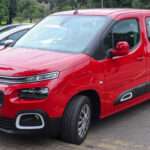
Featured photograph: Vauxford / Wikimedia Commons, CC BY-SA 4.0. Displayed to fit the page; the photograph may be cropped by the theme. Scanner banner: illustrative artwork.
Love cool cars? Join Unusual Cars Club FREE!
Get forgotten motoring finds, stories, helpful car content and more.
Free to join. No spam. Unsubscribe whenever you like. See our privacy policy.