IN-DEPTH BUYING GUIDE · ALFA ROMEO TYPE 116
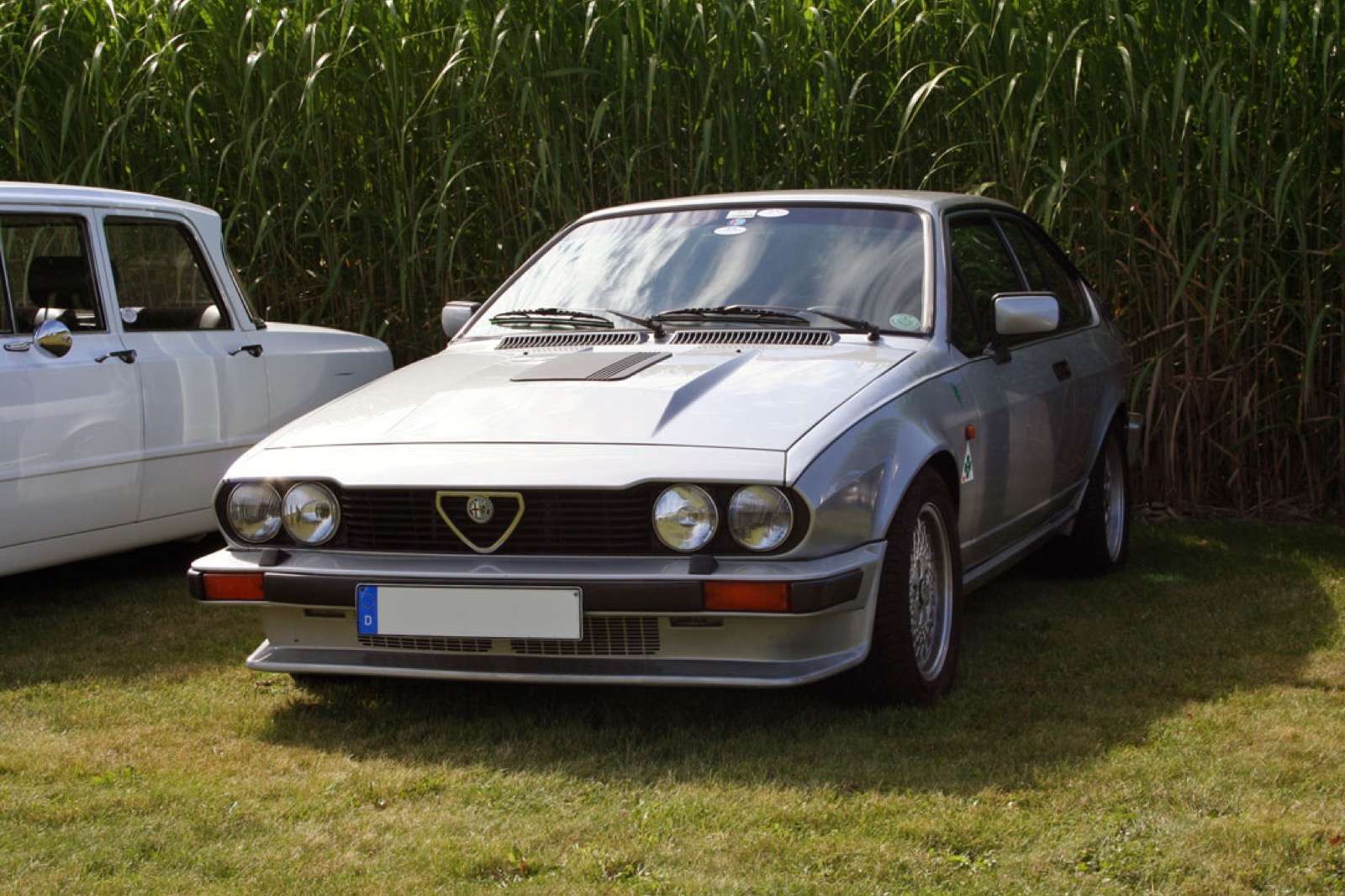
The Alfa Romeo GTV6 combines the 2.5-litre Busso V6 with a rear transaxle and a compact, glassy fastback body. It offers a very different ownership proposition from the later front-wheel-drive GTV, despite the names being repeatedly mixed in adverts and parts searches. The engine’s appeal is obvious; the quality of the shell, drivetrain installation and maintenance evidence determines whether buying one is sensible.
The buying verdict
Choose a structurally sound Type 116 with a documented 12-valve V6, clear timing-belt and tensioner history, a properly assessed propshaft/transaxle and complete trim. Prioritise a lift inspection over paint colour or a claimed low mileage. A 3.0-litre conversion can be appealing when documented, but should be assessed and priced as the specification actually fitted.
Know which Alfa GTV you are researching
This guide covers the Alfetta-derived Type 116 GTV6, originally using the 2.5-litre 12-valve V6. It does not cover the later 916 GTV, the four-cylinder Alfetta GTV as a whole, or every subsequent Busso application. The names overlap in search results, but the layout, maintenance and parts are not interchangeable. Begin with VIN, engine identity, market and actual fitted equipment.
The rear gearbox/differential assembly and propshaft make the GTV6 distinctive to inspect. A mechanic should assess the car as a transaxle installation rather than applying the expectations of an ordinary front-engine/front-gearbox layout. Clutch, flexible couplings, mountings, brakes and related access can affect one another’s quotations. Ask for the complete diagnosed scope.
| Candidate | What to establish | Best reason to choose it |
|---|---|---|
| Documented 2.5 road car | Identity, 12-valve engine, timing history, shell and original equipment | A clear baseline for maintenance and future resale |
| Import | Original market, steering side, mileage units, registration and repair history | Condition and evidence that suit your needs, rather than a blanket claim about climate |
| 3.0 or other engine conversion | Engine specification, builder, cooling, injection/ignition and drivetrain compatibility | A documented modified driving proposition |
| Restoration or competition project | Shell condition, completeness, identity and intended use | A deliberately costed project with the necessary facilities and support |
Try the seating position and controls before committing to the model. Check visibility, pedal relationship, luggage access and how the car fits the journeys you actually want to make. A characterful engine cannot resolve an uncomfortable driving position or a restoration plan that exceeds your available time and space.
Keep originality and condition separate. Correct-looking trim can be worn or hiding repairs, while a documented replacement part can make a driver easier to maintain. Ask the seller to identify deviations from original specification explicitly and check insurance acceptance. Value a modification for its engineering and usefulness, not simply the total of the receipts.

UK asking prices: a thin market needs careful comparisons
Use current advertisements for cars of comparable steering configuration, engine, shell condition and completeness. A recent Car & Classic search for the 2.5 returned three right-hand-drive examples offered by a Bosham dealer: two advertised at £34,995 and one at £29,995. The search also included overseas and 3.0-engined cars. These are seller descriptions and asking prices, not verified sale results or a representative UK valuation survey.
When supply is thin, the best advertised car may not establish a market premium for a particular year. Record dates, mileage evidence, restoration scope, timing and cooling work, drivetrain repairs and the seller’s preparation terms. Keep imports, projects and modified engines in separate comparison groups until you understand why the prices differ.
Compare a cheaper car with a better inspected alternative using the work that actually differs. A due belt service may be a definable cost. Inaccessible sill corrosion, an unexplained vibration or a box of missing trim is not resolved by assuming a small allowance. Obtain written scopes and availability before making the final offer.
A disappeared advert is not evidence of the sale price. For auction comparisons, read the description, result date and fees and distinguish a running road car from a project. Do not let an exceptional competition history set the price of an ordinary driver without evidence that the histories are comparable.
Documents to request before travelling
Ask for registration and VIN, engine capacity and code, mileage units, ownership chronology, MOT history and the complete service and repair file. Get clear underside and engine-bay photographs, together with any restoration album. Ask whether the car is currently used on proper journeys or mainly started in storage.
Have the seller leave it cold and allow enough time for a warm road test and hot restart. Book a lift inspection with someone familiar with transaxle Alfas and specify structural areas, propshaft, mountings, inboard rear brakes, service history and actual engine configuration. Establish what access and diagnostic testing the quoted inspection includes.
If it has been rebuilt or converted, request the builder’s identity, scope, date, mileage and subsequent maintenance. Ask what was measured, machined or renewed and what was left alone. A bill saying “engine fitted” does not establish the condition of the replacement unit, and a belt bought in a spares box does not prove installation.
For an import, check registration documents and mileage conversions against the history. A dry-country claim deserves the same examination for corrosion, old accident repairs and later storage as any other car. Confirm insurance for the actual modifications and use, and agree transport if roadworthiness remains uncertain.
Rust and old repairs: inspect the shell first
Begin with the front structure: inner wings, suspension attachment areas, rails, bulkhead and the surrounding seams. Compare both sides and investigate patches, distortion or reinforcement that the seller has not explained. An engine bay sprayed during restoration can look excellent while concealing the earlier condition. Ask for photographs before preparation.
Inspect inner and outer sills, jacking areas, floors and seat/belt mounting regions from above and below where access is permitted. Have the inspector identify the extent of each repair and adjoining metal. A replacement outer sill is not evidence that the internal structure was renewed or protected correctly.
Continue through rear wheel tubs, suspension and transaxle mounting areas, rear floor, spare-wheel/luggage well and hatch surround. Ask which repairs require additional dismantling and whether braking or drivetrain work will expose nearby structure. A mechanical estimate should not ignore mounting metal that has not yet been assessed.
Inspect screen surrounds, scuttle, gutters, door bottoms, lower wings and hatch edges for corrosion or water paths. Open and close doors, bonnet and hatch and compare panel fit and latching. Have a body specialist distinguish cosmetic panel mismatch from evidence of structural repair. A new rubber seal cannot correct an inaccurate aperture.
How to judge a restored GTV6
Read the photographs chronologically: initial condition, stripping, metalwork, trial assembly, paint, protection and refitting. Match invoices to the actual car. Ask about welding technique, replacement sections and cavity protection without assuming that a particular amount of new metal automatically makes a repair good or bad.
Look for evidence of repeated repairs in the same area and establish why earlier work needed redoing. Recent underseal, carpets or paint should prompt an explanation of the work underneath. The useful inspection report states what is sound, what is defective and what cannot be determined without access.
For a project, obtain a staged body-shop quotation. Investigation, metalwork, paint and reassembly may need separate approval points. Include glass and trim removal, pipework and wiring access, protection and storage where applicable. Do not add a panel’s supply price to a guessed labour time and call the result a restoration budget.
The 2.5-litre 12-valve Busso V6
The engine deserves a specific service file. Confirm what is fitted, particularly if it has been rebuilt using another block or head assembly, or enlarged/replaced. Do not order later 24-valve or 916 parts merely because a listing contains the words Alfa V6. Ask the workshop to record the relevant component numbers before pricing work.
Observe a genuine cold start, idle, warning or gauge behaviour, smoke, smells and leakage. Listen for persistent mechanical noise and ask the specialist to interpret it in context. A smooth demonstration after the seller has warmed the engine is not equivalent to assessing cold starting. A phone recording cannot establish the whole engine’s condition.
Inspect visible oil-leak areas and ask about oil use, coolant loss and earlier overheating. During normal warm driving, check progressive response and temperature stability and repeat a hot restart. If a significant warning or fluid loss appears, stop the test and arrange assessment. Do not accept repeated topping-up as a complete explanation of the fault.
Timing belt and tensioner: identify both
The belt and tensioning arrangement must be considered together. EB Spares’ model-specific engine catalogue separately lists the 12-valve belt, tensioner rebuild and bearing kits, and a mechanical tensioner. That is evidence that “belt changed” is not a complete description of the job. Establish what arrangement is fitted and what was actually renewed.
Ask for installation date, mileage, parts and workshop details, then have the specialist set the next due point using the applicable engine requirements and use. Low mileage does not stop a belt ageing. A recent belt receipt without tensioner assessment or clear fitment needs clarification before a long first journey.
Do not substitute the service schedule or fitted price for a later 24-valve GTV, GT or GTA. Search engines often mix those applications. A cheap quoted kit may omit the parts needed for this installation, and a generic workshop time may not describe the actual car. A correct written quotation should identify the 12-valve engine and tensioner.
Fuel injection, ignition and cooling
Inspect hoses, connections and wiring for deterioration or improvised changes and investigate fuel smells before driving. Assess starting, idle and response cold and hot. Poor running can involve several systems; ask for a diagnosis before ordering injectors, ignition components or an air-metering assembly on the seller’s suggestion.
Check radiator, pump, thermostat housing, hoses and fan operation as a system. Classic Alfa’s GTV6 pump listing explicitly asks buyers to compare the installed pump and distinguishes later 75 applications. A 3.0 conversion makes this even more important. Confirm the actual pulley and housing arrangement rather than using registration year alone.
Ask what a cooling quotation includes: fault tracing, relevant pump or hoses, gaskets, coolant, access and a warm check. A new radiator does not prove that a previous overheating cause was corrected. If the engine has been modified, establish who selected the cooling and management setup and what evidence supports it.

Love cars you don’t see every day?
Get forgotten cars, surprising motoring stories and the most interesting finds from Unusual Cars by email.
Free to join. No spam. Unsubscribe whenever you like. See our privacy policy.
Propshaft couplings, mounts and vibration
The propshaft and its flexible couplings deserve a specific line in the inspection report. EB Spares lists front, middle and rear couplings and alternative bearing/mount sizes for this family. Ask the workshop to identify the actual components, their condition and what is causing any noise or vibration before buying a general “doughnut kit”.
Inspect accessible rubber for deterioration, distortion and damage, and check mounts, support bearings and adjacent components. A vibration may involve more than one worn item or an installation problem. Ask for the whole assembly to be assessed rather than assuming that one newly replaced coupling establishes everything else is healthy.
During ordinary driving, record the speed, load and gear associated with vibration or clunks. Have the specialist reproduce the symptom and decide what further inspection is required. Do not repeatedly drive through a significant vibration to discover a maximum speed at which it disappears. An unsafe or unassessed car needs recovery, not a more ambitious test.
For replacement work, confirm the correct couplings, sizes, mounts, alignment/balance requirements and associated hardware. Access may overlap with clutch or other drivetrain work, so request a combined scope where appropriate. Do not sum every alternative middle coupling in the catalogue as if the car needs all of them.
Gearbox, clutch and inboard rear brakes
Try each gear cold and fully warm, noting selection quality, noises, drag or jumping out. Ask the mechanic to distinguish linkage, bushes, clutch release, mountings and internal gearbox wear. The transaxle layout is a reason for model knowledge, not an excuse to accept a reluctant change without investigation.
Record clutch take-up and any slip, judder or changing pedal behaviour under a suitable legal load. Read replacement invoices for the actual clutch and release components. If the car has another engine or transmission specification, identify the combination before ordering. A clutch supply price does not include every seal, mounting or access operation a workshop may recommend.
The inboard rear brakes need deliberate access and assessment. Ask the inspector to look for leakage, contamination, caliper and handbrake operation and the condition of pipes and hoses. A seller’s claim that “it only needs rear pads” should be confirmed before it becomes your repair budget.
EB Spares separates rear brake service parts, alternative front calipers and pad applications in the model catalogue. Measure and identify what is fitted, especially after brake or hub conversions. Compare a complete fitted axle repair rather than one inexpensive pad or disc listing. Work that shares drivetrain access should be priced without duplicated labour.
Suspension, steering and tyres
Inspect the front suspension, steering joints, bushes and attachment metal, and have the rear axle/suspension arrangement checked for wear, damage and poor modifications. Ask the workshop to explain findings on the actual car. A set of performance springs cannot correct a worn joint or a corroded mounting point.
Read invoices for changes to dampers, springs, bushes, wheels or geometry. Chris Snowdon Racing’s Type 116 parts operation explicitly asks owners to discuss application and intended use. The practical lesson is to choose parts for a coherent road or competition brief rather than assembling a catalogue of upgrades that happen to fit the model family.
Check tyre age, condition, sizing and suitability, wheel damage and correct fixings. Inspect inner shoulders and the spare where relevant. If handling feels nervous or imprecise, assess tyres, alignment, suspension and shell condition together. Obtain alignment after mechanical defects are corrected, not as a substitute for fixing them.
Interior, electrics and rare trim
Test instruments, lighting, wipers, washer, heater, windows, locks, mirrors and any fitted air conditioning. Investigate inconsistent gauges or charging behaviour with a competent specialist. A replacement battery can be sensible when it has failed, but should not be used as an explanation for every electrical symptom without testing.
Inspect seats, dashboard, door cards, switches, hatch trim and seals for completeness. Check what is original, retrimmed or borrowed from another variant. Price missing pieces before assuming the cabin can be finished cheaply. A complete worn interior may offer a clearer restoration path than an attractive but incomplete one.
Look for dampness in the cabin and luggage area and check whether carpets or trim have recently been dried or replaced. Trace ingress and assess metal underneath before ordering another seal. Ask which repaired areas need monitoring after rain and whether any electrical repairs were related to water damage.
Sourced UK parts, labour and fitted-cost planning
EB Spares states that its catalogue prices exclude VAT and carriage. The examples below add 20% VAT where shown, while delivery and fitting remain additional. They are model-specific supply references, not a quotation for your car. Recheck stock, exact application and tax before ordering.
| Job or parts | Checked parts reference | What remains outside it |
|---|---|---|
| 12-valve cambelt | EB Spares: £24.50 excluding VAT; £29.40 including 20% | Tensioner assessment, other parts, installation and correct timing procedure |
| Tensioner alternatives | Rebuild kit £28.50 ex VAT (£34.20 inc); mechanical tensioner £96 ex VAT (£115.20 inc) | These are different scopes, not automatically items to add together |
| Front or rear V6 propshaft coupling | EB Spares: £140 each ex VAT; £168 each including 20% | Correct position, middle coupling/support assessment, hardware and fitting |
| Oil, GTV6 air and fuel filters | Catalogue references total £49 ex VAT; £58.80 including 20% | Oil, other service items, inspection, labour and delivery |
| Classic Alfa D0349 water pump | £70 advertised, shown sold out; confirm tax and delivery | Actual pump/pulley compatibility, gaskets, coolant, availability and fitted work |
| Workshop labour context | Village Classic Cars: £75 plus VAT, £90/hour including VAT | A general published rate, not a GTV6 specialist fixed price or quoted job duration |
Price sources: EB Spares 12-valve engine parts, propshaft catalogue, service items, Classic Alfa pump and labour reference. Compare the correct-generation timing parts on eBay.
Ask for fitted quotations that identify access and overlap
A belt-only price does not represent a completed cambelt service. Ask the specialist to identify the fitted tensioner, due items, seals, fluids and any related diagnosis. If another repair shares access, ask for the combined scope and the additional labour rather than paying two complete overlapping operations.
Apply the same approach to propshaft, clutch and inboard-brake work. Ask what can be seen before dismantling, what needs measuring and which fasteners, seals or supports may be required. The quote should state VAT, transport, access, reassembly and any follow-up checks. If the extent remains uncertain, authorise a bounded diagnostic stage before approving the repair.
An advertised but unavailable pump is not an immediate solution. Establish stock and whether another compatible component is genuinely suitable. A car that can be driven while waiting for trim is a different ownership proposition from an immobile car waiting for essential mechanical parts. Include storage and transport when that distinction affects the purchase.
GTV6 Type 116 eBay service-parts table
Affiliate disclosure: we may earn commission from qualifying eBay purchases at no extra cost to you. Model names in search results are frequently mixed. Match Type 116, the installed 12-valve engine and original part numbers; later 916 or 24-valve listings are not automatic substitutes. Confirm seller, contents, condition and returns.
| Service item | Fitment and buying check | eBay parts comparison |
|---|---|---|
| 12-valve timing belt | Match the 12-valve transaxle engine; exclude later 24-valve and 916 applications. | Compare 12-valve timing belt |
| Timing-belt tensioner parts | Identify hydraulic/rebuilt/mechanical arrangement and complete diagnosed scope. | Compare timing-belt tensioner parts |
| Oil, air and fuel filters | Confirm all three applications and contents; a filter kit is not a fitted service. | Compare oil, air and fuel filters |
| Spark plugs and ignition | Match engine, distributor and approved plug specification, particularly on conversions. | Compare spark plugs and ignition |
| Water pump | Compare fitted pump, pulley and housing; a later 75 or converted engine may require another application. | Compare water pump |
| Auxiliary drive belt | Separate accessory-belt work from the cambelt; match actual pulleys. | Compare auxiliary drive belt |
| Alternator | Match output, mounting, pulley, connectors and exchange terms. | Compare alternator |
| Propshaft couplings | Identify front/middle/rear position, size and installed shaft; do not buy every listed variant. | Compare propshaft couplings |
| Propshaft bearing and mount | Confirm measured bearing size and housing; inspect the complete assembly. | Compare propshaft bearing and mount |
| Clutch components | Match installed transaxle, engine conversion and release hardware. | Compare clutch components |
| Brake service parts | Identify actual front and inboard rear assemblies and any conversions before ordering. | Compare brake service parts |
| Suspension bushes | Match axle and exact location; assess mounting metal and alignment as part of the job. | Compare suspension bushes |
Hidden ownership costs
Trim and glass: establish availability before assuming you can finish an incomplete cabin or hatch assembly gradually. Used parts may need refurbishment and shipping. A missing correct component can consume more time than a routine service. Value included spares only after inspecting them and checking they fit the intended specification.
Combined drivetrain work: propshaft, transaxle and rear-brake access can alter the sensible order of repairs. Have the specialist propose a coherent scope rather than ordering individual parts for symptoms. Avoid duplicated labour, but do not authorise unrelated upgrades merely because the car is on the lift.
Corrosion beyond the visible panel: body quotations need stripping, adjoining metal assessment, protection and reassembly. Ask which areas were inaccessible and whether the first quote is an investigation or a complete repair. A freshly painted floor is not a guarantee that hidden seams and mounting areas are healthy.
Recommissioning and storage: recovery, tyres, brakes, fuel and cooling checks belong ahead of a long collection drive in a stored car. Find a workshop with suitable knowledge and an actual booking slot. An appealing project price does not remove the need for space, transport and money to discover its full condition.
Three GTV6 buying scenarios
The sound 2.5 with an overdue belt
If the shell, engine and drivetrain assessment are otherwise clear, a due timing service may be a definable negotiation point. Obtain a fitted quote for the actual 12-valve tensioner arrangement and compare with an equivalent car that has completed the work. Keep any separate cooling fault or leak outside that service estimate until diagnosed.
The cheaper car with a vibration
Do not assume one flexible coupling will settle the matter. Have the shaft, supports, mounts and related drivetrain assessed and record when the symptom occurs. If the specialist cannot establish the cause without more work, make the purchase conditional or price an investigative stage. A new visible coupling does not certify the rest of the installation.
The attractive 3.0 conversion
Ask for the exact engine, cooling, fuel/ignition and drivetrain specification and the builder’s records. Check insurance and parts support and assess the complete installation cold and warm. A well-documented conversion can suit a driver, but its components and price should not be compared blindly with an original 2.5.
A practical GTV6 viewing checklist
Before travelling
- Confirm Type 116, steering side, actual engine, mileage units and modifications.
- Request the timing, tensioner, cooling, propshaft and transaxle invoices.
- Ask for underside and restoration photographs and details of outstanding work.
- Book cold-start access, a warm drive and a transaxle-Alfa lift inspection.
- Check insurance, transport and the workshop’s ability to source and fit any likely parts.
At the car
- Compare identity and history and establish the actual installed specification.
- Inspect structural areas, both sides of accessible repairs and suspension/transaxle mounting metal.
- Record cold-start behaviour, gauges, leakage and the timing/tensioner evidence.
- Inspect propshaft couplings, bearings and mounts and identify the brake assemblies.
- Test all controls and assess trim completeness, hatch seals and dampness.
- Check tyres, wheels, pipes and other roadworthiness matters before driving.
During and after the drive
- Assess clutch and every gear cold and warm using normal legal driving.
- Record vibration or noise by gear, speed and load for specialist reproduction.
- Watch temperature stability, repeat a hot restart and inspect for fresh leaks.
- Separate confirmed defects, due maintenance and items still needing investigation.
- Get complete fitted quotations and compare with the better alternative before finalising the offer.
Buy, investigate or leave it?
Buy on clear evidence: identity and specification are understood, the shell has been assessed and the service/repair budget is supported by written scopes. Honest cosmetic wear need not outweigh a sound structure and coherent drivetrain history.
Investigate first: the shell looks promising but timing evidence, a vibration, a conversion or inaccessible repairs remain unresolved. Get the relevant specialist assessment before treating the unknown as a cheap job.
Leave it: necessary inspection is refused, the description is inconsistent, structural concerns cannot be assessed or the purchase only works if every uncertain fault is inexpensive. Another opportunity is preferable to an attractive car whose fundamental condition is unknowable.
Alfa Romeo GTV6 buying questions
Is this the same as the later GTV V6?
No. This guide covers the rear-transaxle Type 116 GTV6 with its original 2.5-litre 12-valve engine. The later 916 is a different car and parts/schedules should not be mixed.
Does “cambelt changed” settle the timing-system question?
No. Establish the installed tensioner, what was renewed, date, mileage and workshop. A belt receipt alone does not describe the complete job.
Is vibration always a propshaft doughnut?
No. Ask the specialist to examine the complete shaft, couplings, bearings, mounts and related installation. Diagnose before choosing parts.
Are rear brakes as simple to price as ordinary outboard brakes?
Identify the inboard installation and actual work needed. Access, caliper/handbrake condition and other drivetrain work can affect the fitted quotation.
Is a 3.0 conversion a bad buy?
It depends on engineering, documentation, condition and your use. Inspect the actual assembly and check insurance and future parts support rather than judging solely by capacity.
Can eBay supply service parts?
Relevant parts are available, but precise generation and part-number checks matter. Generic GTV searches can return later 916 or unrelated V6 items.
Alfa Romeo GTV6 Type 116 cars for sale
Compare current advertisements for complete cars on eBay UK. Asking prices are not completed sale results. Check identity, condition and history before contacting a seller.
Affiliate disclosure: we may earn a commission from qualifying purchases.

Love cars you don’t see every day?
Get forgotten cars, surprising motoring stories and the most interesting finds from Unusual Cars by email.
Free to join. No spam. Unsubscribe whenever you like. See our privacy policy.