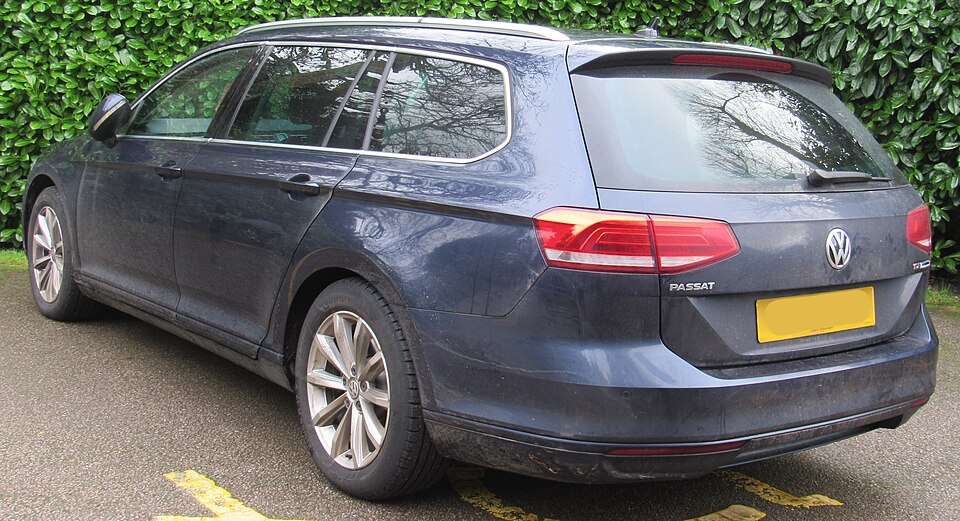
A Volkswagen Passat B8 TDI can be an excellent used long-distance family car: comfortable, spacious and available in enough numbers to let you compare histories. Its fleet-car background is also the reason to inspect it carefully. A clean interior and a freshly polished R-Line badge do not tell you whether the belt, cooling system, gearbox and emissions equipment have received the right maintenance.
This guide focuses on the UK B8/Typ 3G Passat with 1.6 and ordinary 2.0 TDI engines, in Saloon and Estate form. It distinguishes them from the older B7 and the later B9, and does not treat the GTE plug-in hybrid, high-output BiTDI or Alltrack as mechanically identical alternatives. Confirm the VIN, engine and gearbox codes, build and drivetrain before using a schedule or buying parts.
Our verdict: a well-maintained 2.0 TDI 150 is a sensible starting point for regular longer journeys, with manual or DSG chosen around your preference and the actual car’s condition. Consider the 1.6 where its performance meets your needs. For mostly short cold journeys, reconsider whether a diesel is appropriate before pursuing low advertised fuel consumption.
Which B8 TDI should you buy?
Volkswagen’s UK launch announcement placed first deliveries in January 2015. The initial UK diesel range included a 120 PS 1.6, 150 and 190 PS 2.0 engines, plus a separate 240 PS BiTDI/4MOTION flagship. The launch tables list six-speed manuals, a seven-speed DSG for the 1.6 and a six-speed DSG for ordinary 150/190 PS applications. Later changes mean those launch combinations should not be treated as the specification of every B8.
That factory announcement is useful for identifying the original range, not for copying every historic figure uncritically into a used advert. Check the candidate’s engine output, transmission identity and actual equipment. Registration year alone cannot establish the correct gearbox service, emissions hardware or facelift specification.
| Choice | Buying case | Checks that matter |
|---|---|---|
| 1.6 TDI | Economy-focused option when its performance suits your normal load and route. | Exact output/build, gearbox, service record and how it feels with your intended use. |
| 2.0 TDI 150 | Our starting point for a broadly useful motorway/family diesel. | Engine/cooling condition, belt evidence, transmission identity and emissions operation. |
| 2.0 TDI 190 and later variants | Extra performance where useful, but compare the exact drivetrain and equipment. | Parts and servicing are not established by capacity alone. |
| Manual | Worth considering when you prefer direct control and a straightforward test drive. | Clutch/flywheel condition, selection, bearing noise and leaks. |
| DSG | Convenient when healthy, with documentary evidence of applicable maintenance. | Code-specific wet/dry-clutch requirements and cold/hot operation. |
| Estate | Useful for bulky luggage, dogs or family equipment. | Load area, rear suspension, tailgate equipment and water ingress. |
Trim and equipment: buy what you will use
The original UK range included S, SE, SE Business, GT and R-Line. Volkswagen’s launch information lists substantial equipment differences, including driver-assistance and navigation features. Later names and packages changed, so check every fitted function rather than trusting a copied dealer description.
Comfortable seats, suitable tyres, good visibility and a sound climate-control system matter more on a long commute than a badge. Test the seat adjustments over a proper drive, including lumbar support and heated functions where fitted. If a lower trim works better for you and has a clearer history, it can be the better purchase.
Larger wheels may increase tyre cost and expose damaged rims or uneven wear. Driver-assistance options bring checks for sensors, calibration and previous repairs. Panoramic roof equipment, powered tailgates and adaptive dampers should be assessed as additional systems, not merely desirable bullet points in the advertisement.

How to compare UK asking prices
Compare like with like: B8 rather than the entire Passat market, the same engine/output, manual or actual DSG type, body style, age, mileage and seller type. A cheap older diesel, a GTE and a BiTDI are not direct valuation evidence for an ordinary B8 150. The current advertisements below are a starting point and can contain incorrectly described cars.
Make a shortlist with columns for asking price, dated servicing, belt evidence, gearbox work, tyres, brakes, keys and outstanding faults. Save adverts and ask for the important invoices before travelling. A car with a slightly higher asking price can have a lower first-year cost if significant maintenance has already been completed properly.
Do not use a speculative diagnosis to negotiate. A warning that “only needs a sensor” may involve wiring, software, a mechanical issue or another system entirely. Have the cause established and obtain a fitted quote with parts, labour and VAT. Unresolved gearbox or engine symptoms cannot be sensibly valued by subtracting the cost of a bottle of fluid.
Fleet history and mileage: evidence beats assumptions
A well-serviced high-mileage business car can make sense, but fleet use is not a guarantee of quality. Repeated short trips, long idle periods, missed additional items or poor accident repairs are still possible. Read the complete chronology and match it to the mileage and condition.
Ask about taxi/private-hire, rental, delivery or towing use. Compare seat, pedal, steering-wheel, door and loading-edge wear with the account. A replaced dashboard part or newly trimmed wheel can make a car look fresher, so use records and inspection rather than one wear clue as a mileage test.
Where service history is digital, ask for a meaningful printout and supporting invoices. An entry for an inspection does not automatically prove that a DSG, belt, fuel filter or other additional item was completed. For major repairs, establish the cause, parts, installer and subsequent mileage as well as the seller’s verbal description.
Identity, shell and accident-repair checks
Match VIN and registration details, check the seller’s authority to sell and obtain an appropriate provenance check. Read the MOT record as a sequence, paying attention to recurring suspension, tyre and brake advisories. A fresh pass is a legal test outcome, not a warranty on engine, gearbox or repaired structure.
Inspect in daylight. Look at panel gaps, paint texture, seals, fasteners, wheelarches, sill/jacking areas and accessible floors. Examine the boot or Estate load well, tailgate hinges and rear panel for repair evidence. Arrange an underside inspection on proper workshop equipment rather than crawling beneath an unsupported car.
On a car with front radar, camera or related assistance equipment, ask about bumper, grille and windscreen replacement and any required calibration. A system that is unavailable may have a simple cause, but diagnose before accepting that explanation. Do not deliberately drive at an obstacle to test emergency braking.
TDI engine: cold start, cooling and lubrication
Arrange to see the engine genuinely cold. Watch warning-light self-tests and listen without music masking the first start. Persistent noise, rough running, difficult starting, pronounced smoke or abnormal vibration needs investigation. A brief warm demonstration is not equivalent to a cold-to-hot assessment.
Check the cold oil and coolant levels using the correct procedure, then ask about top-ups and recent changes. Read invoices for oil approval and quantity rather than a generic viscosity description. “LongLife” in an advert is not evidence of the correct servicing for the car’s operating pattern or elapsed time.
Inspect accessible pump/housing areas, hoses and joints for coolant staining or leaks. Ask about water-pump, thermostat and cooling-assembly work. During the drive, monitor normal temperature behaviour and heater performance. A pressure test can be appropriate when loss is reported; the absence of a puddle at a short viewing does not prove the system is sound.
Assess consistent acceleration at legal speeds once warm. Hissing, unusual whistling, repeated limp mode or smoke should be investigated with a scan, live data and physical checks as appropriate. A boost-pressure code does not by itself establish a failed turbocharger. Avoid buying a car around a guess that the cheapest hose or sensor will resolve everything.
Timing belt, pump and related work
Obtain the maintenance requirements for the actual engine/build from Volkswagen or an appropriate specialist. Generic online age rules, overseas schedules and another owner’s experience may not apply. A workshop’s price-list introduction should not be presented as a universal factory interval.
Check any replacement invoice for the belt kit, tensioners/rollers, water pump where appropriate, coolant and necessary associated parts. Confirm the pump design and procedure against the engine code. An auxiliary-drive belt is a separate item; its replacement does not prove that the timing belt was done.
If evidence is missing and the work is due or uncertain, obtain a written quote and plan it before relying on the car for a long trip. A sticker is weaker evidence than an itemised invoice matched to the VIN, date and mileage. A visual check cannot establish the remaining fatigue life of an old belt.
DPF, EGR and AdBlue/SCR checks
Ask whether the normal use includes meaningful fully warm journeys. A diesel can be a poor match for repeated short cold trips even when it promises attractive economy. Do not accept “it just needs a motorway run” as a diagnosis of repeated warnings or power loss.
Have faults and relevant live data recorded before anything is cleared. Investigate the running conditions, sensors, pressure readings and wider system as well as any DPF/EGR code. A code description does not prove which part needs replacing. Emissions equipment removed or bypassed is a separate compliance and condition concern.
Establish what SCR/AdBlue equipment the candidate has. An unresolved countdown after a refill needs proper diagnosis of the system, not repeated additions of fluid. Look at the actual vehicle’s warning messages and service history rather than assuming all B8 diesels have identical after-treatment.
Check clean-air-zone eligibility for the registration and places you use. Euro-rating claims, registration dates and badges should be verified. If the use case makes a petrol or hybrid more appropriate, compare the alternatives before spending your whole budget on a diesel that does not suit the journey pattern.
Love cars you don’t see every day?
Get forgotten cars, surprising motoring stories and the most interesting finds from Unusual Cars by email.
Free to join. No spam. Unsubscribe whenever you like. See our privacy policy.
Manual and DSG buying checks
Manual clutch and selection
Try every gear and reverse from cold, then repeat once the gearbox is warm. Look for consistent take-up, sensible pedal effort and smooth changes. Pronounced shudder, slipping during normal acceleration, difficult selection or unusual noises when the clutch pedal is operated require assessment. Do not abuse the car with a high-gear stall test.
A clutch/flywheel quote should identify the transmission and what is included: clutch, flywheel if required, release components, seals, oil, fasteners and labour. A kit advertised for “Passat diesel” may match a different generation or gearbox. If the transmission itself is noisy, fitting a clutch is not a guaranteed cure.
DSG: code, service history and hot operation
The launch 1.6 and ordinary 2.0 choices demonstrate why seven speeds and six speeds cannot be used interchangeably when ordering a service. Later units and drivetrains add further variation. Identify the gearbox code and whether the relevant unit has wet or dry clutches; obtain its actual service requirement before judging the history.
Test selection of drive and reverse, gentle take-up, normal stop/start traffic, steady cruising and acceleration, first cold and again fully warm. Pronounced judder, delayed engagement, repeated flaring, slipping or a warning is a reason for diagnosis. Do not assume a fluid change, adaptation or software update will fix internal wear or a control fault.
Read DSG invoices for more than the phrase “gearbox oil”. Ask what fluid, filter and procedure were used and whether the job corresponds to the installed unit. JBS publishes separate wet-DSG prices for DQ250 and DQ381; those are budgeting references for matching units, not a rule that every B8 has one of those two gearboxes.
For a car with replacement or repaired transmission components, establish the original symptoms, repairer, parts, warranty and subsequent running. A clean diagnostic scan today is useful evidence, but it cannot replace a proper road test or prove the past service procedure was correct.
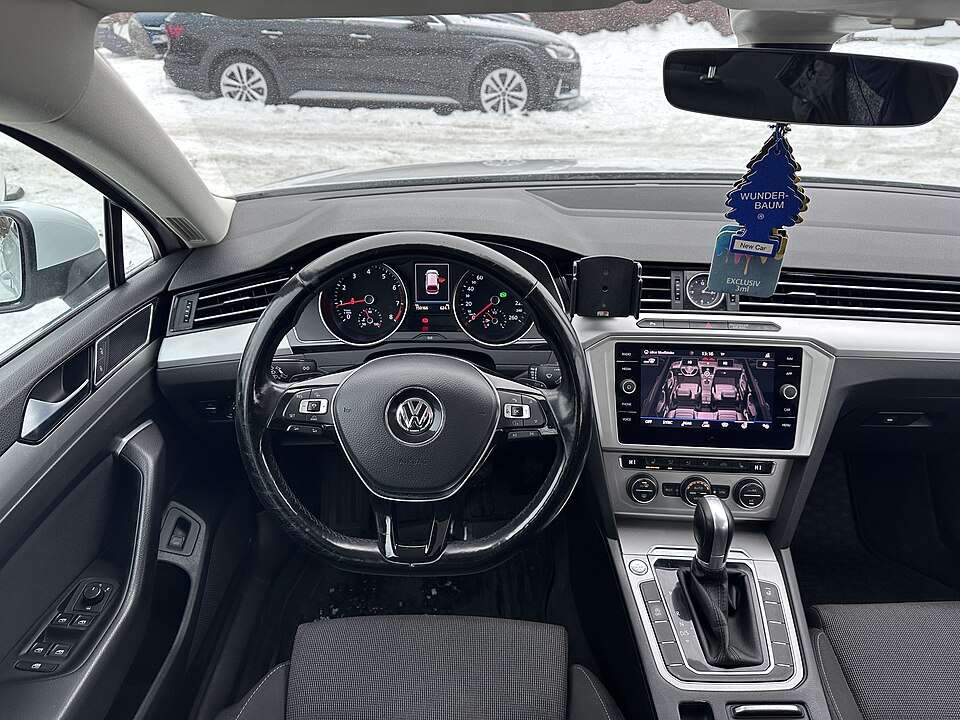
Estate load space, tailgate and towing
Try the actual luggage, child seats or dog crate that determines the purchase. Check the rear-seat releases, load floor, cover and any divider or storage equipment. Inspect the loading edge, seat backs and side trim for damage, and investigate dampness in the load well and under accessible trim.
Where a powered tailgate is fitted, test opening, closing and the normal controls in a clear area. Check that it latches consistently and has not been misaligned after a repair. An intermittent fault is not necessarily solved by replacing the cheapest switch seen online. Confirm the actual mechanism before pricing parts.
If the car has a towbar, ask about the load and frequency of use. Inspect the installation and wiring and obtain evidence of any relevant service or repair. Use the vehicle’s own permitted limits and your licence entitlement. A photograph of another Passat towing a large caravan is not capacity evidence for yours.
On a 4MOTION candidate, extend the inspection to the coupling, differentials, tyres and rear-drive operation. A 4MOTION badge is not evidence of correct maintenance or a functioning system. Alltrack equipment also deserves its own application checks; do not order ordinary front-drive parts by capacity alone.
Suspension, steering, tyres and brakes
Look over the full tread width of every tyre, the sidewalls and wheel rims. Confirm approved sizes and suitable compatibility on cars with additional drivetrain requirements. Poor inside-edge wear or vibration should trigger a component and alignment assessment rather than simply budgeting a new pair of tyres.
Drive on varied ordinary surfaces at legal speeds, listening for knocks and checking steering return, tracking and vibration. Have a workshop identify worn bushes, links, bearings or dampers. A generic online symptom list cannot distinguish those components from a damaged wheel or another cause.
Confirm adaptive-damper equipment before replacing suspension parts. A driving-mode menu alone does not establish the installed damper type. Investigate conversions or deleted warnings, and discuss any modification with the insurer. The cheapest ordinary shock absorber may not be a suitable replacement for the fitted equipment.
Inspect discs and pads on both sides where accessible, then assess braking for pulling, judder and abnormal noise. Test the electronic parking brake and Auto Hold through their normal safe operation, following the handbook. Rear-brake servicing requires the correct procedure and tools; do not force the mechanism back as if it were an ordinary manual-caliper arrangement.
Brake or stability-control warnings require physical and electronic assessment. A weak battery can create complications, but voltage should be tested rather than used as a blanket explanation. Save fault information before clearing it, and confirm the diagnosed repair resolves the symptom.
Comfort equipment, infotainment and water
Test both keys, locking, windows, mirrors, seat adjustment and heated functions where fitted. Operate the fan at all speeds, assess sustained air-conditioning cooling and check the different climate zones. A promise that the air conditioning “only needs gas” should be supported by proper system testing.
Inspect accessible carpets, boot/load well and headlining for dampness or staining. Check roof and door equipment where fitted and pay attention to previous windscreen or body work. Locate and quote the source of a leak and any consequential damage before buying. Drying the visible carpet does not prove the problem has been repaired.
Test the actual infotainment hardware, audio, navigation if fitted and phone connection. Early and later B8 units and optional displays are different buying propositions. Check software/support and replacement-component compatibility rather than assuming a newer screen can simply be plugged in.
The UK launch release described some display and assistance features as optional or arriving later. Verify the car’s equipment directly. Persistent radar, camera or parking warnings need diagnosis, and relevant screen/bumper repairs may require calibration. Do not test collision-prevention systems by deliberately creating a dangerous situation.

Passat TDI UK maintenance costs and labour scope
The following are published references checked in November 2026. JBS states its listed prices include VAT. Confirm application and scope with the workshop; the quoted durations span its supported models and are not a guaranteed labour time for a particular Passat. Parts adverts are separate comparisons and do not include installation.
| Job | Parts / scope | Labour and fitted reference | How to budget |
|---|---|---|---|
| Applicable EA288 1.6/2.0 TDI belt and pump | JBS describes genuine belt kit, rollers/tensioners, water pump and fresh coolant. | £615 fitted including VAT; broad duration about 3½–7 hours across models. | Match the engine, pump and due schedule before booking. |
| Identified DQ250 wet DSG | Code-appropriate oil/filter service subject to workshop confirmation. | JBS £285 including VAT; general duration about 1–1½ hours. | Does not apply to every DSG. |
| Identified DQ381 wet DSG | Correct seven-speed wet-DSG service for a matching unit. | JBS £355 including VAT; general duration qualification as above. | Seven speeds alone does not establish DQ381. |
| Eligible six-speed manual oil service | Correct oil and procedure; not a clutch replacement. | JBS advertises £150 including VAT. | Confirm transmission applicability and scope. |
| 2.0 TDI filter-kit comparison | Compare Passat B8 service kits; an observed Bosch-labelled four-filter package was advertised at £59.99. | Parts only; no workshop labour or engine oil should be assumed from that description. | Check actual kit contents, engine/build and part numbers. |
| Clutch/flywheel, SCR or cooling repairs | A diagnosis and actual component list are needed. | No universal fitted total is established by the cited menus. | Ask for parts, labour, diagnostic time, VAT and exclusions separately. |
A worked example: if an eligible car needs the advertised belt/pump package and its identified DQ250 service, those menu references total £900. With the cited DQ381 service instead, the sum is £970. Neither includes an engine service, tyres, brake repairs or fault investigation. Do not assume every B8 needs those jobs immediately, and do not count parts twice by adding a kit to a fitted package.
Ask whether a workshop accepts customer-supplied parts and how it handles warranty responsibility. For an exchange alternator or similar component, include any surcharge and return costs. A correct specification and accountable repair are more valuable than choosing the lowest search-result price without checking the application.
Model-specific eBay service-parts table
Affiliate disclosure: these search links use campaign 5339238906; we may earn commission from qualifying purchases. Match VIN, engine/gearbox code, OE number and required approvals before buying. Search results can include older Passats, unrelated variants or incomplete kits.
| Item | What must match | Compare on eBay UK |
|---|---|---|
| 1.6 TDI service kit | Engine/build, filter types, oil approval and quantity. | 1.6 TDI service kits |
| 2.0 TDI service kit | Actual kit contents and oil specification if included. | 2.0 TDI service kits |
| Timing kit/water pump | Engine code, pump design and complete installation requirements. | Timing kits and pumps |
| Fuel filter | Housing/filter application and correct replacement procedure. | Diesel fuel filters |
| Auxiliary drive | Engine and belt/tensioner application. | Auxiliary-drive parts |
| Alternator | Output, pulley, connector, mounting and exchange terms. | Alternators |
| Battery | Size/rating, stop-start technology and adaptation where required. | Replacement batteries |
| Manual clutch/flywheel | Transmission identity, flywheel requirement and release components. | Manual clutch/flywheel parts |
| DSG service items | Actual gearbox code and approved procedure. | DSG service items |
| 4MOTION service items | Coupling/drivetrain identity and approved fluid. | 4MOTION service items |
| Brake discs and pads | Brake codes, axle, dimensions and parking-brake equipment. | Brake parts |
| Cabin filter/wipers | Correct generation and body fittings. | Filters and wipers |
Hidden ownership costs
Tyres, wheel repairs, a second key, missing Estate equipment, assistance-system calibration, air-conditioning investigation and worn suspension can turn a cheap B8 into an expensive first year. Optional equipment adds potential repair scope; value it around your actual needs and condition rather than assuming more equipment always means better value.
Keep inspection, collection, recovery if needed and alternative transport in the budget. Read warranty exclusions for wear, diagnosis, emissions systems and pre-existing faults. Obtain insurance terms for modifications and check any finance/provenance concerns before paying. Keep contingency beyond the list of already diagnosed jobs.
A practical Passat viewing checklist
Before travelling
- Confirm B8/Typ 3G, engine output/code, transmission, drivetrain and body.
- Request dated servicing, belt/pump and gearbox invoices; establish previous fleet/taxi/towing use.
- Read MOT/provenance history and verify local emissions-zone eligibility.
- Ask directly about oil/coolant consumption, warnings, overheating and major repairs.
- Arrange a cold start, fully warm drive, appropriate scan and underside inspection.
During the visit
Match identity, assess shell/repair quality, examine cold fluids, tyres and water ingress, then test equipment and both keys. Try the seats and real family load. Observe the first start and warning checks, assess gearbox behaviour cold and hot, and check steering and brakes at sensible legal speeds.
After the drive, look for fresh leaks and warnings and retain diagnostic findings. Ask the workshop to separate faults, maintenance due and cosmetic defects, with clear scope and written prices. Treat refusal to permit meaningful checks as a reason to consider another car.
Buy, investigate or stop?
Proceed when the identity, history and inspection support the price. Negotiate around diagnosed work. Stop or postpone for serious unexplained engine noise/smoke, overheating, transmission slip, structural concerns, identity discrepancies or emissions tampering. A cleared warning is not evidence of a completed repair.
Frequently asked questions
Is every seven-speed DSG the same?
No. Establish the gearbox code, clutch arrangement and service requirement. Ratio count alone is not a parts or maintenance specification.
Does a digital service record prove the belt and DSG were done?
Only if those particular jobs are documented. A general inspection or oil-service entry does not automatically include additional maintenance.
Should I buy a diesel for short trips because it uses less fuel?
Compare the complete use case and ownership costs. Repeated short cold journeys may not suit diesel emissions-system operation; apparent fuel savings are only one factor.
Is the BiTDI or GTE covered by the ordinary TDI parts table?
No. Their additional or different powertrain equipment requires its own identification and service checks.
Continue your buying research
Compare our Golf Mk7/Mk7.5 TDI guide for the smaller alternative. Related engine families do not make whole-car service requirements interchangeable. Return to the hub for the exact model you are considering.

Love cars you don’t see every day?
Get forgotten cars, surprising motoring stories and the most interesting finds from Unusual Cars by email.
Free to join. No spam. Unsubscribe whenever you like. See our privacy policy.