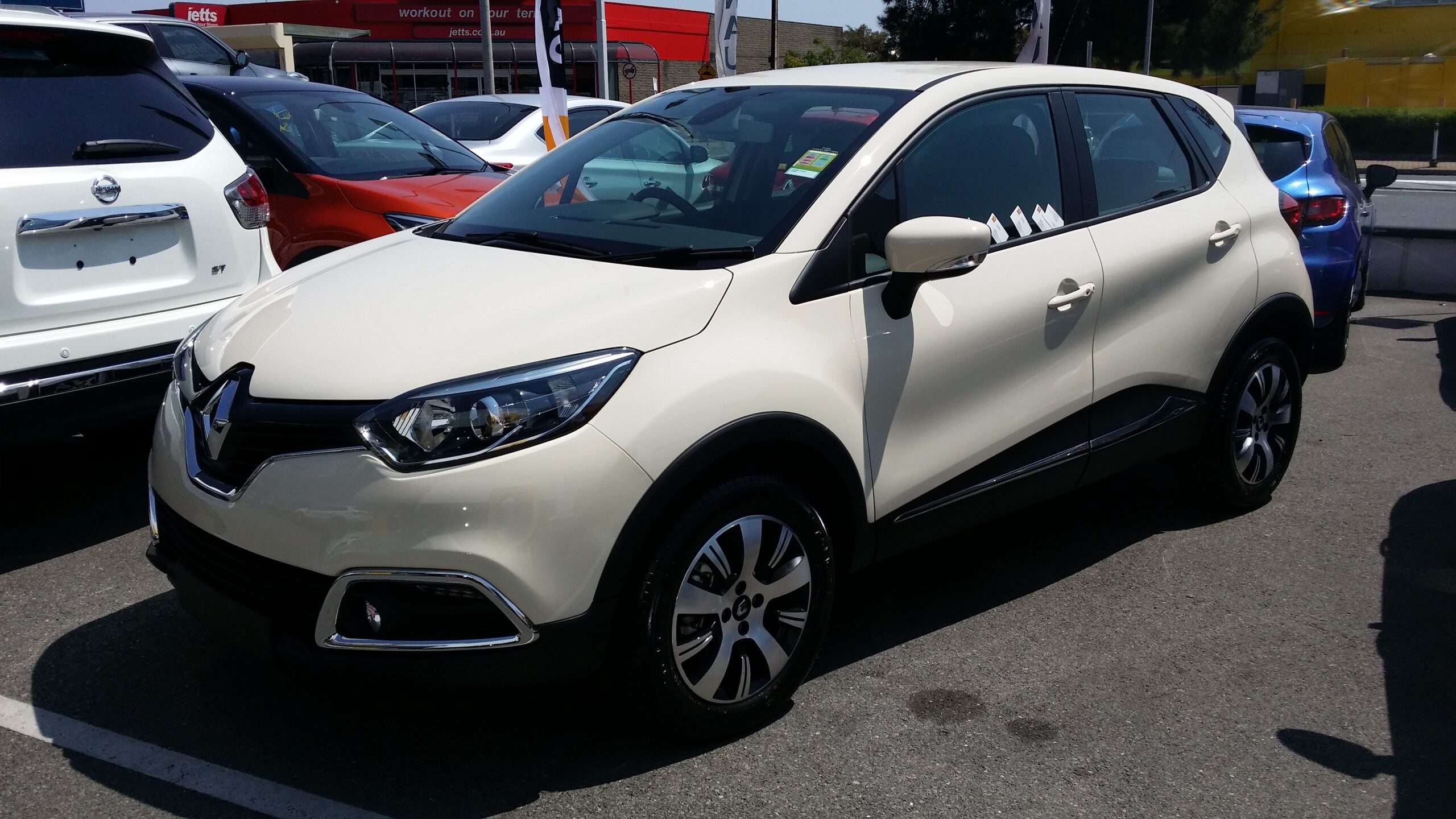
Buying Guides / Renault Captur Mk1, 2013–2019 · UK buying advice
For most low- to moderate-mileage buyers, a well-documented 0.9 TCe manual is the sensible starting point in the original Captur range. A later 1.3 TCe may justify a larger budget. Choose a 1.5 dCi for journeys that suit a diesel, and approach a 1.2 TCe or EDC automatic with a particularly thorough engine and transmission assessment. Condition and records decide the purchase.
This guide covers the first-generation Captur. It excludes the larger Mk2 and its E-Tech hybrid powertrains. Changeover registrations and generic advert descriptions can be confusing, so confirm generation, capacity, engine code and gearbox using the VIN. The 0.9 TCe and later 1.0 TCe are not interchangeable descriptions of the same engine.
Affiliate disclosure: we may earn commission from qualifying purchases through eBay links, at no extra cost to you. Searches can mix generations and engines. Verify the exact application, original part numbers and lubricant approval before ordering.
The buying verdict
The Captur is attractive as a compact family car with an elevated seating position and flexible rear seating. Buy it for how well it accommodates your normal passengers and luggage rather than the SUV label. Test the rear bench and boot arrangement with your own child seats, pushchair or mobility equipment before deciding that the advertised capacity solves your needs.
Our preference is standard specification, two working key cards and evidence of regular servicing. A later, higher-trim car with patchy oil history is not automatically better value than a modestly specified example with detailed invoices. Allow for immediate maintenance and tyres rather than spending every pound on paint and wheels.
If an automatic is essential, consider the gearbox and engine together. A low price for a 1.2 TCe EDC does not remove the need to investigate oil use or poor low-speed operation. If the seller cannot provide a cold start and fully warm drive, postpone the decision. These are precisely the conditions a proper purchase inspection needs to assess.
Which Captur Mk1 engine suits you?
| Engine | Best reason to consider it | Priority checks |
|---|---|---|
| 0.9 TCe three-cylinder petrol | A straightforward starting point for local and mixed use. | Oil history, cold running, boost response and manual clutch condition. |
| 1.2 TCe four-cylinder petrol | More performance and automatic availability. | Documented oil consumption, service evidence, cold noises and the exact gearbox. |
| Later 1.3 TCe petrol | A later alternative worth comparing if the budget allows. | Confirm actual Mk1 application, capacity, power and transmission; not the 1.2 under another name. |
| 1.5 dCi diesel | Regular longer journeys and higher annual mileage. | Timing-belt evidence, fuel-system health, DPF operation and suitability for your routes. |
Power outputs and gearbox availability vary with year and market. Use build data for the actual car rather than combining figures from a current Renault webpage. The Mk1 is not the same vehicle as today’s hybrid Captur, and a later brochure cannot establish its equipment, oil requirement or service interval.
For predominantly short journeys, do not choose the diesel merely because its advertised economy figure looks lower. The petrol alternative may be the better ownership fit. Conversely, a regularly driven and properly maintained diesel can be more convincing than one whose low mileage consists of repeated interrupted warm-ups and unresolved emissions warnings.

Petrol TCe inspection: start with the oil story
0.9 TCe
Arrange a cold start and assess the three-cylinder engine on its own terms. Some characteristic vibration differs from severe shaking, stalling or misfiring. Look for stable idle, clean response and no warning lamps. Investigate rattling that persists, smoke or poor performance rather than accepting that every noise is normal for a small engine.
Check oil and coolant levels safely, examine for leaks and ask about top-ups between services. Read invoices for the actual oil approval and time/mileage gaps. A vague reference to “fully synthetic” is not enough to select the next oil. Ask Renault or your workshop for the current requirement for that VIN.
The small turbo petrol needs a proper warmed-up drive with passengers or on an ordinary incline if possible. Make sure its performance suits you. A modest output working harder is not itself a fault, but pronounced hesitation, an engine warning or inconsistent boost needs diagnosis. Save fault information before codes are cleared.
1.2 TCe
Give oil-use evidence particular attention on a potential 1.2 purchase. Ask how often the level is checked, how much is added and whether any consumption investigation or engine repair has taken place. A seller who cannot quantify a recurring top-up requirement has not established that the engine is healthy.
Do not label every 1.2 engine defective, and do not assume a clean short test proves the opposite. Request the previous repair scope and a specialist’s assessment where consumption, smoke, cold-start noise or misfiring is reported. A compression or other mechanical test may be appropriate if the inspector’s findings justify it; a generic scan alone cannot measure every internal condition.
A replacement engine invoice should identify the unit, supplier, mileage, ancillary work and warranty. “New engine” may mean a used assembly, a rebuild or a genuinely new unit. These are different propositions. Ask who would handle a repeat complaint and whether the warranty transfers to you before assigning a premium to the repair.
Later 1.3 TCe
Identify the actual engine rather than assuming every later TCe has the same layout. Compare the better performance against purchase cost, insurance and condition. Correct servicing, coolant integrity and a clean cold-to-hot drive remain essential. A newer engine designation is not a substitute for inspecting the car in front of you.
For the petrol engines, confirm the cam-drive arrangement and any specific requirements against engine code. Do not order the 1.5 dCi’s timing-belt kit for a TCe or assume a chain removes all maintenance risk. Chain noises require diagnosis, while oil neglect can affect more than one system.
1.5 dCi: timing belt, fuel system and DPF
The dCi has its own maintenance priorities. Ask for a proper timing-belt invoice identifying date, mileage, kit and associated work; confirm the current interval for the VIN. A seller saying “the belt looks fine” is not equivalent evidence. If replacement is due or undocumented, obtain a fitted quote and decide whether the overall purchase still makes sense.
On a cold start, look for excessive smoke, difficult starting or an uneven idle, and inspect accessible fuel-system areas for leakage. Injector correction readings can support diagnosis but are not a universal pass/fail test on their own. Persistent issues need a diesel specialist’s assessment before an injector set becomes an assumed repair budget.
Ask how the car has been used and whether there have been DPF warnings or forced regenerations. A recently cleared light does not explain why regeneration failed. The inspector should assess relevant fault history and operating conditions. Do not regard removal of emissions equipment as a desirable fix; it complicates legality, testing, insurance and resale.
Check clean-air-zone compliance and tax using the actual registration and current official services. A model-year assumption or Euro-standard claim in an advert is insufficient. The purchase decision should reflect the journeys you plan to make as well as today’s price.
Manual and EDC gearbox checks
For a manual, check reverse and all forward ratios, clutch take-up and behaviour under sensible load. Persistent rattling, slip, vibration or difficulty selecting gears needs diagnosis. Do not perform abusive stall tests. Ask whether the clutch was replaced and what the invoice included if a recent repair is claimed.
EDC is a dual-clutch automatic, with applications that must be identified by build. Test pulling away, reversing, crawling, inclines and changes when warm. Repeated judder, delayed drive, harsh engagement or a warning is a reason for further investigation. Do not let a brief smooth cruise substitute for the manoeuvres you will do every day.
Confirm the exact service requirements rather than applying a generic DSG or automatic-fluid procedure. If adaptations or software were changed, ask what complaint prompted the work and whether it recurred. Obtain a diagnosis and written complete repair quote for an unresolved symptom; a used gearbox listing is not a fitted and warranted solution.
Love cars you don’t see every day?
Get forgotten cars, surprising motoring stories and the most interesting finds from Unusual Cars by email.
Free to join. No spam. Unsubscribe whenever you like. See our privacy policy.
Cabin, sliding bench and electronics
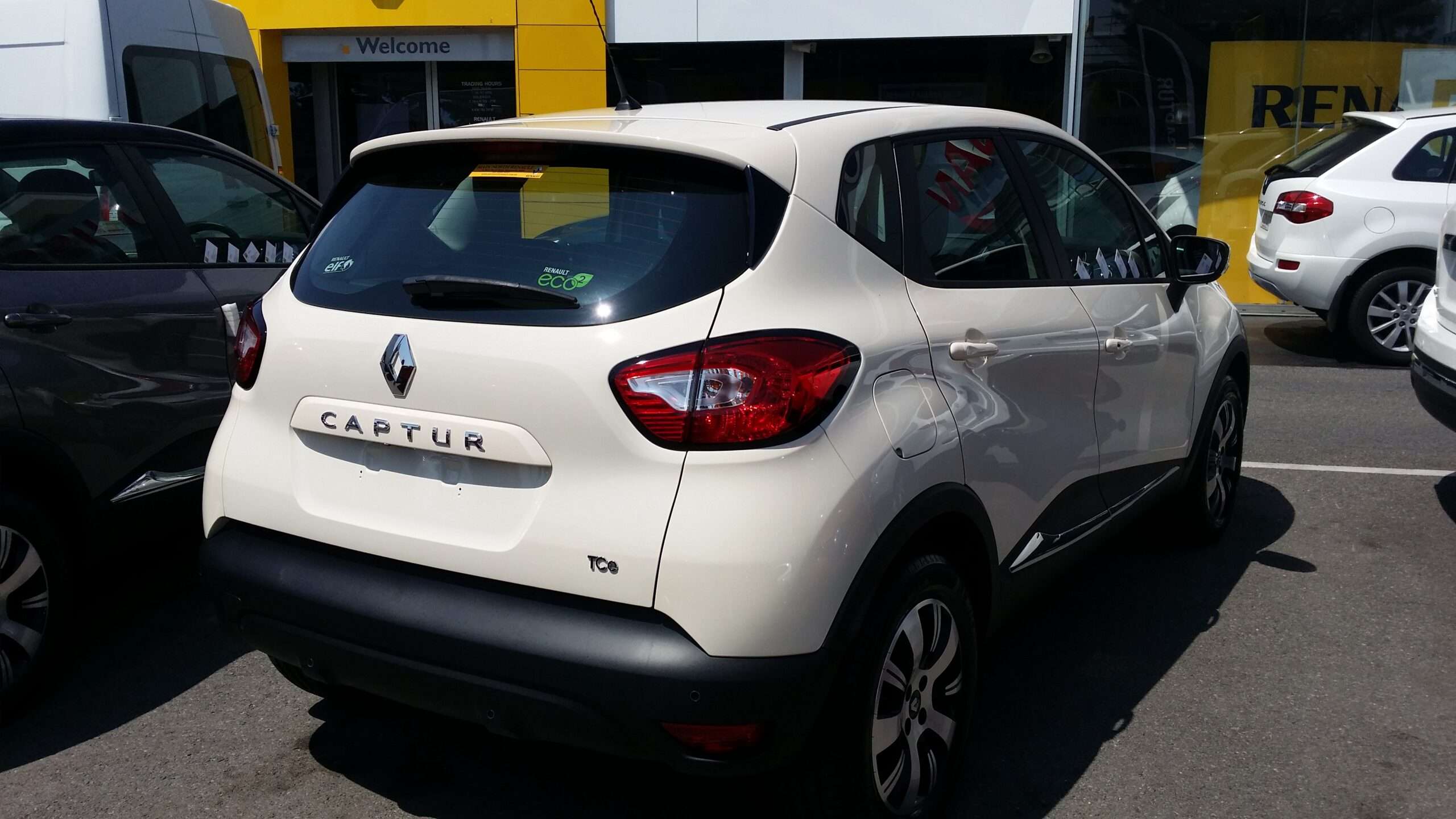
Try the rear bench in its different positions and test seatbacks and latches. More luggage room can mean less rear legroom, so check the arrangement you will actually use. Make sure child seats do not prevent the driver’s normal seating position. Inspect the load floor, luggage cover and any removable storage pieces for damage or absence.
Some versions use distinctive removable or washable seat-cover arrangements. Check the actual trim, zips and fittings rather than assuming every Captur has them. Inspect beneath mats for dampness and look for stains around roof or door seals. A heavily perfumed cabin warrants questions about leaks, pets or previous smoking.
Test the key cards, locks, windows, mirrors, heater and air conditioning. Start with the cabin warm enough to judge cooling. A statement that it needs only a regas is not a diagnosis; establish whether the system leaks. Key-card replacement and programming also cost more than an empty shell advertised online.
Try the fitted multimedia system with your own phone and check its menus and screen response. Different years and specifications use different equipment. Do not infer smartphone integration or map support from the current Captur brochure. Ask whether subscriptions, updates and account transfers are included or still available for the fitted system.
Chassis, body and road-test checks
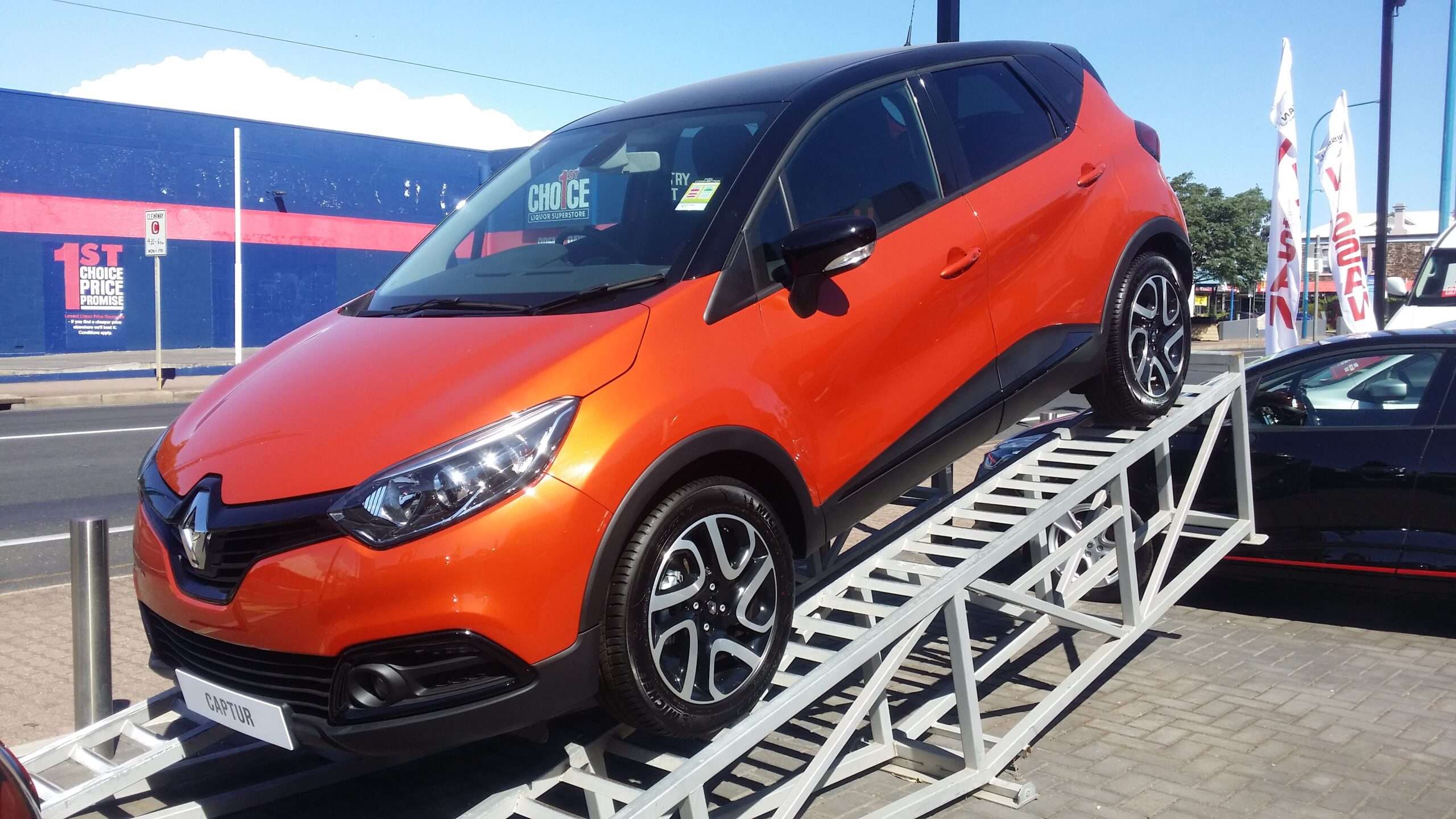
Walk around in daylight and compare paint finish and panel alignment. Inspect bonnet and door shut areas, bumper corners and the boot floor for evidence of poor repairs. Cosmetic scuffs can be negotiable; structural distortion, unclear identity or unexplained repairs require a more serious assessment.
Inspect tyres across their accessible width and check age, sidewalls, sizes and load ratings. Large wheels can add replacement expense. Uneven wear may reflect worn parts, alignment or impact damage. A new front tyre and a recent tracking receipt do not prove that an underlying suspension problem was fixed.
On mixed roads, listen for knocks, wheel-bearing hum and loose trim. Steering should be stable and braking predictable. A pull, vibration or repeated clunk deserves diagnosis rather than a guess at a cheap link rod. Have an inspector check underside condition, joints, bushes, springs and dampers on a lift.
Ask for brake measurements and the actual axle scope of any proposed replacement. Surface rust after standing can differ from deeply corroded or worn discs and sticking components. Assess parking-brake operation safely and confirm all warning lamps perform their normal checks. A recent MOT is useful history, not a substitute for a purchase inspection.
UK maintenance costs: understand A and B servicing
Renault’s current Advantage menu lists petrol A service at £180, B at £269 and combined A&B at £365. The distinction matters: A is cabin-filter replacement and checks; the petrol B includes engine oil and filter. The published terms exclude diesels and vehicles outside the A&B schedule. Confirm your car’s eligibility and additional age/mileage operations.
| Job | Published reference | Parts, labour and application |
|---|---|---|
| Petrol A service | Renault Advantage £180. | Cabin filter and checks; do not describe it as an oil service. |
| Petrol B / combined A&B | £269 / £365. | B includes oil/filter and checks. Published menu includes parts, labour, oil and VAT, subject to eligibility. |
| Spark plugs | Renault petrol menu: three-cylinder £140; four-cylinder £165. | Fitted supplementary-operation references; confirm application and whether booked alongside service. |
| Brake fluid / air filter | £90 / £50 on the petrol menu. | Confirm scope and any additional charge when booked separately. |
| Front pads / pads and discs | £189 / £365 listed, with stated exceptions. | Confirm Captur build, brake size and complete fitted scope. |
| Diagnostic work | Renault menu: up to one hour £130. | Diagnosis time, not a guarantee that the fault will be resolved in an hour. |
| 0.9 TCe online service kits | Observed examples around £43–£107 depending on filters, oil and plugs. Compare 0.9 kits. | Parts only. Diesel and 1.2/1.3 kits are separate applications. |
| dCi belt / EDC repair | Requires correct engine/gearbox and defined job. | No verified universal fitted quote used here; ask for written parts, labour, fluids and VAT breakdown. |
Do not use the petrol menu to estimate a diesel service or treat an automatic-oil menu entry as proof that every EDC has the same requirement. Ask Renault or a specialist to identify the current maintenance plan from VIN and mileage. Keep invoices that show exactly which filters, fluids and additional operations were completed.
For the purchase budget, add known immediate work to the asking price. Compare two cars after allowing for tyres, belt evidence where relevant, key cards, service due and any unresolved diagnosis. A quoted engine repair, a timing-belt service and an oil change are different scopes; do not combine the cheapest component prices into an optimistic fitted total.
Captur Mk1 service-parts comparison table
These searches distinguish engines where it matters. Verify original part numbers and current oil approval, and check set quantities: the 0.9 is a three-cylinder, while an online kit may be catalogued for another engine. Diagnostic work should precede major parts purchases.
| Item | Fitment / maintenance check | eBay UK comparison |
|---|---|---|
| 0.9 oil/filter service kit | Correct approval, quantity and engine application. | 0.9 service kits |
| 1.2 TCe service kit | Do not substitute a 0.9 or 1.3 kit. | 1.2 service kits |
| 1.3 TCe service kit | Confirm late Mk1 engine and build. | 1.3 service kits |
| 1.5 dCi filters | Correct diesel fuel, oil and air filter application. | dCi service filters |
| Petrol spark plugs | Correct heat range and three/four-cylinder quantity. | 0.9 spark plugs |
| dCi timing-belt kit | Engine code, associated work and current interval. | dCi belt kits |
| Cabin filter | Correct size and pollen/carbon specification. | Cabin filters |
| Auxiliary belt / tensioner | Engine-specific routing and components. | Auxiliary belts |
| Alternator | Output, connector, engine and start-stop system. | Alternators |
| 12-volt battery | Technology, dimensions and required configuration. | Batteries |
| Front discs and pads | Match actual caliper and disc diameter. | Front brake parts |
| Wiper blades | Correct front/rear lengths and arm fittings. | Wiper sets |
Hidden ownership costs
Missing key cards, damaged load-floor components and non-working air conditioning are tangible costs, even on an otherwise tidy car. Obtain fitted quotations rather than relying on online parts prices. Check whether both cards start the vehicle and whether all locking functions work. A replacement card must be compatible and programmed.
Check current tax and insurance against the registration. For a diesel, confirm clean-air-zone status for the places you expect to visit. Ask insurers about any aftermarket wheels, remap or towbar where relevant. A modification the seller describes as “only cosmetic” can still need declaration.
Compare any warranty’s actual exclusions, claim limits and diagnostic responsibility. A policy may not cover a known fault, service neglect or wear. Keep enough money for ordinary maintenance even when a warranty is supplied. A more expensive car with demonstrably completed work can be cheaper to own than a low-priced example needing several jobs immediately.
Comparing Capturs without confusing their running costs
A petrol buyer’s first-year plan
Start by identifying which scheduled operations are due, then ask Renault to confirm whether the car follows the A&B plan. A £180 A service and a £269 B service buy different work. If spark plugs, air filter or brake fluid are also due, ask whether the quote includes them and whether supplementary prices assume they are completed alongside a service.
For a 0.9 TCe, check the quantity and specification of plugs rather than accepting a four-cylinder kit returned by a broad model search. For a 1.2, put documentary oil-use evidence ahead of optional equipment. For a late 1.3, confirm that both the part application and service plan belong to the actual Mk1 build rather than a later Captur.
A diesel buyer’s comparison
Compare a dCi’s potential fuel saving with its actual maintenance position. If timing-belt evidence is missing, obtain a fitted quote for the correct engine and include it in the purchase calculation. If emissions warnings or regeneration problems exist, price diagnosis separately; a belt service cannot resolve a DPF complaint.
Ask the seller to describe a normal week’s journeys rather than simply annual mileage. A high annual total can still include repeated short delivery trips, while a modest annual total may include regular long journeys. Neither description proves current condition, but it helps an inspector decide which symptoms and records deserve attention.
An EDC buyer’s test route
Include the manoeuvres that matter to you: reversing into a parking space, pulling away on an incline and crawling in ordinary traffic. Repeat them after the car is fully warm. Do not judge the transmission only by how smoothly it cruises once already in a high gear. Hold the car with its brakes on hills instead of deliberately slipping the clutches with the accelerator.
If a fault appears, ask for a written diagnosis before negotiating a repair allowance. A software adjustment, clutch assembly and complete gearbox replacement have different costs and implications. A seller’s claim that a reset will resolve it should be demonstrated by completed work and a repeat test, not reflected as an unproven bargain in the asking price.
Check the family-car details at handover
Move the rear bench through its range, latch the seatbacks and confirm your child seats still leave adequate front-seat space. Check the boot floor and parcel shelf are the ones shown at the viewing. Demonstrate both key cards, the cooling system and phone connection again if repairs were promised. These practical checks protect the usefulness of the car you are buying, rather than merely verifying that the engine starts.
Viewing checklist in purchase order
- Before travel: obtain registration, VIN, exact engine and transmission, service invoices, oil-use information and belt history for a dCi. Arrange a cold start and enough time to warm the car properly.
- History: check finance, recorded damage and MOT chronology. Confirm outstanding campaigns and current service instructions through Renault.
- Static checks: inspect fluids safely, tyres, body repairs and dampness. Test sliding seats, boot furniture, multimedia, air conditioning and both key cards.
- Cold start: observe warnings, idle, smoke and unusual noises. Ask for an explanation supported by diagnosis if anything is abnormal.
- Drive: include slow manoeuvres, inclines, uneven roads and normal acceleration. Pay particular attention to EDC behaviour when warm and to diesel emissions messages.
- Inspection: request a lift inspection and relevant diagnostics. Separate confirmed defects from suggested further investigation.
- Decision: obtain written fitted costs. Do not buy an unresolved oil-use, coolant-loss or gearbox complaint on the assumption that it only needs a cheap sensor or software reset.
Frequently asked Captur buying questions
Which engine is the best starting point?
A documented 0.9 TCe manual is a sensible first comparison for mixed local use. A later 1.3 may appeal with more budget; a dCi suits regular longer journeys. The inspected car’s condition still leads.
Should I avoid every 1.2 TCe?
Judge the actual evidence, but require a clear account of oil use, servicing and any engine repairs. An unexplained consumption complaint needs diagnosis before purchase.
Does every Captur have a timing belt?
No. Engine families differ. The 1.5 dCi belt history is a specific priority; do not apply its kit or schedule to a petrol TCe.
Is EDC a conventional automatic?
It is a dual-clutch transmission. Identify the application and test it cold and warm; generic torque-converter or DSG servicing assumptions are not enough.
Is Renault’s A service an oil change?
The cited petrol Advantage menu describes A as cabin filter and checks. B includes oil and filter. Confirm your actual schedule before comparing prices.

Love cars you don’t see every day?
Get forgotten cars, surprising motoring stories and the most interesting finds from Unusual Cars by email.
Free to join. No spam. Unsubscribe whenever you like. See our privacy policy.