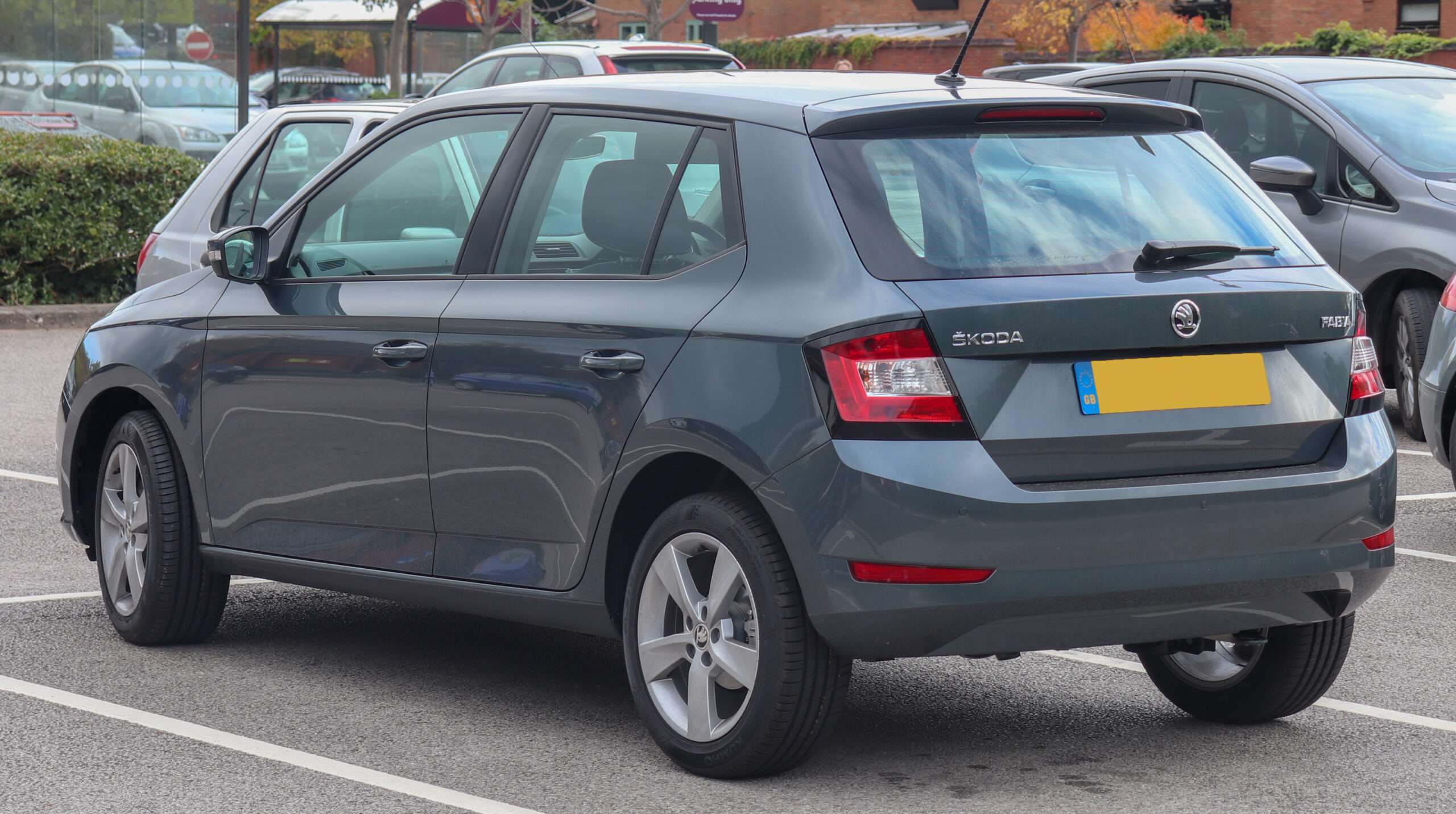
The Škoda Fabia Mk3 petrol makes a persuasive used buy if you want useful space without paying SUV prices. It is compact enough for town, the estate carries an impressive amount of everyday luggage, and the turbocharged versions have enough flexibility for journeys beyond the school run. The buying decision is less about finding the most elaborate trim and more about choosing the right engine, gearbox and maintenance history.
This guide covers the third-generation Fabia hatchback and estate, approximately 2015–2021 UK cars, with 1.0 MPI, 1.2 TSI and 1.0 TSI petrol engines. It does not cover the preceding Fabia Mk2, diesel engines or the fourth generation. Registration dates overlap generation changes: identify the actual car before using any engine or parts advice.
Affiliate disclosure: we may earn a commission from qualifying eBay purchases through links on this page, at no extra cost to you. Search results are a starting point; registration, VIN, engine code and supplier confirmation determine fitment.
Quick verdict: which Fabia Mk3 should you buy?
A well-maintained 1.0 TSI manual is the starting point for mixed UK driving. The 95 PS version suits everyday use; the 110 PS model gives more flexibility when loaded. An earlier 1.2 TSI manual can be equally sensible if its condition and invoices are better. Choose the naturally aspirated MPI for predominantly local trips when purchase price and simplicity matter more than overtaking performance.
A DSG automatic is worth considering if you genuinely want one, but a flawless cold-and-hot test and a proper gearbox assessment matter more than a seller’s assurance that a slight judder is normal. For maximum luggage space, try an estate before assuming you need a larger car. Avoid paying a large premium for Monte Carlo styling if it leaves no repair reserve.
1.0 MPI, 1.2 TSI or 1.0 TSI?
1.0 MPI: the straightforward local-use choice
MPI means the non-turbo petrol option here. Its appeal is uncomplicated delivery, particularly for drivers doing short urban journeys who do not need a turbocharged engine’s stronger mid-range pull. Drive it with the people and luggage you normally carry in mind. A lightly occupied test around a flat dealership can disguise how much more gear-changing you will want on a steep road or motorway slip road.
Do not mistake a modest engine’s willingness to rev for evidence of abuse, but distinguish that from misfiring, hesitation or excessive mechanical noise. Air-conditioning, clutch action and tyre condition have a large effect on whether an inexpensive MPI feels like a good purchase. A low price does not make deferred servicing disappear.
1.2 TSI: judge this generation on its own merits
The Mk3’s 1.2 TSI belongs to the later belt-driven EA211 family. Advice about earlier chain-driven 1.2 TSI engines must not be transferred wholesale to this car. Check the engine code, service requirements and invoices rather than using a generic internet description of a “1.2 TSI problem”. An engine change or an incorrectly described advertisement is another reason to verify identity.
Its useful torque makes the 1.2 TSI attractive for commuting and occasional long trips. Inspect coolant level, warm-up behaviour, smooth boost delivery and the history of any cooling-system work. Treat a persistent warning light or unexplained top-ups as an unresolved fault requiring diagnosis, rather than buying replacement parts on a guess.
1.0 TSI: the later all-rounder
Škoda’s March 2017 release confirms that the three-cylinder 1.0 TSI replaced the four-cylinder 1.2 TSI in both hatchback and estate. The 95 PS version was paired with a five-speed manual; the 110 PS version had a six-speed manual or seven-speed DSG. Those are useful distinctions when comparing listings that simply say “1.0 petrol”. Check the actual derivative and transmission, not just the badge.
The three-cylinder character is different from the 1.2’s. A different sound does not excuse rough running, a flashing engine warning or poor response. Try steady low-speed driving, a clean acceleration through the middle of the rev range and a restart after the test. Avoid an engine with unexplained tuning if your priority is predictable everyday ownership.
Manual or seven-speed DSG?
The manual is the easier default when reducing complexity is the objective. Check the clutch for smooth take-up, slipping under sensible load and noise that changes with pedal position. Try every ratio, including reverse, once the car is warm. A difficult shift should be investigated rather than blamed automatically on the driver.
The small-petrol seven-speed DSG uses a different arrangement from the wet-clutch DSG units fitted to some larger models. Do not prescribe a universal wet-DSG oil-change package to it. Identify the gearbox code and obtain its actual maintenance requirements. A general “DSG serviced” stamp does not establish that the correct work was performed.
Test slow forward movement, reverse, a gentle incline and repeated stop-start traffic after warming through. Significant judder, delayed engagement, warning messages or loss of drive justify specialist inspection before purchase. Clutch and control-system repairs are separate possibilities with very different scopes; an oil change is not a diagnosis or a guaranteed cure.
Hatchback, estate and trim: buy the useful equipment
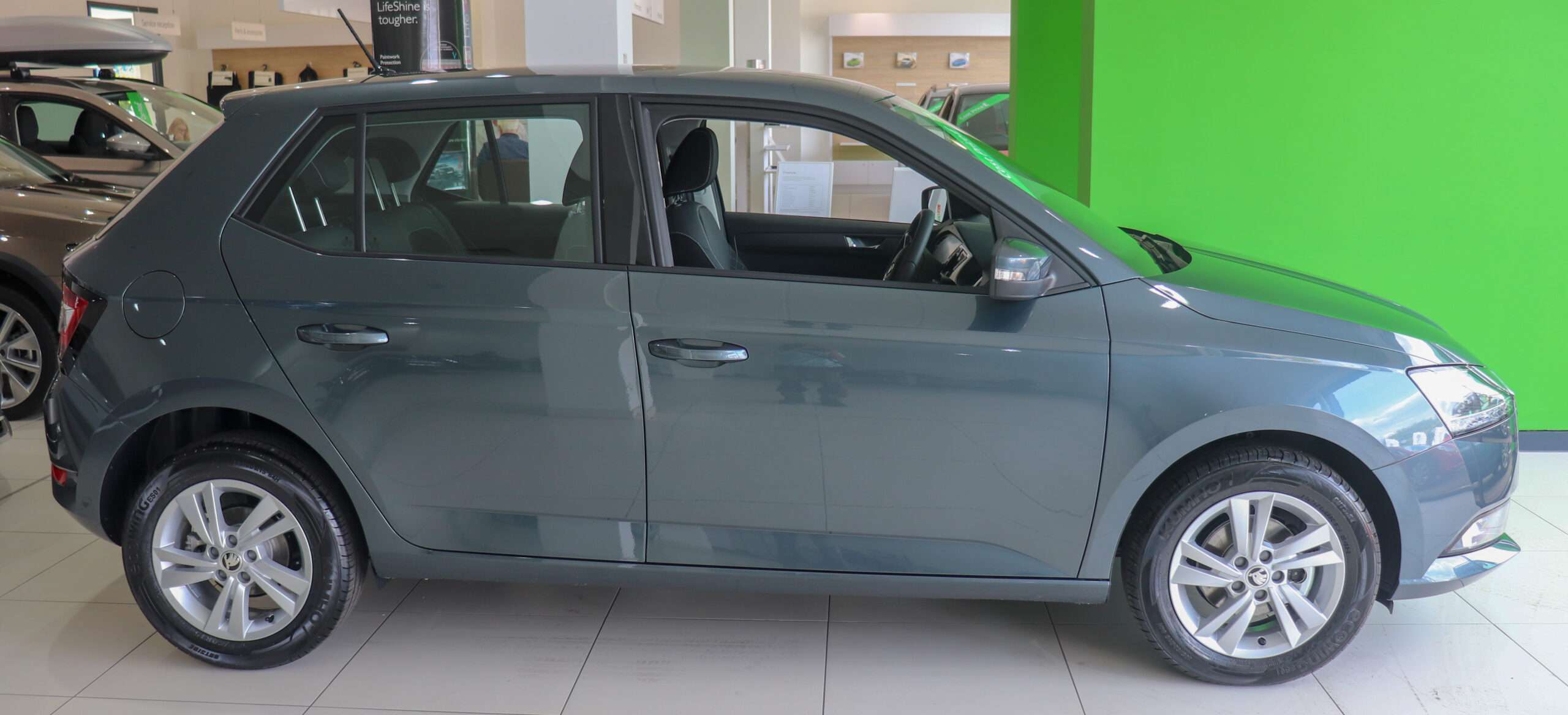
The hatchback makes sense when parking space matters; the estate is particularly worth viewing for dogs, buggies and regular luggage. Bring the objects you actually carry, measure the opening and check the seat-folding arrangement. Payload and roof-load limits come from the individual vehicle’s documents, not the visual size of its boot.
SE, higher trims and Monte Carlo versions differ in equipment and appearance. Confirm air-conditioning operation, cruise control, parking aids, smartphone integration and spare-wheel provision on the actual car. Škoda offered various assistance and connectivity features; a press photograph or a trim name is not proof that an advertised example has them. Older connected services may require compatible hardware or subscriptions, and availability can change.
The facelift’s revised appearance can attract a premium. Decide whether its equipment and condition justify that premium rather than treating registration year as a mechanical guarantee. Check larger wheels carefully: damaged rims and expensive tyres can make a stylish example less economical than an ordinary car on smaller wheels.
UK prices: compare like with like
At the time of research, advertised eBay examples included a 2017 1.2 TSI 90 SE at £4,750 with around 95,000 miles, a 2016 1.2 TSI Colour Edition at £5,495 with around 99,000 miles, and a 2018 1.0 TSI Monte Carlo estate at £6,495 with around 64,000 miles. These are individual asking prices, not completed-sale values, a valuation formula or proof that each car is sound.
Build your own comparison set with the same engine, gearbox, body style and broad mileage. Separate dealer and private offers and note what the advertised warranty actually excludes. A cheaper DSG with symptoms is not directly comparable with a healthy manual. Likewise, a clean estate can merit more than a neglected hatchback even if both have similar mileage.
Agree your budget in three parts: purchase, immediate documented catch-up work and a reserve for faults found after purchase. If servicing, tyres and brakes consume the entire reserve on day one, negotiate accordingly or look for a better maintained car. Finance settlement and vehicle-history checks belong before payment, not after collection.
A practical Fabia Mk3 viewing checklist
Before the journey
Ask for the registration, derivative, gearbox type, service invoices and confirmation that the engine will be cold. Read the UK MOT history for repeated tyre, suspension and brake advisories. A subsequent pass shows that the test requirements were met on that day; it does not itemise the repairs or replace an inspection. Match mileage progression with invoices and the seller’s account of ownership.
Check the VIN and registration against the vehicle and documents. Ask a Škoda retailer to confirm outstanding campaigns against the VIN. An MOT pass is not evidence that every recall or service campaign is complete. If the seller cannot explain a discrepancy, pause the transaction until it is resolved independently.
Engine bay and cold start
Look for fluid staining, improvised repairs, missing covers and a recently cleaned area that contrasts with the rest of the bay. Check coolant only when the engine is cold and safe to inspect. Low level or dried residue around joints warrants investigation. Do not remove a hot expansion-tank cap. An invoice for a past repair is useful only when the present system is dry and behaving correctly.
Start without the seller warming it first. Warning lights should complete their normal checks. Listen for persistent abnormal noise, watch for uneven idle and observe the exhaust without assuming condensation on a cold day is a head-gasket failure. A recurring misfire, heavy smoke or an oil-pressure warning needs professional diagnosis. Do not continue driving a car showing a serious warning merely to finish the test route.
Body, underside and water ingress
Examine panel gaps, paint transitions, lamps and the boot floor for evidence of repairs. Check the sill edges and jacking points for lifting damage. Look below the load floor and feel carpets for dampness; a dry mat placed over a wet floor can hide a problem. On an estate, pay attention to the tailgate, load cover and signs of regular heavy use.
Inspect tyres across the full tread and compare brands, sizes and age. Uneven wear may reflect alignment, suspension damage or pressure neglect. Look at wheel damage in context with steering position and road behaviour. Corroded brake surfaces, sticking operation or a weak handbrake require a properly scoped estimate, including whether the individual car has rear drums or discs.
Road test
Use a varied route and get the engine fully warm. The Fabia should steer consistently without a pull, suspension clatter or vibration that grows with speed. Brake progressively when safe and look for judder, pulling and an inconsistent pedal. A dealer’s promise to replace “the pads” does not address a sticking caliper or a damaged disc unless the repair order says so.
For a TSI, check smooth response under moderate acceleration without labouring the engine in too high a gear. Watch the temperature indication and check for warnings. On a manual, compare clutch behaviour cold and warm. On DSG, repeat parking manoeuvres after the road test, because an initially smooth cold departure is only half the assessment.
Cabin and equipment
Operate every window, door lock, mirror, steering-wheel control and infotainment function. Pair your own phone while stationary, with the seller’s permission, and confirm the connection you need actually works. Check air-conditioning beyond the presence of an illuminated button. Screen faults, a missing key and failed parking sensors can materially change the value of a budget car.
Try the driver’s position for at least several minutes. Check seat adjustment, belt operation and rear accommodation behind your normal driving position. If fitting child seats, test the relevant fixing points and access rather than assuming all small hatchbacks are interchangeable. Inspect seat and pedal wear alongside the mileage, without treating wear alone as proof of clocking.

Love cars you don’t see every day?
Get forgotten cars, surprising motoring stories and the most interesting finds from Unusual Cars by email.
Free to join. No spam. Unsubscribe whenever you like. See our privacy policy.
Maintenance: what the records should prove
Ask for dated invoices stating oil specification, filters, mileage and the work completed. Škoda’s servicing information distinguishes routine oil inspection from extended-scope work and additional maintenance. The right schedule depends on vehicle and service regime; obtain it against the VIN rather than adopting an interval from a different engine or a generic listing.
For the belt-driven petrol engines, establish the manufacturer’s current inspection/replacement advice for that exact engine and market. A brief view through a cover does not prove a belt’s entire condition. If age, provenance or contamination makes the history uncertain, commission a professional assessment and quote before paying. Do not confuse the auxiliary belt, timing belt and any separate pump-drive arrangement on a parts invoice.
Cooling-system repairs need particular clarity about what was replaced and why. Ask whether a pressure test established the leak, which housing or pump was fitted and whether the correct coolant was used. A system that still loses fluid is unresolved even if the seller has a box of new parts. Avoid adding incompatible coolant to make a viewing appear satisfactory.
Brake fluid, spark plugs, filters and air-conditioning are not automatically included in every advertised service. The official Škoda fixed-price information explicitly treats brake fluid as an additional item. Request an itemised catch-up plan so that an attractive service headline does not obscure necessary extras.
Published UK prices: parts, labour and fitted scope
| Job or item | Published price | How to interpret it |
|---|---|---|
| 1.0 TSI oil/filter service kit | Example advertised £62.81 parts only | eBay snapshot; check oil approval, capacity and engine code. No labour included. |
| 1.0 TSI broader filters, plugs and oil kit | Example advertised £120.99 parts only | Contents vary. Compare the actual brands and quantities. |
| Fixter Fabia 1.2 Colour Edition full service | Estimated £116–£182 | Provider’s model estimate; generation and registration must be confirmed. Not a Škoda tariff. |
| Same provider/model major service | Estimated £201–£316 | Confirm included plugs, filters, oil specification, VAT and extra work before booking. |
| Sytner Škoda diagnostic work | £100 for the first 30 minutes | Initial diagnostic block, not a universal hourly labour rate or a promise to fix the fault. |
| Timing-drive, clutch or DSG repair | Vehicle-specific written quotation | Ask for parts, labour, VAT, diagnosis and associated work separately. No reliable single price covers all versions. |
These sources do not provide a defensible stand-alone labour figure for every job, so one has not been invented. A fitted-service estimate already includes its stated work; do not add the parts-kit price to it unless supplying those parts is an agreed separate arrangement. Workshop acceptance of customer-supplied parts and warranty terms should be settled first.
A useful planning example is a £201–£316 major-service estimate plus a £100 initial diagnostic block: £301–£416 before any separately authorised repairs. That arithmetic is a scoped scenario, not a predicted annual bill. If the diagnosis identifies a gearbox fault, the repair belongs in a new quote and may change the buying decision completely.
Fabia Mk3 service parts: compare the correct version
The links below open model-specific eBay UK searches using our affiliate campaign. A search result can still be wrongly categorised. Use the registration, VIN and engine or gearbox code, and compare OE references with the supplier before ordering. In particular, MPI and TSI ignition/service components, brake sizes and battery requirements are not automatically interchangeable.
| Service part | Fitment and buying advice | eBay UK comparison |
|---|---|---|
| Oil and filter kit | Match the engine code, oil approval and quantity; MPI kits differ. | Compare oil and filter kit |
| Air filter | Check engine and airbox reference. | Compare air filter |
| Cabin filter | Compare standard and activated-carbon options. | Compare cabin filter |
| Spark plugs | Check heat range and exact engine; do not substitute MPI plugs by appearance. | Compare spark plugs |
| Timing-belt kit | Identify engine and complete job scope; a kit title is not proof of pump-drive compatibility. | Compare timing-belt kit |
| Auxiliary belt | Match engine, accessories and belt length. | Compare auxiliary belt |
| Front discs and pads | Confirm brake code, diameter and pad arrangement. | Compare front discs and pads |
| Rear brake service parts | First identify whether your vehicle has drums or discs. | Compare rear brake service parts |
| Battery | Match technology, capacity, size and any required adaptation. | Compare battery |
| Alternator | Match engine, rating, pulley and connector; check surcharge on exchange units. | Compare alternator |
| Wiper blades | Confirm front set and body-specific rear fitment. | Compare wiper blades |
| Manual clutch kit | Manual only; establish gearbox code and whether release parts are included. | Compare manual clutch kit |
Hidden ownership costs worth budgeting for
Buying a neglected service history. A stamped book without itemised invoices may leave plugs, brake fluid and timing-drive decisions unanswered. Price the actual catch-up work rather than assuming a generic “full service” solves every maintenance question. A seller who agrees to have work done should provide the invoice and completed scope before handover.
Automatic convenience. DSG diagnosis, clutch work and electronic control repairs cannot be reduced to the cost of a routine oil service. Paying for an independent assessment is especially sensible if reverse is hesitant or warm parking produces a tremor. A warranty is useful only when its limits, exclusions and claim authorisation genuinely cover the concern you have identified.
Tyres, wheels and brakes. A four-tyre replacement can overwhelm a small discount, particularly on larger wheels. Price the right size and load/speed rating and include fitting, valves and disposal. For brakes, establish whether discs, pads, shoes, drums or a sticking mechanism are needed. An uneven wear pattern may also justify alignment or suspension investigation.
Equipment that is costly relative to the car. Missing keys, non-functional air-conditioning, damaged infotainment and parking-sensor faults deserve written estimates. “It only needs regassing” is a hypothesis until a leak and performance test support it. Check whether a quoted screen repair includes coding or component protection where relevant.
Insurance, tax and recovery. Obtain registration-specific insurance and tax figures before paying. First registration date, emissions and vehicle classification affect the tax position; do not assume all 1.0-litre cars pay the same amount. Budget for breakdown cover if you depend on the car for work, particularly when collecting it a long way from home.
How to negotiate without buying someone else’s problem
Separate defects into normal consumables, overdue maintenance and unresolved faults. Tyres with measurable wear are easy to price. Missing belt history needs an engine-specific assessment. A DSG warning or coolant loss is a diagnostic uncertainty, and the eventual repair can exceed a casual price reduction. Do not treat all three categories as interchangeable bargaining chips.
For a dealer purchase, have agreed work written into the order: component, specification, who performs it and when evidence will be supplied. A broad promise to “service before collection” may only mean an oil-and-filter change. A new MOT can still leave age-related maintenance due. Inspect the car and invoice again when collecting it.
For a private sale, establish that the seller is entitled to sell and that the identity and payment details make sense. Complete appropriate history and finance checks and obtain a receipt identifying the car and agreed terms. An attractive price should not create urgency that prevents you checking the basics.
A realistic first-month ownership plan
Start with a baseline inspection by a workshop familiar with the generation. Give them the service paperwork and ask them to identify the engine, gearbox, actual service regime and outstanding items. That allows you to prioritise safety-related defects and urgent mechanical concerns before spending money on cosmetic upgrades.
Record fluid levels, tyre pressures and any warning messages after collection. Recheck them under comparable safe conditions rather than relying on memory. A falling coolant level or recurring fault light should go back for diagnosis promptly. Keep invoices together so the next service is based on evidence rather than repeating work or overlooking an item.
Familiarise yourself with the tyre repair kit or spare wheel, jack arrangements and locking-wheel key. Test the spare key. Check the service indicator against the actual maintenance plan; resetting a dashboard reminder is not the same as performing a service. For DSG cars, follow the handbook’s manoeuvring advice and avoid prolonged throttle-controlled creeping on an incline.
Fabia Mk3 buying questions
Does the 1.2 TSI have the older timing-chain issue?
The Mk3 1.2 TSI is from the later belt-driven EA211 family. Verify engine identity and follow that engine’s requirements instead of applying earlier chain-driven 1.2 TSI advice. Belt condition and documented maintenance still matter; “not the old chain engine” does not mean maintenance-free.
Is the 1.0 MPI too slow?
It can suit local use very well. Its limitation is the amount of gear-changing and planning needed with passengers, luggage and hills. Try it on a representative road. If regular motorway and loaded driving are central to your use, compare it directly with a TSI before deciding solely on purchase price.
Is the DSG automatic a reason to walk away?
Not by itself. Buy one only after a proper cold-and-hot test, verified identity and maintenance history, with no unresolved engagement or warning symptoms. If your budget cannot absorb diagnostic uncertainty, a healthy manual is usually the more straightforward buying proposition.
Is a Monte Carlo a performance model?
The name primarily identifies a styling/equipment proposition in this range. Verify the engine output and gearbox individually. Do not confuse its appearance with a different engine or assume it has the specification of a vRS model from another Fabia generation.
Should I buy the estate?
It is worth trying if boot access and carrying space matter. Check your actual load, the rear seats, tailgate and load-floor condition. Choose it for practical benefit rather than an assumed payload or towing capacity; those limits must be checked against the specific vehicle.
Our buying verdict
Start with a sound 1.0 TSI manual, compare a documented 1.2 TSI on equal terms and consider MPI when most trips are local. Choose condition and clear maintenance evidence ahead of wheel size or trim. A Fabia that passes a cold-and-hot inspection and leaves money for sensible catch-up work can be a much better purchase than a shinier car with unanswered questions.
Škoda Fabia Mk3 Petrol cars for sale
Compare current asking prices, then verify the generation, engine, history and condition of each advertised car. Results can include incorrectly described vehicles.

Love cars you don’t see every day?
Get forgotten cars, surprising motoring stories and the most interesting finds from Unusual Cars by email.
Free to join. No spam. Unsubscribe whenever you like. See our privacy policy.