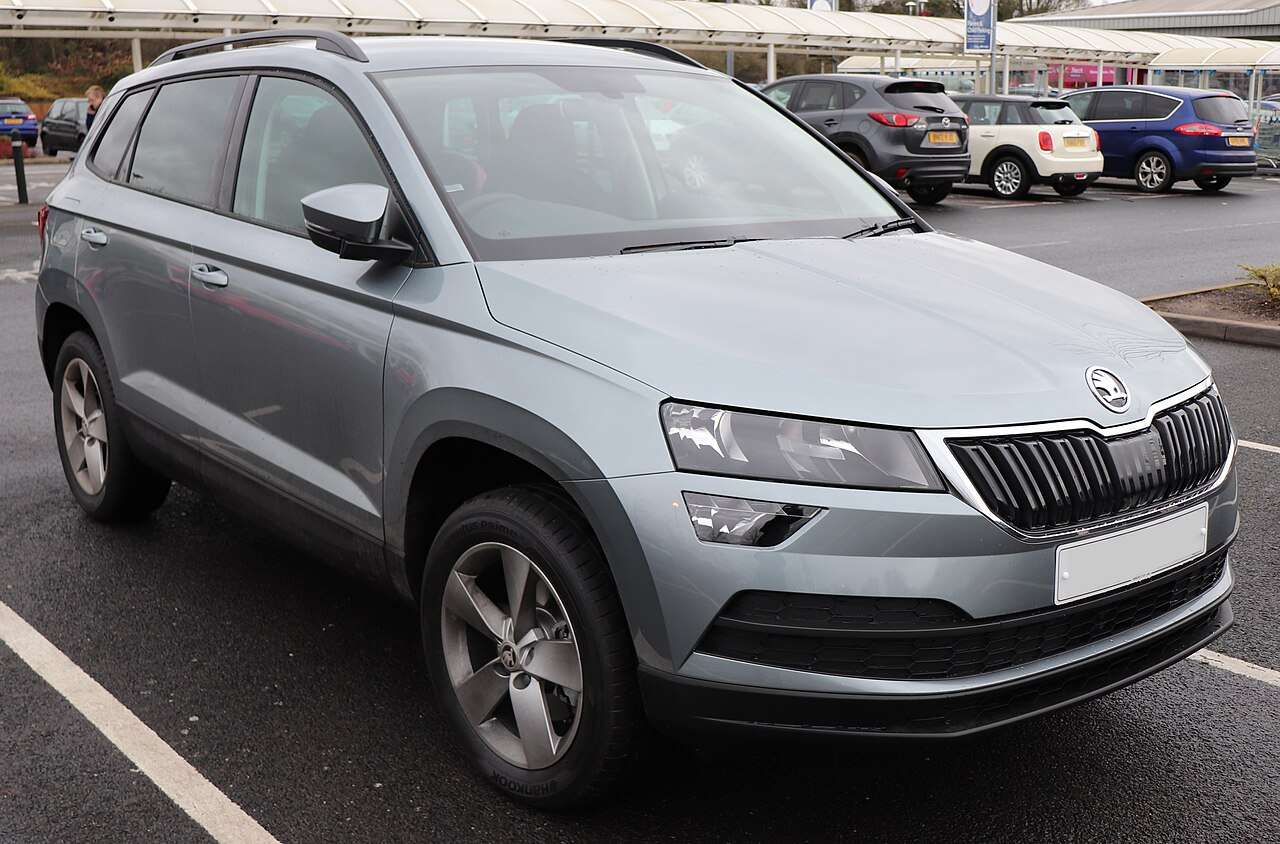
The Škoda Karoq is an appealing used family SUV because its useful features are easy to appreciate every day: sensible cabin access, a square load area, several engine choices and, on suitably equipped examples, individually removable rear seats. Choosing well requires more than finding the right colour and a familiar trim badge. A petrol manual, a diesel DSG and a four-wheel-drive example have different maintenance commitments.
This guide covers the first-generation Karoq introduced in 2017, including later updates, with mainstream 1.0 and 1.5 TSI petrol and 1.6 and 2.0 TDI diesel engines. Equipment, emissions systems, outputs and transmission combinations changed during production. Establish the VIN, engine and gearbox codes before applying any schedule or ordering parts. This is separate from our Tiguan, Yeti and performance-SUV coverage.
Affiliate disclosure: we may earn commission from qualifying eBay purchases at no extra cost to you. Links open model-specific searches, not a guarantee that every result fits your vehicle.
The buying verdict
For mixed family use, start by comparing documented 1.5 TSI examples with the gearbox you prefer. Try the 1.0 TSI if your loads and routes are modest; choose a diesel because your regular driving suits it, rather than because its advertised economy looks attractive. Buy four-wheel drive for an actual requirement and budget for its additional servicing, tyres and components.
Put a clean cold start, consistent service evidence, sound cooling and transmission operation ahead of SportLine styling or a long options list. A plainer car with working equipment and clear invoices can be the stronger purchase. A low asking price loses its attraction if it leaves you funding tyres, overdue maintenance, brake work and unresolved warnings immediately.
Which Karoq should you buy?
1.0 TSI: assess it on your real route
The small turbocharged petrol makes sense for buyers who value a manageable everyday car and do not routinely carry a full load or tow. Its suitability depends on what you ask it to do. A short, flat demonstration with one occupant does not establish how it feels on a steep commute with passengers and luggage.
Drive it on a representative hill and a safe faster-road section. Look for smooth boost delivery, consistent idle and clean acceleration without persistent hesitation or misfiring. Do not accept a warning light or repeated stumble as simply the character of a small engine. Conversely, ordinary performance limits are a reason to choose a different version, rather than evidence of a mechanical fault.
1.5 TSI: the useful all-round petrol
The 1.5 TSI adds flexibility and uses cylinder-deactivation technology. Škoda’s launch material identifies this feature specifically; it does not mean that every light-load change in sound is a defect. What matters at a viewing is whether the actual car pulls consistently, starts cleanly and remains comfortable at low speed.
Arrange to drive it from genuinely cold, especially if the seller has already mentioned hesitation or previous software work. Try gentle pull-away, a safe incline and low-speed traffic without deliberately labouring the engine. If the car repeatedly lurches or loses response, have the cause diagnosed before buying. An assurance that a software update will fix it is not the same as an invoice and a successful cold retest.
Ask which updates or campaigns have been completed and what symptoms prompted them. Software status does not exclude ignition, fuelling, clutch or other mechanical faults. A warm demonstration can conceal a concern which only appears on the first journey of the day. If the seller cannot offer a cold start, build a second visit into the decision.
1.6 and 2.0 TDI: choose by use, not badge
A diesel can suit regular longer journeys and loaded driving. It is less compelling if most trips end before the car warms thoroughly. Inspect the actual emissions equipment and service history rather than treating all Karoq diesels as identical. Engine size alone does not tell you its output, transmission, driven wheels or exhaust-treatment specification.
Ask about recent warning lights, regeneration issues, EGR repairs and AdBlue work where applicable. A full additive tank is not proof that dosing, sensors and emissions controls are healthy. Repeated interrupted regeneration, unexplained rising oil level, persistent smoke or an emissions countdown needs diagnosis; a long test drive is not a substitute for repairing a fault.
For a higher-mileage diesel, examine how the mileage was accumulated and what has actually been replaced. Consistent motorway use with documented servicing can be preferable to uncertain low-mileage short-trip use. Neither pattern is a guarantee. Check the MOT mileage trail, invoices and the condition of controls, seats and load area for a coherent story.
Trim, facelift and equipment
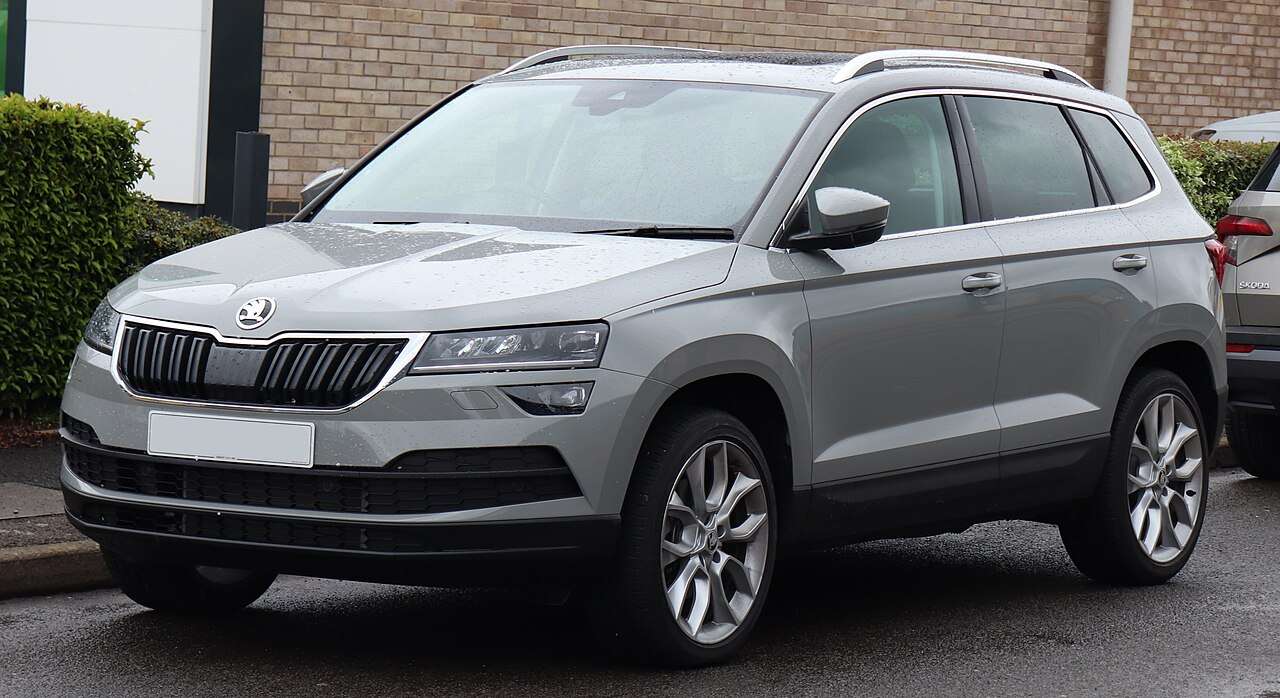
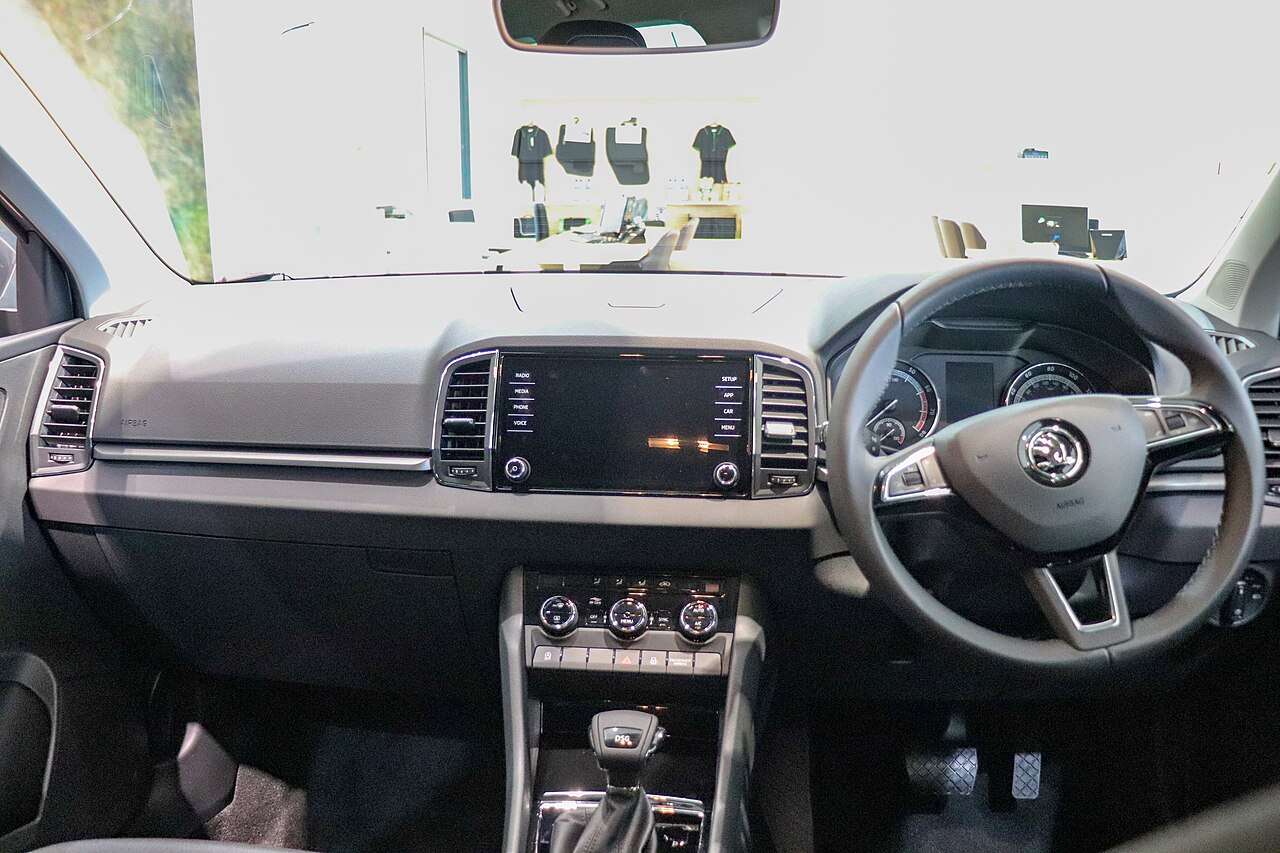
SE, SE L, Edition, SE Technology and SportLine names appear across different years and packages. Treat them as a starting point for questions, not an equipment warranty. Demonstrate climate control, parking aids, lighting, phone integration and assistance systems on the individual car. An advertisement copied from a specification database can contain features the car never had.
Later styling, a digital instrument panel or a larger screen does not automatically make a car a better buy. Decide which functions you will use and price their condition. Larger wheels can affect tyre cost and ride comfort; a panoramic roof adds an inspection task. Compare the actual ride on broken roads before paying for a visual specification you may not enjoy.
VarioFlex rear seats: check what is fitted
The original press kit describes a 521-litre boot with the ordinary rear-seat arrangement and a maximum 1,810 litres with VarioFlex seats removed. Those figures represent different configurations, not space available simultaneously. VarioFlex uses three separate rear seats; it should not be assumed from the model name or from a generic photograph.
If the feature matters, see the individual seats slide, fold, release and latch correctly following the handbook. Check that all seats, head restraints, belts and associated pieces are present. Bring your child seats, dog crate or usual luggage and try them. Do not discover after purchase that the advertised flexibility belongs to a different seating installation.
Love cars you don’t see every day?
Get forgotten cars, surprising motoring stories and the most interesting finds from Unusual Cars by email.
Free to join. No spam. Unsubscribe whenever you like. See our privacy policy.
Manual, DSG and four-wheel drive
Manual gearbox and clutch
Work through all ratios cold and warm, including reverse, and judge clutch take-up in normal use. A sensible hill start and gentle manoeuvring are more informative than an abusive stall test. Listen for abnormal vibration or rattling at idle and changes when the clutch is operated. A high bite point alone does not establish which parts need replacing.
If there is slipping, dragging, repeated crunching or excessive pedal effort, get a complete fitted estimate. Ask whether flywheel, release mechanism, seals and any necessary hydraulic work are included. A cheap clutch kit advertised online is a parts price, not the amount needed to resolve every driveline symptom.
DSG: identify the transmission before its service schedule
The Karoq range uses different DSG applications. The phrase seven-speed automatic does not establish a single clutch design, oil procedure or maintenance interval. Have a specialist identify the gearbox from the vehicle data and quote the correct work. A receipt saying gearbox service is useful only if it describes what was done to the correct unit.
Test drive and reverse selection, crawling traffic, an incline and warm parking. Look for repeated judder, delayed engagement, harsh shifts, warnings or unexpected loss of drive. A dual-clutch gearbox need not behave exactly like a torque-converter automatic, but persistent troublesome behaviour still needs investigation. Try a healthy comparable car if you are unfamiliar with the system.
Do not budget every symptom as a fluid change or an adaptation reset. Electrical supply, controls, clutch wear and internal faults require different remedies. Ask a workshop to read relevant modules and assess the complaint; a basic engine-code scan can miss transmission information. Evidence that faults were cleared is not evidence that they were repaired.
4×4: useful capability with additional checks
Confirm that the advertised car actually has four-wheel drive. Badges, an off-road driving-mode screen or a seller’s assumption are not sufficient. Check the drivetrain specification and evidence of the required coupling and transmission maintenance. A normal engine service does not establish that the rear-drive equipment was serviced.
Inspect tyres for compatible size, type, tread and rolling circumference. Look underneath for damaged guards, fluid leaks and signs of hard off-road or towing use. During a safe drive, investigate binding, unusual vibration or driveline noise. Do not provoke wheelspin or test off-road functions on unsuitable surfaces at a viewing.
If towing is part of your plan, verify the exact car’s permitted weights, towbar installation and electrical operation. Have a specialist check trailer functions where needed. The maximum figure quoted for another Karoq engine or drivetrain is not permission to tow that weight with this one.
UK buying market: compare complete cars
Our live Auto Trader check showed roughly 1,944 Karoqs across the model range. Individual advertisements included a 1.0 TSI SE at £7,495, a 1.5 TSI SE Technology DSG at £10,950 and a 2.0 TDI Scout 4WD at £11,490. These are asking examples, not completed-sale values, condition assessments or a universal valuation band.
Build a shortlist with matching year, engine, gearbox, driven wheels, mileage and equipment. Separate recorded-damage, trade-clearance and repair-project cars from prepared retail examples. Then add immediate maintenance, tyres, missing equipment and transport. Comparing headline prices alone can favour the car with the largest unpriced liabilities.
Ask the seller for registration, mileage, ownership details, invoice photographs and a candid fault list before travelling. Confirm who owns the car and who receives payment. Use an appropriate vehicle-history check and inspect identity markings against the documents. A V5C identifies the registered keeper and is not proof of ownership.
Practical Karoq viewing checklist
Before the engine starts
Agree a cold start and ask the seller not to warm the car. Look for warning lamps during their normal initial check, then observe which remain on once started. Check oil and coolant only using the handbook’s safe procedure. Never open a hot cooling system. An unusually clean engine bay deserves the same leak inspection as a dirty one.
Ask about coolant top-ups and look for staining around accessible joints, the expansion tank and below the engine. A correct level on the day does not explain repeated loss. Investigate sweet smells, dampness, temperature warnings or heater behaviour which suggests a cooling problem. Do not accept routine topping-up as a maintenance strategy.
Body, underside and accident repairs
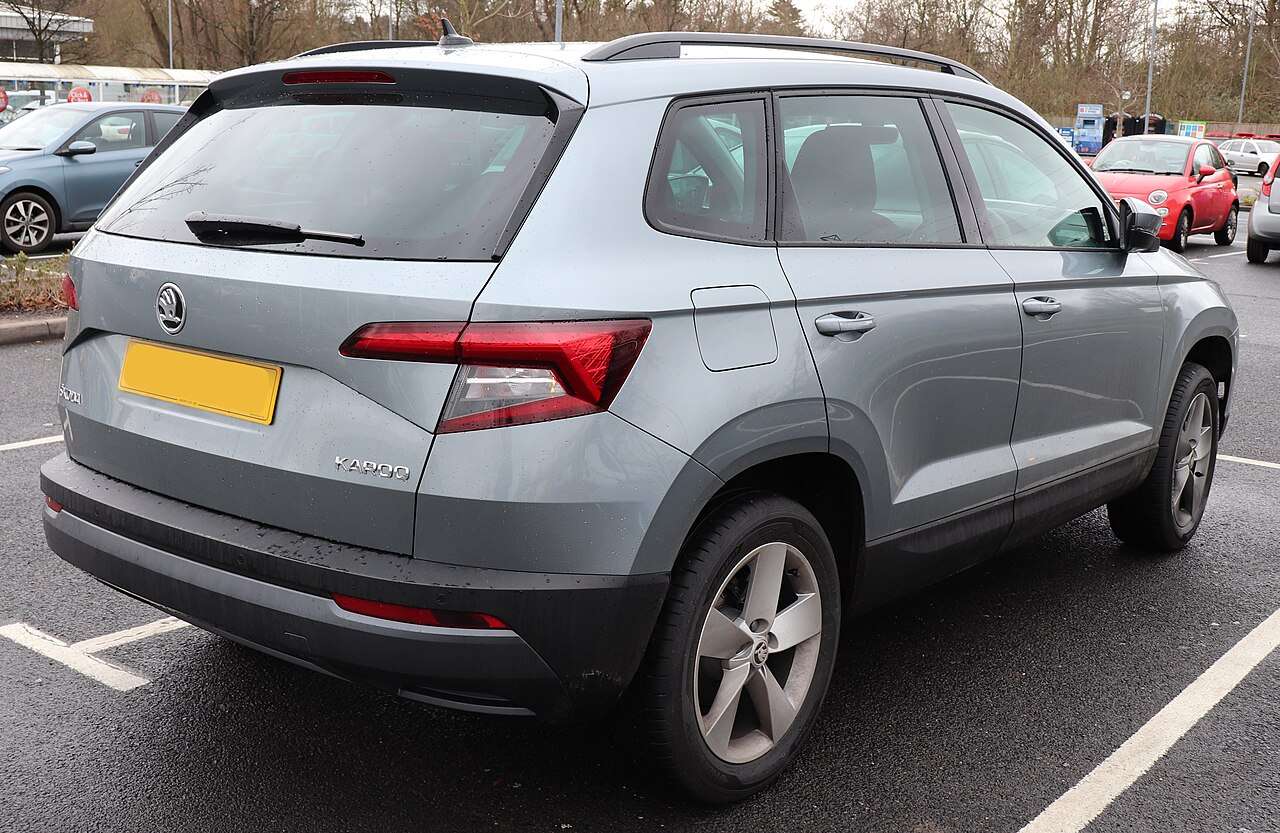
Compare paint finish and panel alignment in daylight. Inspect lamp fit, bumper attachments, wheel-arch liners, door seals and load-floor areas. A replaced bumper may have an innocent explanation, but a history of repairs should be consistent with the structure underneath. A clean history report does not rule out every unrecorded repair.
Check for damage to jacking points and accessible underbody parts, especially on cars which have towed or visited rough tracks. An SUV’s seating height does not make its underside immune to impacts. If corrosion, repairs or fluid leaks cannot be assessed safely, arrange a lift inspection rather than crawling under an unsupported vehicle.
Tyres, suspension and brakes
Read the size and load information on all four tyres and inspect inner shoulders where visible. Uneven wear can accompany alignment or suspension problems, while a nearly new outer tread can hide a worn inner edge. Note wheel damage and the presence of locking-wheel-bolt tools before discussing replacement costs.
Drive over ordinary imperfect surfaces and listen for repeatable knocks. Check straight-line behaviour and braking without unsafe hands-off experiments. Persistent pull, vibration or scraping needs diagnosis. Rear brakes and the electronic parking brake deserve attention even when the car spends much of its life on easy motorway trips.
Cabin, water entry and electrics
Lift accessible mats and inspect the boot well for dampness, staining and a musty smell. On a panoramic-roof example, inspect the headlining, seals and operation, and ask about previous water-entry repairs. A dry surface after valeting does not explain marks beneath it. Drainage investigation should follow the correct procedure rather than improvised high-pressure cleaning.
Try every door, window, mirror and key. Test climate control at different settings, the rear wiper and washer, parking sensors and any powered tailgate. Inspect seat releases and boot fittings. Multiple small defects can create a substantial first-month bill, particularly where replacing a component involves diagnosis, programming or trim removal.
Pair your own phone while parked and demonstrate the functions you need. A display which turns on is not proof of working smartphone integration, navigation, microphone or camera. Check whether connected functions need an account, subscription or transfer, and separate a missing online service from a hardware failure.
Diagnostics and road test
A useful inspection combines a cold start, representative road test, module scan and mechanical checks. Ask for a written report which distinguishes stored historic faults from current faults and records readiness or incomplete tests where relevant. No-warning-lights and no basic engine codes are narrower claims than a clean bill of health.
Return to the car after the drive. Check for fresh leaks, hot smells and changed behaviour during warm manoeuvring. Confirm temperature stability and restart operation. If the seller rushes the end of the test or will not allow an independent assessment of a meaningful concern, leave the question unresolved and do not price it as the cheapest possible repair.
Maintenance: establish what is actually due
Ask a Škoda retailer or qualified specialist to establish the schedule from the VIN, engine, gearbox, age and service regime. A dashboard reminder is not a complete list of additional tasks. The evidence should identify dates, mileages, oil approval and work completed; a stamped book without itemised invoices leaves important questions unanswered.
Škoda UK’s current maintenance page distinguishes annual oil-and-inspection work from extended-scope inspections and additional items. It also says brake fluid is charged separately when due. Treat that menu as an explanation of scope and confirm the correct requirements for the car, particularly where a previous owner followed a different permitted service regime.
Oil, filters and ignition parts
Choose the oil by its required approval, not simply its viscosity or an eBay compatibility tick. Karoq engine variants and production changes matter. Ask for invoices showing the actual product specification and interval, especially on cars with long gaps or uncertain maintenance. Replacing oil now cannot prove that earlier neglect caused no damage.
Separate the oil filter, air filter, cabin filter, petrol spark plugs and diesel fuel filter in your maintenance budget. A cheap oil change does not mean all these items were renewed. If a seller advertises a major service, ask for the job sheet; workshop packages use different names and may exclude work which the vehicle needs.
Timing belts and associated work
Do not apply one internet age or mileage rule across the whole range. Have the current timing-drive requirements checked for the exact engine and market. An engine-specific inspection or replacement instruction can change, and a seller’s recollection of an older policy is not enough. Ask the retailer to explain the applicable schedule in writing.
If belt work is due or history is inadequate, quote the complete job: correct belt and tensioning components, required fasteners, associated checks and any pump or coolant work justified by that engine’s layout and condition. Do not assume every water pump is part of an identical package. An accessory-belt invoice is not proof of a timing-belt replacement.
Transmission, coupling and brake-fluid work
Keep engine servicing, DSG maintenance and four-wheel-drive coupling work as separate invoice lines. Ask which unit was serviced, what oil or parts were used and whether the procedure included required checks. A workshop should explain why the proposed job applies to that gearbox, rather than quoting every seven-speed DSG the same interval.
Confirm brake-fluid history and the procedure needed for rear-brake work on the installed electronic parking-brake system. Brake discs, pads, wear sensors and caliper faults are separate scopes. If a cheap advertised price covers pads only, it should not be used as the budget for corroded discs or a seized mechanism.
Sourced UK fitted costs and labour time
The figures below are published provider examples, not a personalised quotation. Fixter lists parts-and-labour estimates and estimated job times for specific Karoq variants; Listers lists Škoda service starting prices. Confirm VAT, fees, parts quality, engine applicability and the full scope before booking. Do not add a parts-table price to a fitted estimate which already includes parts.
| Job and applicability | Published fitted example | Labour/scope to check |
|---|---|---|
| Listers Škoda oil service | From £209 including VAT, plus its stated £12 environmental fee | Model-dependent starting price; confirm additional scheduled items |
| Listers oil and inspection | From £255 including VAT, plus stated £12 fee | Not automatically an extended-scope service, plugs or brake fluid |
| Timing belt: Fixter Karoq 1.5 SE example | £341–£536 | Estimated 3h 45m–4h 30m; confirm exact engine and pump scope |
| Front pads: Fixter Karoq 1.5 SE example | £70–£109 | Estimated 39m–1h 24m; discs, sensors or caliper faults may add work |
| Rear pads: Fixter Karoq 1.5 SE example | £70–£110 | Confirm parking-brake procedure and disc condition |
Labour time is not a separate labour-only cash quotation, and the time ranges should not be multiplied by an invented hourly rate and presented as a workshop estimate. For a clutch, DSG fault, emissions problem or coolant leak, diagnosis comes first. Obtain a written estimate for the identified cause and keep a reserve for associated work found during inspection.
Karoq service parts and eBay searches
During our parts check, advertised 1.5 TSI filter kits included a £26.99 three-filter example; oil-and-filter packages varied in contents and approval, with examples at £61.99 and £147.92. These are parts-only asking prices, not endorsements of a particular kit. The searches below deliberately separate petrol, diesel and drivetrain equipment. Confirm engine code, VIN and original component references with the supplier.
| Part | Model-specific eBay search | Fitment check |
|---|---|---|
| 1.0 TSI service filters | Check current parts and prices | Confirm production date and filter references. |
| 1.5 TSI service filters | Check current parts and prices | A kit may omit oil and sump hardware. |
| 1.5 TSI spark plugs | Check current parts and prices | Check engine code and specified plug reference. |
| 1.6 TDI fuel filter | Check current parts and prices | Confirm housing and engine application. |
| 2.0 TDI service filters | Check current parts and prices | Do not substitute a petrol kit. |
| 1.5 TSI timing-belt kit | Check current parts and prices | Ask the workshop to specify the complete required kit. |
| 2.0 TDI timing-belt kit | Check current parts and prices | Pump inclusion and compatibility require confirmation. |
| Front brake discs and pads | Check current parts and prices | Match brake codes and dimensions. |
| Rear brake discs and pads | Check current parts and prices | Check installed brakes and workshop procedure. |
| 12V stop-start battery | Check current parts and prices | Match battery technology, rating and setup needs. |
| Alternator | Check current parts and prices | Match output, connectors and engine application. |
| Wiper set | Check current parts and prices | Check length, attachment and rear blade. |
Results can include unrelated engines and misleading compatibility claims. The vehicle-registration filter is a useful starting point, but do not order solely from a broad match. Brake size, gearbox code and charging-system specification can make apparently similar parts unsuitable. Agree with the fitting garage whether it accepts customer-supplied parts and how warranty responsibility works before buying them.
Hidden ownership costs
Tyres, wheels and alignment
Price the actual wheel size and suitable tyre specification before comparing two cars. Four worn tyres, damaged wheels and alignment work can erase the saving on a cheaper example. On a 4×4, treat compatibility across the set as part of the drivetrain assessment, rather than fitting the cheapest isolated replacement without advice.
Keys, electronics and equipment
Confirm that both keys operate the car and that emergency access functions are understood. Replacement and programming can cost more than the key shell advertised online. A damaged LED headlamp, intermittent camera or powered-tailgate problem can also involve diagnosis and setup. Have an estimate based on the actual fault rather than pricing only a used component.
Optional equipment and missing fittings
Check the luggage cover, floor panels, tyre-repair or spare-wheel equipment, towing accessories and VarioFlex pieces where fitted. Missing removable seats are a material problem, not a cosmetic omission. A panoramic roof needs functioning seals and drainage as well as a working switch; previous water damage can create a wider electrical investigation.
Deferred diesel and drivetrain work
Keep a repair reserve separate from the routine service budget. A diesel emissions fault or DSG complaint should not be priced as a consumable. The cheapest listed sensor or clutch component may not be the cause. A car requiring diagnosis before it can be used reliably is a different purchase from one needing known, quoted wear items.
Questions to ask the seller
- What are the exact engine and gearbox codes, and is it front-wheel drive or 4×4?
- Can I see it cold and drive it after it reaches normal operating temperature?
- Which services and additional maintenance tasks are supported by itemised invoices?
- Has it needed repeated coolant top-ups, emissions repairs, software work or gearbox attention?
- Does the car have VarioFlex, and are all seats and fittings present and working?
- Are both keys supplied, and is every advertised electrical option functional?
- Has it towed, suffered damage or had water-entry repairs?
- Will you allow an independent inspection and diagnosis of any unresolved concern?
A sensible test-drive order
Start with the records and a cold inspection. Check identity, fluid levels and tyre condition before moving. Use low-speed manoeuvring to assess controls, clutch or DSG selection, then a mixed route with ordinary uneven surfaces, a hill and a safe faster-road section. Listen under gentle acceleration and during normal braking; do not manufacture extreme conditions to test a stranger’s car.
Finish with warm reverse selection, parking, an engine restart and a fresh leak inspection. Then review the price against the faults and maintenance you have actually established. If the test cannot address a known concern, arrange a specialist assessment. A short viewing is a filter for unsuitable cars, not a guarantee against every future fault.
First-month ownership plan
Give your workshop the invoices and agree a written maintenance baseline. Complete safety-related repairs and overdue work first. Record tyre pressures, cold fluid levels and mileage so repeated changes are easier to recognise. Learn assistance and infotainment settings while parked, and store both the locking-wheel tool and puncture equipment where they can be found.
Keep future invoices specific: the oil approval, filters, timing-drive parts, gearbox or coupling work and mileage should be identifiable. Good documentation helps you maintain the car sensibly and gives the next buyer something stronger than a service reminder reset. Investigate fresh warnings promptly rather than repeatedly clearing them.
Karoq buying questions
Would you choose petrol or diesel?
For mixed use, compare the TSI petrols first. Consider a diesel where regular longer journeys and load requirements justify it. The suitability of the actual car and its maintenance history matter more than a blanket verdict on fuel type.
Is every seven-speed DSG maintained the same way?
No. Identify the installed gearbox and follow its applicable schedule and procedure. Do not transfer an oil-change interval from another Karoq drivetrain simply because both advertisements say DSG.
Does every Karoq have removable rear seats?
No. Check for the actual VarioFlex installation and demonstrate it. The optional seating arrangement is a distinct feature, and headline boot figures refer to different seat configurations.
Should I accept low-speed hesitation as normal?
Persistent troublesome hesitation, jerking or warnings needs assessment. Arrange a cold drive, confirm any previous work and retest the car after repair. A promised software solution is not a completed repair.
What makes you walk away?
Unresolved identity or structural concerns, overheating, substantial gearbox symptoms, emissions countdowns or refusal of a reasonable inspection. Known wear can be priced; uncertainty about a major fault should be resolved before purchase.
Our recommendation
Buy the Karoq whose engine, gearbox, seating and equipment suit your actual use, then choose the strongest condition and maintenance evidence within that group. A carefully checked 1.5 TSI is a useful starting point for many families. A 1.0 TSI, diesel or 4×4 can be the right answer when the route and workload support the choice. Reserve money for complete fitted jobs and resist paying for an attractive specification while ignoring the car underneath.
Škoda Karoq cars for sale
Compare current asking prices, then verify the generation, engine, gearbox, history and condition. Advertisements can be misclassified; auction bids are not completed-sale values.

Love cars you don’t see every day?
Get forgotten cars, surprising motoring stories and the most interesting finds from Unusual Cars by email.
Free to join. No spam. Unsubscribe whenever you like. See our privacy policy.