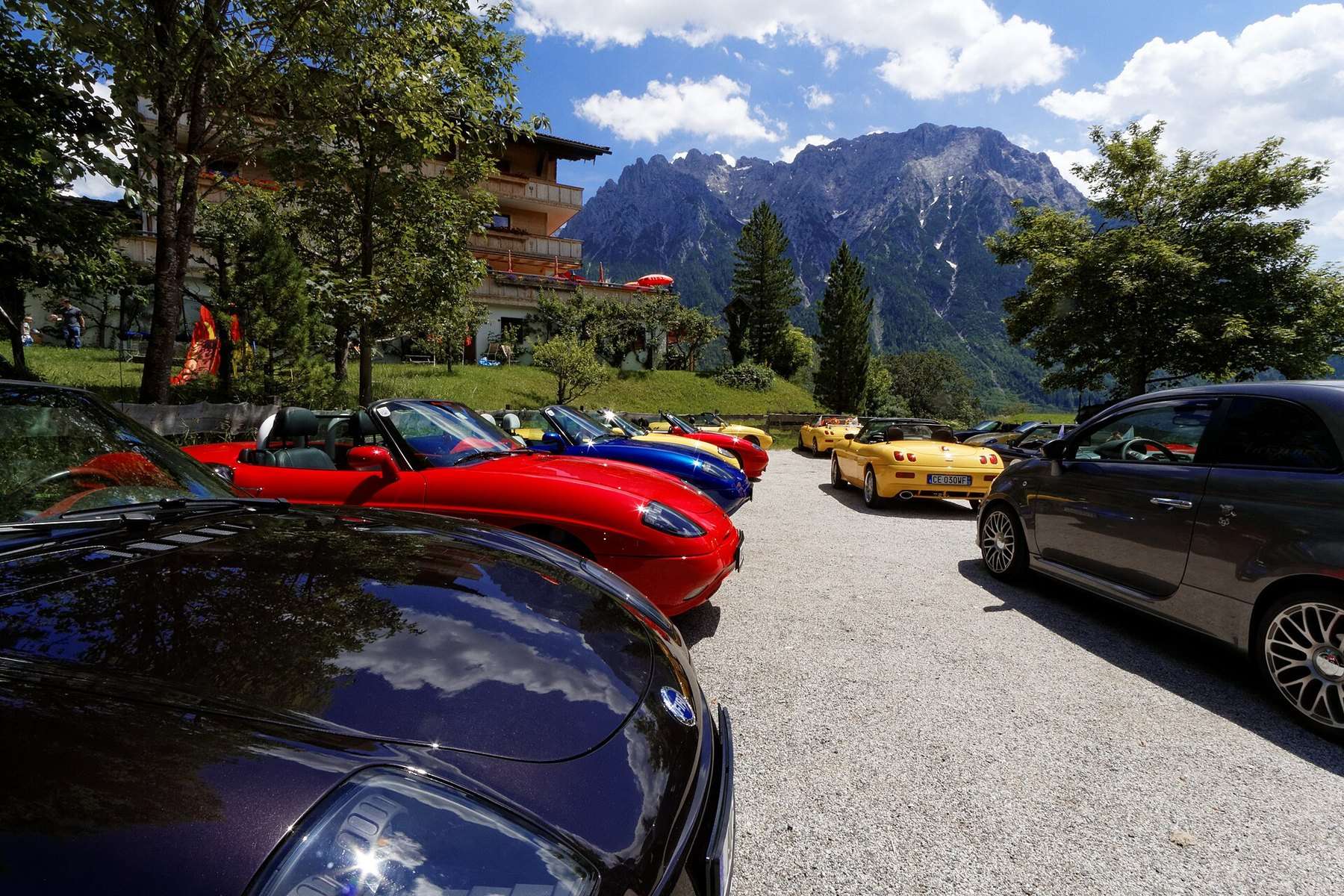
10 THINGS YOU PROBABLY DIDN’T KNOW
Fiat’s bright little roadster looked like a simple answer to the Mazda MX-5, but its engineering and production story were quite different. Front-wheel drive, unusual coachbuilt assembly and left-hand-drive-only UK sales made the Barchetta one of the 1990s’ most distinctive affordable sports cars.
1. Its name simply means ‘little boat’
Barchetta is the Italian term for a small boat and had long been used to describe low, open sports-car bodies. Fiat deliberately wrote the model name in lower case in much of its literature, giving the car an informal identity that matched its compact proportions and simple two-seat brief.
2. It shared a platform with the Punto
Under the curving body sat front-wheel-drive architecture related to the first-generation Punto. That kept costs realistic and made the transverse powertrain practical, but it meant the Barchetta approached the roadster formula very differently from the rear-wheel-drive Mazda MX-5.

3. Andreas Zapatinas led the design
Fiat’s Centro Stile team created a shape with a clean nose, rising waistline and distinctive door-handle recesses. Zapatinas later worked for BMW, Alfa Romeo and Subaru. The production Barchetta retained the confidence of a concept car without relying on retro copies of one particular classic Fiat.
4. The 1.8-litre engine used variable valve timing
A 1,747cc, 16-valve four-cylinder produced a little over 130PS, depending on market specification. A variable inlet-cam system helped torque and emissions. The engine was shared with other Fiat-group models, but the light two-seat body and close-ratio manual gave it a livelier role.
Love cars you don’t see every day?
Get forgotten cars, surprising motoring stories and the most interesting finds from Unusual Cars by email.
Free to join. No spam. Unsubscribe whenever you like. See our Privacy Policy.
5. Maggiora assembled the early cars
Body production involved several Italian specialists before final assembly at Maggiora’s former Lancia plant in Chivasso. That semi-coachbuilt route was unusual for an affordable Fiat. Small badges on early cars acknowledge Maggiora, a name also associated with low-volume bodies and specialist manufacturing.
6. Britain officially bought it only in left-hand drive
Fiat never engineered a right-hand-drive Barchetta, yet sold it through UK dealers. British buyers accepted the compromise because the car was affordable, distinctive and easy to place on the road. Imports from continental Europe add further variety in trim and specification.
7. The roof was designed to disappear completely
The manually operated fabric hood folded beneath a flush metal cover, preserving the clean rear deck. The arrangement was elegant and light, but blocked drains, tired seals and damaged rear windows are familiar age-related concerns. A factory hardtop was also offered.

8. The door handles became a styling signature
A small chrome lever sat within an oval recess in each door rather than using a conventional pull handle. The detail was decorative and functional, echoing 1950s and 1960s Italian sports cars without making the whole design an obvious pastiche.
9. Production stopped—and then restarted
Maggiora’s collapse interrupted Barchetta manufacture in 2002. Fiat later transferred assembly to its Mirafiori operation and relaunched the car with revised front and rear styling. This creates a clear distinction between the original and facelift cars beyond registration year alone.
10. It outlived the market moment that created it
Production began in 1995 and continued into 2005, spanning a decade in which roadsters multiplied and then declined. The Barchetta never matched MX-5 volumes, but its left-hand-drive rarity, Italian styling and simple mechanical base have given it a character no later Fiat directly replaced.
Join the Unusual Cars Club
Get more forgotten performance cars, surprising motoring stories and new 10 Things articles by email.
Free to join. No spam. Unsubscribe whenever you like. See our Privacy Policy.
Explore more 10 Things articles
Discover more cult cars, performance legends and motoring surprises in the Unusual Cars 10 Things hub.
Sources and further reading
Featured image: Photograph by Pelz, CC BY-SA 3.0, via Wikimedia Commons; locally hosted.