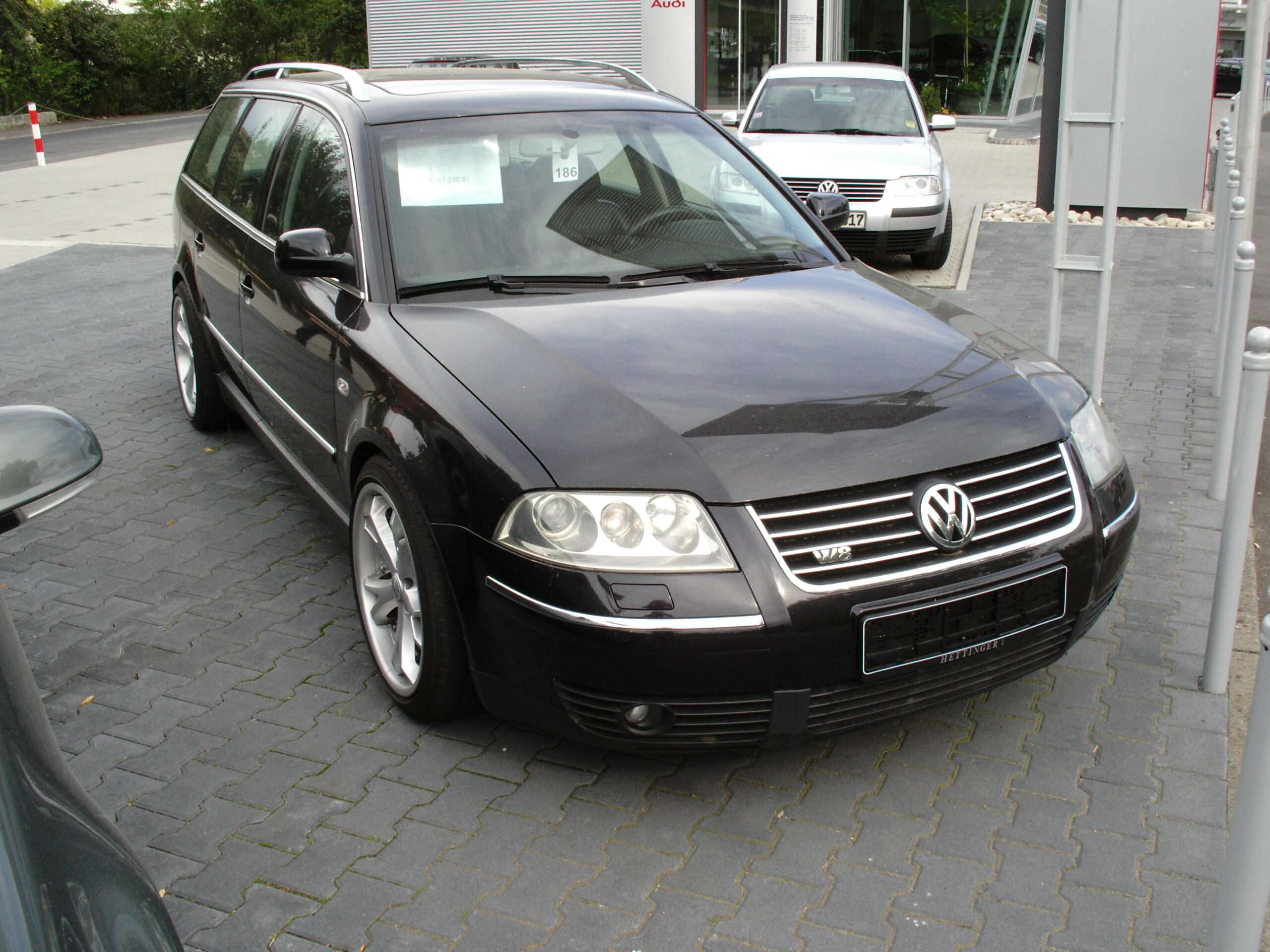
The Volkswagen Passat W8 looked like an ordinary company car but contained one of the strangest production engines of the modern era. With eight cylinders, four-wheel drive and discreet styling, it was a luxury flagship hiding in plain sight.
1. It used the only production W8 car engine
Volkswagen’s four-litre W8 remains unique in series production. Its cylinders were arranged as two narrow-angle VR4 banks joined on a common crankshaft, creating an engine much shorter than a conventional V8 and narrow enough to fit lengthways in the Passat’s existing nose.
2. The engine previewed Volkswagen’s grandest projects
The W8 belonged to the same architectural family as Volkswagen Group W12 engines and the Bugatti W16. Installing it in a Passat allowed engineers to prove compact multi-bank packaging and manufacturing ideas before the group’s most ambitious luxury and supercar programmes reached maturity.
3. Every W8 used four-wheel drive
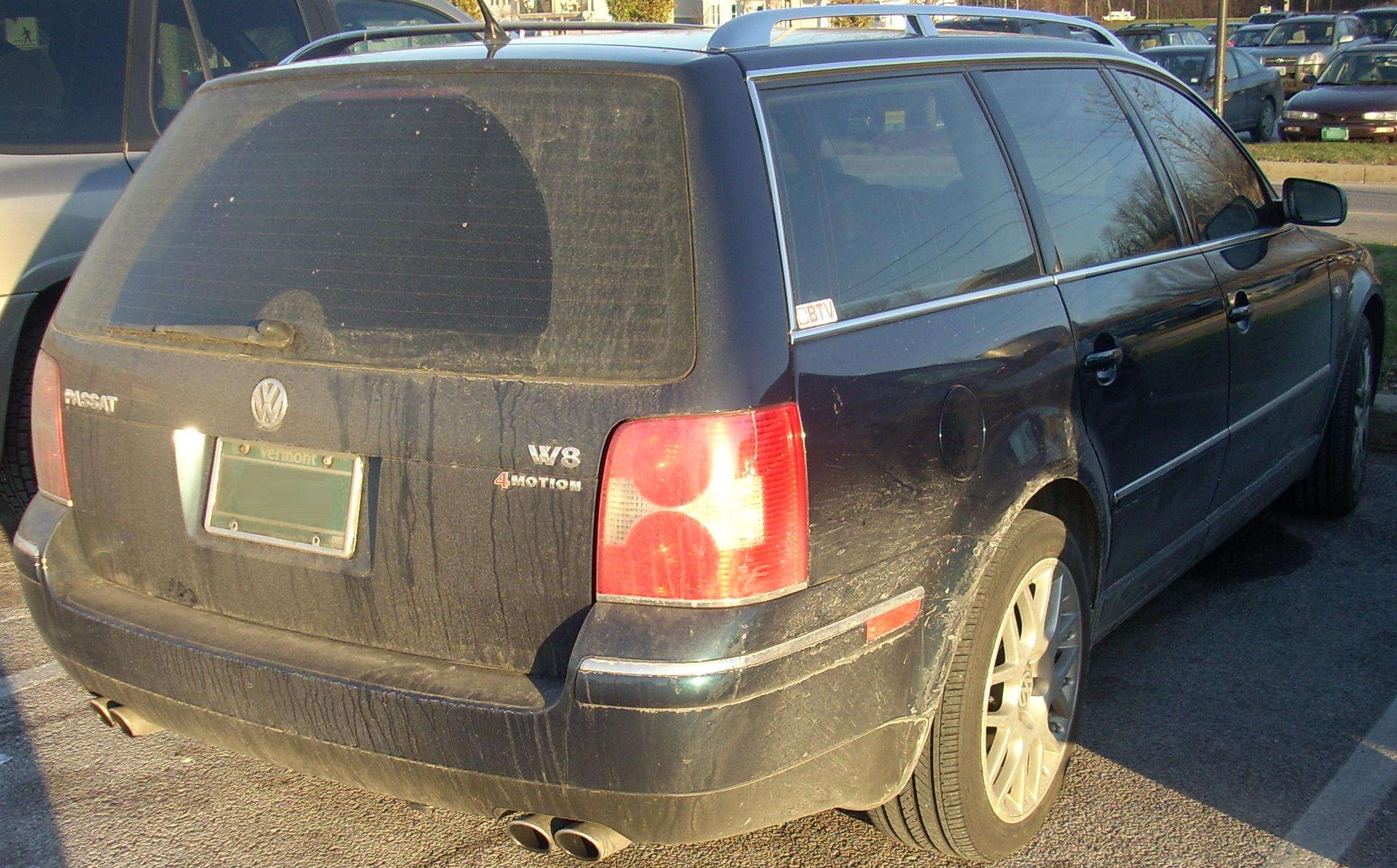
The 4Motion system was standard because 275PS and 370Nm would have overwhelmed a front-drive layout. A Torsen centre differential distributed power mechanically, giving the Passat secure all-weather traction and making it a genuine high-speed long-distance machine.
4. A six-speed manual really existed
Although most W8s used a five-speed Tiptronic automatic, Volkswagen also offered a six-speed manual in selected markets and body styles. Manual cars are exceptionally scarce and especially prized because they reveal more of the engine’s character.
Love cars you don’t see every day?
Get forgotten cars, surprising motoring stories and the most interesting finds from Unusual Cars by email.
Free to join. No spam. Unsubscribe whenever you like. See our Privacy Policy.
5. It came as both saloon and estate
The W8 could be ordered in discreet four-door or practical Variant estate form. The estate is arguably the ultimate sleeper: roof rails and family-car proportions surrounding an engine configuration unavailable in any other production model.
6. Performance was deliberately understated
With roughly 275PS, the W8 was quick rather than outrageous, reaching 62mph in around 6.5 seconds in its fastest forms and running into an electronic 155mph limit. Its appeal lay in effortless response, smoothness and a complex exhaust note rather than headline acceleration.
7. Its exhaust system was unusually elaborate
Packaging eight cylinders into the Passat required closely packed catalysts, pipework and heat shielding. The exhaust contributed to the W8’s muted but distinctive sound and is one reason seemingly ordinary repair jobs can become expensive.
8. Production lasted only a few years
The W8 arrived for 2001 and disappeared during 2004. High price, fuel consumption and the Passat badge limited demand, while the newer Phaeton offered Volkswagen’s luxury ambitions in a body customers could more easily understand.
9. Maintenance access can be intimidating
The compact engine saved space overall but filled almost every available corner of the engine bay. Timing components, oxygen sensors, cooling parts and oil leaks can involve major labour. A specialist inspection and complete history are essential before treating a cheap example as a bargain.
10. Its failure is part of its appeal
The W8 never made commercial sense in conventional terms, yet that is precisely why enthusiasts value it. It represents a period when Volkswagen was prepared to place extraordinary engineering in an intentionally anonymous family car.
Why it matters
The Passat W8 matters because no manufacturer is likely to repeat it. It is not merely a rare trim level; it is the only production home of an entire engine configuration and one of the greatest factory sleepers ever sold.
Join the Unusual Cars Club
Get more forgotten performance cars, surprising motoring stories and new 10 Things articles by email.
Free to join. No spam. Unsubscribe whenever you like. See our Privacy Policy.