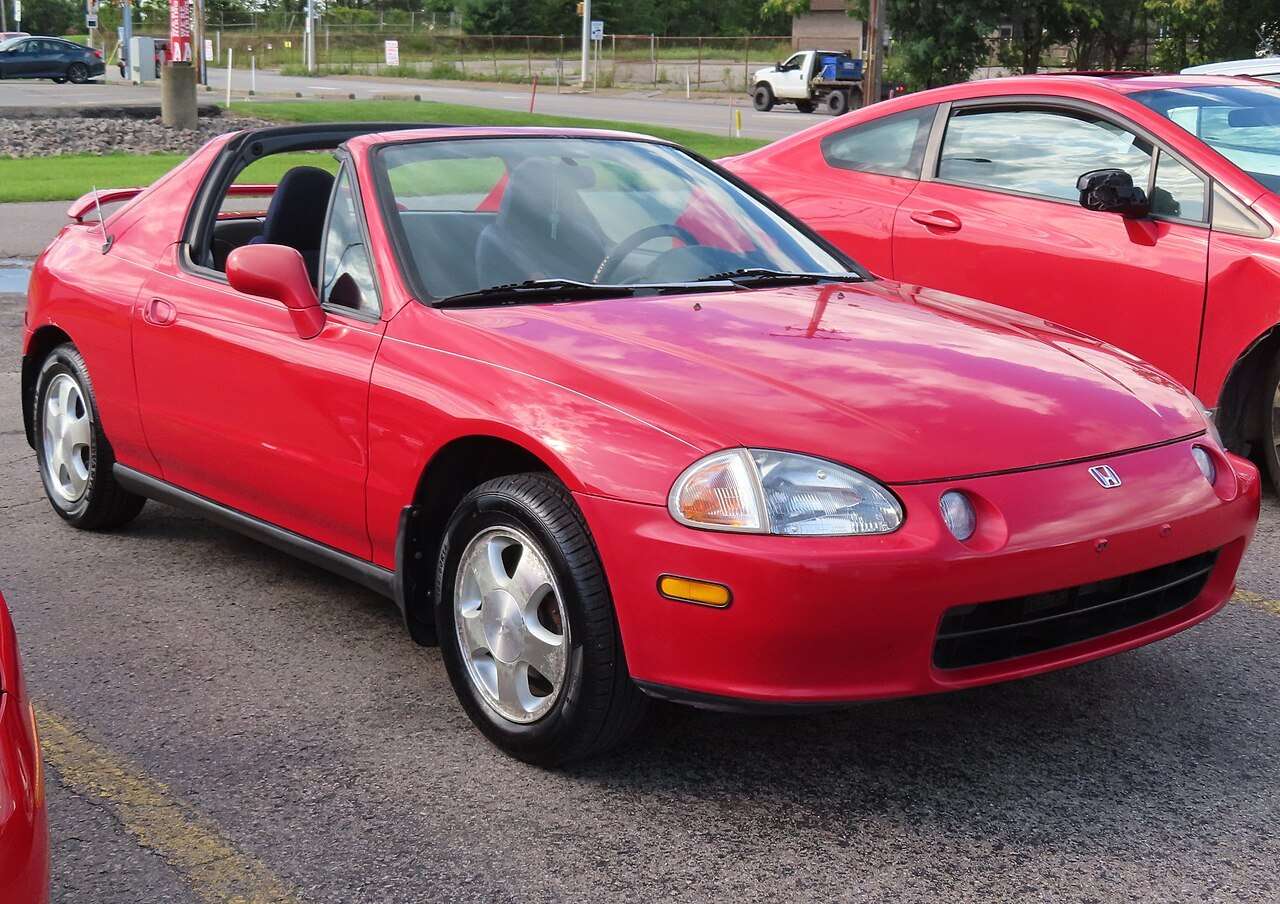
Honda replaced its familiar CR-X hatchback with a two-seater whose roof was the main event. One version even stowed its own roof panel with a mechanism worth watching twice.
1. It made its Japanese debut in 1992
Honda introduced the CR-X del Sol in February 1992. The new concept paired a closed coupé feel with a removable roof so the driver could choose how much weather to let in.
2. The name means “of the sun”
The Spanish name fits the open-air brief. Depending on the market, the car appeared under CR-X del Sol, Civic del Sol or del Sol branding, which explains why old brochures use different names.
3. The roof could be removed by hand
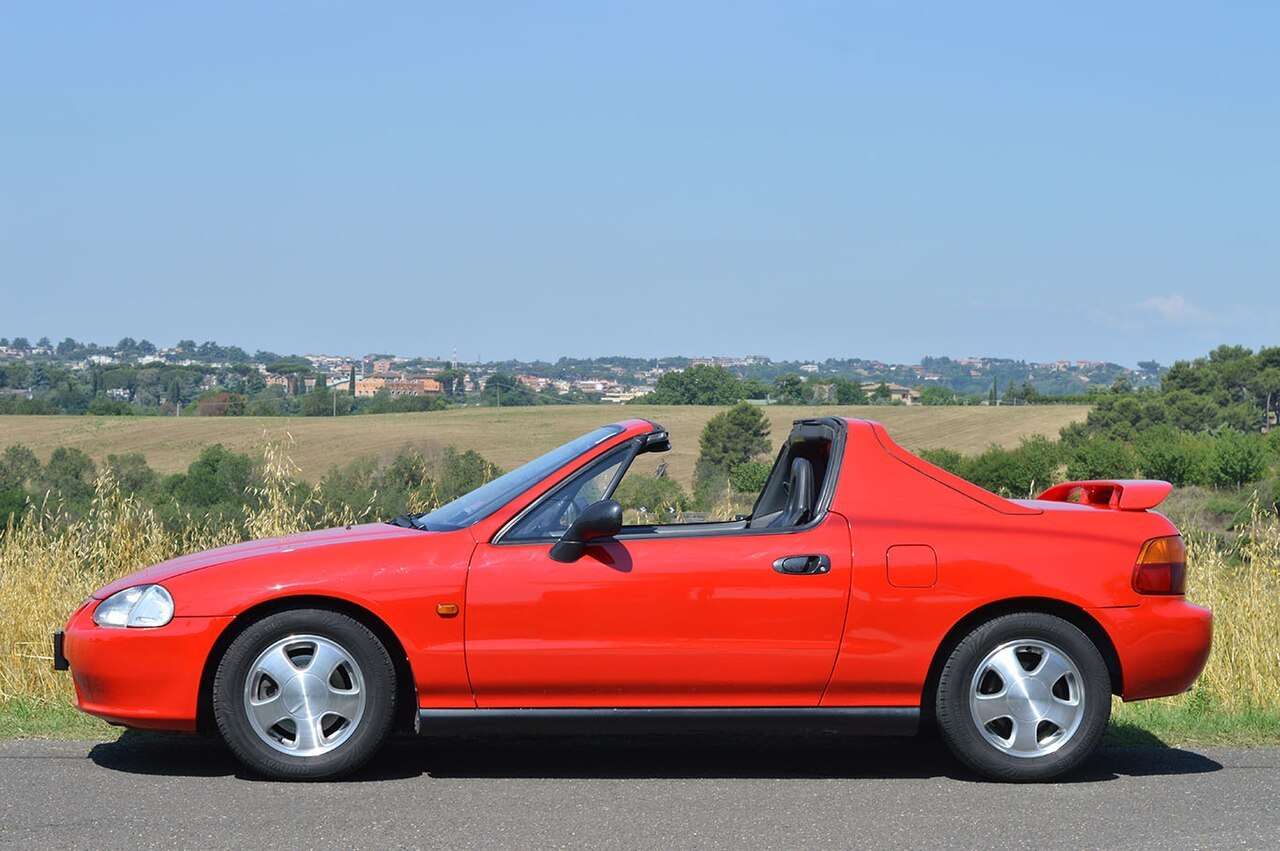
The manual version used an aluminium panel. After releasing the locks, the driver could lift it off and secure it in a holder in the boot. Honda put thought into how the roof affected luggage space.
4. TransTop could take over the lifting
The powered TransTop moved the roof panel into the rear compartment. The deck rose and the mechanism drew the roof back into it. This elaborate sequence is the car’s most distinctive party trick.
Love cars you don’t see every day?
Get forgotten cars, surprising motoring stories and the most interesting finds from Unusual Cars by email.
Free to join. No spam. Unsubscribe whenever you like. See our Privacy Policy.
5. The back window could drop
A retractable rear window allowed extra ventilation even with the roof in place. It also changed the amount of wind or engine sound reaching the cabin on an open drive.

6. There were two contrasting launch engines
Honda’s Japanese launch range included a 1.5-litre VTEC in the VXi and a 1.6-litre DOHC VTEC in the SiR. The second gave it an entirely different character for drivers who liked to chase the top of the rev range.
7. Power figures need market labels
Honda quoted 170 PS for the Japanese-market manual SiR at launch. Other versions and markets used different figures. It is a good example of why a bare “del Sol VTEC” specification can be misleading.
8. The suspension was part of the appeal
Honda used double-wishbone suspension, giving the car more to offer than its roof trick. The lightweight manual-roof version and high-revving engine appealed for reasons that had little to do with cruising.
9. It transformed the CR-X idea
The earlier CR-X used a small hatchback body. The del Sol retained the compact two-seat proposition but gave up the old shape’s loading arrangement in favour of a separate boot and the removable roof.
10. Some of the best clues are inside
The roof switches, rear glass controls and boot fittings are better evidence of how an example was equipped than a distant badge photo. A detailed cabin or open-deck image reveals why two near-identical cars can work differently.
Meet the del Sol’s predecessor, the Honda CR-X Mk2.
Explore more 10 Things articles
Browse the Unusual Cars 10 Things hub.
Sources and further reading
- Honda, original Japanese launch release and specifications
- Honda, original launch photography and mechanism images
Featured image: Red Honda Civic del Sol showing the removable roof opening. Photo by MercurySable99 via Wikimedia Commons (CC BY-SA 4.0, resized).
Join the Unusual Cars Club
Get more forgotten performance cars, surprising motoring stories and new 10 Things articles by email.
Free to join. No spam. Unsubscribe whenever you like. See our Privacy Policy.