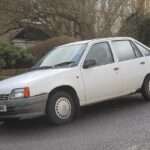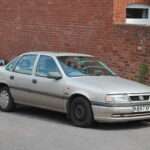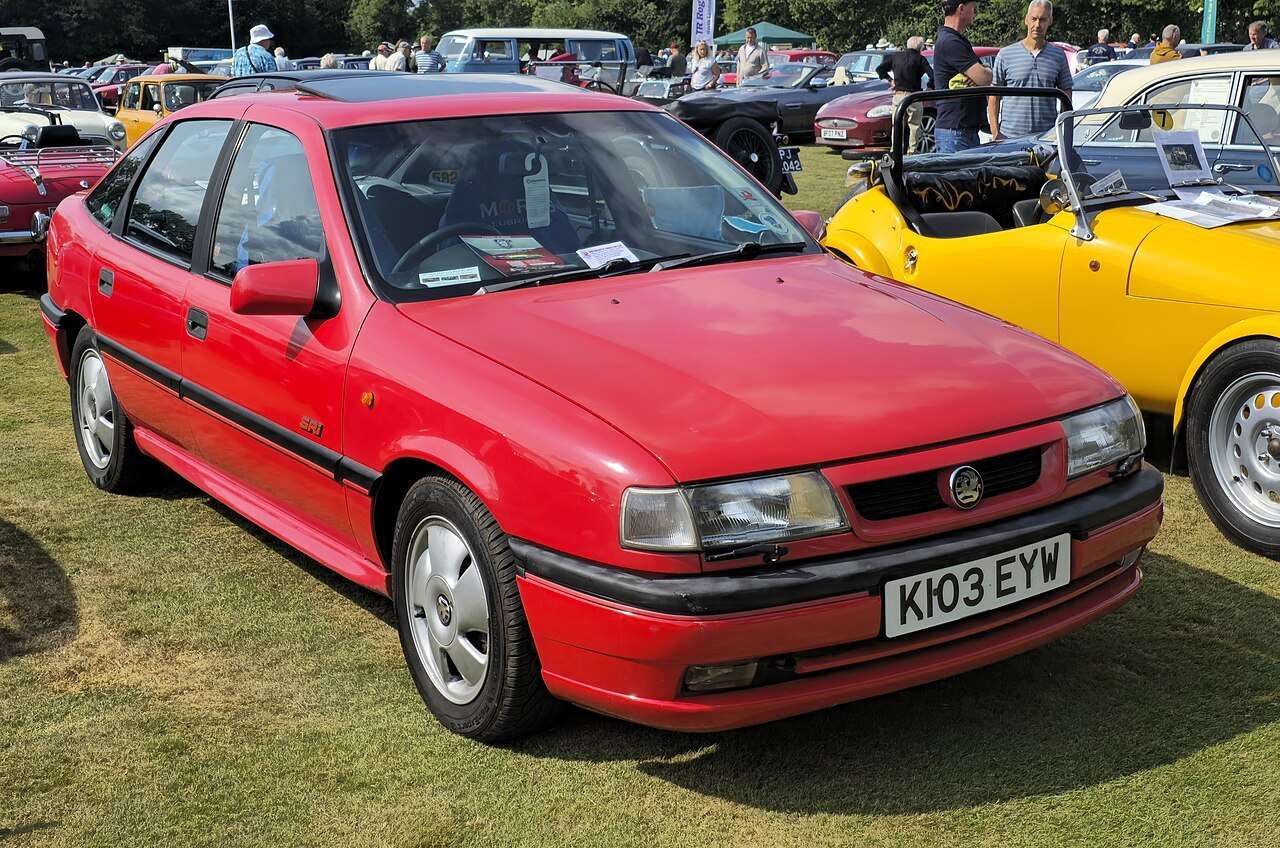
The Mk3 Cavalier SRi could pass for a company car until you spotted the badges. Behind them was a succession of engines that turned an everyday Vauxhall into three quite different sporting cars.
1. It wore a different badge across the Channel
The Mk3 Cavalier arrived in 1988, with the related Opel Vectra A sold in continental Europe. British buyers kept the Cavalier name for another generation, so an Opel brochure is useful context but a poor substitute for a UK specification sheet.
2. The eight-valve car came first
Early Mk3 SRis had a fuel-injected 2.0-litre eight-valve engine. Its character came from accessible mid-range pull, which suited a car that might spend the week on motorways and still be fun on a Sunday.

3. The SRi could be a hatchback
The five-door hatch did the same job in the range as the four-door saloon. Its large tailgate made it the more accommodating option for drivers who had to make one car do everything.
4. The red-top arrived with the facelift
The 16-valve C20XE brought the cylinder-head design associated with the GSi 2000 into the SRi line-up. With about 150 PS, it was a substantial change to a car whose trim badge could look much the same.
Love cars you don’t see every day?
Get forgotten cars, surprising motoring stories and the most interesting finds from Unusual Cars by email.
Free to join. No spam. Unsubscribe whenever you like. See our Privacy Policy.
5. The eight-valve and red-top overlapped
A facelifted SRi badge alone cannot identify the engine beneath it. Vauxhall continued to offer an eight-valve SRi alongside the 16-valve car, which makes a period brochure or the engine code more useful than a registration year.
6. The Ecotec was a third recipe
Late SRis gained the 2.0-litre Ecotec, another 16-valver but with a different engine code and output. The C20XE and X20XEV labels explain why enthusiasts can tell two very different stories about a Cavalier SRi 16V.
7. The GSi helped set expectations
The GSi 2000 had already established the Mk3 Cavalier as a credible sporting saloon. The later red-top SRi gave buyers a route to similar engine performance in a trim with a longer history in the Cavalier range.

8. The Turbo sat in a class of its own
The 16V Turbo combined forced induction and four-wheel drive. The SRi story is the rise of the naturally aspirated sporting Cavalier, the version company-car drivers were more likely to recognise from their own keys.
9. Touring cars made the shape famous
The Mk3 body became a familiar sight in British Touring Car Championship coverage. John Cleland's 1995 title came in a works Cavalier, making that final season a good backdrop to the showroom car's last year.
10. The badge handed over to Vectra
In 1995 the Vectra took the Cavalier's place in Britain and carried on the SRi label. That made the Mk3 the last chance to buy a new Cavalier SRi, even though the trim name survived it.
10 Things You Probably Didn’t Know About the Vauxhall Cavalier Turbo 4×4.
Explore more 10 Things articles
Browse the Unusual Cars 10 Things hub.
Sources and further reading
- Vauxhall Cavalier Drivers Club Mk3 history
- Continental engine applications catalogue
- Mk3 owners' club discussion with April 1993 brochure reference
Featured image: Red 1992 Vauxhall Cavalier SRi 16V. Photo by Calreyn88 via Wikimedia Commons (CC BY-SA 4.0, resized).
Join the Unusual Cars Club
Get more forgotten performance cars, surprising motoring stories and new 10 Things articles by email.
Free to join. No spam. Unsubscribe whenever you like. See our Privacy Policy.