If your Superb loses power up a hill, a basic OBD2 reader might put the word “underboost” on the screen. That is a useful start. If the heater fan stops on the way home and the driver’s door refuses to lock that evening, the same reader may have nothing further to add. The appeal of a Škoda-specific scanner on a second-generation Superb is that one purchase can help you investigate all three complaints over the years you own it. The trick is knowing which readings change a repair decision.
Consider two real Superb brake reports. In one the ABS controller answered and described a reference-voltage fault. In the other the scanner could not reach the ABS controller at all. Both cars could be described over the phone as having an “ABS problem”, yet sending either owner out to buy an ABS pump would be a leap. We’ll come back to those reports after an engine example where the inexpensive reader gets much of the credit.
Choose a tool for the Superb II or 3T
When searching for coverage, use the generation as well as the year. The Superb Mk2, also called Superb II or 3T, was sold with different engines, transmissions, equipment and body styles. A scan from a four-wheel-drive estate with an automatic gearbox will contain entries that a front-wheel-drive manual has no reason to show. Make a list of the equipment you would actually want to investigate. On an older car, door controls and heating can matter as much as a highly advertised service reset.
Ask a garage for the controller identification from a past diagnostic visit if you have one. An application ending in a different suffix or running different software may expose different measured values. When you ring a supplier you can now ask something specific, such as whether it reads the fitted brake controller and the installed Climatronic unit, and how much detail appears beside a stored code. It is much easier to check an answer against a sample report than against a long list of supported badges.
A 2.0 TDI that loses boost in two different situations
The owner of a 170 PS common-rail diesel recorded P2563, a turbo boost-control position signal fault, and P0299 for underboost. The first tended to appear at low revs with a warm engine in traffic. The second had happened on a steep climb shortly after a cold start. The owner had noticed the different circumstances before asking for help. A generic reader that gives you those engine codes and their freeze frames has already done something worthwhile. Read the two Superb TDI fault descriptions and operating conditions.
Think about what the engine is measuring. A position signal concerns the mechanism controlling the turbo. Underboost describes a difference between the boost required under the circumstances and what the engine management detected. The two may be related, but one code is not simply a second name for the other. A mechanic faced with a pressure shortfall might check for leakage, the actuator and control system, the pressure measurement or the turbo itself. The engine code does not tell you which of these checks will uncover the fault.
An enhanced scanner earns its place if it can log requested and actual boost against engine speed and load on the particular engine. Actuator command or position feedback, where available, adds another comparison. If the demand changes and the position reading behaves unexpectedly, a specialist has a reason to check the mechanism and feedback. If movement looks plausible but pressure still falls short, a different set of physical checks becomes relevant. A line on a graph cannot show a split in a hose or prove a mechanical assembly is worn.
A separate 2010 Superb CBBB owner’s account gives the financial question some context. The owner reported P0299, found the vacuum-operated actuator did not hold vacuum and reported normal running after replacing it. That physical test is what makes the account informative. It provides no shortcut for deciding that every underboost fault needs an actuator, or for setting one up without the right procedure. Ask which test on your own engine supports an actuator or complete turbo quote and what the fitter will do to verify the result.
ABS case one: the controller is talking and names a reference-voltage fault
A Superb Mk2 owner posted several brake-controller scans from a unit identified as MK60EC1. The first report included a supply-voltage entry, a rear-right wheel-speed entry and complaints relating to several motion sensors. There were eight entries. Immediately after clearance the report contained two, including 00538 with failure type 012 for an electrical reference-voltage fault. The number of entries changed much more quickly than eight physical parts could conceivably have been repaired.
A reference voltage is used as a known electrical reference for a measurement. The fact that a controller reports a reference issue does not establish where that issue originates. The fitted system, wiring information and electrical measurements matter. Likewise, knowing the rear-right wheel is named in one entry does not establish the sensor itself is faulty. A workshop comparing several complaints needs the full controller number, code wording and the conditions under which each entry returned. Keep the Ross-Tech 00538 reference together with the failure wording from the car.
A reader showing only “ABS module fault” throws away much of that value. Look for an output that includes the complete five-digit number, its accompanying failure type and the list from the first scan. Recording individual wheel speeds may help a technician investigate a wheel-specific complaint under controlled conditions. It answers a different question from an electrical test of a reference circuit. Four equal wheel readings while the car stands still cannot establish that all the signals remain credible in motion.
If braking feels abnormal or the car shows a red brake warning, stop safely and arrange assistance. A parked scan is evidence to pass on, never a reason to test stability control on the road. If the quote is for a control unit, ask whether the garage verified the relevant supplies and circuits and identified the correct unit for the car. The specific wording can help you compare two estimates that might otherwise both say simply “ABS fault”.
ABS case two: the scanner never hears back
In a different Superb scan with several unreachable controllers, the engine and brake electronics could not be reached, along with parking assistance and other systems. Climatronic did answer. Its report included U1111 for functions restricted by missing messages, with the extra diagnostic wording identifying an absent brake-controller message in one entry. The heater had something to say about the information it received, even though the scanner had no account from the brakes themselves.
Picture receiving a note that says a colleague has not phoned. The note establishes the missing call. It cannot tell you whether the phone, its power or the connection at the other end has failed. The same principle applies here. “Cannot be reached” means the tool could not read that unit’s memory on that occasion. An older generic reader that simply returns no engine data cannot distinguish all the possible routes by which the conversation failed.
Like our guides and unusual cars?
Get forgotten finds, useful motoring content and the most interesting car stuff from us by email.
Free to join. No spam. Unsubscribe whenever you like. See our privacy policy.
The useful garage questions change accordingly. Was the scan made with the correct equipment and vehicle selection? Did a previous report reach these units? Are several absent units associated with a shared supply or part of the network on this particular build? The technician can use wiring information and measurements to follow that up. A consumer reader cannot prove a broken data line by repeating the same scan. Avoid disconnecting modules at random, particularly where braking or restraints are involved.
This is one reason to keep a healthy baseline scan on an older Superb. If a particular unit has never answered your handset, check the handset’s coverage before paying someone to find a wiring fault. If it answered last month, several ordinarily responsive units have now disappeared and the car is malfunctioning, the difference between the files is evidence in its own right. The new report may actually contain fewer codes while the underlying fault has become more significant.
Cabin comfort: poor airflow and warm airflow are different complaints
A Superb owner recorded B10A1 15 under Climatronic. The fault concerned the diagnostic line for the front air blower, with an open-circuit or short-to-positive description. In the separate scan with missing controllers the climate unit listed B10AE 14 for the high-pressure sensor circuit, with an open-circuit or short-to-ground description. Do not swap the two. One concerns the blower’s diagnostic path. The other concerns the measurement of pressure in the air-conditioning system. See the blower entry and the climate-controller identification.
The easiest way to help the garage is to split the symptom in two. Does a strong stream of air come out when fan speed is increased? If it does, does the temperature change when requested? A weak or absent stream, a strong warm stream, or a blower that runs at an unexpected speed are different observations. Compare the outlets with the car parked and note whether the symptom changes after a restart. Even a perfect reading of engine coolant temperature cannot answer the blower circuit question.
For the blower case, a technician can check power, connections and the relevant control and diagnostic wiring before condemning the motor or its controller. For the high-pressure sensor case, a technician can compare the reported value with qualified refrigerant-system measurements and assess the circuit. If the signal is electrically unreliable, a reading that looks low cannot on its own justify a refill. Keep the written wording rather than translating either case to “climate unit broken” when requesting an estimate.
Door switches, windows and mirrors that go on strike together
In a Superb driver’s door case, the owner described losing the driver’s switch console, central locking and mirror functions. Another Mk2 owner found broken wires at the door hinge. These are accounts of symptoms and physical findings on separate vehicles. They do not prove that a loom is the cause on your car, but they illustrate why replacing several individual switches at once is a poor first response.
Ask whether a compatible scanner can reach the driver’s door unit and, where supported, show switch requests while the car is stationary. Does a rear window work from its own door switch but not from the driver’s console? Do the mirrors and lock fail at the same time? Does the driver’s unit answer the scan when the others do? These small distinctions separate a failure affecting multiple functions in one door from one motor that refuses to move despite a recognised command.
Ask an auto electrician what the relevant power, wiring and connections show before buying a door module. If a restraint warning is also present, leave work around the relevant circuits to a qualified repairer. The role of an owner’s scanner here is to preserve the reporting unit and symptoms while they are present, then check that the repaired functions work normally. The owner can also verify the car actually locks securely before leaving it parked.
Alarm and load-management entries on a high-mileage car
Another Superb Mk2 full scan listed 00323 for the inclination sensor and 01135 for interior monitoring under central electrics. Those are two different inputs to the alarm system. One concerns the vehicle’s inclination, the other activity in the cabin. The scan also recorded a load-management intervention, 00907. Keeping those descriptions intact makes it easier to investigate an alarm complaint without treating every unrelated electrical symptom as proof of one faulty module.
If the alarm sounds overnight, record the time, where the car was parked and whether any door or boot warnings appeared beforehand. If available, ask the specialist to read the stored trigger history. A fault in the monitoring system and a recorded cause of the last alarm are different things. Note recent battery work or slow starting too. A supply voltage in a controller’s freeze frame describes that instant, whereas a battery condition or charging-system test answers a wider question. There is no need to disable the alarm to preserve that evidence.
When collecting the car, ask for two records alongside the invoice: the original unedited scan and the checks made after the repair. A normal blower at every requested speed, a door that consistently acknowledges a lock request, or boost control that follows demand under the original conditions tells you more about the outcome than a bill that simply says “codes erased”. Keep those observations with the car’s service history. They are useful comparisons if a superficially similar fault appears next winter.
Comparing a handheld scanner, a phone app and a laptop interface
A reader sold for Volkswagen Group cars is one route to Škoda diagnostics. A multi-make scanner with the appropriate Škoda software is another. What matters is the conversation the tool can have with your particular controller. The same tool may also offer a separate generic OBD2 or EOBD menu. Select that menu and you are asking the standard emissions questions again. It is quite possible to spend more on hardware and see the same short engine report you had before.
If you prefer a standalone handset, look up the exact model on iCarsoft’s VAWS V3.0 vehicle and function list. Ask for the build year and controller to be checked against the software supplied. Find out how updates are installed, whether the required computer is available to you and how you get a report off the device. A handset with physical buttons can be convenient beside the car. That advantage wears thin if the only way to show a garage twelve faults is to photograph twelve screens.
For phone users, check OBDeleven’s Škoda coverage, including which functions the chosen plan supplies and whether the adapter works with your phone. For a Windows laptop, Ross-Tech’s VCDS Auto-Scan example shows the sort of controller-by-controller record worth asking for. Allow for the interface, licence and any vehicle limit. If there are two Volkswagen Group cars in your household, price the plan you need for both and compare coverage for each separately.
When comparing quotes, distinguish the price of reading fault memory from the price of finding the cause. A workshop diagnostic fee may buy an electrical test, pressure measurement or inspection as well as the scan. Owning a reader can avoid a separate visit to catch an intermittent warning. You will still want the person with the right instruments for a safety fault or an expensive mechanical decision. Ask what that first hour includes before using it as the figure you expect to save.
My shortlist for a Superb Mk2 scanner
For an owner keeping the car for several years, I would choose reliable access to the fitted ABS, door and climate units ahead of a long list of resets. On the 2.0 TDI, add recorded boost demand and feedback on the exact engine. Ask for a sample whose report explicitly distinguishes a unit with no faults from one that never answered. Then check that you can save and reopen the file, complete with controller identification and fault descriptions, without depending on a photograph of a tiny display.
The investment makes sense when it improves the next buying decision. A plot of boost under the right conditions can make a turbo estimate more accountable. A localised blower circuit can steer the first visit towards an electrician. A brake controller that never replied calls for an appropriate professional investigation. Those are three very different returns on the same tool, each grounded in what your own Superb actually reported.
Browse all Škoda diagnostic scanner guides
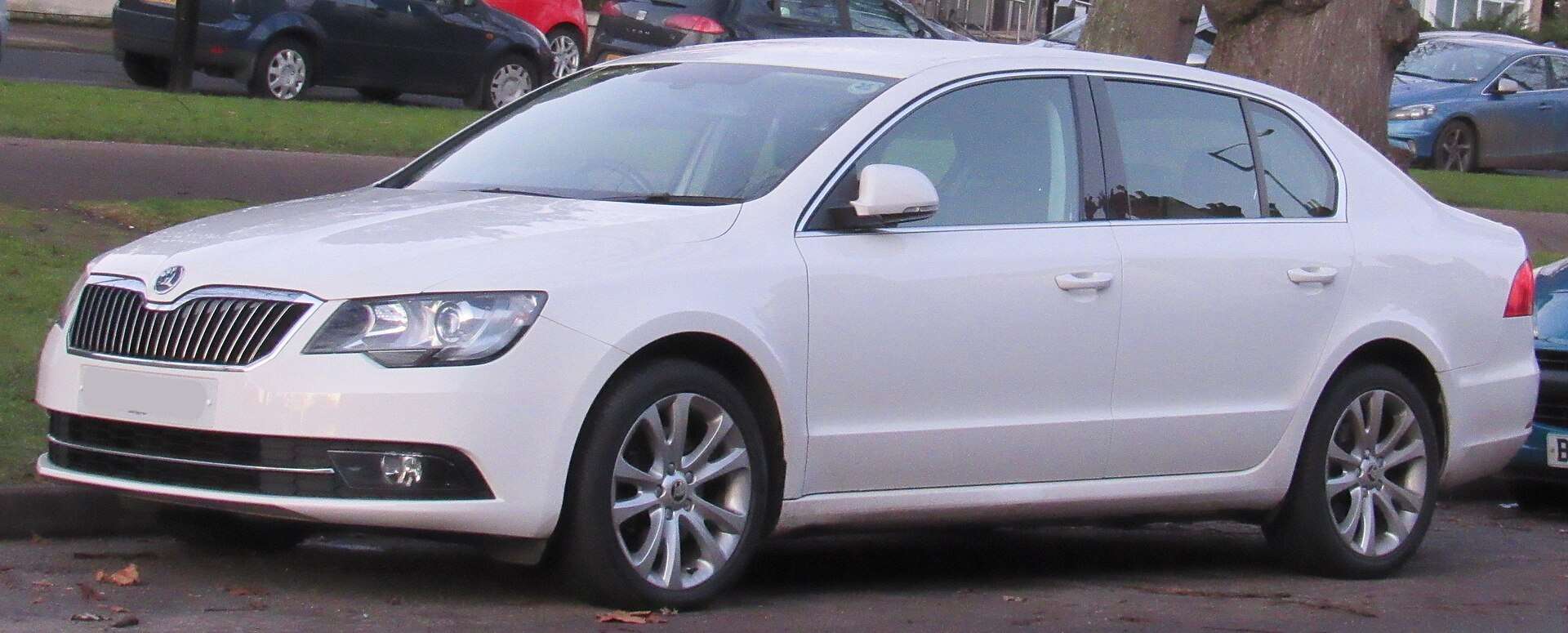
Model photograph by Vauxford, Wikimedia Commons, CC BY-SA 4.0, resized for display.
Like our guides and unusual cars?
Get forgotten finds, useful motoring content and the most interesting car stuff from us by email.
Free to join. No spam. Unsubscribe whenever you like. See our privacy policy.