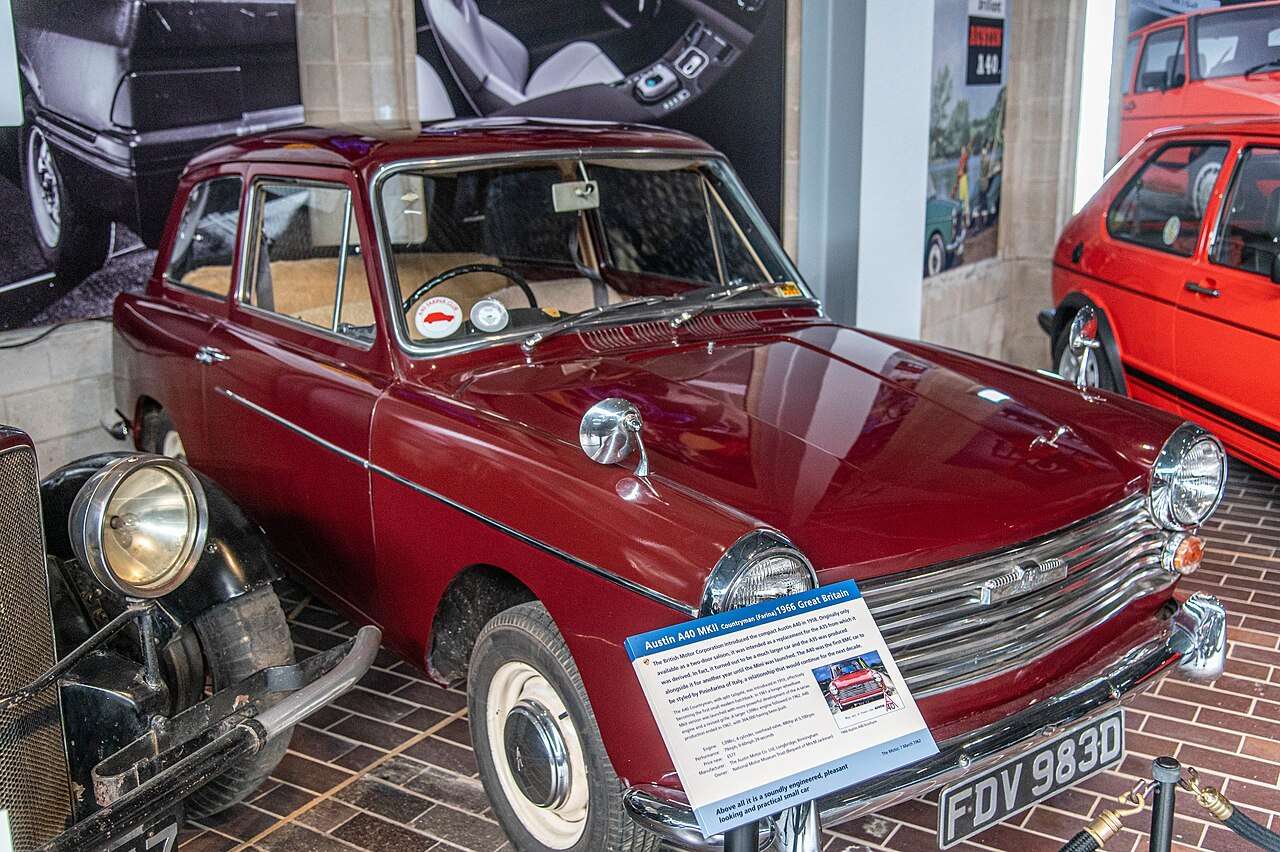
The Austin A40 Farina Countryman hid a clever rear opening in a crisp Italian shape. Its split tailgate makes it a good reminder that the modern small hatchback had an interesting childhood.
1. The Farina arrived before the Mini
BMC introduced the A40 Farina in 1958, with the Countryman following in 1959. The first car was a two-door saloon. The small Austin followed a different line from the Mini that would arrive soon afterward.
2. The shape came from Italy
The National Motor Museum identifies it as the first BMC car styled by Pininfarina. The compact proportions and squared-off rear gave the little Austin an identity of its own. The design relationship would carry on through a number of much larger BMC models.
3. It shared roots with the A35
The Farina was developed as a successor to the Austin A35. It used familiar A-series engineering but gave drivers a larger and more modern-looking car. BMC kept the two on sale together for a time.
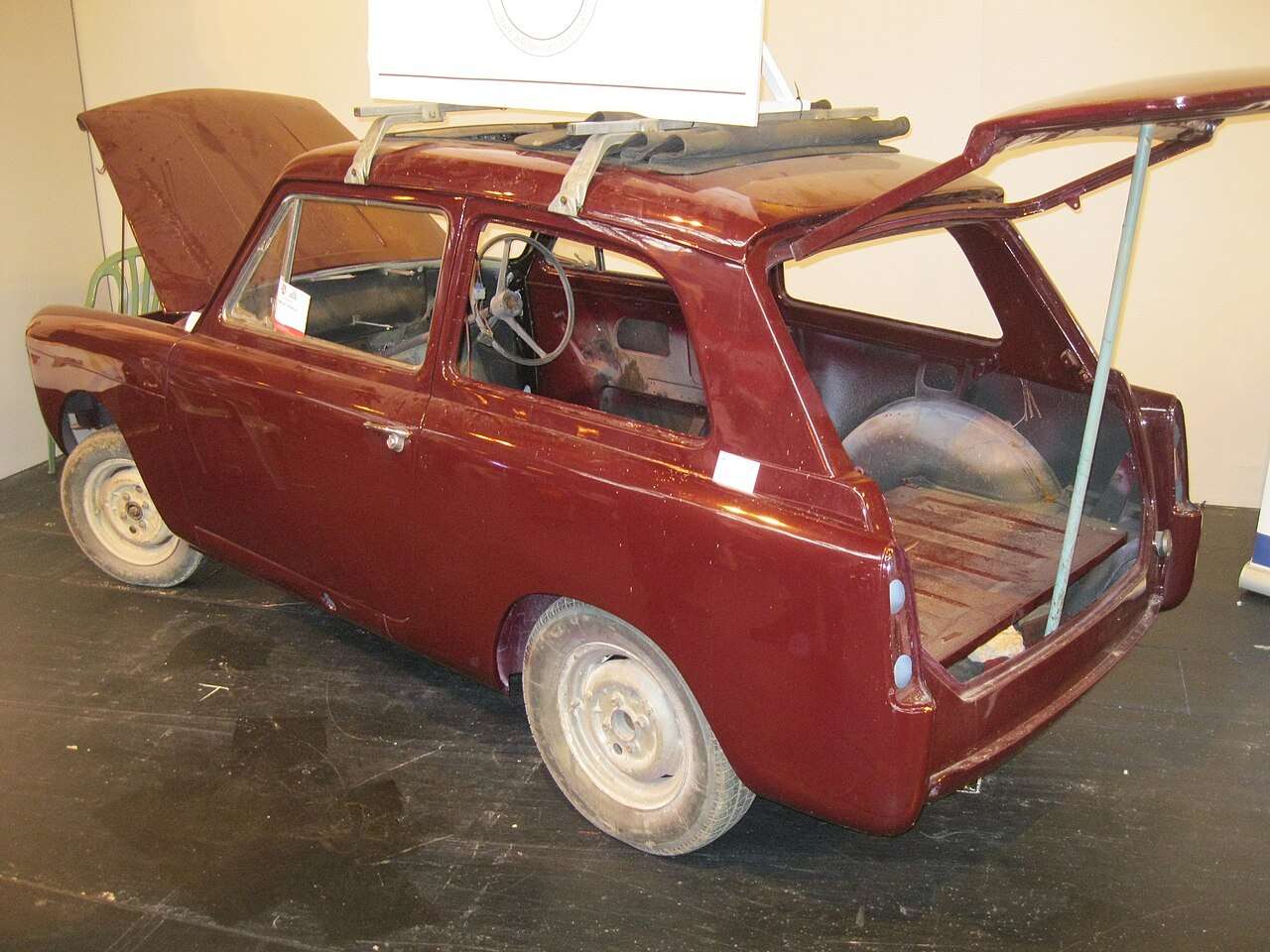
4. The Countryman opened in two pieces
The glass hinged upwards and the lower section dropped down. The split gave the Countryman greater access than the saloon’s small drop-down boot lid. It deserves a photograph with both pieces open because that is the clearest way to explain it.
Love cars you don’t see every day?
Get forgotten cars, surprising motoring stories and the most interesting finds from Unusual Cars by email.
Free to join. No spam. Unsubscribe whenever you like. See our Privacy Policy.
5. The hatchback shape disguised familiar running gear
The engine sat at the front and drove the rear wheels through a propeller shaft. The package beneath that new-looking body was very much of its own time. Austin’s innovation here lay principally in what you could do with the space above the wheels.
6. The MkII stretched the wheelbase
BMC launched the MkII in 1961 with a longer wheelbase and a revised grille. That change mattered more than the grille alone might suggest. It makes early and late Farinas worth distinguishing even when both cars have the Countryman tail.
7. A larger engine followed the MkII launch
A 1,098cc version joined in 1962. The National Motor Museum quotes 37 bhp for its 1966 example, a small number that fits the 29-second 0–60 mph figure it gives for the same car. The capacity also links it to other later A-series cars.
8. Italy built its own A40
Innocenti produced the model under licence. Its catalogue included the Berlina and Combinata, corresponding to the British saloon and Countryman. It made an unusual return journey for an Austin whose shape had already crossed the Channel from an Italian designer.
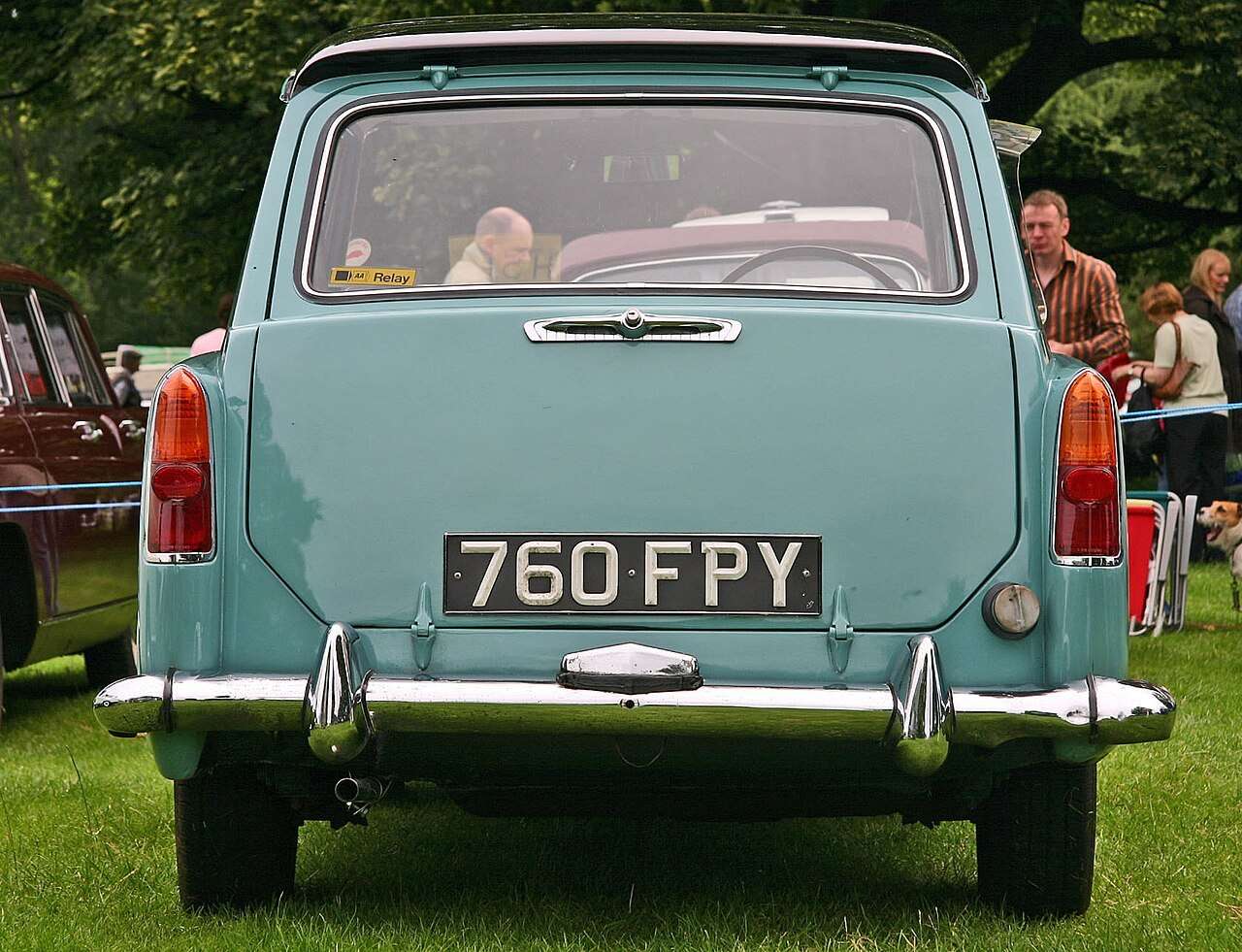
9. There was also a conventional saloon
Both body types could look like a modern hatchback from the side. The useful difference was at the back, where the Countryman let the upper glass open. Identifying a car from shape alone can miss the very detail that made it special.
10. The last Farinas were built in 1967
The National Motor Museum gives roughly 364,000 for the whole A40 Farina run. That covers both saloon and Countryman. The split-tailgate car earned its place in the history of the hatchback without needing the entire production total to itself.
Read about the Austin Allegro Equipe.
Explore more 10 Things articles
Browse the Unusual Cars 10 Things hub.
Sources and further reading
- National Motor Museum’s Austin A40 MkII Countryman
- Austin A40 Farina Club model history and Innocenti derivatives
- Austin A40 period specification and model-change documentation
Featured image: An Austin A40 Farina MkII Countryman on display. Photo by Michael Gaylard from Horsham, UK via Wikimedia Commons (CC BY 2.0, resized).
Join the Unusual Cars Club
Get more forgotten performance cars, surprising motoring stories and new 10 Things articles by email.
Free to join. No spam. Unsubscribe whenever you like. See our Privacy Policy.