Love cars you don’t see every day?
Get forgotten cars, surprising motoring stories and the most interesting finds from Unusual Cars by email.
Free to join. No spam. Unsubscribe whenever you like. See our privacy policy.
The buying verdict
Our starting point for mixed local and longer driving would be a well-documented Cooper petrol on sensible wheels. Move to a Cooper S because you want the extra performance and have budgeted for its consumables. A diesel merits consideration for regular sustained journeys; a low-mileage short-trip example is not automatically the safest purchase.
ALL4 adds traction and additional drivetrain components. It is worth having when your use justifies it, but it cannot compensate for unsuitable tyres or neglected servicing. Compare a front-wheel-drive example before paying for hardware you may rarely need. The condition of the actual vehicle remains more useful than a general claim that one specification is the best.
Allow money after purchase for inspection, an appropriate first service, tyres and any overdue work. A premium badge does not make the parts cheaper as the car ages. Avoid a car with unexplained coolant loss, drivetrain warnings, persistent misfire, gearbox shudder or evidence of structural repair unless a competent inspection establishes both the cause and a realistic repair plan.
Identify the car before comparing prices
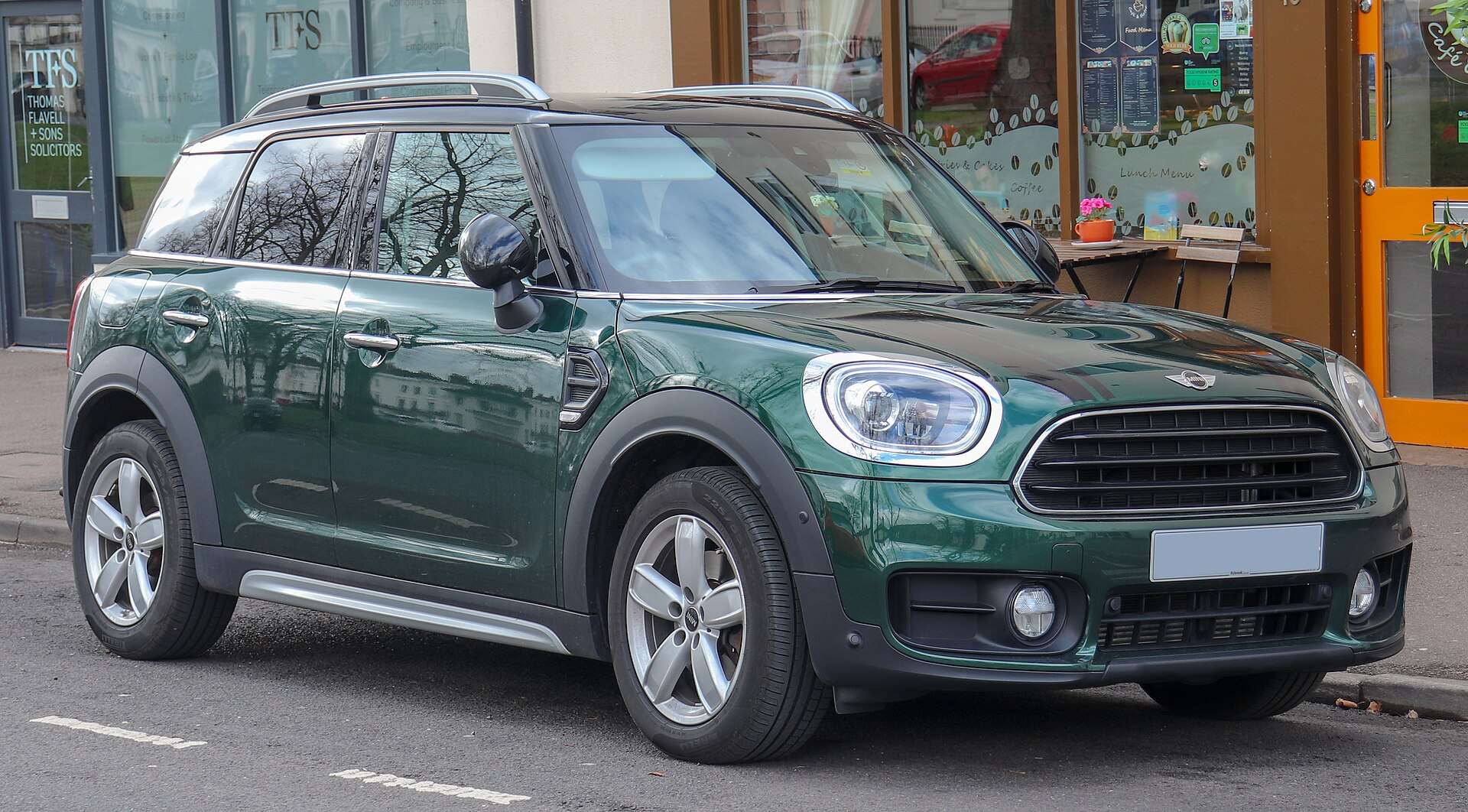
F60 is the generation code that matters here. The earlier R60 commonly appears beside it in searches, and 2024 registrations can span a model change. Compare the body, VIN and build specification rather than trusting a seller’s generation dropdown. The Cooper S E plug-in hybrid and JCW must also be identified separately from the ordinary Cooper S.
Petrol Cooper versions use a 1.5-litre three-cylinder turbo; the Cooper S uses a 2.0-litre four-cylinder. The F60 diesels are 2.0-litre units, with Cooper D and SD denoting different specifications. Output, emissions equipment and gearbox availability changed during production. Confirm the actual engine code and power on the documents instead of assuming every Cooper S has the same output.
The 2020 facelift brought visible and equipment changes, but a late registration is not proof of a facelift build. Inspect the lamps, dashboard and build information together. Treat a retrofitted grille, steering wheel or screen as an alteration to investigate, rather than conclusive model identification.
| Version | Who should compare it | Buying priority |
|---|---|---|
| Cooper 1.5 petrol | Mixed-use family buyer | Cold running, maintenance, cooling and actual gearbox |
| Cooper S 2.0 petrol | Buyer wanting additional performance | Standard versus modified condition, tyres, brakes and cooling |
| Cooper D / SD diesel | Regular longer-distance driver | Journey history, emissions diagnostics and servicing |
| ALL4 | Buyer needing its traction capability | Correct tyres, drivetrain condition and maintenance scope |
| Cooper S E plug-in hybrid | Buyer able to charge regularly | Charging test, hybrid diagnostics and battery campaign status |
Cooper or Cooper S: choose performance you will use
Drive the Cooper with the passengers and road conditions you expect to encounter. The three-cylinder’s character differs from a four-cylinder, but that does not excuse a persistent misfire, warning light or repeated hesitation. Compare idle quality cold and warm, progressive acceleration and a hot restart. A diagnostic check should investigate symptoms rather than merely erase fault codes.
The Cooper S is the more obvious choice if overtaking response and a stronger reserve with passengers matter to you. It also attracts modifications. Ask explicitly about software, intake and exhaust changes, removed emissions hardware and suspension alterations. A car returned to standard appearance may still have an undocumented tuning history. Inform your insurer about relevant changes before committing.
Inspect fluids safely and ask about oil and coolant top-ups. Look for staining around accessible cooling components, dampness beneath the engine and recent cleaning that prevents a fair assessment. A pressure test and inspection can be more useful than guessing which seal or housing is responsible. Never open a hot cooling system.
Do not import the earlier 1.6-litre R60 engine’s reputation or service parts into an F60 assessment. The later engines are different units. Equally, a broad statement that the F60 is improved does not establish that a particular neglected car is healthy. Invoices, current running and a competent inspection should support the decision.
Diesel: assess the journeys behind the mileage
A Cooper D or SD can make sense for sustained longer use, but the odometer does not describe how the car has been driven. Ask about commuting, idle time and repeated local journeys. Compare servicing dates and mileages with MOT records, and investigate gaps rather than assuming an expensive recent service resolved every previous problem.
Have a suitably equipped workshop review engine and emissions-system faults and relevant operating data. DPF warnings, reduced power, repeated regeneration complaints or rising oil level require investigation. A motorway drive is not a guaranteed cure for an unknown fault. Confirm the emissions equipment fitted to the actual build, including any fluid system, instead of assuming a specification from another model year.
Check safety-campaign status through MINI using the VIN, particularly where a diesel’s EGR system is concerned. A general online recall list cannot establish whether this car was included or whether work was completed. Ask the retailer for a clear record. MINI’s UK recall page states that the manufacturer covers safety recalls and technical campaigns.
During a cold-to-hot drive, look for consistent starting, smooth delivery and normal operating temperature. Investigate smoke, loss of coolant, smells or warnings. If a seller attributes a fault to a cheap sensor, ask for a documented diagnosis and quotation. A hopeful explanation is not evidence that the expensive alternatives have been ruled out.

Looking for a used MINI Countryman F60?
Compare available cars with this guide’s inspection checklist to hand.
See cars for sale ↓Manual, automatic and ALL4: do not buy by badge alone
F60 automatic specifications vary with engine, drive layout and build period. A dual-clutch transmission and a conventional automatic need different identification and servicing research. Ask a MINI specialist to confirm the gearbox from the VIN. The selector shape or the word Steptronic in an advert is not enough information for ordering a service kit.
Test every transmission from cold and again after a proper drive. Check forward and reverse engagement, parking manoeuvres, hill starts and gentle acceleration. On an automatic, investigate repeated shudder, long engagement delays, slipping or warnings. On a manual, assess clutch take-up, gear selection and noises with the pedal raised and depressed. Do not use abusive full-throttle clutch tests.
Ask what gearbox maintenance has actually been carried out, which fluids and filters were used and whether invoices identify the transmission. An engine oil service is not proof of gearbox attention. Obtain a schedule and quotation appropriate to the exact unit; avoid applying a single internet mileage interval across the range.
ALL4 introduces additional components and inspection points. Check for leaks and noises on suitable workshop equipment, and assess vibration or binding during normal manoeuvres. Inspect all four tyres for approved size, wear, damage and suitability together. A new pair on one axle does not establish that the complete tyre arrangement meets the car’s requirements.
If a towbar is fitted, ask about loads and frequency of use and inspect the installation and electrics. Confirm towing and train-weight limits from this vehicle’s documentation. Figures for another output, gearbox or drive layout may not apply. Towing history should sharpen the clutch, cooling, suspension and brake inspection without automatically condemning the car.
Plug-in hybrid: a separate inspection, not just another Cooper
The Cooper S E ALL4 combines a petrol engine with an electric rear-drive system. It needs a full charging demonstration and hybrid-capable diagnostics. A brief drive with an empty battery tells you little about charging reliability, usable electric operation or the condition of the complete system.
Inspect the charging socket, cable and locking function, and ask to see a charge start and complete normally where practical. Establish the battery and charging history and check outstanding campaigns by VIN. Range shown on the dashboard depends on recent use, weather and other conditions; it is not a battery-health certificate.
Compare the purchase premium with your ability to charge routinely. If the car will spend most of its life on longer journeys without plugging in, calculate the costs from that use. Do not base a purchase on a laboratory combined economy figure. Also try your luggage in the actual boot because packaging differs from the conventional car.
Keep high-voltage work with trained technicians. Do not disturb orange cables or dismantle battery-related components at a viewing. Clarify any remaining cover and exclusions with MINI for the specific car. A general warranty description should not replace written confirmation of what is covered and for how long.
Cabin, infotainment and family practicality
The Countryman’s appeal depends heavily on its interior, so test it as thoroughly as the drivetrain. Adjust the front seats for the regular driver and then check rear space with your passengers and child seats. Try the seat-folding and any sliding mechanisms fitted. Confirm that belts, head restraints and latches are present and work correctly.
Bring the buggy, dog crate or normal luggage you intend to carry. Open the tailgate in a space comparable to your garage or driveway and check the load cover and underfloor equipment. Test an electric tailgate repeatedly with the actual controls and both keys. Intermittent operation can be easy to miss during one demonstration.
Check the screen, controller, USB ports, Bluetooth and your own phone. Equipment and connectivity changed during the model’s life, so do not assume that a later review’s CarPlay or screen description applies to an early car. Verify the installed hardware and any subscription or activation requirements before valuing an advertised feature.
Drive on a road that exposes trim noises. Find the source of a rattle before assuming it needs only a clip: dashboard access can take time. Test climate control, heated equipment, windows, mirrors, locks, parking aids and lighting. Inspect footwells, headlining and luggage storage for damp and establish the cause of any water entry.
Look at wear on seat bolsters, pedals, door pulls and luggage trim alongside the mileage claim. Wear alone is not proof of fraud, but contradictions deserve explanation. Missing keys, covers and small interior components can add a surprisingly large bill to an otherwise attractive purchase.

Body, wheels, brakes and suspension
Inspect the car in daylight with a dry, reasonably clean body. Check panel gaps, paint transitions, lamps, glass and repairs around structural areas. Ask about accident damage and compare explanations with the history check. A vehicle-history report and an MOT each have limits; neither replaces an inspection of repair quality.
Large wheels can change ride comfort and replacement costs. Look at inner and outer rims for damage and inspect tyre sidewalls and inner shoulders. Uneven wear can require suspension or alignment work as well as new rubber. Drive the exact wheel and suspension combination over the poor surfaces you use regularly.
Check steering for consistent assistance, unusual noises and pulling. Listen for suspension knocks and wheel-bearing hum on a suitable road, then ask a workshop to identify the cause. A noise is a symptom; buying a set of guessed replacement parts can waste money and leave the problem unresolved.
Brake normally at different safe speeds and assess pull, vibration and pedal feel. Check disc condition, pads, hoses and the parking brake through a proper inspection. Match replacement brakes by application and dimensions. Sport trim is an appearance specification and should not be treated as a complete brake-system identifier.
Look underneath on safe lifting equipment for leaks, damaged undertrays, impact marks and corrosion. Never crawl below a vehicle supported only by a jack. Underbody condition can reveal use that the polished upper body hides, especially where towing or rough access roads have been involved.
Maintenance: evidence to collect before the first long journey
Use the MINI Driver’s Guide and a retailer or specialist’s VIN-specific advice to establish what is due. Check the car’s service display alongside invoices and a documented history printout. A reset display does not prove that oil, plugs, filters, brake fluid and other due work were all completed.
The F60 engines use timing chains rather than a routine cambelt replacement schedule. That does not mean the chain system is immune from wear or that an engine noise can be ignored. Correct lubrication and investigation of persistent abnormal noise matter. Do not buy an R60 timing kit simply because an online search claims broad Countryman compatibility.
Ask the workshop to distinguish the manufacturer schedule from its recommended approach for your use. Record the specified oil approval and quantity, not only viscosity. Short journeys, infrequent use and previous neglect can alter what a sensible first service involves. Have overdue safety or diagnostic work assessed before undertaking a long trip.
On diesels, identify the fuel-filter and emissions requirements; on petrols, establish plug history where due. Treat transmission, ALL4 and hybrid work as separate items. Battery replacement may need appropriate specification and registration procedures. A cheap generic battery or fluid chosen from a model-name search can create additional problems.
Request an itemised quotation showing parts, labour, fluids, VAT and any diagnostic work. Confirm whether a manual clutch quote includes the flywheel and release components, whether a brake quote covers the correct axle and sensors, and whether a service includes the actual items your car needs.
Sourced UK parts, labour and fitted-cost examples
These are published comparison references checked in November 2026, not a quotation for your registration. Fixter groups cars by engine and trim and sometimes includes multiple generations. Its 1.5 Cooper Classic rows are more relevant here than its older 1.6 Countryman rows, but the exact build and job scope still need confirmation.
| Job / parts example | Published evidence | Scope and labour |
|---|---|---|
| Cooper Classic 1.5 full service | £130–£204 fitted estimate | Published service labour: 44 min–1 h 27 min. Confirm included items and oil approval. |
| Cooper Classic manual clutch kit | £720–£1,131 fitted estimate | Published labour: 6 h 32 min–7 h 15 min. Confirm manual application, flywheel and release parts. |
| Cooper Classic rear discs/pads with electronic parking brake | £130–£204 fitted estimate | Confirm brake dimensions, sensors and axle. The page’s general labour table is not an EPB-specific promise. |
| Cooper 1.5 diagnostic appointment | £35–£54 published estimate | Establish diagnostic scope; a code read may not resolve an intermittent fault. |
| F60 1.5 petrol Bosch service kit with plugs | eBay listing example £139.99 parts only | Supplier specification and included contents must match the VIN; fitting extra. |
| F60 diesel oil/filter service pack | eBay example £59.95 parts only | Different contents from a full service. Confirm oil approval and application. |
Sources: service prices and labour examples, manual clutch estimates, rear brake estimates and diagnostic pricing. The provider does not give reliable parts-price and labour-price splits for these rows; none have been invented here.
Compare the petrol service kits and diesel service packs by contents. Do not subtract an unrelated retail kit from a fitted-service price to infer a garage’s labour charge.
Service parts: model-specific eBay UK searches
Affiliate disclosure: qualifying purchases may earn us commission at no extra cost to you. Prices and availability change. Confirm VIN, engine and gearbox codes, build date and original component numbers with the supplier. Search results are not fitment guarantees and parts prices exclude fitting unless stated.
| Item | Compare parts | Before ordering |
|---|---|---|
| Cooper 1.5 service filters | Cooper 1.5 service filters on eBay UK | Match engine code, filter housings and oil approval. |
| Cooper S 2.0 service filters | Cooper S 2.0 service filters on eBay UK | Confirm build and contents. |
| Cooper D / SD filters | Cooper D / SD filters on eBay UK | Identify engine, fuel-filter and emissions specification. |
| Petrol spark plugs | Petrol spark plugs on eBay UK | Match 1.5 or 2.0 engine and plug reference. |
| Timing-chain components | Timing-chain components on eBay UK | Order only after diagnosis and engine identification. |
| Front discs and pads | Front discs and pads on eBay UK | Match brake dimensions and sensor requirements. |
| Rear discs and pads | Rear discs and pads on eBay UK | Confirm parking-brake arrangement. |
| Manual clutch components | Manual clutch components on eBay UK | Not an automatic or hybrid repair kit. |
| Transmission service parts | Transmission service parts on eBay UK | Identify exact gearbox and fluid specification first. |
| Alternator | Alternator on eBay UK | Match engine, rating and electrical system. |
| Battery | Battery on eBay UK | Confirm capacity, type and registration requirements. |
| Suspension arms | Suspension arms on eBay UK | Check drive layout and actual failed component. |
| Cabin filter and wipers | Cabin filter and wipers on eBay UK | Confirm dimensions and model generation. |
Hidden ownership costs
Put wheel size, tyre specification and suspension condition into the budget before paying extra for a Sport appearance package. A set of suitable tyres, damaged alloy repairs and alignment can absorb the apparent saving on a cheap car. Check the price of the actual approved size rather than a smaller-wheel example.
Allow for diagnostic time. A persistent electrical, cooling or gearbox fault may need repeated tests rather than one inexpensive code read. Warranties often have claim limits and authorisation conditions; understand them before assuming a seller’s warranty will fund every investigation or consequential repair.
Price missing keys, tailgate faults, damaged lamps, panoramic-roof issues and infotainment repairs separately. A feature that was expensive when new may remain costly to restore on a depreciated car. If it is central to why you want the vehicle, have it working before purchase or obtain a firm diagnosis.
Check insurance, vehicle tax and clean-air eligibility for the actual registration. Performance modifications, unusual wheels and previous damage can affect the comparison. For a hybrid, add charging access and any required equipment to the ownership calculation rather than looking only at fuel consumption.
Build the first year around purchase price plus known work, routine servicing and a repair reserve. A more expensive car with documented maintenance can cost less overall than a cheap example with worn tyres, unresolved warnings and no gearbox history. Compare complete ownership propositions, not just advert prices.
UK asking prices and making an offer
An AutoTrader check on 26 November 2026 returned approximately 1,370 Countryman results in the 2017–2023 registration window. That broad total includes several engines and may include generation-boundary cars; it is not an exact count of mainstream F60s. Visible examples included a 2017 Cooper D at £9,900, a 2018 Cooper 1.5 at £10,989 and a 2019 Cooper S automatic at £17,800.
These are asking-price examples, not achieved values or recommendations. Mileage, history, trim and seller support differed. Compare engine, gearbox, drive layout and age first, then condition and due work. A highly specified car should not command a premium that hides expensive mechanical uncertainty.
Use diagnosed, quoted work when negotiating. Worn tyres and a due service can be priced; an unexplained drivetrain warning is harder to reduce to a reliable discount. There is enough choice to walk away where the seller refuses a reasonable inspection or cannot explain material history discrepancies.
Ask for written confirmation of included keys, equipment, repairs agreed before collection and warranty terms. Recheck the car at handover and retain the advert and invoice. Do not let a deposit deadline replace the time needed to establish whether the car is suitable.
A practical viewing and test-drive checklist
Before travelling
Collect the registration, VIN, build details and service invoices. Check MOT mileage and repeated advisories, recall status and any finance or damage history. Identify the gearbox and drive layout. Ask about modifications, oil or coolant top-ups, towing and known intermittent faults. Arrange a cold start and enough time for a warm drive.
At the car
Inspect bodywork, tyres, glass and fluids safely before starting. Check warning-lamp behaviour and listen with the bonnet open. Operate both keys and every important cabin function. Try passengers and luggage, folding seats, climate control, tailgate and phone connection. Investigate damp and signs of recent cosmetic concealment.
During and after the drive
Include town driving, a hill and a suitable faster road. Assess normal acceleration, all gears, reverse, steering and braking. Repeat low-speed manoeuvres when warm and perform a hot restart. Look again for leaks and warnings. Arrange an independent inspection and relevant diagnostic scan before committing to a car with a significant history or symptom concern.
Frequently asked questions
Which Countryman generation is this? F60, introduced in 2017 and replaced in early 2024. Verify the build because registration-year searches can cross generations.
Is Cooper S the same as JCW? No. The JCW has its own specification and buying guide. Sport trim also does not turn a Cooper into a Cooper S or JCW.
Does the F60 have a cambelt? Its engines use timing chains. Investigate abnormal noise and maintain the correct lubrication; chain drive is not a promise of unlimited life.
Are all automatic gearboxes the same? No. Identify engine, drive layout and gearbox by VIN before assessing servicing or ordering parts.
Would you choose petrol or diesel? Compare petrol for mixed and local use and diesel for sustained longer journeys, then judge the actual vehicle. Purchase condition can outweigh a theoretical fuel saving.
Does ALL4 make it cheaper to own? It adds traction capability and components. Buy it for a use case, with appropriate tyres and maintenance evidence.
Can I rely on advertised electric range for the hybrid? No. Demonstrate charging and electric operation, obtain suitable diagnostics and verify campaign status and any cover.
Research and further checks
- MINI UK Driver’s Guide: vehicle-specific operating and maintenance information
- MINI UK recall and technical-campaign check
- Auto Express: generation chronology and used-car context. Equipment descriptions spanning the model’s life are not assumed on every build.
- Fixter job pages linked in the maintenance table; eBay parts examples are retail snapshots, not fitment approvals.
- GOV.UK MOT history and recall checking
- Return to the Buying Guides hub