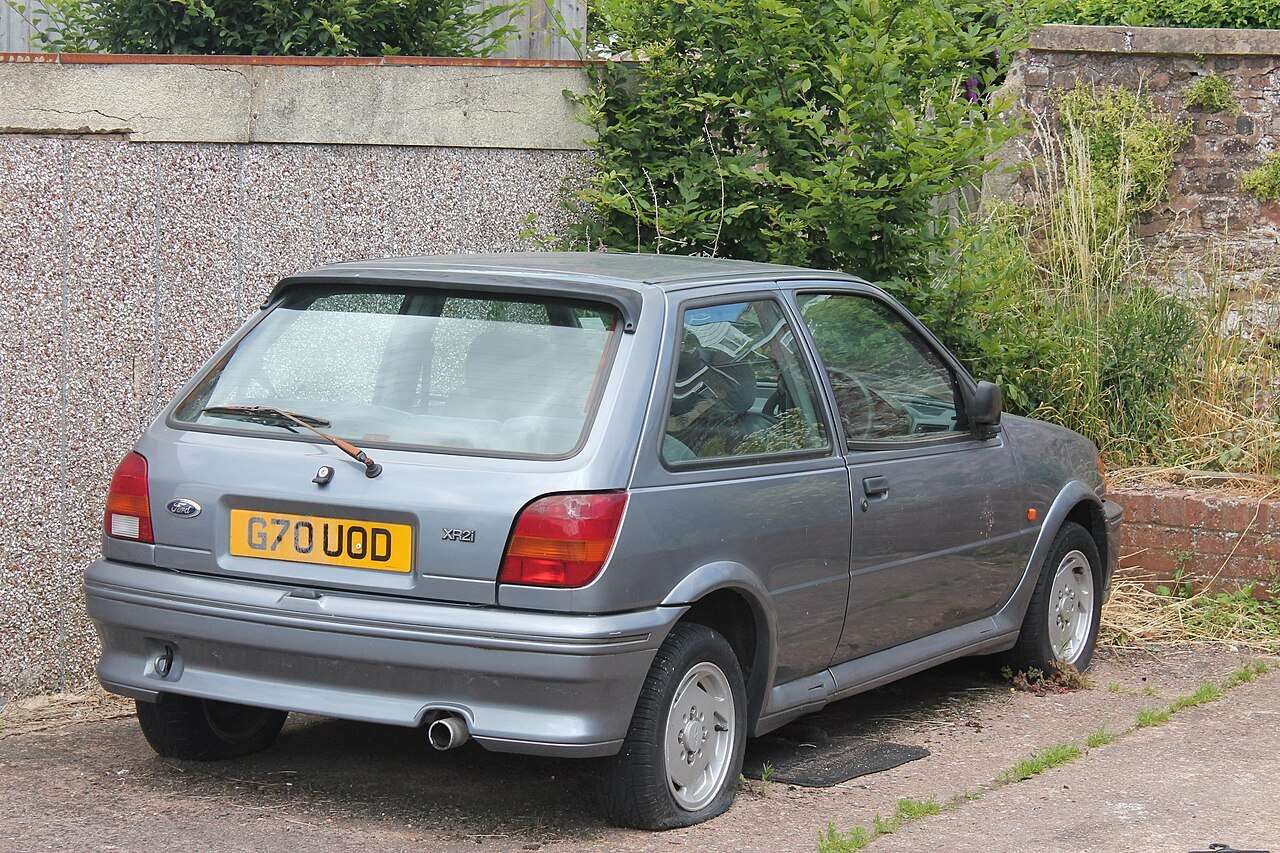
The XR2i was the fast Fiesta you could actually see in a school car park or outside a supermarket. Its badges stayed familiar while Ford changed the engine beneath them.
1. The little i was the big change
The Mk3 XR2i arrived in 1989 with fuel injection. Its predecessor had relied on a carburettor. The 1.6-litre CVH was familiar territory for Ford, but injection was a meaningful change to a name people already knew.
2. It belonged to a new Fiesta generation
The XR2i picked up the baton from the Mk2 XR2 in a larger, rounder Mk3 body. Ford offered the ordinary new Fiesta with five doors, but the XR2i was a three-door hatch.
3. The lamps helped give it away
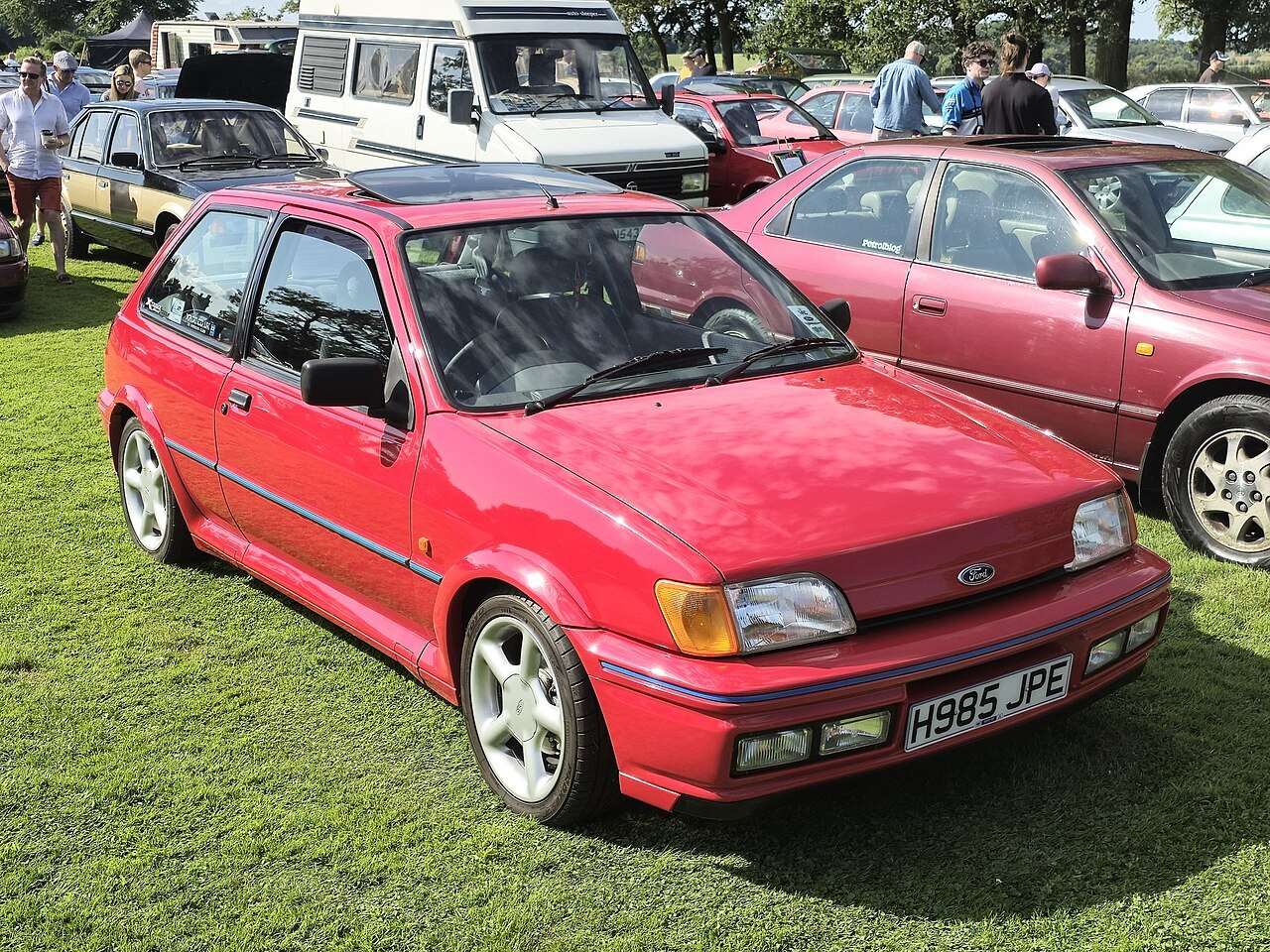
The front bumper carried two pairs of auxiliary lamps. With the arch extensions, skirts and rear spoiler, the result was recognisable in a rear-view mirror long before you could read an XR2i badge.
4. The early version had eight valves
The 1.6 CVH had a single overhead camshaft and two valves per cylinder. The AA’s October 1990 test gives a contemporary picture of the car, before the 16-valve badge muddied the names.
Love cars you don’t see every day?
Get forgotten cars, surprising motoring stories and the most interesting finds from Unusual Cars by email.
Free to join. No spam. Unsubscribe whenever you like. See our Privacy Policy.
5. The 1.8 was a new proposition
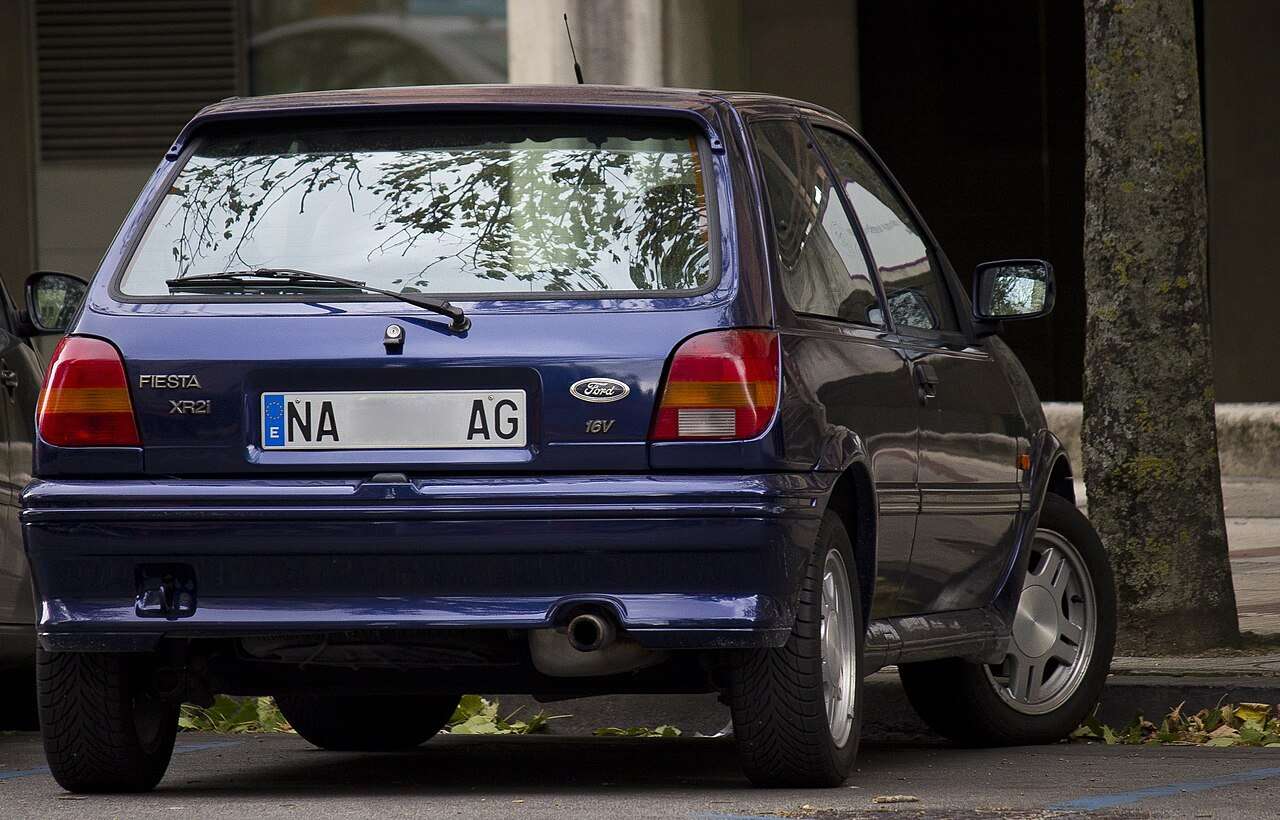
The later 1.8 used a 16-valve engine, from the family eventually known as Zetec. Its twin cams were a real architectural change. The two XR2is therefore deserve their own columns in any specification comparison.
6. The 1.8 figures depend on where it was sold
The British 1.8 XR2i is generally quoted at 105 PS. Some continental XR2i 16V versions were rated at 130 PS, a figure easily confused with the UK RS1800. A market and date make these figures much more useful than a badge alone.
7. The RS Turbo sat above it
The turbocharged Fiesta took the Mk3’s shape and the CVH family much further. The XR2i had a separate brief as the naturally aspirated sporting Fiesta that people were more likely to encounter day to day.
8. Ford also sold a more powerful 1.8 in Britain
The RS1800 brought the higher-output 1.8-litre engine to the British line-up. Its existence is one reason that a casual online search for an XR2i can return more power than a UK owner remembers.
9. The blue trim ran inside too
The AA’s 1990 test noted blue stripes on the doors and carpet, plus blue numbers on the gear knob. A tidy original cabin offers details that are easily lost when a car is retrimmed.
10. You could order mechanical anti-lock brakes
The AA’s test car came with a heated Quickclear windscreen and optional mechanical anti-lock brakes. Ford charged £135 for the screen and £435 for the brakes, substantial extras for a small car in 1990.
The turbocharged alternative: Ford Fiesta RS Turbo.
Explore more 10 Things articles
Browse the Unusual Cars 10 Things hub.
Sources and further reading
- AA period road test of the 1.6 XR2i
- Classic & Sports Car, UK fast Fiesta chronology
- Spanish official vehicle list, 130 PS XR2i 16V
- Motor16, period Spanish XR2i 16V test
Featured image: Red Mk3 Ford Fiesta XR2i at a car show. Photo by Calreyn88 via Wikimedia Commons (CC BY-SA 4.0, resized).
Join the Unusual Cars Club
Get more forgotten performance cars, surprising motoring stories and new 10 Things articles by email.
Free to join. No spam. Unsubscribe whenever you like. See our Privacy Policy.