Fiesta XR2i buying verdict
Buy a sound, documented Mk3 and choose the engine before comparing prices. The 1.6 CVH 8V is the earlier injected XR2i. The 1.8 Zetec 16V is the later alternative, with different timing components and different engine management. Both deserve a cold start, a proper warm road test and a look behind the body kit. If the history is incomplete, price the car by the fitted equipment, structure and work you can verify.
A standard-looking car with its trim and an honest repair file is often easier to put into use than one with an undocumented engine swap. If you want a modified XR2i, get the parts and wiring details and confirm insurance for the exact configuration. A bad earth or a failed hot restart can take longer to diagnose on a car whose loom has been altered. Make the inspection before you put a value on rare trim or a low odometer reading.
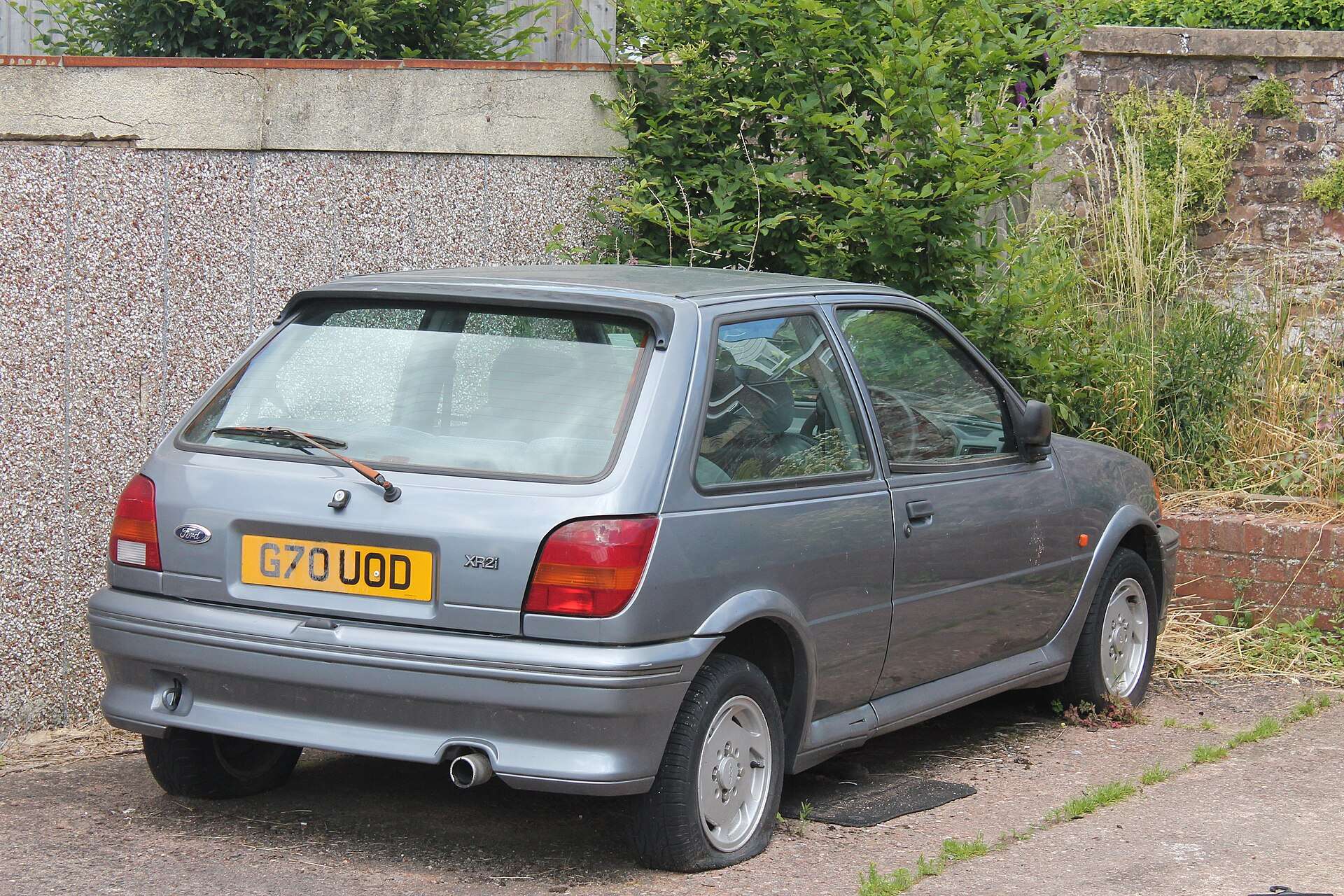
Featured photograph by Charlie from United Kingdom.
Wikimedia Commons source and photo licence
1.6 CVH 8V versus 1.8 Zetec 16V
| Version | How to verify it | What to budget for |
|---|---|---|
| 1.6 CVH 8V | Check build details, engine markings and injection hardware against old invoices and the current engine bay | Correct CVH belt and tensioner, pump fitment, injection and warm-start diagnosis if needed |
| 1.8 Zetec 16V | Verify the engine code and supporting paperwork. Confirm the installed timing hardware before ordering | Correct 16V timing kit and pump, coolant work and any clutch or gearbox jobs after diagnosis |
| Engine conversion | Record donor, wiring, engine management, gearbox and brake changes and applicable registration or insurance records | Order by what is fitted. Allow time for diagnosis and parts research and check local support |

Identity and completeness before the viewing
Ask for the chassis and build details, engine-bay photographs, the instrument reading and old MOT and service records. Compare the dated records and check for changes to the instrument or engine. A receipt for parts says little about what was fitted unless it names the vehicle or appears in a consistent file. For a low-mileage car, ask the seller to show the chronology. The condition of the shell and the scope of repairs matter on any mileage.
Check lamps, bumpers, kit sections, seats, steering wheel, instruments, wheels and clips. Agree what spares are supplied. Find out if original parts fit the current body and whether the fasteners are present. An original-looking exterior can hide panels that were replaced. Ask for repair pictures from before paint and underseal. If a shell was repaired following damage, get the structure checked independently.
UK auction evidence
Iconic Auctioneers reports £7,875 for a 1991 Mk3 XR2i at Sywell in May 2026. The catalogue describes an injected 1.6 CVH and 9,740 miles displayed, with the mileage unwarranted. The same auctioneer’s archive also reports £6,882 for a 1993 XR2i. Use each as a record of that individual car and verify engine, condition and fee basis before comparison. The first figure is a specific 8V sale, so it does not establish what a sound 16V is worth.
Build a comparison from verified 8V and 16V cars separately. Include the dates, documented mileage, running state, MOT, repairs, trim and modifications. Record asks and sold prices in different columns. A restoration bill is evidence of what was done and spent. It does not guarantee the market value of the work. A cheaper car needing welding, parts and a booked workshop can cost more to make usable than a documented driver.

Lift inspection: where to look behind the kit
Start with the front structure, inner wings, suspension tops and chassis legs. Check panel gaps and note any seam or join that differs from side to side. Ask which repair prompted replacement of a panel and whether there are photographs of the mountings before it was closed up. Have the shop identify structural repairs separately from cosmetic paint and record whether there is more work to establish scope.
Follow the jacking points and sills, looking at inner structure and floor seams as well as the visible edge. With permission lift mats and accessible trim to check footwells, the boot floor and the spare-wheel area. Ask whether the garage can see behind the body kit without damaging it. Get an estimate for removal and refit as part of bodywork if access is required. At the rear inspect inner and outer arches, surrounding structure, suspension mounts and brake pipes.
Check water entry around the glass, doors, tailgate and any sunroof. A damp carpet is a reason to find the cause before replacing it. Look for old patches, cracked seals and trapped moisture. Get a body-shop estimate that includes access, adjacent steel, paint, protection and trim. If a structural area cannot be assessed and the seller will not allow a closer inspection, make the offer conditional or keep looking.
Cold start, hot restart and road test
Ask for the first start of the day. Watch warning lamps, idle and smoke, then warm the car through normal use. On the CVH check the history of timing and cooling work and note whether idle or hesitation changes after warming. On the Zetec check the fitted engine and scope of timing work, then note its idle, response and restart. If either cuts out, ask the workshop to check grounds, altered wiring, air, ignition and fuel supply as appropriate before ordering parts.
On a legal drive, check warm gear selection, clutch take-up, steering, braking and noises. Record whether the noise follows speed or revs, and whether it changes in gear, when coasting or under load. Ask the garage to identify shafts, bearings, mounts and gearbox before pricing a repair. If the clutch slips, get the estimate for the actual gearbox and release hardware, with extra parts and fluids itemised.
If temperature rises or coolant drops, arrange separate diagnosis. A pump and belt invoice does not confirm a repair to an unrelated cooling fault. Ask the garage to inspect leak paths, fan operation and other cooling parts. Repeat the restart after a hot stop. Check that any modified suspension leaves enough tyre clearance and that the correct wheels and brake dimensions are known before ordering.

Maintenance parts, labour and UK fitted costs
Burton lists the late CVH timing kit at £73.50 and late pump at £28.20. The supplier reference is a starting point for a confirmed compatible installation. Autodoc’s RQC 1.8 XR2i catalogue showed an SKF VKMC 04212 belt and pump kit at £105.99. Ask for engine and fitted-parts confirmation and itemise coolant, seals and fasteners.
The fitted examples use Village Classic Cars’ published £90 hourly rate including VAT. Labour hours are illustrative allowances, with parts, consumables, availability and exact fitment to be confirmed by the workshop.
| Job | Published parts reference | Worked allowance |
|---|---|---|
| 1.6 CVH timing kit and late pump if compatible | £101.70 total parts | £371.70–£551.70 with 3–5 hours, before fluids and other items |
| 1.8 Zetec timing and water pump example | £105.99 kit | £465.99–£645.99 with 4–6 hours, before fluids and other items |
| Hot running or injection diagnosis | 1–2 hours at £90 | £90–£180 before repair |
Hidden costs and a worked offer
Say a 16V is £850 below another with better records and needs timing work and initial diagnosis for a hot restart issue. At the upper example figures those items take £825.99, leaving £24.01 before fluids or any repair. Get the workshop to write down the actual scope and test the fault before you count the price gap as a saving. If both cars need the same timing work, compare only the remaining differences.
Budget for tyres, brake and fluid work if the car has been standing and confirm alternator output, plug and mount before ordering. Give the garage a list of parts installed after factory build. Add any costs for original trim and clips you want to replace, insurance for modifications and transport if the car cannot be driven safely.
Love cars you don’t see every day?
Get forgotten cars, surprising motoring stories and the most interesting finds from Unusual Cars by email.
Free to join. No spam. Unsubscribe whenever you like. See our privacy policy.
XR2i viewing checklist
- Verify the 8V or 16V identity and the engine and gearbox that are actually installed.
- Arrange a genuine cold start and warm restart. Check lights, idle, temperature, clutch and shifts.
- Have sills, jacking areas, arches, floor and mounts photographed. Get an estimate if more access is needed.
- Get written costs for belt, cooling and confirmed faults. Agree which trim, keys and records are included.
XR2i sale comparisons by engine and condition
| UK example | Published figure | What a buyer can use it for |
|---|---|---|
| 1990 1.6 XR2i non-running project, Anglia Car Auctions, November 2026 | £2,484 including premium | Storage, water entry and seized wheels are part of the comparison. Allow recovery and inspection before pricing it as a runner. |
| 1991 1.6 XR2i, Iconic Auctioneers, May 2026 | £7,875 reported sold | An 8V result with unusually low mileage displayed and a catalogue caveat about mileage. Compare the history and condition. |
| 1992 XR2i 16V, Dore & Rees, March 2025 | £5,600 reported by The Classic Valuer | The auctioneer’s original catalogue describes one owner, original paperwork and recent storage. The sale figure comes from the result archive. |
Recommissioning a stored XR2i before a road test
The November 2026 1.6 project is a useful example of where purchase cost ends and recommissioning starts. The auctioneer described around 18 years of storage, water ingress, seized front wheels and no access under the bonnet because the cable was seized. Before bidding on a similar car, arrange recovery that can move a car with seized wheels, identify where it can be stored and ask a garage what it can inspect without the engine running. Do not assume a fresh battery and fuel are enough to make it roadworthy.
Ask the workshop for a first visit in stages. Start with bonnet access without damaging scarce parts, exterior and floor inspection, brake and tyre condition and checks for fluid or fuel leaks. Agree how it will assess the condition of old fuel and cooling equipment and establish the correct timing parts before running it. The quote should say when the shop will stop and call if it finds structural or mechanical damage. A first running assessment can then establish what is a fault, what is due service and whether a road test is appropriate.
Inside a car with water ingress, start at the seals and openings and check the floor, wiring and seat or belt areas. A preserved seat pattern does not prove the carpet is dry or the floor sound. Ask whether the source can be traced and which parts need removing. Document the difference between cosmetic cleaning, replacing damaged trim and repairing the steel below. If a roof or floor repair needs a second specialist, include the transport and time between workshops.
Check the paperwork like a specialist would
For a car with low mileage, line up MOTs, service dates, the original invoice where supplied and any period photos. Check the instrument and engine separately. An apparent mileage gap can be explained by storage or an instrument change if the owner can document it. Ask when it was last used on a normal road journey, what maintenance followed storage and whether old fluids, fuel system components or tyres were changed.
For a claimed 16V, save clear images of the engine identity and management hardware. Check the seller’s records for the original build and compare it with the installed engine, gearbox and wiring. If the car was converted, ask for the donor, why the conversion was done and which original items are included. Arrange an insurance quote for what is actually fitted. This changes both the selection of comparables and how the next garage orders parts.
Ask the mechanic for a short written report after the warm drive. It should name the conditions for any idle, cutting-out or gear issue, list stored information before anything is cleared and say what it can reproduce. If the symptom is intermittent, record it with the owner, including how recently any wiring, fuel or cooling part was changed. The report can support a conditional offer without pretending the cause is known.
Put a ceiling on a project and protect the handover
Suppose you are comparing a £2,484 project bought at the same all-in figure as the archived sale with a usable £5,600 car. The gap is £3,116 before allowing for the different engines, conditions and dates, so it illustrates the available budget rather than valuing either car. Subtract actual recovery, initial access and inspection and the first written roadworthiness quote. If the costs only fit by leaving welding, brakes or cooling unresolved, you still need a conditional purchase or a different project.
For a running car, arrange one return visit if it matters to prove a hot-start problem or inspect a difficult mounting. Ask which parts remain original and which are required to return it to your preferred setup. At collection retain keys and the original records, obtain a receipt identifying the car and agreed spares, and record the fitted timing references. Keep the workshop’s photos and quote as a baseline for the first year.
Additional XR2i sale sources
- Anglia Car Auctions: 1990 1.6 XR2i project sale
- Dore & Rees: original catalogue for the 1992 XR2i 16V
- The Classic Valuer: 1992 16V reported sale figure
Set up the XR2i viewing before the seller warms it
Send the seller a short list: engine bay and build identifiers, both front strut tops, both sill ends, the inside of each rear arch, floor or boot photos, the timing invoice and any ignition or wiring receipts. Ask whether you can start it yourself or watch the first start, drive until fully warm and return to the same parking place for a restart. If the seller has an appointment soon after you arrive, choose a time that allows a useful warm drive.
At the first start watch the instruments and lights while the owner works the ignition. Note how quickly the engine settles and whether a warm restart or an electrical load changes the idle. Check the dash and fan controls, lights, wipers and demisting while stationary where appropriate. If an alarm or immobiliser has been removed, ask who repaired the loom and whether the invoice identifies the circuits. Give the garage the difference between a starting problem, a running problem and a dash or charging issue.
Drive a repeatable legal route. Start with slow manoeuvres and light throttle, then try normal changes through the gearbox when warm. If there is a hesitation, record whether it happens on steady throttle, on reopening it or after a warm stop. Ask the workshop whether it can reproduce it with the engine management and wiring fitted. Check tyres and braking before any road test and stop if the car becomes unsafe. Save a note on the observed temperature, not just a description such as “runs a bit rough”.
Three outcomes from an XR2i inspection
On a tidy 1.6 with a matching history and dry shell, the immediate expenses may be ordinary service items. Get the timing and pump estimate, plus tyre, brake and fluid work if the car has been standing. A running fault can still change the calculation. Ask the seller what repair history was established before the car was stored and which jobs it has had since it returned to use.
On a 16V with a genuine-looking engine bay but incomplete paperwork, compare the engine and gearbox against the actual car, then establish whether the shell and key components agree with the seller’s description. If it was converted, look at the loom and fuel and brake equipment in use, find out how it will be insured and ask a workshop whether it can support the combination. A functioning conversion can suit a driver once you know what you are buying and can order the right parts.
On an attractive car with unexplained damp, ask the inspector to locate the source, verify the condition of the floor and seat or belt attachments and say whether the kit prevents inspection. Get a separate estimate for access, repair and replacement of damaged trim. If a rust repair may extend behind a body-kit section or under a carpet, make the offer subject to the findings instead of allowing a small fixed sum.
Plan the first month around the inspection report. Fix roadworthiness issues and overdue items first, establish a baseline for hot starting and coolant, and record electrical or instrument faults before further work. Keep a list of the exact service references and where they came from. Photograph any original trim you remove and keep it with the car if it can be reused.
Frequently asked buying questions
Is the Fiesta XR2i always a 1.6?
No. Early cars used an injected 1.6 CVH 8V and the later XR2i 16V used the 1.8 Zetec. Ask for the original model evidence and record the engine installed now. A converted car should be bought and serviced as its actual configuration.
Can an 8V and 16V use the same timing kit?
Match the kit to the actual engine and revision. The published CVH and RQC Zetec examples are separate references and their scopes differ. The workshop should identify the belt, tensioner, pump, seals and fluids for your car.
What if the car cuts out once it is warm?
Record the temperature, time and driving conditions and whether it restarts immediately. Ask for an inspection of fitted ignition, injection, cooling and wiring. Give the workshop any previous repair or alarm information that could affect diagnosis.
What should I verify before buying a stored XR2i?
Check structure, water entry, fuel, brakes and tyres, and establish how the car can be recovered. Ask what the garage can inspect before attempting to start it and whether its timing work is documented. Price recommissioning separately from the purchase.
Maintenance parts on eBay UK
Affiliate disclosure. We may earn a commission from qualifying eBay purchases. Match the exact engine, chassis and installed parts before ordering.
Service parts and maintenance shopping checklist
Use these Ford Fiesta XR2i Mk3 searches to compare parts availability. A search result is not a fitment guarantee: confirm the exact vehicle specification and original part numbers before ordering.
| Maintenance item | What to check before buying | eBay parts search |
|---|---|---|
| 1.6 CVH timing kit | Confirm engine code and the diagnosed scope with a specialist. Check tensioners, guides, seals and associated parts; this is not a universal replacement interval. | Compare 1.6 cvh timing kit on eBay |
| 1.8 16V Zetec timing kit | Confirm engine code and the diagnosed scope with a specialist. Check tensioners, guides, seals and associated parts; this is not a universal replacement interval. | Compare 1.8 16v zetec timing kit on eBay |
| Water pumps | Identify the failed component first; match engine and housing references, seals and the correct coolant specification. | Compare water pumps on eBay |
| Alternators | Match the original part number, output rating, electrical connector and pulley; check exchange surcharges. | Compare alternators on eBay |
| Clutch kits | Match engine and transmission codes and flywheel type; confirm release hardware, seals and installation requirements. | Compare clutch kits on eBay |
| Brake parts | Match axle, fitted brake assembly, dimensions and wear sensors; compare a complete axle set and confirm whether hardware is included. | Compare brake parts on eBay |
Affiliate disclosure: we may earn a commission from qualifying eBay purchases, at no additional cost to you. Listing prices are for the advertised contents only; fitting, diagnosis, fluids and associated work may cost extra. Check availability, seller reputation and returns terms.
UK sale, parts and workshop sources
- Iconic Auctioneers: 1991 Mk3 XR2i result
- Iconic Auctioneers: 1993 XR2i result
- Burton Power: late CVH belt kit and pump
- Autodoc: XR2i 1.8 16V RQC catalogue
- Village Classic Cars: published workshop labour rate
For a side-by-side overview of all three generations, see the Fiesta XR2 and XR2i comparison.
More Fiesta XR buying guides
- Ford Fiesta XR2 Mk2 Buying Guide: CVH, Rust and UK Costs
- Ford Fiesta XR2 Mk1 Buying Guide: Crossflow, Rust and UK Costs
Ford Fiesta XR2i Mk3 for sale on eBay UK

See more Ford Fiesta XR2i Mk3 cars on eBay UK
Love cars you don’t see every day?
Get forgotten cars, surprising motoring stories and the most interesting finds from Unusual Cars by email.
Free to join. No spam. Unsubscribe whenever you like. See our privacy policy.