The Nissan Figaro looks like a postcard from the 1950s. It reached Japanese buyers in 1991, as part of one of the most playful design programmes a large car maker has ever attempted.
1. The public saw it two years before sale
Nissan exhibited the Figaro at the 1989 Tokyo Motor Show. Production versions arrived in 1991. An appreciative show crowd helped demonstrate that unusual small cars had an audience.
2. It was the fourth Pike car
Nissan lists the Figaro after the Be-1, Pao and S-Cargo. These related projects shared an appetite for retro or deliberately unusual design, even when the individual cars looked very different from one another.
3. Nissan made 20,000
Nissan’s heritage collection records a limited run of 20,000. Demand led to purchase lotteries in Japan. That unusual route into ownership is part of the story long before the cars started reaching Britain.
4. The engine was anything but 1950s
Power came from a 987 cc turbocharged four-cylinder engine. It used Nissan March-derived mechanicals and was rated at 76 PS. Under the retro body, the Figaro was unmistakably a contemporary Japanese small car.
Love cars you don’t see every day?
Get forgotten cars, surprising motoring stories and the most interesting finds from Unusual Cars by email.
Free to join. No spam. Unsubscribe whenever you like. See our Privacy Policy.
5. There were four factory colours
Emerald, Pale Aqua, Lapis Grey and Topaz Mist made up the original choice. Figaro owners associate them with the four seasons, an unusually memorable way to sell a restrained colour range.
6. The roof folded back within fixed sides
The fabric centre opens while the side pillars stay in place. That arrangement leaves the Figaro recognisable whichever position the roof is in and gives occupants a very different experience from a full convertible.
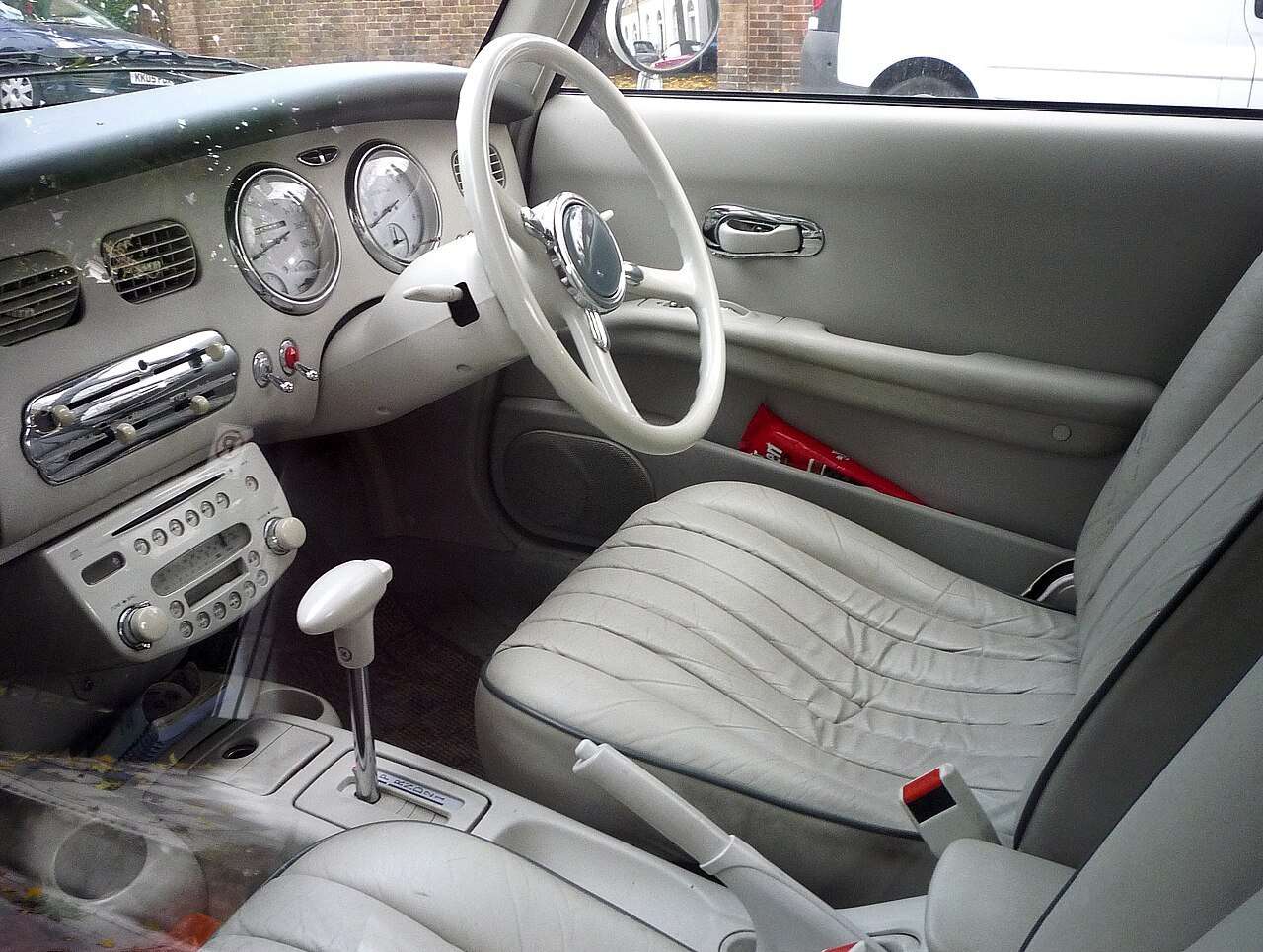
7. The designers kept going inside
White leather, dedicated instruments and specially styled audio controls meant the visual idea continued beyond the body. A clear dashboard photo is one of the best ways to explain why the Figaro felt like a special car.
8. It was an automatic
A three-speed automatic suited Nissan’s intended city use. There was no need to turn this small open-top into a sports car. The appealing combination was easy driving and playful styling.
9. British sightings came by a different route
The Figaro was made for Japan. Later imports made it familiar on British roads, helped by the right-hand-drive layout. The import story is a big part of a UK reader’s memory of the car.

10. It never had to become a normal Nissan
Nissan did not roll the Figaro into a long-running model family. Its one-year production run is one reason its colours, trim and body details are such a cohesive piece of early-1990s design.
Read about another surprising Nissan March derivative.
Explore more 10 Things articles
Browse the Unusual Cars 10 Things hub.
Sources and further reading
- Nissan Heritage Collection, Figaro overview
- Nissan Heritage Collection, Figaro specifications
- Figaro Owners Club, owner and import information
Featured image: Mint green Nissan Figaro. Photo by Lothar Spurzem via Wikimedia Commons (CC BY-SA 2.0 de, resized).
Join the Unusual Cars Club
Get more forgotten performance cars, surprising motoring stories and new 10 Things articles by email.
Free to join. No spam. Unsubscribe whenever you like. See our Privacy Policy.