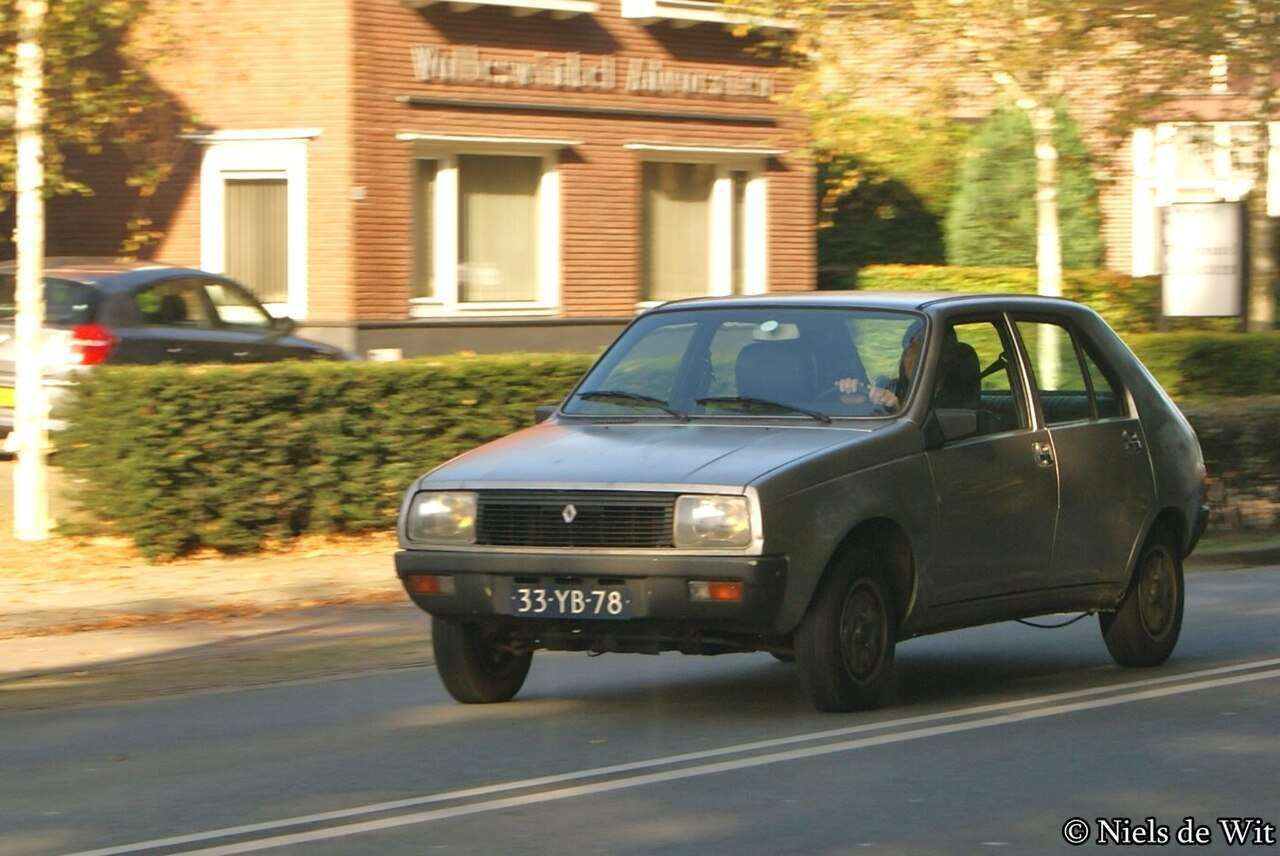
Renault’s family hatchback came with a shape the company likened to a pear and an engine shared with Peugeot. Both details make it one of the most individual Renaults of the 1970s.
1. It filled a gap beside the Renault 12
Renault’s contemporary 12 gave the company an established mid-range saloon and estate. The 14 brought a five-door hatchback to the same general territory in 1976. It was a different answer to carrying a family and its luggage.
2. The pear was Renault’s own idea
Renault embraced the rounded shape in advertising and nicknamed the car the pear. The official museum still uses the image to tell the model’s story. It is hard to think of another period family car whose profile you can describe with a single fruit.
3. Renault was using computer-aided design
The manufacturer’s heritage archive identifies the 14 as an early user of CAD. The result was still unmistakably a 1970s object with a very rounded shape. Behind the curving body was a different method of designing a new Renault.
4. Renault’s first transverse engine came from a partnership
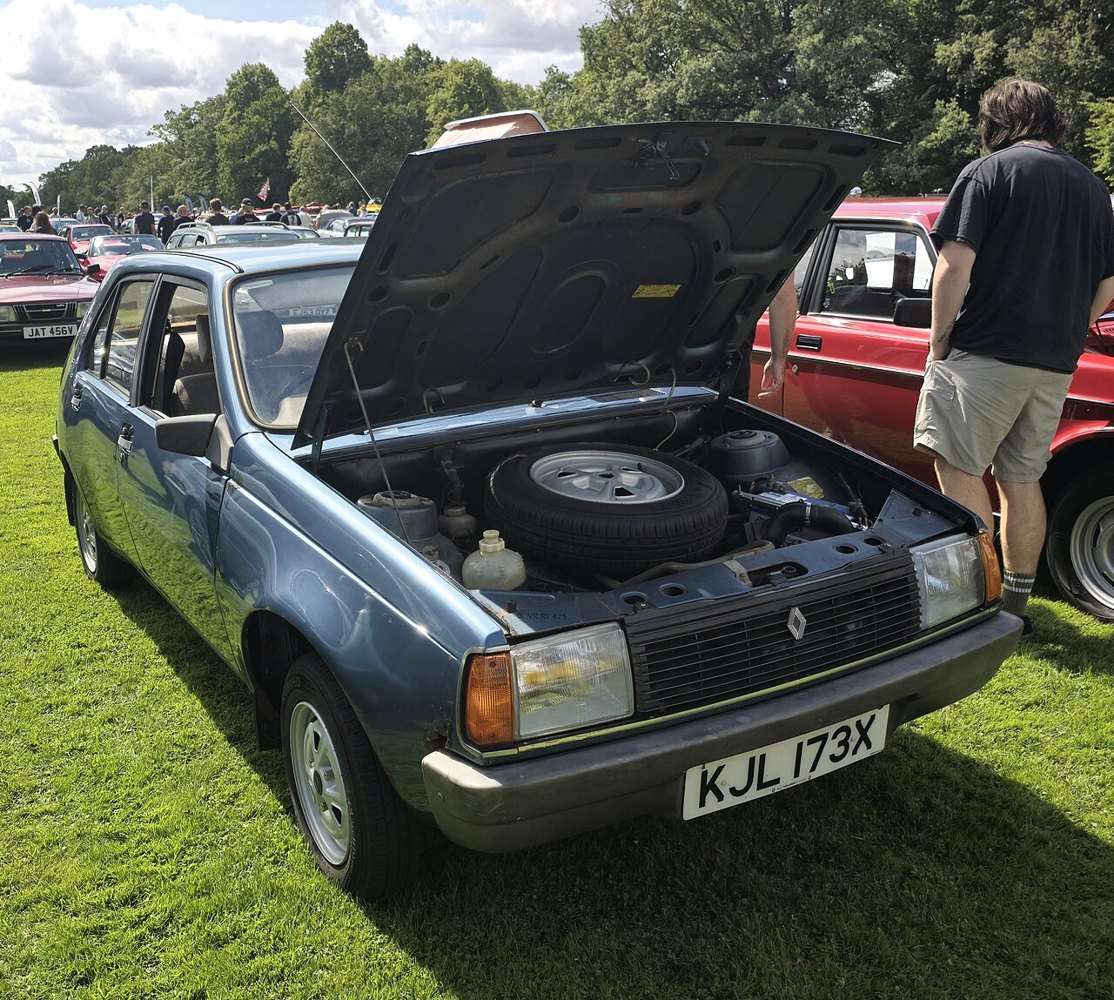
The 14 was the first Renault passenger car to mount its engine across the bay, according to its museum. Renault shared this engine family with Peugeot. The compact installation freed up room within a short family car and gave the model an unusually close mechanical connection to a rival marque.
Love cars you don’t see every day?
Get forgotten cars, surprising motoring stories and the most interesting finds from Unusual Cars by email.
Free to join. No spam. Unsubscribe whenever you like. See our Privacy Policy.
5. The engine and gearbox were close neighbours
The Peugeot-Renault X-series installation packaged the gearbox below the engine, making the powertrain compact. The canted engine gave the assembly its distinctive look. It is a particularly interesting arrangement to see beneath the bonnet of a Renault.
6. The mirrors sat in the window corners
Renault’s archive singles out the integration of the exterior mirrors at the bottom front corners of the side glass. It gave them a visible connection with the line coming back from the front wings. The detail blends into many modern cars but stood out in 1976.
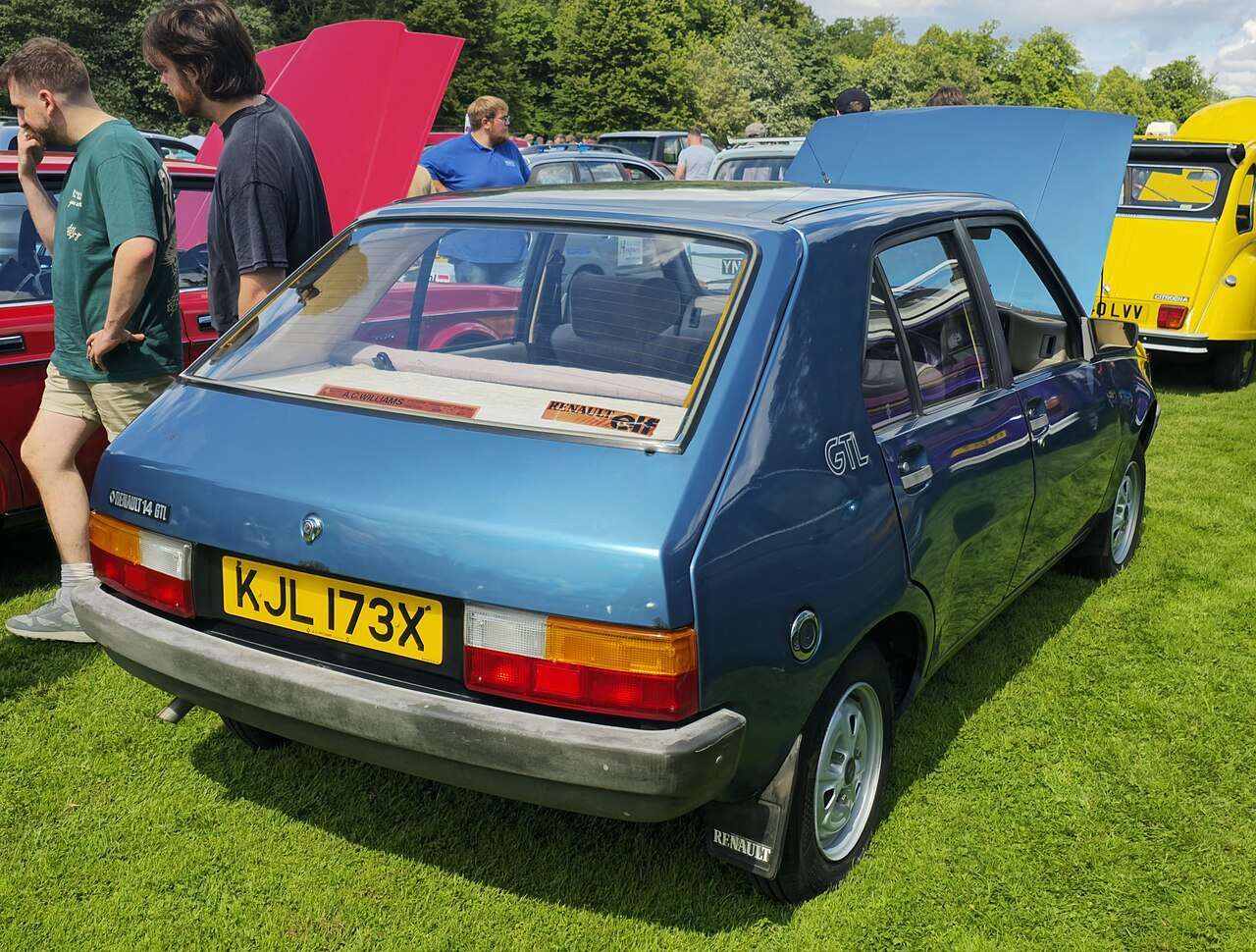
7. Britain advertised a GTL alongside the 14
A period UK range catalogue shows both models. The factory archive also lists grades such as the L, TL and TS across the car’s life. The range names are a useful clue to which market and year you are looking at.
8. The TS added a stronger engine
Later period literature lists the TS with 1,360cc where the TL and GTL used 1,218cc. In other words, the TS badge could have consequences beyond how richly the cabin was trimmed. It is worth keeping the year visible when quoting any particular version.
9. The rear seat helped make the shape useful
The tailgate opened directly into the luggage area and the rear seat could fold for bigger loads. That flexibility explains the car’s place in the range better than the fruit comparison does. It was making the most of space that a saloon would divide between cabin and boot.
10. It made way for two different Renaults
By 1983 Renault had the Renault 9 saloon and the Renault 11 hatchback. The latter was the successor in the same practical body style. For the 14 itself, there was only one generation and no mistaking its profile.
Explore more 10 Things articles
Browse the Unusual Cars 10 Things hub.
Sources and further reading
- Renault’s heritage museum R14 TL model and engineering history
- Period Renault 14 sales brochure catalogue
- 1978 UK Renault range catalogue record
- Contemporary Italian launch reporting and model specifications
Featured image: A 1977 Renault 14 TL. Photo by Niels de Wit from Lunteren, The Netherlands via Wikimedia Commons (CC BY 2.0, resized).
Join the Unusual Cars Club
Get more forgotten performance cars, surprising motoring stories and new 10 Things articles by email.
Free to join. No spam. Unsubscribe whenever you like. See our Privacy Policy.