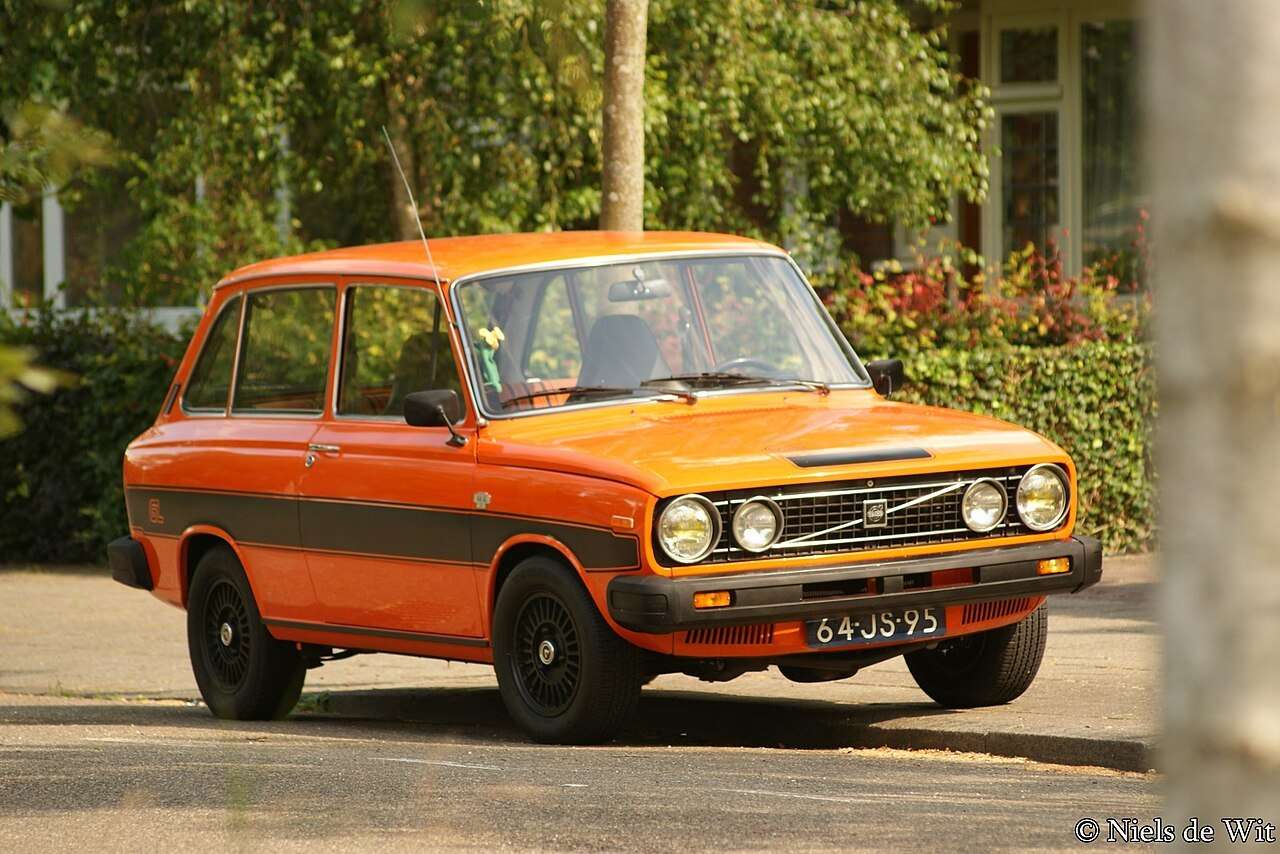
A Volvo with two doors, a Dutch connection and an automatic that changes ratios with belts sounds unlikely. The 66 was all three, and Volvo could even sell you a little estate.
1. It started with DAF’s small-car business
Volvo bought a one-third stake in DAF Car BV in 1972 and later increased its holding. The 66 came out of that Dutch passenger-car operation. It gave Volvo a way into a part of the European market it had not previously occupied.
2. It was a Volvo from 1975
Volvo dates the 66 to 1975–1980. Earlier cars from the same lineage wore DAF badges. A photograph can show almost the same proportions while belonging to quite a different chapter of the story.

3. You could choose an estate despite its size
The two body types were a two-door saloon and a three-door estate. There was a useful rear opening on the estate without a great deal of extra bodywork. The original Volvo range sheet even lists saloon and estate versions at the same two trim levels.
4. Rubber belts did the gear-changing
The Variomatic continuously variable transmission changed the working diameter of its pulleys. The belts therefore let the gearing move through a range of ratios without the familiar stepped shifts of most automatics of its day.
Love cars you don’t see every day?
Get forgotten cars, surprising motoring stories and the most interesting finds from Unusual Cars by email.
Free to join. No spam. Unsubscribe whenever you like. See our Privacy Policy.
5. The driven wheels were at the back
Despite its compact body, the 66 drove the rear wheels. Putting the transmission hardware behind the cabin makes the route the power takes quite different from a modern front-wheel-drive city car.
6. Volvo brought its safety priorities with it
The Volvo version wore larger bumpers than the DAF original. The period range material also emphasises safety details in the cabin. Looking at the differences between the two badges shows how much the Swedes wanted the 66 to fit their own range.
7. Two small four-cylinder engines were available
Volvo’s UK archive lists 1,109 cc and 1,289 cc engines. These were modest capacities, appropriate for a compact car. They also help identify the different versions when an advert describes an early or late example simply as a Volvo 66 automatic.
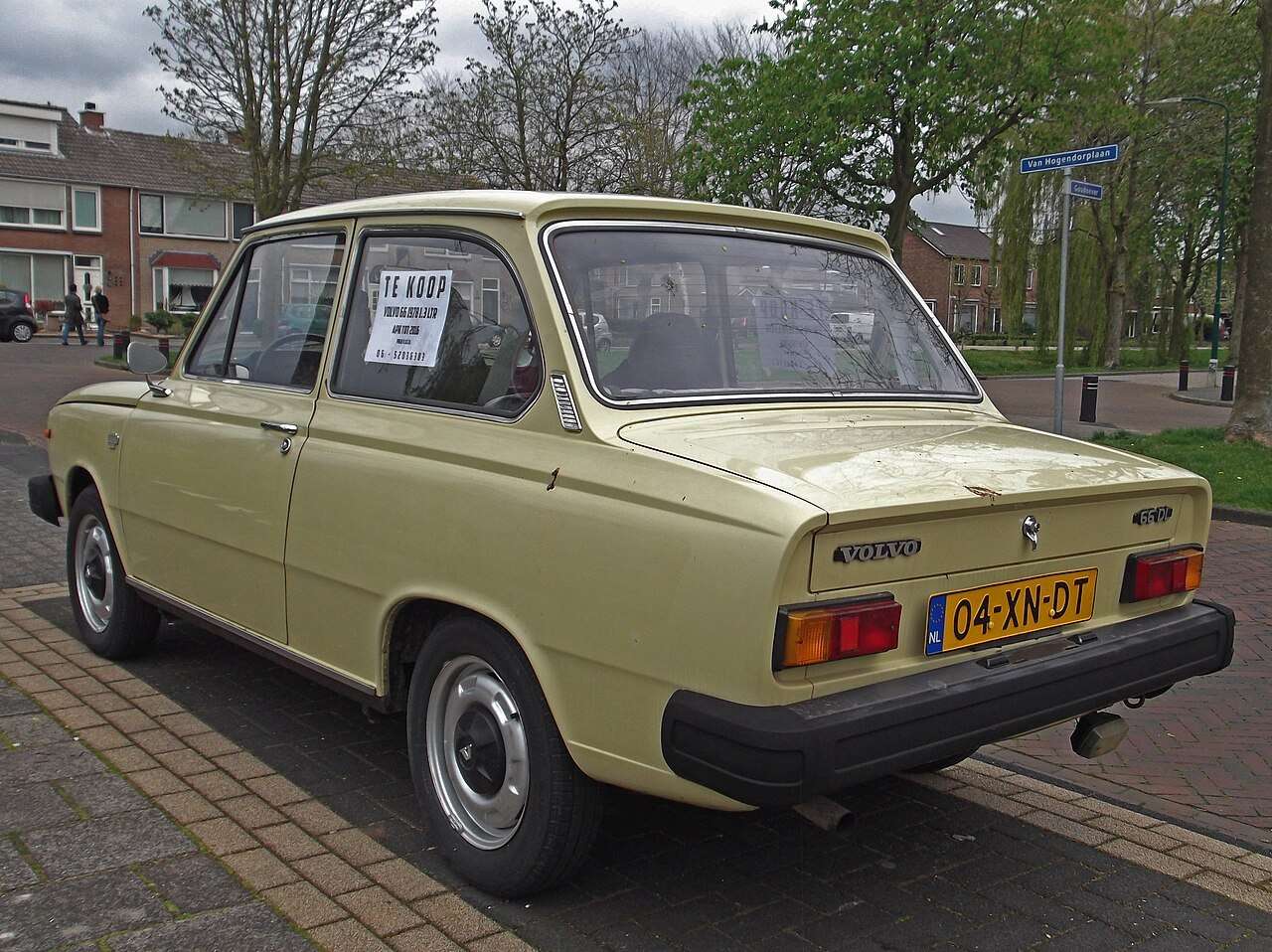
8. There were DL and GL versions of both bodies
The 1975 Volvo Car Division report identifies a DL and a GL for the saloon and for the estate. That makes four combinations at the start of Volvo’s programme. It is a useful reminder that a rare model can still have several documented variants.
9. The official total passed 106,000
Volvo gives production of 106,137. That covers the Volvo-branded model. It gives a scale for the project without implying how many survive in Britain today.
10. It overlapped with an important successor
The Dutch operation also gave Volvo the bigger 343, which arrived during the 66’s lifetime. The 66 and 343 tell two stages of Volvo’s expansion down the size range. The connection is especially visible in the early 343’s use of belt-drive technology.
Read about the Volvo 343 and 340 Variomatic.
Explore more 10 Things articles
Browse the Unusual Cars 10 Things hub.
Sources and further reading
- Volvo Cars UK legacy model archive
- Original Volvo Car Division report
- Original Volvo 1976 brochure
- Volvo Owners Club 66 and 300-series history
Featured image: 1976 Volvo 66 GLS Combi. Photo by Niels de Wit from Lunteren, The Netherlands via Wikimedia Commons (CC BY 2.0, resized).
Join the Unusual Cars Club
Get more forgotten performance cars, surprising motoring stories and new 10 Things articles by email.
Free to join. No spam. Unsubscribe whenever you like. See our Privacy Policy.