UNUSUAL CARS MODEL GUIDE
The Lamborghini Reventón was the first of the company’s modern limited-production “few-off” models. Revealed at Frankfurt in 2007, it wrapped Murciélago LP640 mechanicals in an aircraft-inspired carbon-composite body and introduced design ideas later developed for the Aventador. Twenty coupés were offered to customers, followed by 15 Reventón Roadsters.
Quick answer: the Reventón is rarer and more historically important than a special-bodied Murciélago. A prospective purchase requires factory-level identity and provenance checks, confirmation of original carbon panels and finish, assessment of the 6.5-litre V12, E-gear transmission, all-wheel drive, carbon-ceramic brakes, active aerodynamics, bespoke display system and evidence of correct age-related servicing.
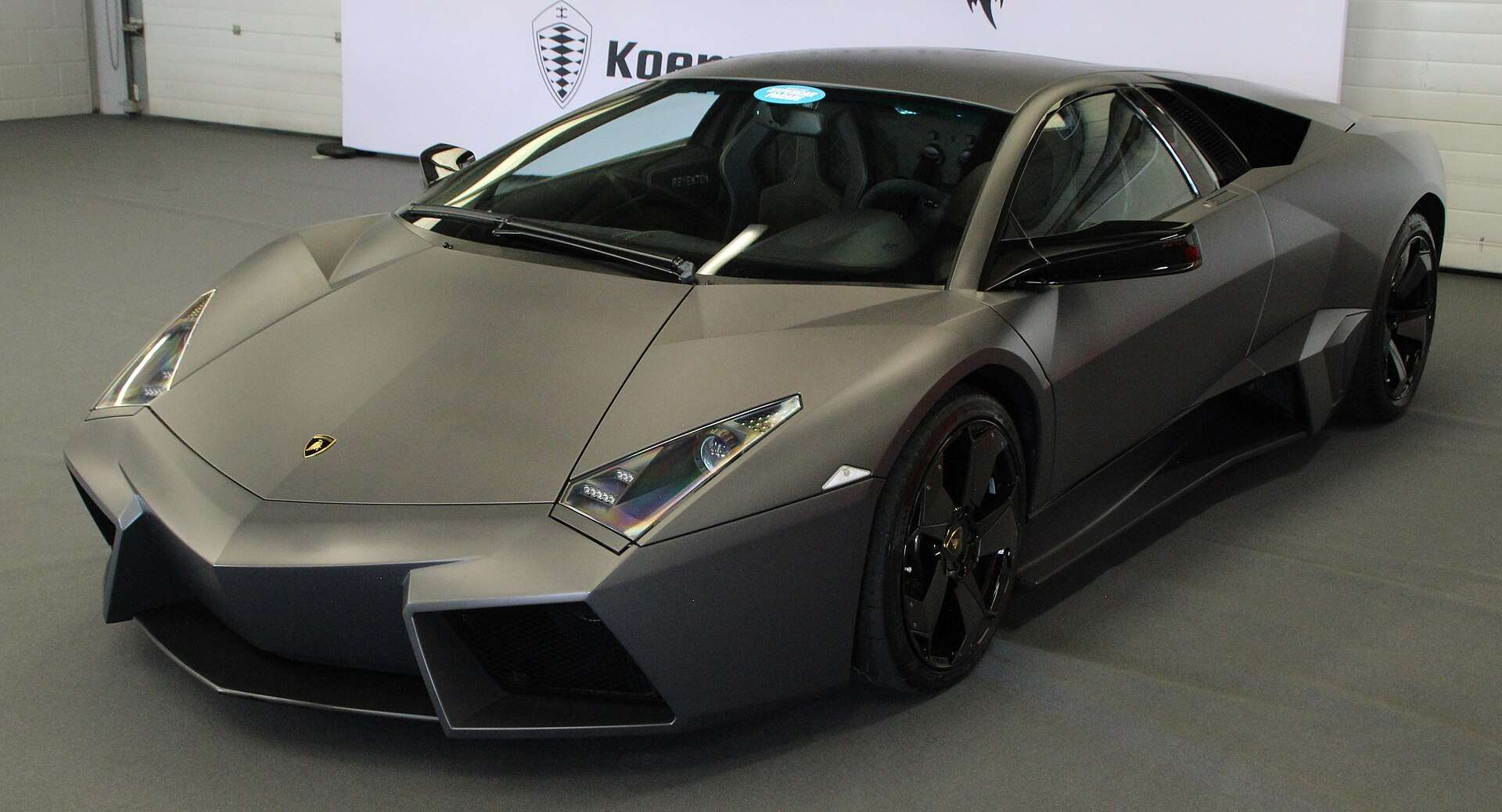
Featured image: Lamborghini Reventón coupé. Photograph by MrWalkr, CC BY-SA 4.0, via Wikimedia Commons; locally hosted.
The first Lamborghini few-off
Lamborghini presented the Reventón at the 2007 Frankfurt motor show with a price of one million euros before taxes. The company describes it as the first modern few-off: a deliberately tiny series that could explore materials, technology and design beyond a normal production model. Each customer coupé carried a numbered plaque, while Lamborghini retained an additional factory example.
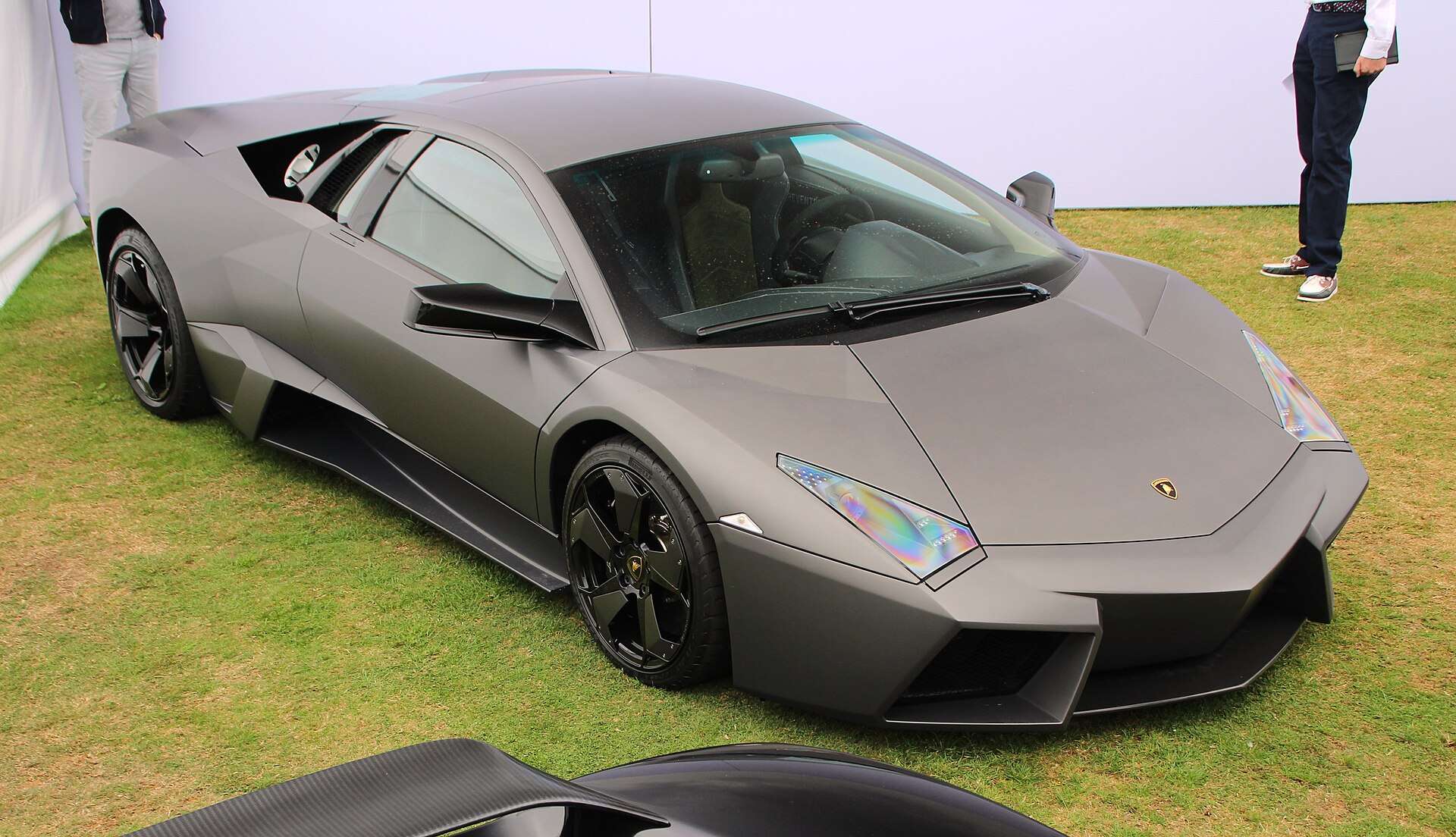
The name followed Lamborghini tradition by referring to a fighting bull. Yet the visual inspiration came primarily from military aircraft. Sharp faceted surfaces, Y-shaped lamps, exposed carbon details and the matt grey-green Reventón colour made the car look more like a prototype for Lamborghini’s next decade than a derivative of an existing model.
Murciélago engineering beneath a new body
The coupé retained the Murciélago LP640’s 6,496cc naturally aspirated V12, permanent four-wheel drive and six-speed E-gear automated manual transmission. Output increased slightly to 650 CV. Lamborghini quoted 0–100 km/h in 3.4 seconds and a maximum speed around 340 km/h, figures that placed it among the fastest road cars of its period.
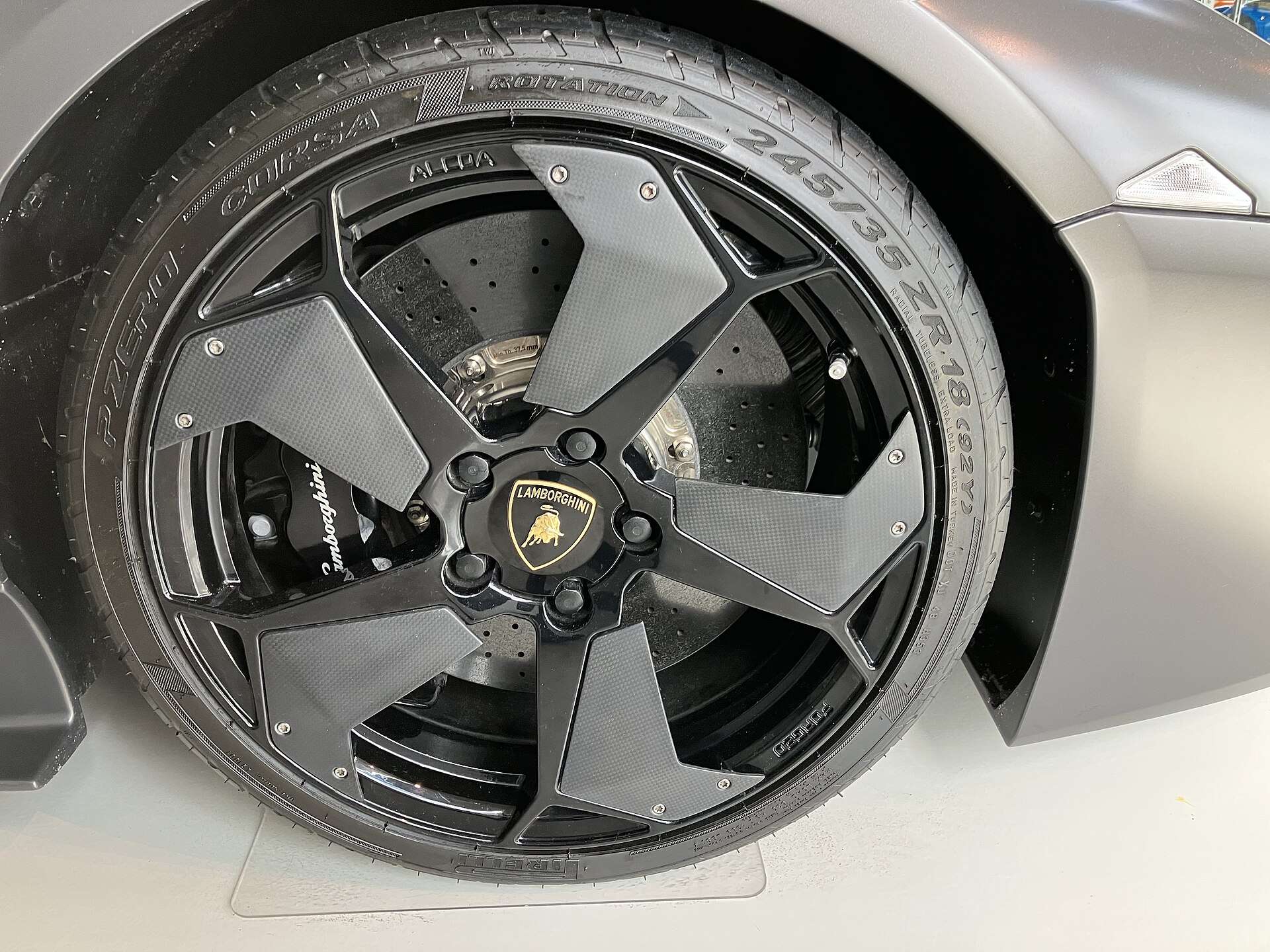
The tubular steel chassis was reinforced with carbon-composite elements and covered by entirely new carbon-fibre body panels. Carbon-ceramic brakes were standard. The wheels used directional carbon-fibre blades intended to improve brake cooling, while an active rear spoiler altered position with speed. These details matter because replacement or repair demands specialist materials knowledge rather than ordinary bodyshop methods.
Coupé and Roadster compared
| Version | Reventón Coupé | Reventón Roadster |
|---|---|---|
| Introduction | Frankfurt 2007 | Frankfurt 2009 |
| Customer production | 20 | 15 |
| Engine output | 650 CV | 670 CV |
| Roof | Fixed carbon-composite coupé | Open two-seat roadster |
| Quoted top speed | Approximately 340 km/h | Approximately 330 km/h |
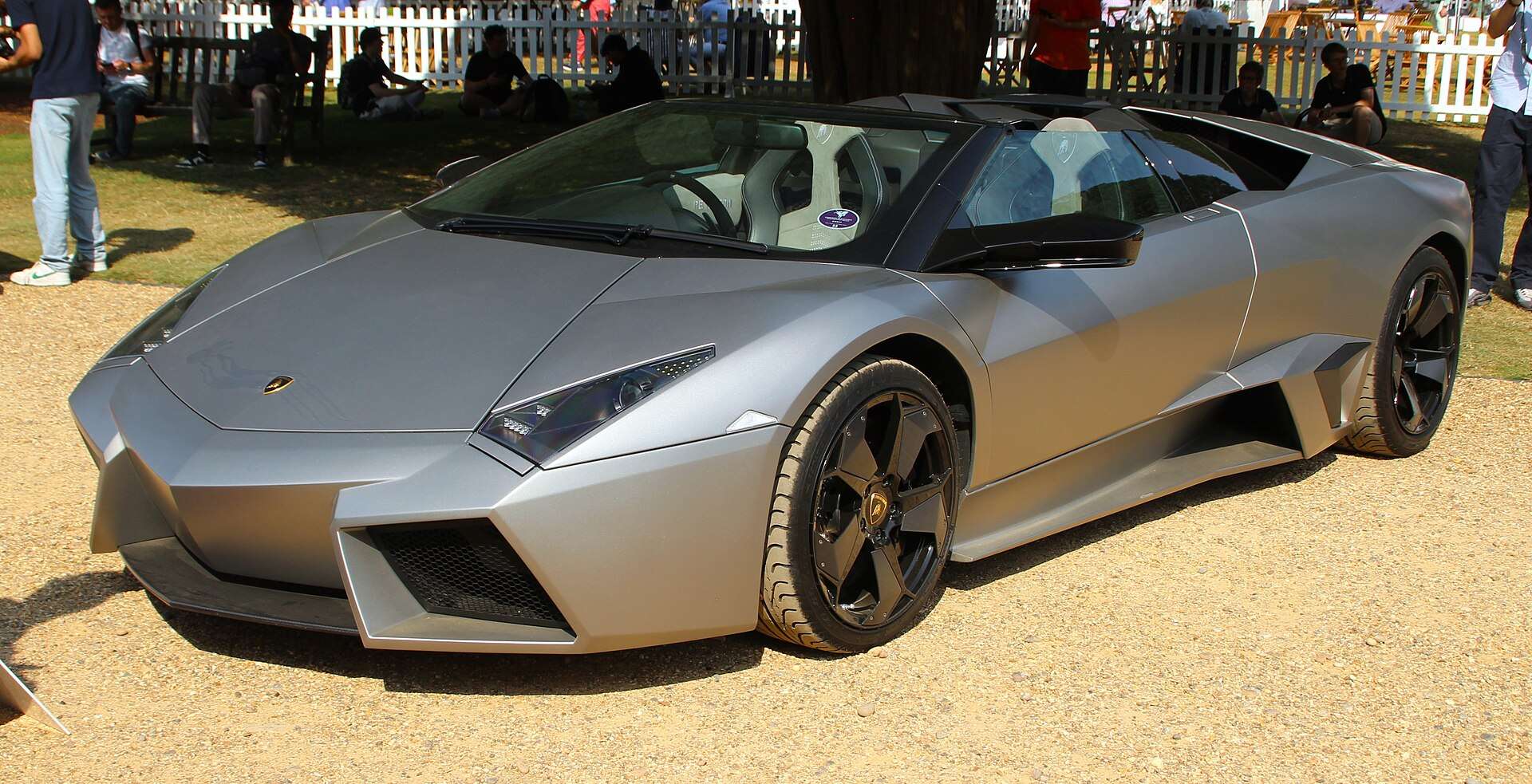
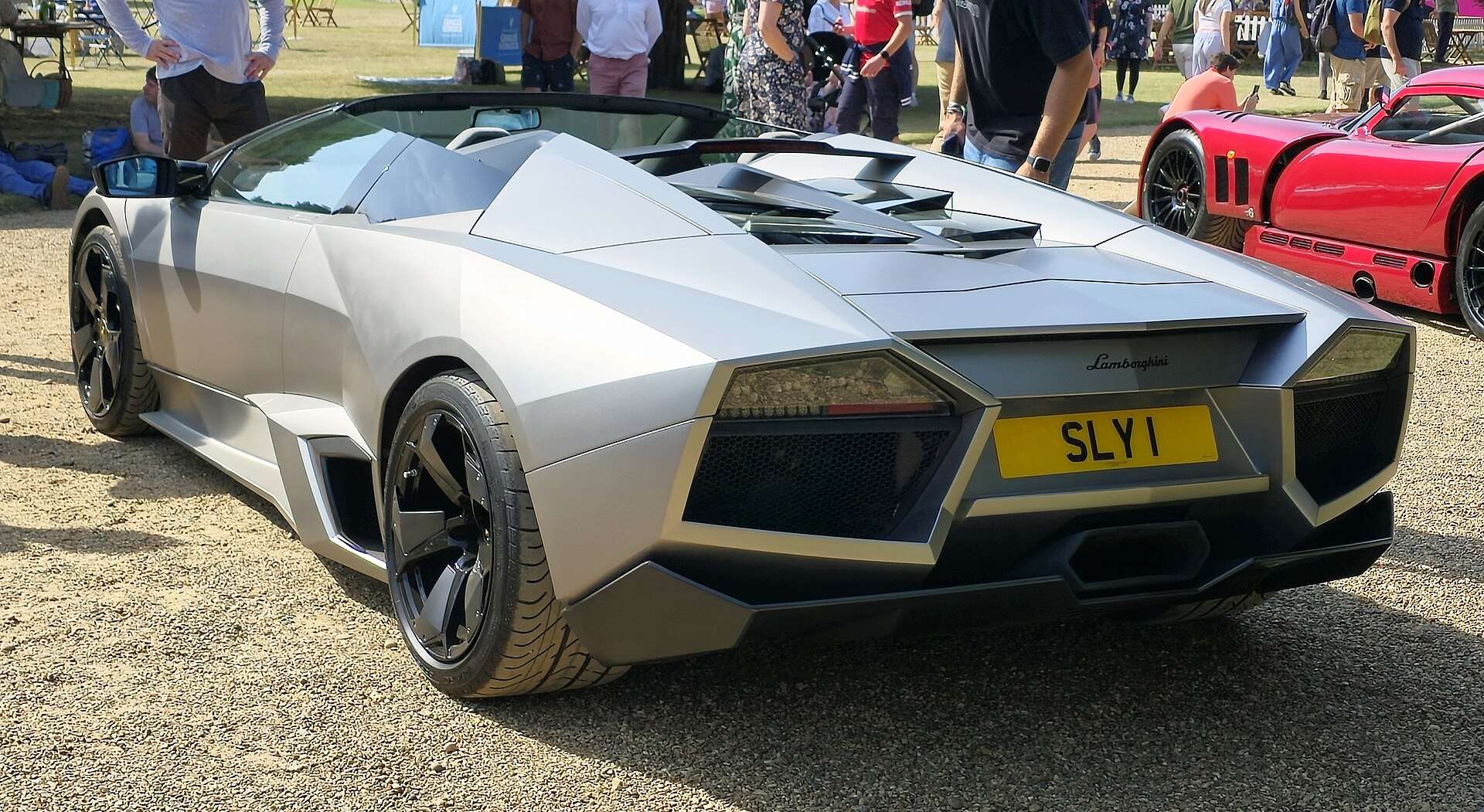
The Roadster adopted the later 670 CV V12 specification and structural changes required by its open body. It is not simply a coupé without a roof: its rear bodywork, rollover protection and aero treatment require separate inspection. Three Roadsters are widely reported to have been built in right-hand drive, including a UK-delivered car, while contemporary UK reporting recorded one coupé in the country.
Love cars you don’t see every day?
Get forgotten cars, surprising motoring stories and the most interesting finds from Unusual Cars by email.
Free to join. No spam. Unsubscribe whenever you like. See our privacy policy.
Aircraft-style cockpit and electronics
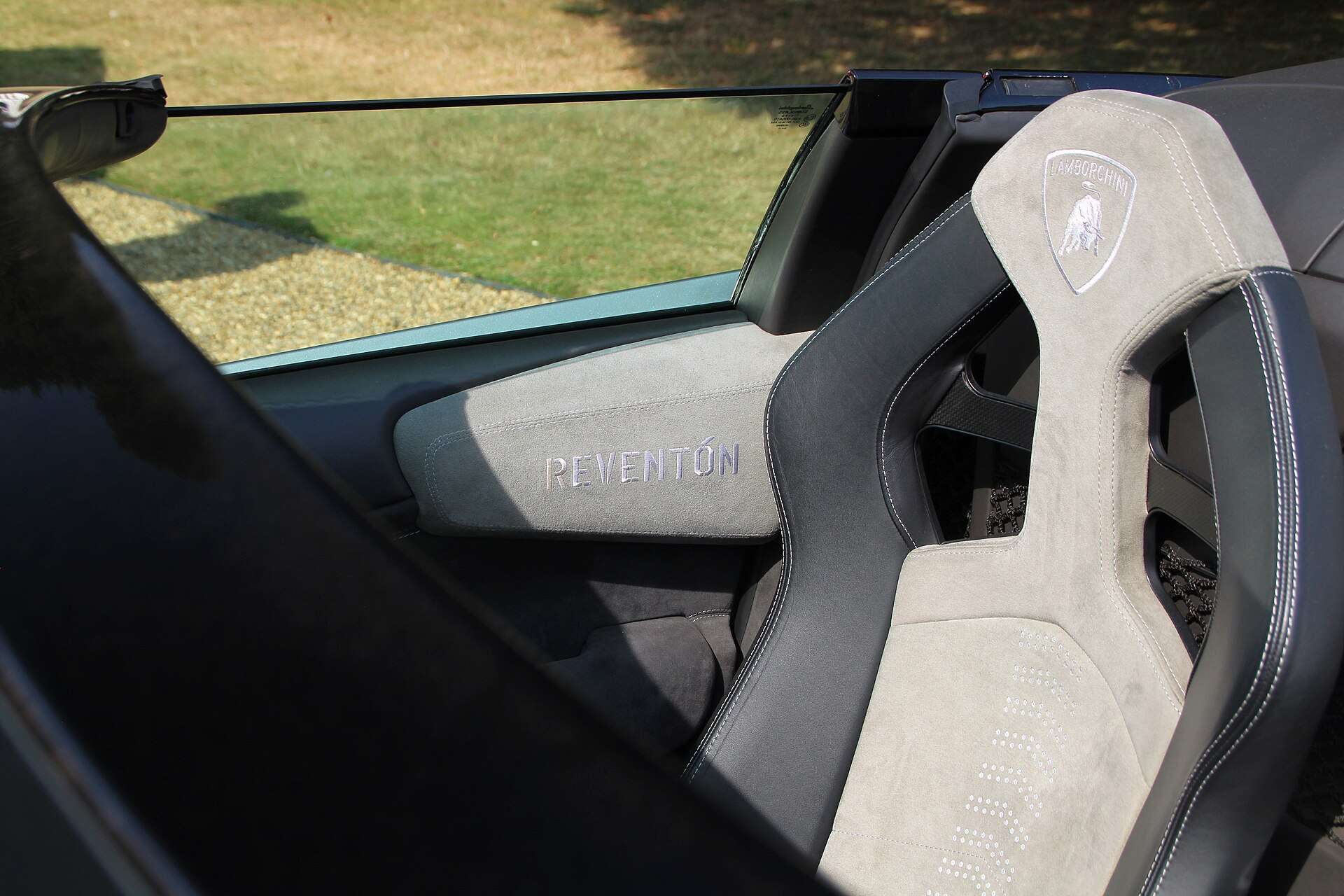
Three thin-film-transistor displays could show conventional instruments or an aircraft-style presentation, including a G-force meter. The cabin combined carbon fibre, Alcantara, leather and aluminium, with details unique to the model. Confirm every display mode, warning light, switch, lift system and climate function during a battery-supported diagnostic inspection.
Low mileage does not make electronics immune to age. Batteries, control units, display panels, hydraulic E-gear components and connectors all need correct testing. Avoid cars whose warning lamps have been cleared immediately before inspection. Verify that diagnostic records, campaign work and software updates match the chassis number.
Carbon body, paint and provenance
Inspect every carbon panel under consistent light for repaired weave, resin distortion, edge damage, mismatched fasteners and variations in the matt finish. Stone chips and ageing protection film require different treatment from cracked carbon. A repaint may be excellent, but it should be documented and assessed against the factory colour and surface texture.
Numbers, supplying dealer, factory specification, ownership, registration and export history should form a continuous record. Original books, tools, keys, covers, numbered plaque and model-specific accessories matter. Lamborghini Polo Storico documentation and direct factory or authorised-dealer confirmation are appropriate for a car whose value depends so heavily on identity.
Mechanical inspection and ownership
The V12 should be assessed from cold, with oil pressure, compression, leak-down, coolant stability and exhaust condition recorded. E-gear clutch wear, actuator pressure, shift behaviour and hydraulic leaks require proper diagnostics. Examine front lift, dampers, suspension joints, wheel bearings, driveshafts and the all-wheel-drive system.
Tyre age and specification are important even on display-focused cars. Brake discs must be measured rather than judged visually. Obtain costs before committing to carbon, display, gearbox or brake work, and confirm that a specialist can source or reproduce every required part. A complete, original and continuously maintained example is preferable to a nominally lower-mileage car with gaps in its history.
Sources and further reading
- Lamborghini: Reventón history and technical overview
- Lamborghini: the few-off tradition
- Lamborghini: Reventón, the first few-off
- Auto Express: contemporary Reventón review
- Supercar Nostalgia: UK-delivered right-hand-drive Roadster
Continue the Lamborghini story
Explore the complete Lamborghini hub. Continue with the Lamborghini Murciélago and Lamborghini Aventador.
Frequently asked questions
How many Lamborghini Reventóns were made?
Lamborghini offered 20 Reventón coupés to customers and later built 15 Reventón Roadsters.
What car is the Reventón based on?
Its engine, four-wheel-drive system and E-gear transmission are derived from the Murciélago LP640, but the carbon-composite body and cockpit are unique.
How powerful is the Reventón?
The coupé produces 650 CV from its 6.5-litre V12; the later Roadster produces 670 CV.
Were right-hand-drive Reventóns made?
Right-hand-drive examples exist. Contemporary reports recorded one coupé in the UK, while three Roadsters are widely reported as right-hand drive.
What should be checked before buying one?
Confirm identity and provenance, then inspect the carbon body, paint, displays, V12, E-gear system, all-wheel drive, brakes, suspension, tyres and complete model-specific equipment.