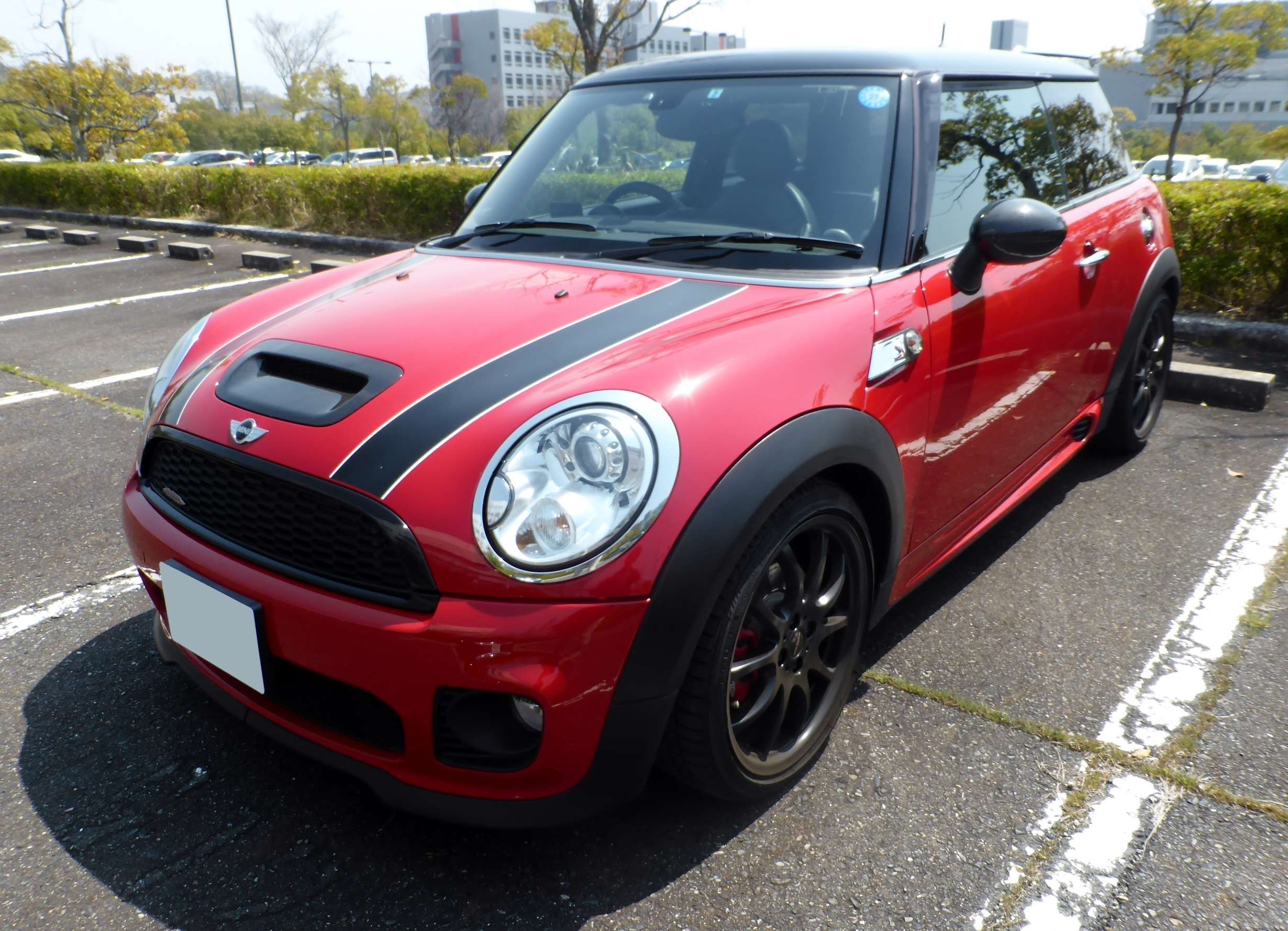
Buying Guides / MINI John Cooper Works R56
A good MINI John Cooper Works R56 is a small, quick hatchback with a very large appetite for entertaining roads. A poor one can consume its purchase price again through engine repairs, neglected cooling, tired suspension and the accumulated consequences of somebody else’s tuning. Buy the car’s identity, mechanical evidence and recent maintenance first. A red roof, attractive wheels and a loud exhaust come much further down the list.
This guide covers the factory 1.6-litre turbocharged R56 three-door JCW, including the important early N14 versus later N18 distinction. It also explains where the limited-production GP2 requires a different budget. The supercharged R53 and 2.0-litre F56 are different cars; so is a Cooper S wearing JCW accessories. Treating all of them as interchangeable is where many unhelpful buying guides begin.
The buying verdict
Our choice: a genuine, largely standard factory JCW with a verifiable build specification, a convincing cold start, healthy oil consumption and invoices that show what was done. A later N18 is appealing, but a thoroughly sorted N14 can be a better purchase than a neglected later car. Keep money outside the purchase budget for inspection and the first year’s work.
Pay for condition and evidence rather than the lowest mileage. A well-used car whose cooling, timing drive and chassis have received attention may be easier to own than a much lower-mileage example with an impressive service-book cover and no useful supporting detail. A replacement engine is neither an automatic rejection nor an automatic reassurance: establish its source, specification, installation quality and subsequent behaviour.
R56 JCW versions: what are you actually buying?
The R56 JCW uses a turbocharged 1,598cc direct-injection four-cylinder, front-wheel drive and a much more focused specification than the ordinary Cooper. The factory JCW was introduced in 2008 with a quoted 211PS, equivalent to approximately 208bhp. Advertisements frequently call that 211bhp. This small unit-conversion difference is not evidence that a car has been modified. Equally, a claimed 230 or 250bhp needs an explanation and supporting records.
| Version | What distinguishes it | Buying implication |
|---|---|---|
| Early factory R56 JCW | N14 1.6 turbo; six-speed manual | Cold-start timing-drive condition, oil use, intake deposits and fuel-pressure diagnosis deserve particular attention. |
| Later factory R56 JCW | N18 with Valvetronic; automatic availability arrived with the later update | Verify the build date and engine. Do not transfer the Cooper S engine-change date to the JCW. |
| Cooper S with JCW equipment | May have a styling pack, accessories or a documented tuning conversion | Not automatically the same specification or valuation as a factory JCW. |
| R56 JCW GP, commonly GP2 | Limited-production two-seat derivative with its own engine/chassis specification and equipment | Check GP-specific completeness and authenticity; ordinary JCW parts prices can be misleading. |
The engine update belongs to the later part of the R56 JCW’s life. A 2011 JCW should not simply be assumed to have the N18 because a 2011 Cooper S does. Registration date, model year and production date are different things. Ask for a VIN-based specification, inspect the actual engine and reconcile any discrepancy with invoices. Engine replacements and imports make a blanket registration-year rule still less reliable.
The N18 adds variable valve lift and related control hardware. That changes the diagnostic questions as well as the parts catalogue. It does not make timing-chain condition, oil level or cooling maintenance irrelevant. If the seller cannot identify the engine, regard that as a reason to investigate, not as proof that the car is bad.
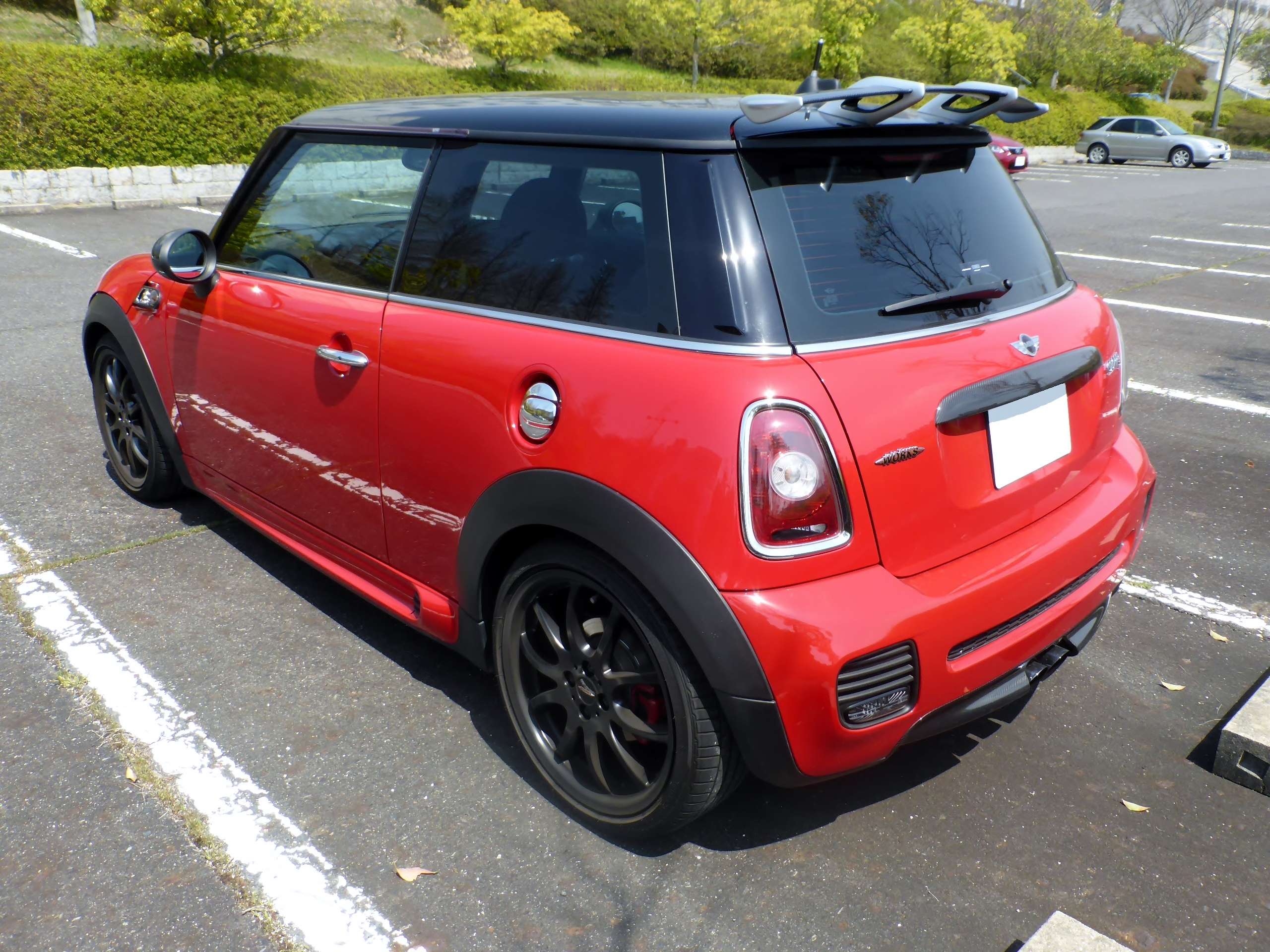
How much should you pay for an R56 JCW?
Use genuinely comparable 1.6-litre cars. The main JCW marketplace results also include much newer 2.0-litre F56s, so their overall stock count and price distribution do not describe the R56 market. At the time of checking, Autotrader’s visible 1.6 JCW listings included asking prices of £2,495, £3,995, £4,750, £5,000, £6,700, £6,995 and £10,100. These are individual advertisements, not verified sale results or a valuation curve.
That spread demonstrates why a single “JCWs start at…” figure is inadequate. At the cheaper end, establish whether the car is running properly, roadworthy, correctly identified and free of major undisclosed faults. At the more expensive end, ask what supports the premium: exceptional condition, recent major work, documented originality or a particularly desirable specification. An optimistic advertisement does not set the value of every similar car.
Compare several cars by adding purchase price, inspection, immediate repairs and the maintenance that will fall due in your ownership. Record tyres, brakes, timing-chain evidence, cooling work, clutch behaviour and any outstanding warning lights. A £1,000 saving can disappear rapidly if a chain job, worn tyres and suspension repairs are all waiting. Conversely, new parts are only valuable if they were needed, correctly specified and fitted well.
Do not mix a GP2’s price into standard JCW comparisons. Separate private and dealer asking prices, accident-history cars, imports and heavily modified examples. Keep dated screenshots or notes when researching, and identify repeated advertisements by registration so that the same car is not counted as several independent market observations.
Genuine factory JCW: identity, paperwork and history
Start with the VIN and a reliable build record. Compare the recorded model with the physical car, V5C and service invoices. The body kit, steering wheel, sill plates, exhaust and brakes can be changed. They help describe the specification but are not an authentication system. A converted Cooper S can be enjoyable, provided it is accurately represented, properly insured and priced accordingly.
Ask a MINI specialist to identify the engine and assess whether the brake, turbo and other major assemblies match the claimed specification. A vague “all JCW bits fitted” statement leaves too much unanswered. Factory equipment, dealer-installed tuning equipment and an aftermarket remap are separate propositions. If the car is advertised as original, ask which components have been replaced and whether any mapping changes have been reversed.
Review the MOT history for repeated oil leaks, tyre wear, suspension play, emissions problems and corrosion advisories. An eventual pass does not explain how a fault was repaired. Compare mileage progression with dated invoices and ask about long gaps in use. A history check should also address finance, theft and recorded insurance losses; the V5C alone is not proof of ownership.
A stack of invoices becomes useful when it forms a coherent story. Look for oil specification and change dates, the scope of timing-chain work, parts brands, coolant repairs and a credible explanation of repeated visits for the same symptom. “Chain done” might mean a tensioner replacement rather than a complete timing-drive repair. Ask to see the actual invoice, not just a photograph of the words in an advertisement.
N14 and N18 engine checks: timing chain, oil and mechanical health
Insist on a genuinely cold start
Arrange for the car to remain unstarted before the viewing. Check that the engine is cold without touching hot components or opening a pressurised cooling system. A warm engine can conceal starting behaviour, smoke and the early stages of a timing-drive noise. If it has already been warmed, agree another cold viewing or an independent inspection rather than trying to diagnose around missing evidence.
Listen during starting, at idle and as the engine settles. Direct-injection ticking is not the same sound as a loose chain, and recordings are an unreliable basis for a purchase decision. A pronounced rattle needs specialist diagnosis. Do not accept “they all do that”, but do not conclude that every mechanical noise means a complete engine is required either. Avoid repeated starts or continued running when a serious mechanical noise is present.
1320 MINI’s published timing-chain service describes chain stretch, guide damage and the possibility of valve-to-piston contact after failure. Its supplied-and-fitted package includes a full chain kit with guides, rails, bolts, seal and tensioner. That is useful evidence of both the risk and the difference between a full repair and a small, temporary intervention.
Ask when the repair happened, who performed it and whether the sump was checked for guide debris where appropriate. Investigate why a recently repaired engine still rattles or has timing-related faults. A receipt does not overrule what the engine is doing today. Neither N14 nor N18 should be bought on the assumption that a timing chain lasts forever.
Oil level, consumption and leaks
Check oil level using the correct procedure before the road test. Ask how much oil is added between changes and over what mileage. “Never uses oil” means little if the owner does not check it. A quantified answer and records are better than reassurance. Extremely low oil at a viewing raises questions about the whole period of ownership, not just the cost of a top-up.
Look around the cam cover, vacuum-pump area, oil-filter housing and accessible turbo oil plumbing. Use a lift inspection to establish where an oily underside actually originates. Fresh cleaning can remove the evidence, while old residue can remain after a successful repair. Distinguish a gasket leak from a damaged cover or a crankcase-ventilation fault: replacing the gasket alone may not solve either.
Observe exhaust smoke at start-up and after the engine has warmed, without revving a cold car. Persistent blue smoke, heavy consumption, rough running or poor compression needs proper testing. Possible causes include ventilation, turbo and internal-engine problems; smoke colour alone cannot price the repair. Compression, leak-down and further inspection may be justified where the symptoms warrant them.
Rough running, deposits and fault codes
A cold misfire, hesitation or uneven idle can involve plugs, coils, injectors, pressure supply, air leaks or intake-valve deposits. The important question is whether somebody has established the cause. A long list of new ignition parts followed by the same fault is a diagnostic warning, even if the parts themselves are desirable.
Direct injection means petrol does not wash the intake valves in the way it does on a port-injected engine. Deposits can therefore be relevant, especially when idle quality and response have deteriorated. Cleaning should follow diagnosis and an assessment of the actual deposits, not be sold as a guaranteed cure for every misfire. A fuel-tank additive is not equivalent to mechanically cleaning the backs of the intake valves.
Have a MINI-capable diagnostic scan carried out before codes are erased. Ask for stored and pending faults, relevant live data and a written explanation. A basic generic reader can provide a starting point, but it does not establish the health of every module or replace mechanical tests. A recently cleared fault memory should prompt further questions and a proper drive cycle.
Cooling system, turbo and fuel supply
Inspect the coolant level only when the system is cold. Look for staining, damaged hoses, evidence of leaks around the thermostat housing and water pump, and coolant or oil contamination that needs investigation. Ask about previous overheating, repeated coolant top-ups and whether any temperature warning has appeared. A new expansion cap is not evidence that an underlying loss has been repaired.
The water-pump drive arrangement and associated components need model-specific inspection. Have the workshop check their condition and operation rather than merely confirming that the pump has been mentioned on an invoice. Plastic housings, hoses and aged seals can leave a car unreliable even when the principal component is new. After a warm road test, check for fresh leaks and confirm stable operation with suitable diagnostics.
During a legal, fully warmed drive, power should build cleanly without surging, misfire or repeated reduced-power warnings. A boost leak can imitate a turbo problem, while fuel-pressure faults can appear under load. Loose intake fittings, damaged charge plumbing and improvised hose repairs deserve attention. Do not diagnose a turbocharger purely from a claimed boost figure or a whistle.
Ask whether the turbo oil supply, return and cooling connections were inspected when a turbo was replaced. Establish why the old turbo failed and whether the cause was addressed. A replacement unit installed into a dirty or oil-starved system can suffer the same fate. Evidence of a quality rebuild or new unit, correct installation and healthy subsequent use is more useful than the word “uprated”.
Long cranking and intermittent reduced power require fuel-pressure diagnosis, including the relationship between supply and demand. A high-pressure pump is a significant purchase, so do not buy one on a seller’s guess. For a car with repeated injector or pump work, obtain the workshop’s conclusions and check whether the fault has actually stopped occurring.
Love cars you don’t see every day?
Get forgotten cars, surprising motoring stories and the most interesting finds from Unusual Cars by email.
Free to join. No spam. Unsubscribe whenever you like. See our privacy policy.
Manual, automatic and clutch: the road-test priorities
On a manual, assess clutch take-up, pedal consistency and changes both cold and warm. Listen for abnormal noises with the clutch engaged and released, and ask about clutch and flywheel replacement as separate items. A high bite point alone does not specify a repair bill. Slip under appropriate load, judder, difficult engagement or a strong mechanical rattle needs investigation.
Do not perform abusive high-gear, low-speed tests or repeated hard launches. A normal test drive, a specialist inspection and a discussion of the symptoms are sufficient to identify a car needing more investigation. If the seller says a heavy or noisy clutch is a racing upgrade, ask for the exact kit and understand its everyday compromises before deciding it suits you.
Check every gear without forcing the lever. Notchiness can involve linkage or clutch release as well as internal gearbox wear. A whine that varies between gears and road speeds should be examined rather than dismissed as the exhaust. Inspect driveshaft boots and listen for clicking or vibration when turning and accelerating gently.
A later automatic should engage drive and reverse consistently and shift cleanly when cold and fully warm. Test manual selection and steering-wheel controls if fitted. Ask for fluid-service evidence and any previous diagnosis of shift faults. An adaptation reset is not a mechanical repair. Confirm the exact transmission and required fluid before arranging maintenance; the gearbox in a later F56 article is not a parts reference for this car.
Brakes, suspension, tyres and bodywork
The JCW’s braking hardware is part of its appeal and part of its ownership cost. Check which calipers and discs are actually fitted, inspect disc condition on both faces where access allows, and look for seized mechanisms, uneven pad wear or a damaged caliper finish concealing poor maintenance. Measure against the correct wear limits rather than relying on a shiny outer disc face.
On the road, braking should be straight and consistent without a steering shake or a warning light. Vibration can have several causes, including disc condition, wheel issues and worn suspension. Budget for diagnosis and a complete axle repair where required. Do not fit ordinary Cooper components just because an online catalogue returns the registration.
Check spring condition, dampers, top mounts, bushes, ball joints and wheel bearings. A sharp little car becomes unpleasant when several modest faults accumulate. Knocks over small bumps, wandering, uneven steering effort and unstable braking need more than an alignment appointment if components are worn. Geometry should follow repairs, not be used to conceal them.
Inspect the inner tyre shoulders and confirm that all four tyres are appropriate, matched sensibly and in good condition. Wheel diameter, run-flat choice and tyre age affect ride and confidence. Check alloys for cracks, buckles and poor repairs. Fresh outer tread cannot compensate for hidden shoulder wear or damage. Very low suspension can make an already firm car difficult on ordinary British roads.
Use a lift to inspect subframes, mounting areas, brake pipes, jacking points and evidence of accident repair. Cosmetic rust and structural corrosion are different issues. Look behind accessible trim and around the boot, seams and underbody for water ingress and inconsistent repairs. Do not remove parts without permission or mistake thick new underseal for proof of a healthy structure.
Compare panel gaps, paint finish, lamp mountings and front-end alignment. A replaced bumper is not automatically sinister; unexplained distorted structures and missing repair records are more consequential. The best bodywork assessment combines a history check, physical inspection and invoices. An unrecorded accident will not necessarily appear in a database.
Interior, electrics and the equipment you will live with
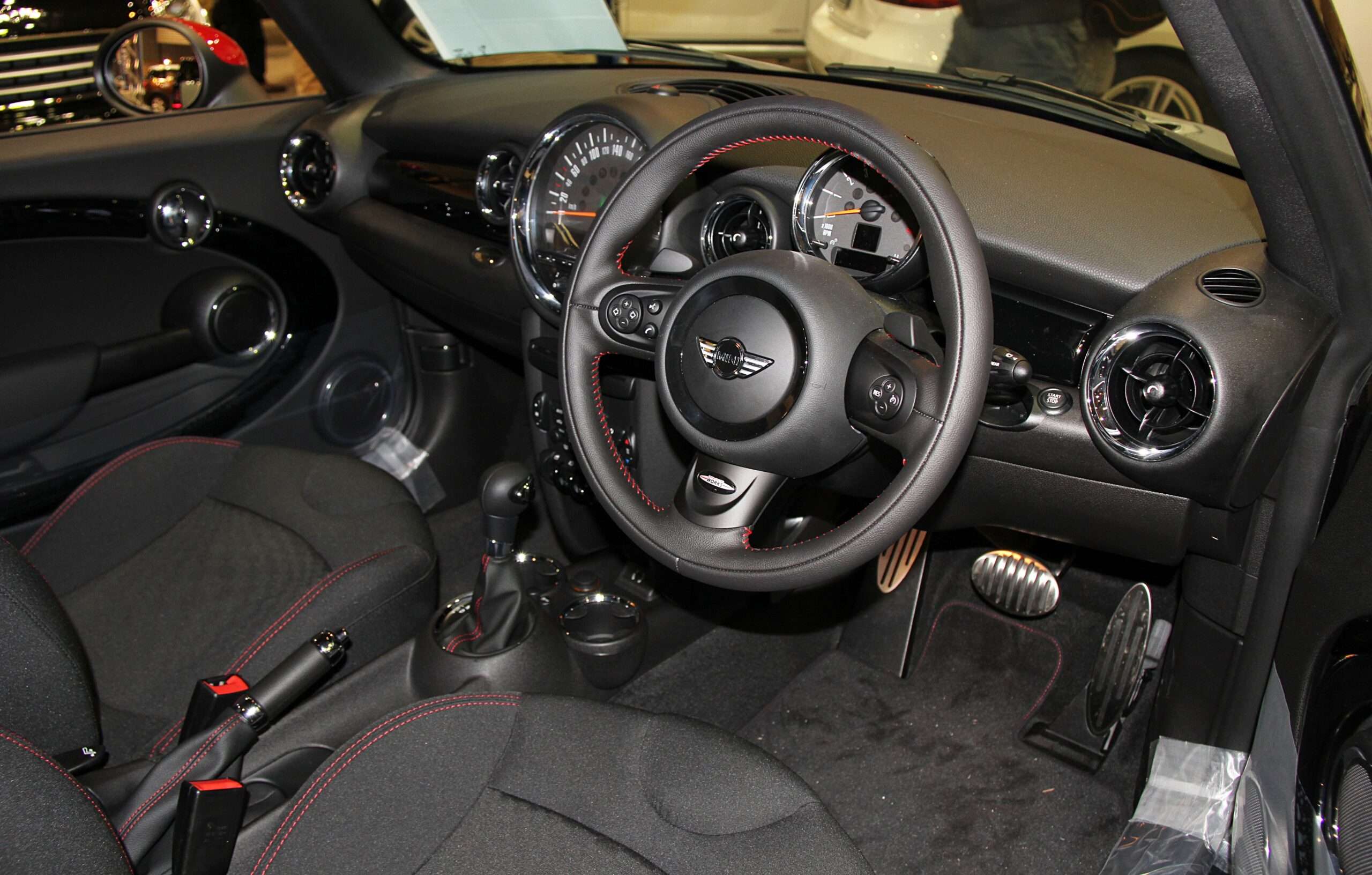
Allow time to operate the windows, locks, mirrors, heater, air conditioning, stereo, sockets and every fitted option. Check that warning lamps illuminate during their normal self-test and then behave correctly. A dashboard with no warning lamps because somebody has disabled them is worse than one that honestly displays a fault.
Feel beneath mats and inspect the boot for dampness, staining and electrical corrosion. Water ingress can create several apparently unrelated faults. Establish the source and inspect affected wiring or modules rather than accepting that drying the carpet completes the repair. A musty smell or heavily fragranced interior is a reason to look more closely, not a diagnosis by itself.
Test the panoramic roof, if present, throughout its travel and check its drains and surrounding headlining. Listen for mechanism strain and look for seal damage. Operate it with the owner’s agreement; do not force a reluctant mechanism. A car without this option can be the simpler purchase if you do not particularly want it.
Check seats, bolsters, steering-wheel controls, dashboard rattles and tailgate operation. None is likely to outweigh an unhealthy engine, but several missing or damaged JCW trim pieces can become expensive and time-consuming to replace. Compare cabin wear with the claimed mileage and use history. An upgraded infotainment unit should have tidy wiring and leave original functions working.
Modified JCWs and the GP2: buy the complete proposition
A remap does not tell you how safely a car has been developed. Ask for the original specification, installer, fuel requirement, supporting cooling and exhaust changes, and evidence of maintenance since the work. A dyno sheet records a test on a particular day; it is not proof of engine health or of how the car was used afterwards.
Investigate catalyst removal, emissions warning suppression and whether the vehicle still meets its legal road requirements. An MOT pass on a different exhaust configuration is not reassurance about the equipment fitted now. Obtain an insurance quotation declaring modifications before buying. Returning a car to standard can involve more than reinstalling one exhaust component.
Check whether suspension changes preserve useful travel, tyre clearance and appropriate geometry. Brakes and tyres should be matched to the intended use. Track use is not an automatic rejection, but it changes the evidence you want: fluid changes, brake inspection, cooling performance and frequent checks matter more than a claim that the owner “never raced it”.
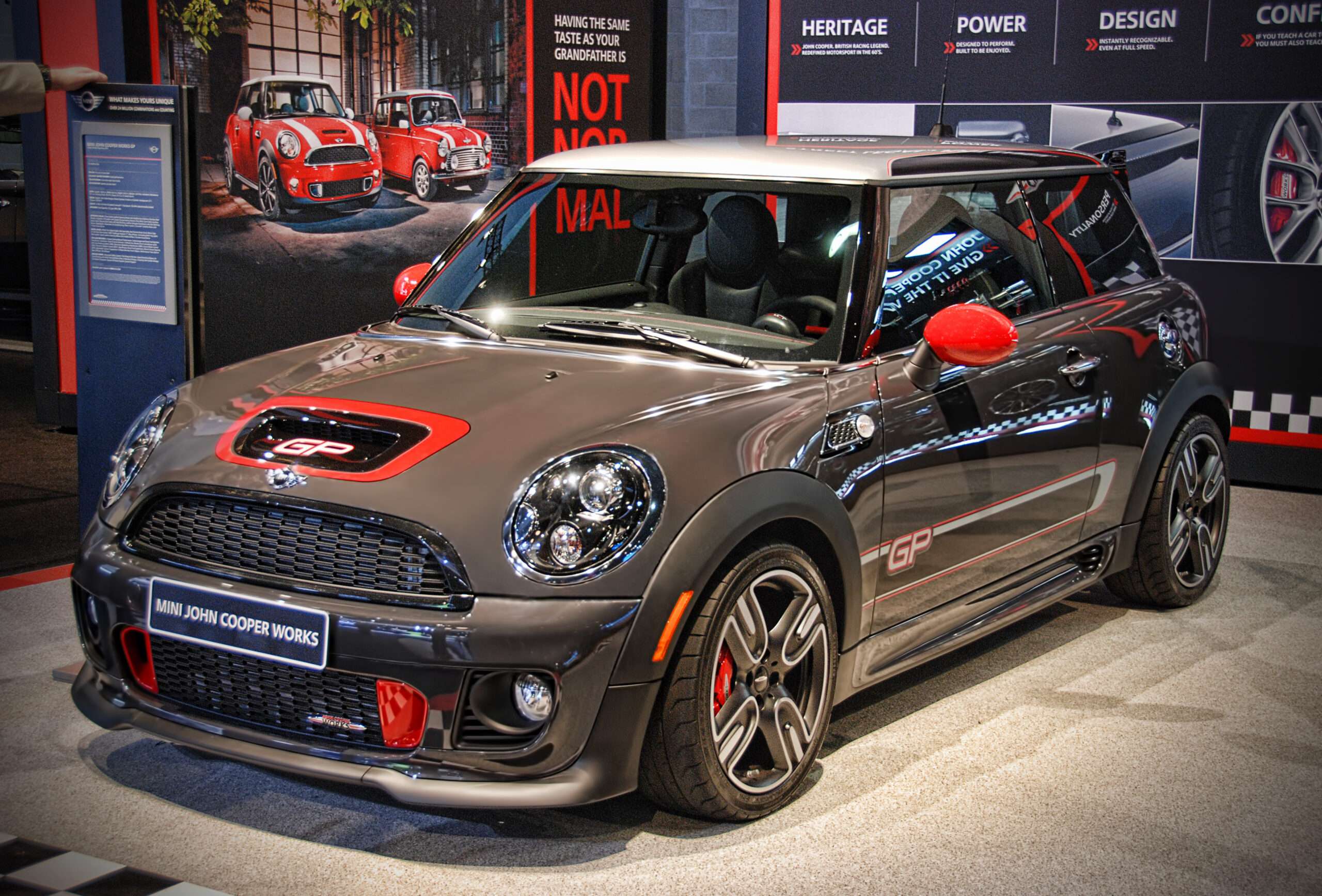
For a GP2, verify the VIN-based specification, identity and original equipment with a specialist familiar with the derivative. Inspect its particular suspension, brake and aerodynamic components, as well as the engine and structure. Missing seats, trim or genuine GP hardware cannot be priced as ordinary used Cooper S spares. An attractive badge or numbered detail is not enough to authenticate the whole car.
Decide whether you want a special road car, a track-focused car or an ordinary JCW before comparing prices. The GP2’s compromises and replacement-part costs are part of the purchase. If an example has been substantially altered, value the car as it exists and obtain the cost of restoring any details that matter to you.
R56 JCW maintenance costs, useful parts and fitted work
Affiliate disclosure: the eBay links below use our affiliate campaign. We may earn a commission on qualifying purchases. Search results are not fitment approvals or recommendations of every seller. Match the VIN, engine, build date and actual installed parts; obtain a workshop quote before ordering components for a garage to fit.
The following published UK specialist prices provide concrete anchors. They are advertised packages, not a universal labour tariff or a promise that your car needs only the listed work. Confirm VAT, diagnostic charges, package contents, availability and the final total directly. Do not subtract an unrelated retail parts price from a package and describe the difference as the workshop’s labour charge.
| Job | Published UK evidence | What to establish before booking |
|---|---|---|
| N14/N18 full timing-chain kit supplied and fitted | 1320 MINI: £810.54 advertised | Guides, rails, bolts, seal and tensioner are described. Diagnosis, existing engine damage and additional work need confirmation. |
| N14 timing-chain repair package | Lohen: from £899 | Obtain the exact scope for the car and reason for the “from” price. |
| N18 timing-chain repair package | Lohen: £820 advertised | Confirm engine identification, included components and booking availability. |
| Performance oil service | Lohen: £191.50 advertised | Confirm approved oil, filter, inspections and any added work. |
| Performance brake-fluid change | Lohen: £123 advertised | Confirm fluid specification and suitability for intended use. |
| Engine health check | Lohen: from £102 | A health check is not automatically a full pre-purchase inspection or compression/leak-down test. |
| Suspension/geometry setup | Lohen: £102 advertised | Worn components and seized adjusters are separate issues. |
Sources: 1320 MINI timing-chain service and Lohen Gen 2 specialist servicing. These are the providers’ displayed prices when checked; they are not an average of completed customer invoices.
Timing-chain kits and planned servicing
For comparison shopping, use N14 JCW timing-chain kits or N18 JCW timing-chain kits. Kit contents matter: chain, guides, tensioner, seals, fasteners and associated components are not identical across every box. A cheaper incomplete kit can create a more expensive job once the missing items and labour are included.
Agree servicing with a specialist using the correct handbook and the car’s actual use. For an ageing performance car, an annual oil-and-filter service is a sensible conservative ownership plan even at low mileage; this is our practical recommendation, not a replacement for the manufacturer’s vehicle-specific schedule. Check oil regularly between services and use the approved specification, rather than choosing by viscosity or marketing alone.
Oil filters and service kits and spark plugs and ignition components are useful recurring purchases. Correct plug specification and installation matter, particularly on tuned cars. Do not replace all coils simply because one symptom could involve ignition: preserve the diagnostic evidence first.
Alternators, cooling parts and brakes
Charging faults need battery and charging-system diagnosis before an alternator is condemned. Compare R56 JCW alternators by output, connector and pulley specification, and establish whether a refurbished unit carries a surcharge and warranty. Labour access, belt condition and any related damage belong in the fitted quote. The search title alone does not confirm compatibility.
For cooling work, distinguish N14 cooling components from N18 cooling components. Ask whether the quote includes coolant, related pipework, bleeding and a pressure test. Solving the leak that caused overheating is separate from checking whether overheating damaged the engine.
Use JCW front brake discs and pads as a starting point, then verify disc dimensions and the fitted caliper. GP2 brake hardware requires separate checking. A garage may reasonably decline to warrant customer-supplied parts, or may need to charge again when a wrongly supplied component leaves the car occupying a lift.
Separating parts, labour and the finished bill
Request an itemised estimate with the actual parts, labour hours, hourly rate including VAT, fluids, disposal, diagnosis and any contingency. Where a provider publishes only a package total, we have kept it as a package total above. Inventing a labour split would make the table look precise without improving your buying decision.
For an alternator, clutch, thermostat or turbo job without a directly comparable published package, obtain a written quote for that exact car before using the number in a negotiation. Ask what happens if seized fasteners, broken plastic fittings or additional damage are discovered. Agree a spending limit and an authorisation point for extra work.
Service parts and maintenance shopping checklist
Use these MINI John Cooper Works R56 searches to compare parts availability. A search result is not a fitment guarantee: confirm the exact vehicle specification and original part numbers before ordering.
| Maintenance item | What to check before buying | eBay parts search |
|---|---|---|
| N14 JCW timing-chain kits | Confirm engine code and the diagnosed scope with a specialist. Check tensioners, guides, seals and associated parts; this is not a universal replacement interval. | Compare n14 jcw timing-chain kits on eBay |
| N18 JCW timing-chain kits | Confirm engine code and the diagnosed scope with a specialist. Check tensioners, guides, seals and associated parts; this is not a universal replacement interval. | Compare n18 jcw timing-chain kits on eBay |
| Oil filters and service kits | Match engine code and production date; compare kit contents and the manufacturer approvals for any included fluids. | Compare oil filters and service kits on eBay |
| spark plugs and ignition components | Match the engine and ignition specification. Diagnose running faults before replacing components; modified cars may need a different approved specification. | Compare spark plugs and ignition components on eBay |
| R56 JCW alternators | Match the original part number, output rating, electrical connector and pulley; check exchange surcharges. | Compare r56 jcw alternators on eBay |
| N14 cooling components | Identify the failed component first; match engine and housing references, seals and the correct coolant specification. | Compare n14 cooling components on eBay |
| N18 cooling components | Identify the failed component first; match engine and housing references, seals and the correct coolant specification. | Compare n18 cooling components on eBay |
| JCW front brake discs and pads | Match axle, fitted brake assembly, dimensions and wear sensors; compare a complete axle set and confirm whether hardware is included. | Compare jcw front brake discs and pads on eBay |
Affiliate disclosure: we may earn a commission from qualifying eBay purchases, at no additional cost to you. Listing prices are for the advertised contents only; fitting, diagnosis, fluids and associated work may cost extra. Check availability, seller reputation and returns terms.
Hidden ownership costs: what the purchase price leaves out
The first service is rarely the whole catch-up bill. If a car has unknown oil history, old brake fluid, worn tyres and a cooling leak, adding a timing-chain invoice does not make it comprehensively maintained. Build a list of immediate safety work, reliability work and desirable improvements, then price each category before buying.
Keep a separate repair reserve. An illustrative £1,500–£2,500 reserve offers more breathing space than spending every pound on the car, but it is our budgeting suggestion, not a claim that every JCW needs that sum or that it covers a failed engine. A car with significant unresolved mechanical symptoms needs a diagnosis and quote rather than a larger guess.
Insurance can change materially with age, location, modifications and import status. Check the registration-specific tax and emissions-zone position rather than assuming every 1.6 JCW is identical. Fuel grade, real consumption, parking and annual mileage belong in the ownership calculation. Treat a seller’s economy claim as an experience, not a guaranteed running cost.
Allow for four appropriate tyres, alignment after chassis work and the replacement of damaged wheels. A fresh MOT does not mean tyres have several years left. Air-conditioning repairs, sunroof problems, missing JCW trim and a second working key can also turn an apparently tidy car into a series of small bills.
Storage and occasional use create their own demands. A car that covers very little mileage still needs checks, fluid maintenance, battery management and attention to tyre age and corrosion. Low mileage does not suspend ageing. Before the first long trip, establish a reliable maintenance baseline and resolve known faults while you still have time to book the right specialist.
A practical JCW viewing and test-drive checklist
Before travelling
- Obtain the registration, VIN, build specification and confirmation of N14 or N18.
- Ask whether it is a factory JCW, a converted Cooper S or a GP2, and request evidence.
- Review MOT progression, ownership records, finance/history checks and important invoices.
- Ask for a cold start, a meaningful road test and permission for a specialist lift inspection.
- Get insurance quotations declaring every known modification.
At the car
- Reconcile VIN, documents and specification; inspect accident repairs and underbody condition.
- Check cold oil and coolant levels correctly; investigate stains and evidence of repeated topping-up.
- Listen for abnormal timing-drive noise and assess idle, smoke and starting behaviour.
- Inspect brakes, inner tyre shoulders, wheels, springs, bushes and dampers.
- Test cabin equipment and check carpets and boot for water ingress.
During and after the drive
- Assess clean power delivery once fully warm, with no misfire or reduced-power warnings.
- Check clutch, every gear, driveshafts and any automatic shift behaviour.
- Test steering, braking and ride over normal surfaces without abusive manoeuvres.
- Scan before clearing faults and agree any further mechanical tests with the specialist.
- Recheck for leaks and hot-start issues; do not open the hot cooling system.
Buy, investigate or walk away?
Buy: identity is clear, the engine behaves properly cold and hot, maintenance is credible and the remaining work is understood and affordable. Investigate: an isolated fault has a plausible cause but still needs independent confirmation. Walk away: a serious engine symptom is dismissed, identity cannot be reconciled, structural damage is unexplained or meaningful inspection is refused.
Do not negotiate against yourself by treating an unknown engine problem as a cheap sensor. Ask the seller to obtain a diagnosis or make your offer conditional on inspection. An ordinary, honestly presented car with known needs is usually a better starting point than an impressive specification accompanied by evasive answers.
MINI JCW R56 buying questions
Is an R56 JCW the same as a Cooper S with a body kit?
No. Factory identity and mechanical specification need checking through the VIN and the actual car. A Cooper S may have genuine JCW accessories or a documented conversion, but the badges do not turn it into a factory JCW.
Is the N18 the safer choice?
It is an attractive later development, but condition, oil history and the quality of repairs remain decisive. It can still need timing-drive and cooling attention. Do not pay a premium for an assumed engine specification based only on registration year.
Does a replaced timing chain mean the engine is sorted?
Only if the correct repair was completed and the engine is healthy now. Read the invoice for scope, investigate residual noise and establish whether any guide debris or associated damage was addressed.
Can a JCW be a daily driver?
Yes, provided its maintenance, ride and operating costs suit your use. Try the actual wheel and suspension combination on ordinary roads, check every convenience feature and keep a repair reserve. A heavily modified example is a different daily proposition from a standard car.
Should I buy the cheapest one and repair it?
Only after the defects have been diagnosed and priced. A cheap car with a known, contained repair can make sense. A car with unexplained oil consumption, timing noise and coolant loss is several unknowns rather than one bargain.
Is the GP2 worth the premium?
That depends on whether you value its particular specification and compromises. Verify authenticity and completeness, and obtain specialist costs for the actual equipment. It should be compared with other credible GP2s, not used to establish the value of a standard JCW.
Continue your MINI research
Compare the R56 Cooper S, the supercharged R53 Cooper S and the later F56 JCW. This article’s scope is the 1.6-litre R56 factory JCW; those guides address different buying decisions.
Sources, photographs and research method
This is research-led UK buying advice, not a claim that we inspected every car advertised or measured fault prevalence across the whole fleet. Mechanical symptoms are inspection prompts rather than remote diagnoses. The price sample is asking-price evidence, and specialist packages are attributed to the businesses that publish them.
- Autotrader UK JCW listings: individual 1.6-litre advertisements were separated from later 2.0-litre cars; listings change.
- 1320 MINI: chain failure mechanism, repair contents and supplied-and-fitted price.
- Lohen: Gen 2 engine coverage and published maintenance packages.
- MotoringFile’s contemporary engine-update report: later JCW range update and automatic availability. Its Countryman-specific output figures are not used as R56 Hatch specifications.
- Photographs: featured/front and rear by Tokumeigakarinoaoshima (CC0); cabin by TTTNIS (public domain); GP2 by Chris Yarzab (CC BY 2.0). Linked file pages identify the originals and licences. The photographed cars are illustrative, not the advertised price examples.
MINI John Cooper Works R56 for sale on eBay UK

See more MINI John Cooper Works R56 cars on eBay UK
Love cars you don’t see every day?
Get forgotten cars, surprising motoring stories and the most interesting finds from Unusual Cars by email.
Free to join. No spam. Unsubscribe whenever you like. See our privacy policy.