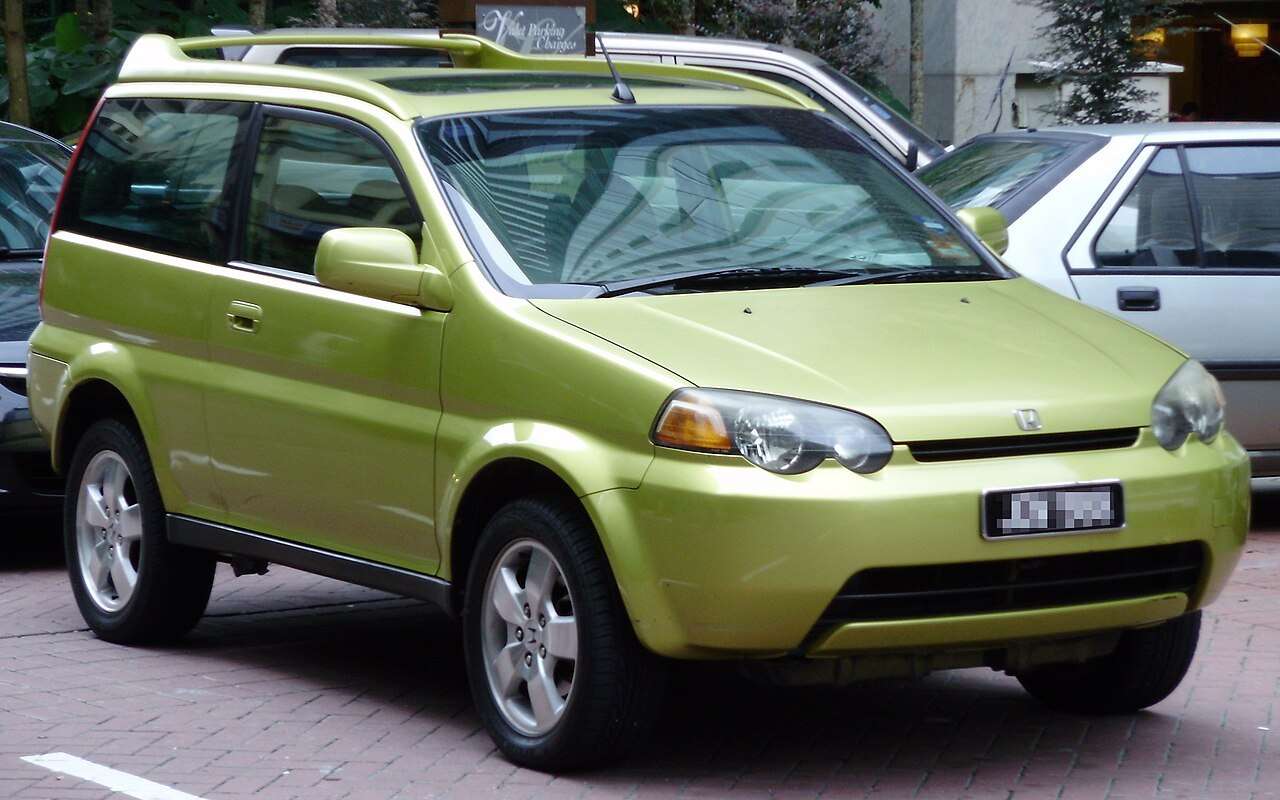
The first Honda HR-V was a small crossover before that word was on every forecourt. Its tall, angular three-door body made it look much closer to the original show car than today’s HR-V does.
1. It started with the J-WJ concept
Honda put the J-WJ in its J-Mover concept series at the 1997 Tokyo Motor Show. European audiences got a look at Geneva in 1998, before the first HR-V reached showrooms.
2. The three-door came first
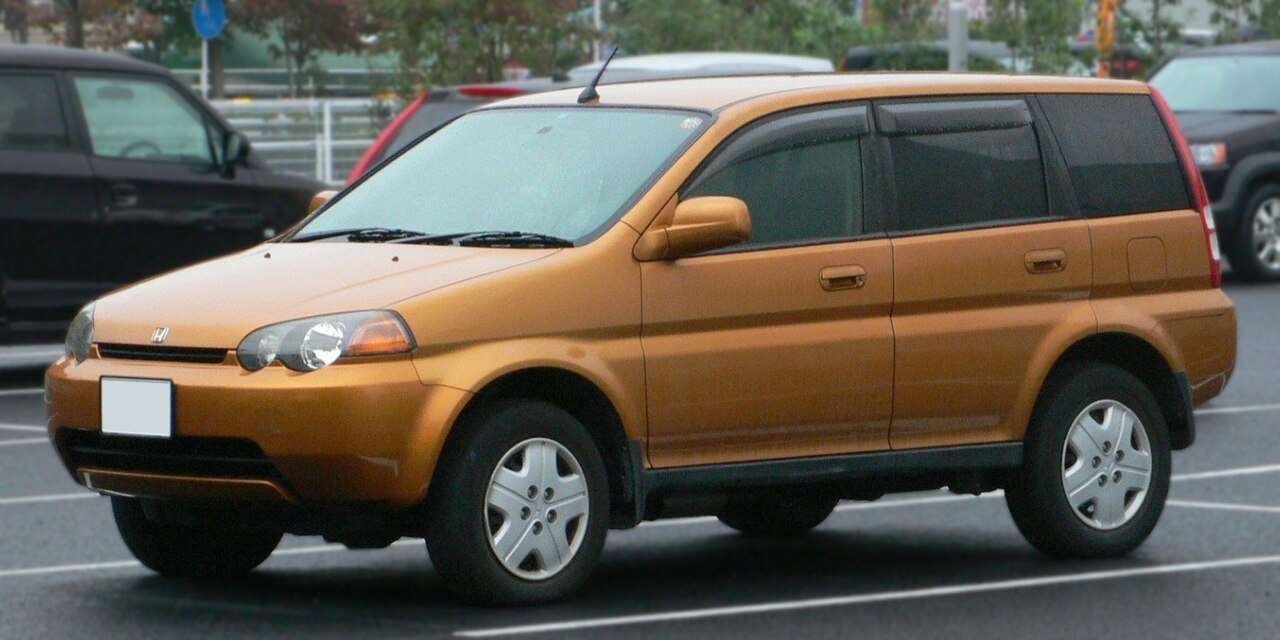
Honda used the short three-door body to establish the idea. With the wheels pushed towards the corners and the body sitting high, it looked particularly different from a conventional family hatch.

3. The five-door followed
The longer five-door arrived after the original version. That allowed Honda to keep the distinctive front and raised stance while improving access to the back seats.
4. It launched with a 1.6
Honda’s European launch pack quoted 105 PS from its 1.6-litre engine. Later specifications included a more powerful VTEC version, so a first-generation HR-V badge alone does not settle the output.
Love cars you don’t see every day?
Get forgotten cars, surprising motoring stories and the most interesting finds from Unusual Cars by email.
Free to join. No spam. Unsubscribe whenever you like. See our Privacy Policy.
5. Real Time 4WD worked automatically
Honda’s system could send drive to the rear when needed, without asking the driver to move a transfer lever. It was a different approach from an older part-time off-roader.
6. Front-wheel drive existed too
Honda’s Japanese archive lists front-drive models. The raised body tells you what kind of car the HR-V was intended to be, but it cannot identify the drivetrain on an individual example.
7. It could have a CVT
Honda offered an automatic continuously variable transmission in the generation. That kept the small engine working differently from a stepped automatic, while a manual remained available.
8. The short body was aimed at younger buyers
Honda’s launch material made the target audience explicit. The position of the HR-V within the range explained both its unusual styling and the effort to keep its overall size compact.
9. The concept had room for the real world
Honda designed in useful headroom and a rear opening you could actually load. The original was meant to take ordinary jobs in stride even though its narrow three-door proportions made a strong first impression.
10. The first-generation badge has its own identity
The HR-V name reappeared on very different Hondas later. Add Mk1 or GH when searching for the original and the angular J-WJ-inspired car immediately comes into focus.
10 Things You Probably Didn’t Know About the Ford Maverick Mk1.
Explore more 10 Things articles
Browse the Unusual Cars 10 Things hub.
Sources and further reading
- Honda Japanese HR-V launch release, 1998
- Honda European HR-V launch pack, 1999
- Honda Geneva 2001 model update
Featured image: Green first-generation Honda HR-V three-door. Photo by User:Two hundred percent. via Wikimedia Commons (CC BY-SA 3.0, resized).
Join the Unusual Cars Club
Get more forgotten performance cars, surprising motoring stories and new 10 Things articles by email.
Free to join. No spam. Unsubscribe whenever you like. See our Privacy Policy.