Love cars you don’t see every day?
Get forgotten cars, surprising motoring stories and the most interesting finds from Unusual Cars by email.
Free to join. No spam. Unsubscribe whenever you like. See our privacy policy.
The buying verdict: make the powertrain decision first
A well-maintained diesel can suit a family that regularly covers motorway distances, but the cheapest diesel is not necessarily the cheapest car to own. Emissions-system condition, timing history and the exact transmission matter. For predominantly short journeys, compare petrol ownership costs carefully instead of relying on the diesel’s advertised mpg.
Our starting point is a car with an identified engine, invoices showing the correct servicing, functioning seating and no unresolved warning messages. If you want an automatic, identify whether it is ETG or EAT before travelling. These systems behave differently and cannot be judged or maintained as though they were interchangeable.
Pay for the condition of the vehicle, then the equipment. Large screens, a panoramic roof and a high trim level are attractive only if they work. A lower-spec car with sound mechanical fundamentals can be much better value than a top model needing timing work, tyres, emissions repairs and a tailgate mechanism at once.
Model identity: Picasso, SpaceTourer and the meaning of Grand
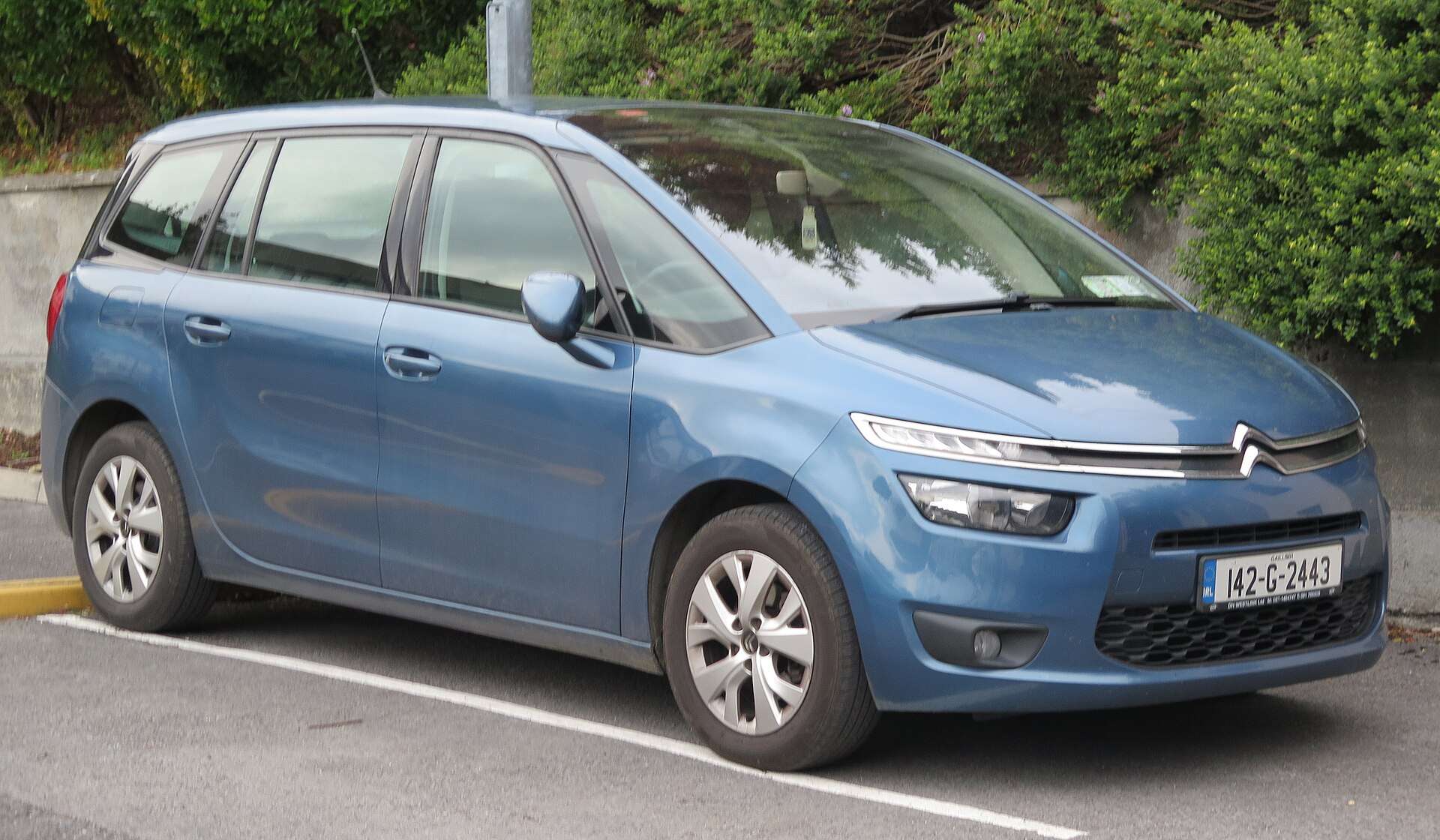
The second-generation Grand uses the EMP2 platform and a body that is visibly different from the earlier model. The split-level front lighting and the flowing roof-rail treatment are useful identification clues. Confirm the VIN and build specification because registration-year searches can include outgoing stock.
The 2016 facelift revised appearance and equipment; the Picasso name gave way to SpaceTourer in 2018. Engine choices and transmissions evolved too. Do not assume a 2018 registration establishes one particular engine, screen system or gearbox. Ask for engine capacity and code, transmission identification and the original specification if possible.
Grand identifies the seven-seat body. The shorter five-seater shares important technology but has different body and load-space requirements. A replacement tailgate, rear lamp, luggage cover or third-row component must be for the correct body. Generic “C4 Picasso” parts searches often mix both generations and seating formats.
Early VTR, VTR+, Exclusive and Exclusive+ labels later gave way to other trim names including Feel and Flair. Build a checklist from the actual car: roof equipment, parking aids, electric tailgate, climate control, connectivity and seating features. An advert copied from a newer model is not proof that an option is present.

Seven-seat practicality: test the complete family arrangement
The separate middle-row seats are a major attraction. Move each through its sliding and reclining range, fold and relatch it, then check the belt, head restraint and accessible child-seat anchorage. The three seats should not be assessed merely by looking through an open door. Broken handles, jammed rails and incomplete latches need repair.
Raise the third-row seats and inspect the folding floor panels and restraints. Test access with the second row in the positions your passengers actually need. Third-row space depends on sharing legroom sensibly; a car that looks spacious with the middle seats fully forward may be uncomfortable in your normal arrangement.
Bring your own child seats and consult both sets of instructions. Underfloor storage and support-leg requirements deserve particular attention. Separate seats and ISOFIX points do not guarantee that every combination of three child seats fits safely or leaves usable buckle access.
Try the boot with all occupied seats raised. RAC’s early-model review records only 165 litres with seven seats in use, compared with much more space when the third row is folded. The exact usable shape is more important than a maximum seats-down figure: take your pushchair, dog crate or mobility equipment.
Inspect the loading lip, luggage cover, tie-downs, underfloor compartments and any folding front-passenger-seat provision. Missing covers, broken floor sections and absent head restraints can make a cheap car expensive to complete. A seat that does not lock safely is an immediate functional defect, not cosmetic wear.
Documents and history: the questions to ask before travelling
Create a timeline from invoices, digital history and MOT records. Compare mileage, dates and recurring advisories. A “full service history” description may refer only to stamps; ask whether timing work, brake fluid, gearbox maintenance, fuel filters and plugs have actually been completed.
Check the specified oil approval for the exact engine. Viscosity alone is not enough, especially where oil and timing-belt compatibility matter. Ask how much oil or coolant is added between services and whether consumption has ever been investigated. A recently topped-up reservoir does not answer that question.
Ask for the VIN and check outstanding recalls and manufacturer campaigns. A support programme is not a substitute for completed maintenance, and a seller’s promise that Citroën will pay for any future repair is not evidence of eligibility. Get vehicle-specific confirmation directly from the manufacturer or retailer.
Where a major repair underpins the asking price, read the invoice. It should establish the original fault, the parts fitted, the mileage, the workshop and any warranty. “Belt changed” or “new AdBlue tank” is incomplete information if the cause and repair scope remain unclear.
1.6 HDi and e-HDi: buy the history and the correct gearbox
Early 1.6 diesels can provide economical family transport, but age and previous use now matter substantially. Ask about oil-service intervals, turbo work, injector or fuel-system repairs and any persistent starting or emissions fault. A slow cold start needs investigation rather than a theory about a weak battery.
Drive from cold until fully warm and check consistent power delivery, temperature behaviour and hot restarting. Inspect safely for oil and coolant leaks. Smoke, unusual noise or a warning under load can involve several systems; do not value the car on the assumption that the cheapest possible component is responsible.
Some early cars use ETG6. It is an automated manual, with a clutch operated for you, rather than a conventional torque-converter automatic. Its pauses between changes are part of the design, but excessive judder, poor engagement, an actuator warning or inconsistent behaviour still needs diagnosis.
A diesel used chiefly on short trips deserves a careful particulate-filter assessment. Ask a suitably equipped technician to establish relevant fault history and live data. A forced regeneration is a procedure, not proof that a temperature, sensor, fuelling or driving-pattern problem has been solved.
1.6 and 2.0 BlueHDi: distinguish economy from emissions-system health
For sustained longer journeys, compare documented 1.6 and 2.0 BlueHDi cars on the same route. The larger engine can be more relaxed with passengers and luggage, but condition and history take precedence over output. Test the exact manual or automatic version you expect to buy.
Establish timing-belt maintenance for the engine and VIN. Ask what kit, associated components and fluids were included. Missing evidence may justify an immediate specialist service plan, but a new belt invoice does not automatically establish the condition of the rest of the engine.
Where SCR/AdBlue equipment is fitted, investigate warnings and remaining-start countdowns before purchase. A low-fluid message and a fault involving a pump, tank, heater, sensor or injector require different responses. A refill does not repair every emissions warning.
A DPF or EGR fault also needs its cause established. Be wary of deleted emissions equipment or an advert suggesting a warning light is normal. Check clean-air-zone eligibility using the actual registration on official services and ensure the car remains in its intended emissions configuration.
On a manual, assess clutch slip and any flywheel-related noise with a professional if needed. For an automatic, identify the gearbox and service requirements. Diesel economy cannot compensate for buying an unresolved transmission fault alongside an emissions problem.
1.5 BlueHDi: the camshaft chain must be checked separately
Later 1.5 BlueHDi cars need a specific camshaft-chain conversation. Citroën’s UK support page describes a campaign for previous generations of this engine and an ongoing recall process for some vehicles. This is distinct from routine replacement of the engine’s timing belt: a belt receipt alone does not prove the camshaft-chain issue has been addressed.
Ask Citroën to check the VIN and confirm outstanding actions and completed work. Its published support describes up to ten years or 150,000 miles for qualifying chain issues, covering parts and labour subject to eligibility criteria. Do not assume that every car, every repair or an incomplete service record will qualify.
Listen during a genuine cold start and investigate abnormal noise or warnings before purchase. Do not rely solely on silence during a short demonstration or a seller saying the car has not received a letter. Citroën states that its recall is staggered and a vehicle may be recalled later.
Request written evidence of inspection, updates or replacement work, including what was fitted and why. If chain condition or campaign status is uncertain, make manufacturer confirmation and an appropriate specialist assessment part of the buying process rather than buying first and hoping for support later.
Citroën: current 1.5 BlueHDi chain support and recall guidance.
Looking for a used Citroën Grand C4 Picasso / SpaceTourer?
Compare available cars with this guide’s inspection checklist to hand.
See cars for sale ↓1.2 PureTech petrol: belt condition is only part of the inspection
The 1.2 petrol can fit short-trip use better than a diesel, but it requires careful maintenance evidence. Citroën’s own support page recognises premature timing-belt degradation associated with oil-pressure issues, and excessive oil consumption, on specified previous-generation PureTech engines. That makes oil specification and documented servicing central buying checks.
Have a specialist assess the belt using the appropriate procedure and establish whether further checks are necessary. A casual photograph through the filler is not a full engine-health assessment. If degradation or an oil-pressure warning has occurred, ask what was done to investigate contamination and the lubrication system, rather than accepting a belt-only repair as the complete answer.
Ask how much oil the engine consumes over a known mileage, whether formal testing has been done and whether any engine or timing work was covered by the manufacturer. Keep consumption and belt degradation as separate questions: one repair does not prove that both issues have been resolved.
Citroën publishes conditional extended coverage up to ten years or 112,000 miles for relevant PureTech issues. Eligibility, maintenance evidence and the scope of repair must be confirmed for the individual vehicle. Treat support as something to verify, not a guarantee that removes the need to inspect a used car.
During the drive, check smooth idle, progressive response, stable temperature and a clean hot restart. Persistent misfire, smoke, coolant loss or a pressure warning is a reason to stop and obtain diagnosis. A petrol badge does not make an unsuitable example safer to buy than a well-maintained diesel.
Citroën: PureTech support programme and conditions.
1.6 petrol and less common versions
Do not transfer 1.2 PureTech belt advice to a 1.6 petrol simply because both are turbocharged. Identify the engine and ask a specialist to confirm the timing arrangement, servicing and likely inspection work. A rarer derivative may have fewer directly comparable adverts and different parts requirements.
Listen for abnormal cold-start noise, check coolant and oil history, and investigate misfire or boost-related symptoms. An invoice for a tensioner or ignition component needs to be read in context: what was the original symptom, what diagnosis was made and did the repair resolve it?
For any unfamiliar engine or imported specification, establish parts availability and insurance before paying a deposit. Do not order from a generic Picasso search until the supplier has confirmed the application against the VIN.
ETG, EAT6, EAT8 and manuals: choose with your eyes open
ETG is an automated manual. EAT6 and EAT8 are conventional automatic applications and offer a different driving experience. The seller’s word “automatic” is therefore insufficient. Confirm the transmission from vehicle records and inspect the actual controls and specification.
Try ETG in parking manoeuvres, traffic and on a hill, both cold and warm. Some interruption of acceleration during shifts is characteristic, but severe judder, warning messages or difficulty engaging drive needs a repair assessment. Buy it only if you are comfortable with its normal behaviour.
On EAT cars, check drive and reverse engagement, light-throttle shifts, downshifts and fully warm operation. Ask a specialist for the correct fluid and maintenance advice for the particular unit. A universal transmission flush is not automatically the right answer to a fault or the right service for every gearbox.
Manual clutch quotations need the exact engine and gearbox, and clarity about flywheel, release mechanism, fluids and labour. A cheap kit advertised online may omit most of the expensive parts of the fitted job. Test reverse and every forward gear rather than limiting the drive to a short loop in third.

Screens, parking brake, tailgate and climate control
Test both displays from startup and work through audio, navigation if fitted, phone pairing, settings and ventilation. On this car a screen fault can affect practical climate control as well as entertainment. Do not assume an old system supports the same phone integration as a later facelift.
RAC’s early used review records individual reports involving the electronic parking brake, starting, windows and warning lights. These identify useful inspection areas rather than a failure rate. Operate the parking brake correctly and check that it releases normally without warnings or binding.
If an electric tailgate is fitted, test it repeatedly and inspect the hinges, struts, latch, switches and seals. A tailgate that will not close reliably is a real usability and security problem. Price the diagnosed fault rather than assuming it needs adjustment.
Check air conditioning from a warm cabin, all fan settings and any rear ventilation. A seller’s “just needs a regas” statement does not identify a leak. Inspect the panoramic windscreen, sunvisors, roof blind and headlining; large glazing and moving trim are expensive things to ignore.
Try every window, mirror, lock, key, parking sensor and camera. Check footwells and boot storage for damp. An independent scan should cover the relevant body, brake, transmission and engine systems, not just a generic engine-code check.
Maintenance and sourced UK fitted-cost examples
These published Fixter examples were checked in November 2026. They are model/trim estimates rather than registration-specific quotes. The source does not publish a parts-price split or labour hours for these particular rows, so neither has been invented. Ask a garage for an itemised quote including VAT, fluids and the work actually required.
A scheduled timing-belt replacement is not the same job as repairing damage after degradation. Likewise, a clutch-kit estimate may not include a flywheel or actuator repair. Use the examples to plan questions and a budget; confirm scope against the VIN before booking.
| Published application and job | Parts / labour scope | Fitted estimate |
|---|---|---|
| 1.2 Feel full service | Parts/labour split and hours not published; confirm oil approval and filters | £130–£204 |
| 1.2 Feel timing-belt replacement | Scheduled job estimate; additional lubrication-system investigation may be separate | £346–£543 |
| 1.2 Feel rear discs/pads with electronic parking brake | Confirm brake specification and service-mode procedure | £180–£283 |
| 1.2 Feel clutch-kit replacement | Confirm gearbox, flywheel, release mechanism and any additional work | £727–£1,143 |
Sources: servicing, timing belt, brakes and clutch kit.
Service parts: model-specific eBay UK searches
Affiliate disclosure: we may earn a commission from qualifying purchases through these links, at no extra cost to you. Prices and availability change. Confirm VIN, engine code, build date and original part number with the supplier. Search results are not a fitment guarantee; parts prices exclude fitting unless stated.
| Item | Compare parts | Check before ordering |
|---|---|---|
| 1.6 BlueHDi filters | 1.6 BlueHDi filters on eBay UK | Match engine code, fuel-filter housing and oil approval. |
| 2.0 BlueHDi filters | 2.0 BlueHDi filters on eBay UK | Confirm exact engine and emissions application. |
| 1.5 BlueHDi filters | 1.5 BlueHDi filters on eBay UK | A service kit does not address the separate camshaft-chain question. |
| 1.2 PureTech filters and oil | 1.2 PureTech filters and oil on eBay UK | Use the current manufacturer approval for the VIN. |
| Petrol spark plugs | Petrol spark plugs on eBay UK | Check engine and plug specification. |
| Timing-belt kit | Timing-belt kit on eBay UK | Order by engine code; confirm pump and associated parts scope. |
| Front brakes | Front brakes on eBay UK | Confirm disc size and brake specification. |
| Rear brakes | Rear brakes on eBay UK | Check bearing arrangements and electronic parking-brake procedure. |
| Manual clutch components | Manual clutch components on eBay UK | Check gearbox and whether flywheel/release parts are included. |
| Alternator | Alternator on eBay UK | Match amperage, pulley and stop-start application. |
| Battery | Battery on eBay UK | Correct EFB/AGM type and capacity matter. |
| Cabin filter and wipers | Cabin filter and wipers on eBay UK | Check the Grand body and screen application. |
Hidden ownership costs: the items that change the first-year total
Seven usable seats require complete restraints, head restraints, floor sections and sound latches. Price missing components individually before agreeing a discount. A cheap used trim piece may need the correct colour and mounting, while a damaged seat mechanism can require much more than replacing a handle.
Tyres are a significant family-car bill. Inspect inner shoulders, load ratings, age and sidewalls, and compare replacement prices for the actual wheel size. Four mismatched budget tyres can be a warning about the previous owner’s maintenance priorities. Alignment or worn suspension may need attention alongside a new pair.
Large glazing, distinctive lamps and an electric tailgate can be expensive to repair. Check whether a windscreen quote includes the correct glass, sensors and any necessary calibration. A damaged lamp may be a complete assembly rather than a replaceable bulb. Obtain prices for the specification fitted, not the cheapest generic result.
Diesel fuel savings should be compared with your journey pattern and emissions-system exposure. A car that rarely gets warm may cost more to keep healthy than a petrol using more fuel. Add tax for the actual registration, insurance for your drivers and any clean-air-zone charges to the calculation.
A warranty deserves careful reading before purchase. Claim limits, diagnostic authorisation, wear exclusions and pre-existing-fault clauses matter. A warranty banner does not make an active oil-pressure, gearbox or emissions warning an acceptable unknown.
Air conditioning, keys and multimedia are everyday equipment, not optional luxuries in a full family car. Budget for a second working key, proper leak diagnosis if cooling is weak, and repair of any screen defect. A recent valet cannot replace those functions.

UK asking prices: compare condition and completed work
A UK Auto Trader check on 26 November 2026 returned 340 Grand C4 Picasso adverts in the 2014–2018 window. Visible examples included a 2016 1.6 BlueHDi Selection at £2,995, a 2015 2.0 BlueHDi Exclusive+ at £5,995 and a 2017 1.6 BlueHDi Feel at £3,680. These were asking prices, not achieved sales or recommendations, with different mileages, histories and seller support.
Build a shortlist by engine, gearbox and body first. Then add overdue tyres, timing maintenance, missing equipment and diagnosed faults to the asking price. A car with invoices and a clean inspection can be cheaper in year one than an unusually low-priced example with several “easy fixes”.
Do not benchmark against damaged or incomplete cars. An advert for a car with a tailgate fault is evidence that condition affects price, not that every similar car should cost the same. Ask for a written repair quotation where a defect is central to the negotiation.
The SpaceTourer name does not automatically make a later car a safer purchase. Inspect its actual powertrain, history and campaign status. Similarly, an early car with documented maintenance can be more sensible than a newer example whose servicing is uncertain.
Compare current Grand C4 Picasso asking prices.
A practical viewing route
Before travelling, obtain the registration, VIN, engine and gearbox identification, service invoices and a list of known faults. Check MOT mileage and repeated advisories. Ask for a cold start and enough time to operate all the seating. An already-warm engine removes an important part of the assessment.
Start with bodywork, tyres and fluid levels checked safely. Listen to the engine before the throttle is touched and watch the normal warning-lamp self-test. Do not open a hot coolant system or crawl beneath a car supported only by its jack. Inspect leaks and damage on proper lifting equipment through a specialist.
Work through each seat, belt and folding floor section, then test screens, ventilation, windows, locks, lights and parking aids. Bring the family equipment you will actually carry. A mechanically sound car can still be unsuitable if the seating arrangement makes daily use awkward.
Drive in traffic, on a hill and on a suitable faster section until warm. Assess gearbox behaviour, braking, steering, noise and consistent temperature. Repeat parking manoeuvres and a hot restart. Have unresolved symptoms diagnosed, including the relevant control units, before negotiating against a defined repair.
Walk away from unexplained pressure warnings, significant transmission symptoms, unsafe seat locking or a seller who refuses a reasonable inspection. There is sufficient market choice to avoid making a family-car purchase dependent on optimistic repair assumptions.
Frequently asked questions
Is Grand C4 SpaceTourer a completely new generation? It is the later name used for this generation’s seven-seat model. Check the build specification, because engines, gearboxes and equipment changed during its life.
Is ETG the same as EAT? No. ETG is an automated manual; EAT6 and EAT8 are conventional automatic applications. Identify the gearbox and test its behaviour cold and hot.
Does a timing-belt invoice prove the 1.5 BlueHDi chain issue is resolved? No. Ask Citroën to confirm camshaft-chain campaign status and completed work by VIN separately.
Will Citroën pay for any PureTech or BlueHDi repair? No such blanket promise should be assumed. Published programmes have engine, age, mileage, maintenance and repair-scope conditions. Confirm eligibility directly before relying on it.
Can I fit three child seats across the middle row? Test the exact seats and consult the vehicle and child-seat instructions, including underfloor-storage and support-leg restrictions. The three separate seats help but do not guarantee every combination.
Which version would we choose? Match the engine to your journeys, then choose the car with the clearest history and best inspection. For an automatic shortlist, be explicit about which gearbox you want rather than searching only for “auto”.
Research and sources
- RAC: second-generation Grand C4 Picasso design, seating, transmissions and used inspection context
- Citroën: PureTech support programme
- Citroën: 1.5 BlueHDi chain support and recall guidance
- Fixter: model-specific service estimates and the repair pages linked in the cost table
- GOV.UK MOT history and recall check