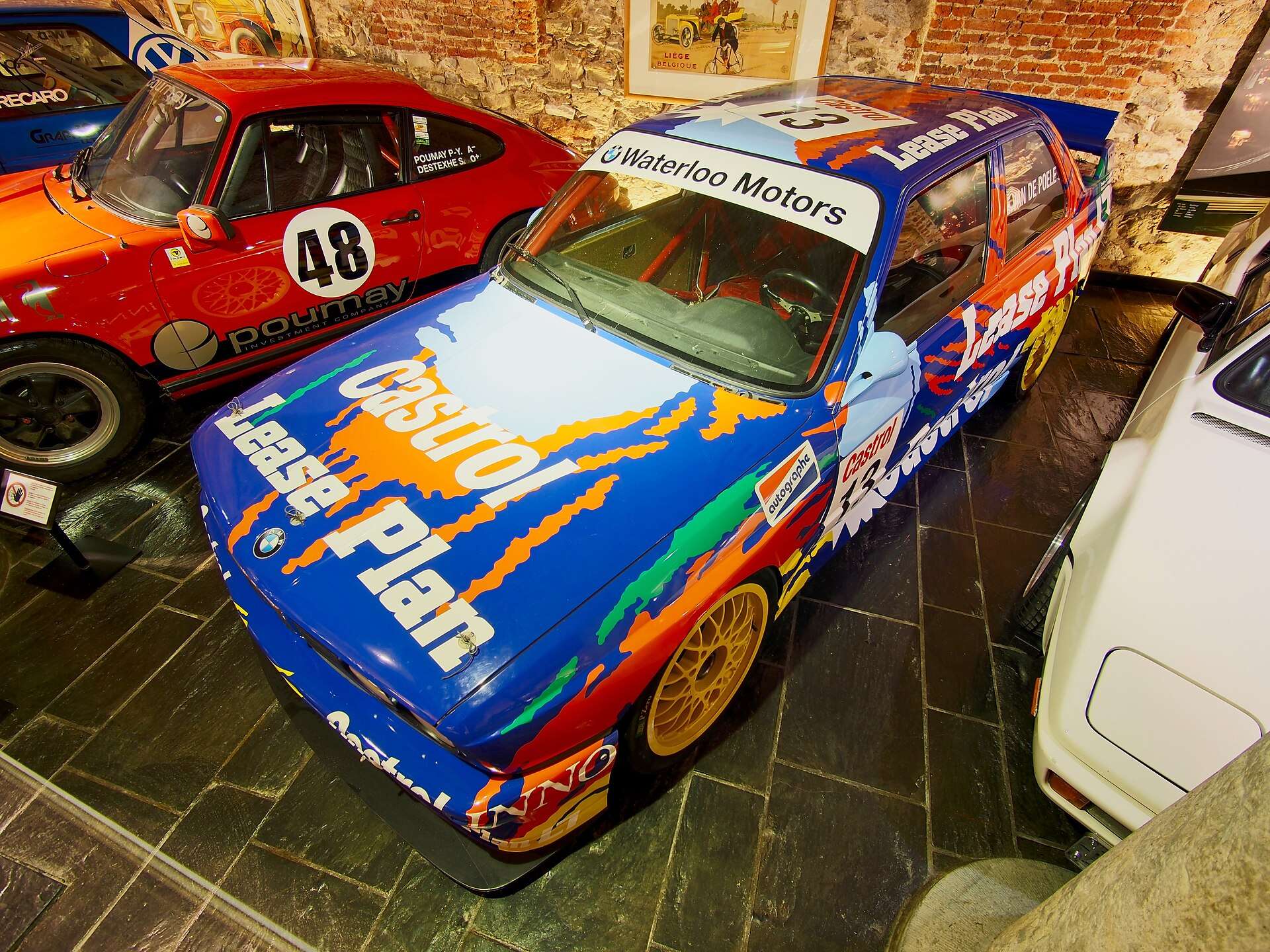
The BMW E30 M3 is more than an Eighties performance icon. It was built to homologate BMW’s Group A touring-car programme, which explains the square-shouldered bodywork, high-revving S14 four-cylinder and unusually close relationship between the road car and competition machine.
Why the E30 M3 exists
BMW created the E30 M3 for touring-car homologation. It was not a conventional 3 Series fitted with a bigger engine. The car used a 2.3-litre S14B23 four-cylinder, a twin-cam unit developed for the purpose, and bodywork shaped around motorsport needs. The swollen arches, altered rear screen area, boot treatment, spoilers and suspension changes are fundamental to the M3 rather than decorative additions.
That background is important when assessing a car. The E30 M3’s appeal comes from how its mechanical specification, body shell and racing identity fit together. A standard E30 converted to resemble an M3 is not remotely the same thing, however convincing its paint or badging may appear.
BMW E30 M3 history and production
BMW Group Classic records production from September 1986 to December 1990. The standard S14B23 engine began at 200 hp in non-catalyst form; cars for the German market with a catalytic converter were listed at 195 hp from 1987, while a 215 hp catalyst-equipped version followed in September 1989. More than 17,000 E30 M3s were sold, but that total includes several development stages and market variations.
For a buyer, production date alone is not enough. Ask what exact version is being offered, which market it was supplied to and whether the engine, panels, trim and paperwork support that description. A specialist familiar with E30 M3 chassis numbers and components is a worthwhile part of the purchase process.
E30 M3 versions: what is different?
| Version | What matters |
|---|---|
| Standard European M3 | 2.3-litre S14; quoted output varies with catalyst and production period. Correct market specification is more useful than a generic power claim. |
| Evolution engine | A homologation-led engine development that can look much like a regular car. BMW notes identifying details such as an E marking on the cylinder head and a two-part manifold. |
| Evolution II | A 500-car homologation run with revised spoiler arrangement, front-apron brake-cooling inlets and a listed 220 hp output. Verify the physical details and documentation. |
| Sport Evolution | The 600-car 1990 2.5-litre flagship. BMW lists 238 hp, a 25 kg reduction in weight, revised front bumper and adjustable rear spoiler. |
| US-market M3 | Different equipment and output. Do not compare a US example directly with a European one without understanding its original specification. |
The key lesson is simple: “Evolution” has been used loosely in adverts for years. A special-version claim should be backed by the correct chassis information, parts, paperwork and an informed inspection—not only a boot badge, coloured cam cover or aftermarket aero.
What makes an E30 M3 valuable to own?
The E30 M3’s motorsport record gives it instant recognition, but the driving experience is the more durable reason to care. It is a naturally aspirated, rear-wheel-drive saloon developed around response, balance and revs rather than outright torque. A sound car should feel precise and deliberate, not merely fast in a straight line.
That same identity means originality carries unusual weight. Factory body panels, spoilers, glass, trim, wheels, seats and engine components are not just cosmetic details; collectively they explain what the car is. Sensible, documented upgrades are not automatically a reason to walk away, but a car sold as original must withstand close inspection.
BMW E30 M3 buying checklist
1. Start with the body shell
Examine the shell before becoming absorbed in the engine or special-version story. Check sills, jacking points, floorpans, bulkhead areas, front inner wings, rear arches, boot floor, sunroof cassette and windscreen surrounds. Look inside the boot, beneath carpets and around suspension mounting areas where possible.
Rust repair is not an automatic rejection. A properly photographed and invoiced restoration by a known specialist may be preferable to a supposedly untouched car with fresh underseal and no explanation. Poor panel fit, differing paint texture, overspray, distorted seams or vague statements about “a little welding” deserve further investigation.
2. Verify identity and provenance
Match the car’s VIN and documents, then examine whether the engine and body specification make sense for the claimed model. Retain copies of registration history, old MOT records, invoices, restoration photographs and correspondence with recognised specialists. Treat incomplete paperwork as a reason to investigate further, rather than as a minor inconvenience.
Be particularly cautious with cars described as Sport Evolution, Evolution II or race-derived. The genuine versions are meaningful, but their special parts and identifying details must be present and credible.
3. Inspect the S14 properly
See the engine cold if possible. Listen for untoward mechanical noise, assess idle quality and watch for smoke or overheating as it reaches temperature. Look for leaks, tired cooling components and signs that maintenance has been deferred. Ask specifically about valve-clearance work, timing-chain-related maintenance, cooling-system renewal and major engine rebuilding, then read the supporting invoices.
A short test drive cannot prove engine health. A specialist inspection, compression or leak-down assessment where appropriate, and a careful review of history offer far more confidence than a warm engine and a polished cam cover.
4. Drive the transmission, differential and chassis
Check gearbox shift quality when cold and warm, clutch operation, driveline vibration, differential noise and wheel-bearing rumble. Suspension bushes, dampers, ball joints and steering components affect both safety and the characteristic precision that buyers expect. Brakes should feel stable and progressive; a pull, vibration or long pedal needs diagnosing rather than excusing as “old-car character”.
5. Price the missing parts before buying
Missing M3-specific trim, damaged spoilers, incorrect seats, tired wheels or absent undertrays can transform a cheap purchase into a frustrating project. Make a written list of what is incorrect, research availability before committing and separate essential work from cosmetic wishes. The strongest ownership experience usually comes from buying the most honest, complete car the budget allows.
Restored, modified or original?
There is no single right answer. A well-restored E30 M3 with a transparent photographic record can be a very sensible ownership choice. A subtly improved road car may also suit a driver who values usability. The problem is not restoration or modification itself; it is poor workmanship, hidden structural repair, made-up specification or a seller who cannot explain what has changed.
Ask whether modifications are reversible, whether original parts survive and whether the work was carried out by a recognised specialist. A clear file turns a modified car into an understandable proposition. Missing information turns it into a gamble.
Ownership advice
Budget for specialist care rather than treating the E30 M3 as an occasional modern car. Use an experienced BMW workshop, keep preventative maintenance current, store the car carefully and deal with water ingress or corrosion early. Regular, considerate use is generally better for seals, fluids and systems than long neglect followed by a demanding first journey.
For most enthusiasts, a sound standard or sympathetically maintained M3 is a more rewarding choice than chasing a rare badge. The car’s charm is in the way its homologation story, chassis and engine work together—and that is preserved best by condition, documentation and informed ownership.
Frequently asked questions
Was every E30 M3 powered by the same engine?
No. The S14 family, output and detail specification varied by market and evolution model. Confirm the exact car rather than relying on an advert’s generic figure.
Is corrosion a deal-breaker?
Not automatically, but structural corrosion and poor repairs can be very costly. Buy only after an informed inspection and review of any restoration evidence.
Are modified E30 M3s always less desirable?
No. Quality, reversibility and documentation matter. Originality carries real weight, particularly where rare E30 M3-specific parts are involved.
Should I buy a special-version E30 M3?
Only if the identification, specification and history have been independently checked. A special badge is not evidence by itself.