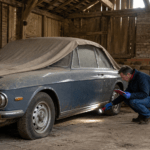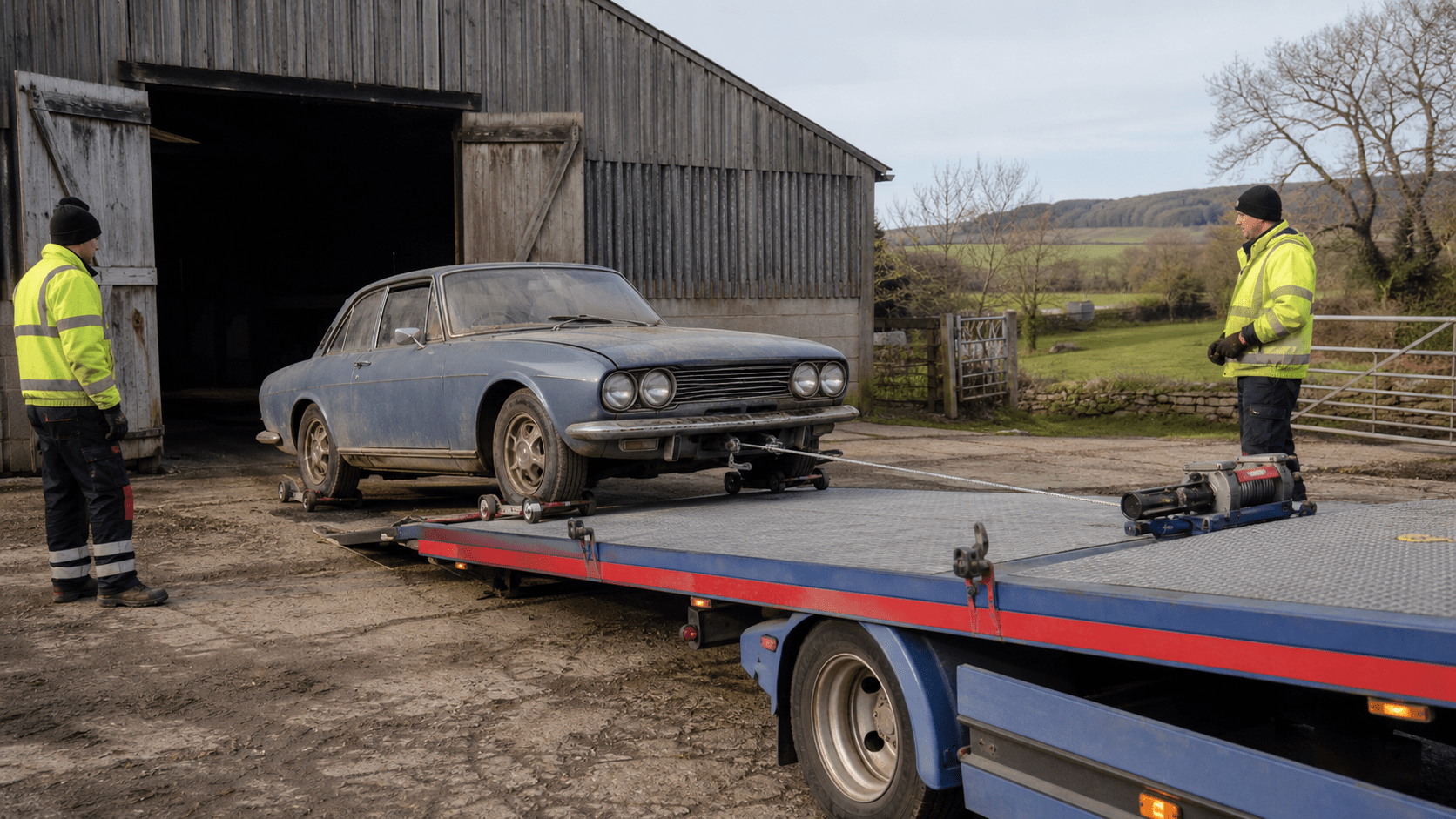
Recovering a barn-find car is not ordinary breakdown collection. Tyres may collapse, brakes may be seized, steering may be disconnected and the structure itself may be too weak for familiar towing points. The building, ground and loose components can be as important as the car. A safe move begins with accurate information and suitable professional equipment.
Survey the extraction route before booking
Begin at the car and work outwards to the public road. Measure the vehicle, barn doorway, gateways, turning area, overhead clearance and width between walls, posts or parked machinery. Photograph the entire route and identify slopes, steps, drains, soft ground, low branches and fragile floors.
A transporter that can carry the car may not fit down the lane or turn in the yard. The vehicle may need to move first onto stable hardstanding using smaller recovery equipment. Agree who provides ground protection, machinery and permission to cross adjoining property.
Establish the car’s true loading condition
Rolling
All wheels rotate and tyres support the car, but brakes, bearings and tyre carcasses may still fail during loading. Do not describe it as roadworthy.
Non-rolling
One or more wheels are seized, missing, collapsed or obstructed. Wheel skates, dollies or specialist lifting equipment may be required.
Structurally fragile
Sills, chassis rails, suspension mounts or towing points may not support normal loads. The operator needs this information before choosing attachment and lifting methods.
Check steering connection and range, gearbox position, handbrake, wheel security and whether the car can be accessed from both sides. Note missing hubs, suspension collapse, low bodywork and loose panels. Never test movement by pushing people into crush zones.
Do not trust old tyres for loading
A tyre can look inflated yet separate when loaded or dragged across a ramp. Check cracking, exposed cords, detached beads and wheels corroded around their mounting points. Inflate only when the tyre and wheel appear safe and remain outside the likely failure path.
Wheel skates or dollies can allow a seized car to move without forcing the drivetrain, but must suit the weight, surface and ramp. A professional operator should decide the appropriate equipment and attachment method.
Check the structure before attaching a winch
Factory towing eyes, suspension components and chassis points can be dangerously weakened by corrosion. Cosmetic outer panels reveal little about the load path. Inspect likely attachment areas and tell the operator about perforation, accident damage and missing subframes.
Do not loop a cable around bumpers, steering components, brake pipes or unknown brackets. Recovery forces can pull components from the car. When no safe point is apparent, stop and use a specialist capable of lifting, supporting or cradling the vehicle appropriately.
Keep clear of the line of pull
A loaded cable, strap, chain or attachment can fail suddenly. Only the person controlling the operation should direct movement, and everyone else should remain in an agreed safe area. Never step over a tensioned line, stand between the car and transporter or place hands and feet beneath a moving wheel.
Use equipment rated for the task, inspect it before use and follow the manufacturer’s instructions. Improvised ropes, damaged straps and unidentified old chains have no place in a controlled recovery.
Choose the right transport method
| Method | Suitable when | Main limitation |
|---|---|---|
| Low-bed recovery truck | The vehicle is a non-runner and access allows a truck close to stable loading ground. | Vehicle condition, approach angle and yard access must suit the bed and winch. |
| Open vehicle trailer | A correctly rated tow vehicle, trailer, driver and loading setup are available. | Combined weights, load distribution, trailer condition and restraint remain the driver’s responsibility. |
| Enclosed transporter | The car is valuable, fragile or needs weather and visual protection. | Costs more and can require greater access and careful loading geometry. |
| Specialist lifting recovery | Wheels are missing, structure is fragile or the vehicle cannot be safely winched conventionally. | Requires a detailed site survey, suitable lifting points and experienced personnel. |
A tow rope or rigid bar is not an appropriate plan for moving a long-stored car of unknown brakes, steering, tyres and legal status. The Highway Code warns that rope towing can be dangerous; use a transporter.
Understand towing weights and licence limits
If using your own car and trailer, check the driver’s licence entitlement, tow vehicle’s permitted towing weight, trailer maximum authorised mass, actual loaded weights and gross train weight. GOV.UK states that the combined fully loaded car and trailer must not exceed the vehicle’s gross train weight, and a vehicle without a train weight on its VIN plate should not be used for towing.
Do not estimate the barn find’s weight from appearance. Old cars, added parts and loads placed inside can change axle and trailer loading. Use manufacturer data and a weighbridge where necessary.
Inspect the tow vehicle and trailer
Current DVSA trailer safety guidance covers coupling, breakaway cable, tyres, wheel fasteners, lights, brakes, load distribution and weight limits. Carry out all required checks before loading and again before entering the road.
The towing vehicle, trailer, winch, ramps, restraints and attachment points must all suit the actual load. Confirm insurance and any breakdown or goods-in-transit cover rather than assuming a normal motor policy protects the vehicle being transported.
Secure the car as a load
The vehicle must not move forwards, backwards or sideways during braking and cornering. Use the transporter or trailer manufacturer’s approved restraint method and rated straps or wheel nets in good condition. Avoid attaching to fragile bodywork, brake pipes or components that can compress and loosen the restraint.
After initial movement, stop in a safe place and recheck the load because tyres, suspension and straps can settle. GOV.UK guidance states that all loads must be secure regardless of the vehicle, load type or journey length.
Loose parts need a separate plan
Doors, bonnets, bumpers, engines, gearboxes, glass and boxes of trim are loads in their own right. Inventory and photograph them before removal. Use strong containers, protect fragile items, keep heavy components low and secure everything against movement.
Do not fill the car with loose heavy parts. They can damage the interior, change axle loads and become dangerous during sudden braking. Arrange a separate van or second trip when necessary.
Protect originality during recovery
Photograph how the car sits and where parts were found. Avoid pressure washing, forcing doors or removing trim simply to simplify loading. Cover fragile glass and loose panels without trapping abrasive sheets against original paint.
If the vehicle may be historically significant, agree attachment, handling and documentation with a marque specialist or conservator. Damage caused during extraction can destroy evidence that careful restoration cannot recreate.
Prepare the destination before collection
The destination needs suitable access, level unloading space, secure dry storage and a method of moving the vehicle after the transporter leaves. Confirm whether the workshop accepts a dirty, mouldy or non-rolling car and whether immediate quarantine or cleaning is required.
Do not unload onto a public road or leave the car where it cannot be moved safely. Have wheel skates, supports and storage positions ready, and keep loose parts together with the vehicle’s labelled inventory.
Information to give the transporter
- Collection and delivery addresses, contact people and time restrictions
- Vehicle make, model, approximate weight, length, width and ground clearance
- Whether each wheel rolls and holds air
- Whether steering, gearbox and handbrake operate
- Known structural corrosion and safe attachment concerns
- Missing wheels, suspension, panels or glass
- Doorway, lane, gate, turning and overhead measurements
- Ground type, slopes, steps and weather-related access risks
- Loose parts and whether they require a separate load
- Required insurance, enclosed transport or specialist equipment
Questions to ask a professional operator
- Have you moved non-rolling and structurally fragile classic cars before?
- What vehicle, bed, winch, skates and restraints will you use?
- Does the quote include extraction, waiting, difficult access and loose parts?
- What insurance applies while loading, in transit and unloading?
- What information or site changes do you require before arrival?
- Who directs the loading operation and controls the exclusion area?
Printable barn-find recovery checklist
Access survey
- Route photographed from car to road
- Doors, gates and turning space measured
- Ground strength, slope and obstacles checked
- Overhead and side clearance checked
- Permission for all access confirmed
Vehicle condition
- Dimensions and weight researched
- Each wheel and tyre assessed
- Steering, gearbox and handbrake checked
- Structure and attachment risks identified
- Loose panels, glass and components recorded
Operator and transport
- Professional experience checked
- Equipment and load capacity confirmed
- Written quote and insurance checked
- Driver licence, weights and trailer legality checked if self-towing
- Rated restraint plan agreed
- Loose-parts transport arranged
Loading and destination
- Safe exclusion area established
- No one enters the line of pull
- Car and parts secured
- Restraints scheduled for recheck
- Destination access and unloading prepared
- Dry secure storage ready
Confirm ownership before removal, inspect the vehicle properly and prepare the recommissioning and budget plans before it reaches the workshop.
Documents & ownershipRecommissioningBarn-find costsBarn Finds hub