Unusual Cars model guide
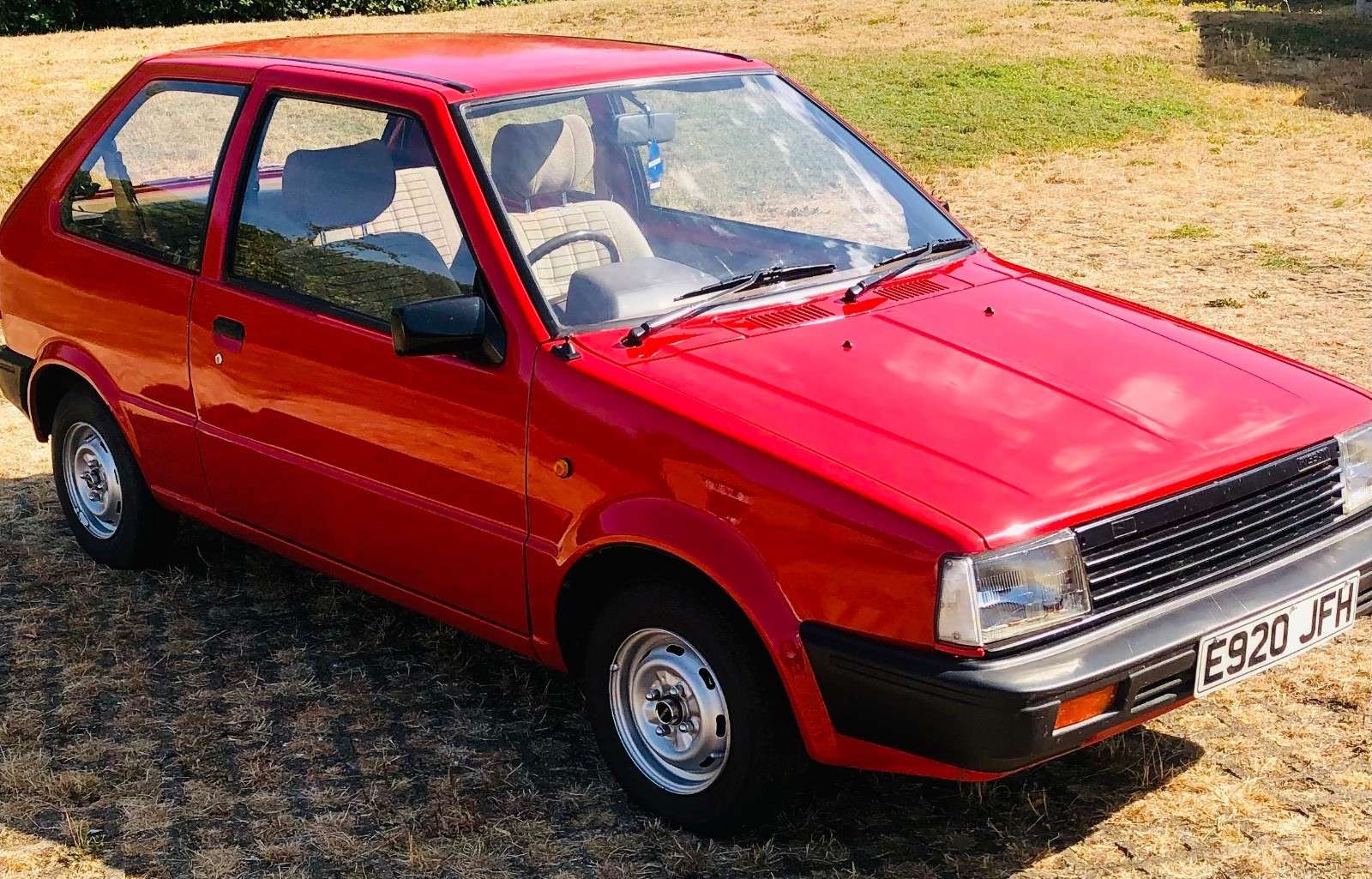
The Nissan Micra K10 was designed as uncomplicated, economical transport—and that simplicity is precisely why it became memorable. Launched in Japan as the March in 1982 and sold in Britain as the Micra, the angular first generation earned a reputation for light controls, dependable mechanicals and easy ownership. Once an everyday sight, an original K10 now feels like a remarkably pure survivor from the 1980s.
Nissan Micra K10 history
Nissan showed its new small front-wheel-drive model at the 1981 Tokyo Motor Show. A public naming campaign produced the March name, and the production car launched in Japan in October 1982. Export markets, including Britain, knew it as the Micra.
The K10’s job was straightforward: provide an economical, space-efficient hatchback below Nissan’s larger family cars. Its engineering reflected that brief. A transverse four-cylinder engine drove the front wheels, the body was compact and light, and controls were simple. The upright glass area made the cabin easy to see out of, while the squared-off tail used the available space effectively.
British sales began in 1983, placing the Micra among a busy group of small hatchbacks that included the Austin Metro, Ford Fiesta, Vauxhall Nova and Toyota Starlet. The Nissan was not sold on flamboyance. Its appeal came from starting reliably, fitting into small spaces and asking relatively little of its owner.
That modest role also explains why surviving cars are interesting. Cheap, ageing superminis were used, neglected and discarded rather than restored. The K10’s mechanical durability could outlast its body, so corrosion and the economics of repair removed cars that still ran perfectly well.
K10 versions, body styles and updates
Three-door Micra
The simplest and most recognisable K10 shape. Its light weight, compact dimensions and large glass area capture the original small-car brief particularly well.
Five-door Micra
Added rear-door convenience without greatly changing the car’s footprint. Door condition and model-specific trim become important when restoring a complete example.
Facelift cars
Grilles, lights, bumpers, interiors, trim names and equipment evolved through production. Advertised “Mk1” or “Mk2” descriptions are informal, so identify a car by year and visible specification.
UK trim names and standard equipment varied over the decade. Basic cars might have four-speed gearboxes and very little equipment; higher specifications could add a five-speed transmission, improved upholstery, wheel trims, a radio, tinted glass or other comfort features. Special editions appeared as Nissan kept the long-running model fresh.
Japanese-market March derivatives were much more diverse. Nissan’s own heritage collection records Collet and Collet Canvas Top versions, while performance models included the March Turbo and the technically extraordinary March Super Turbo. Imported Japanese cars should not be assumed to match UK specifications, parts listings or insurance categories.
Nissan Micra K10 engines and specifications
The ordinary K10’s character comes from Nissan’s compact MA-series four-cylinder engine. The 987cc MA10 was central to the range and, in standard form, prioritised economy and ease of use rather than outright performance. Gearboxes included four- and five-speed manuals, with automatic availability on some models and markets.
| Version | Engine | What to know |
|---|---|---|
| Typical UK Micra 1.0 | 987cc MA10 four-cylinder, usually carburetted | Simple, economical and durable when serviced; precise output varies by year and specification |
| March Turbo | Turbocharged MA10 derivative | Japanese-market performance version; specialist parts and identity checks matter |
| March Super Turbo | 930cc MA09ERT with supercharger and turbocharger | Rare Japanese homologation-linked flagship, entirely different in character from an ordinary UK Micra |
Nissan’s heritage example gives a useful indication of the original car’s scale: 3,645mm long, 1,560mm wide, a 2,300mm wheelbase and a quoted 615kg kerb weight for the particular competition-prepared 1982 March recorded by the collection. Those figures should not be treated as applying to every trim, body and market, but they show how compact and light the basic design was.
What is a Nissan Micra K10 like to drive?
A healthy standard K10 feels light rather than fast. Slim pillars and an upright driving position make it easy to place, the steering is manageable at town speeds, and the modest footprint suits narrow roads. There is little insulation compared with a modern car, so engine, tyre and wind noise are part of the experience.
The 1.0-litre engine rewards momentum and realistic expectations. A five-speed car is more relaxed on a longer journey, while a four-speed version feels most at home in town and on slower roads. Brakes, tyres and suspension are small and straightforward, but age can make a neglected example feel far less composed than Nissan intended.
Do not accept wandering steering, grinding wheel bearings, severe vibration or persistent brake pull as normal. Fresh tyres, sound dampers, correctly adjusted brakes and tight suspension joints can transform a car that has deteriorated gradually over decades.
Nissan Micra K10 common problems
Rust and structural corrosion
Corrosion is the decisive K10 problem. Inspect the full length of both sills, jacking points, front crossmember, floor edges, front and rear suspension mounting areas, inner and outer wheelarches, door bottoms, rear seat area, boot floor, battery tray and the metal around the windscreen. Lift carpets and the spare wheel where the owner permits.
Bubbling paint is only the visible part of a repair. Check from underneath, looking for distorted seams, old patches, fresh underseal and filler. A properly repaired car may be a better purchase than an apparently original example hiding structural deterioration.
Carburettor, choke and vacuum pipes
Ageing hoses, dirt and maladjustment can cause poor starting, an uneven idle, hesitation or an engine that runs too fast when cold. Insist on seeing the car start from cold. Check that the choke settles, the engine takes throttle cleanly and there is no strong smell of fuel.
Ignition and damp-weather starting
Distributor caps, rotor arms, leads, plugs and electrical connections are inexpensive service items but can produce frustrating intermittent faults. A car that misfires in damp weather may need basic ignition maintenance rather than major engine work, although diagnosis should come before replacing parts.
Cooling system
Check the radiator, hoses, water pump area and expansion system for leaks or staining. Make sure the fan operates and the temperature remains stable in traffic. Old coolant and corroded components can turn a simple system into an overheating problem.
Clutch, gearbox and driveshafts
A heavy or rough clutch action can point to a tired cable or mechanism; slipping under load means further work. Test every gear and listen for bearing noise. Split CV gaiters allow grease out and contamination in, while clicking on full steering lock suggests worn outer joints.
Brakes, suspension and tyres
Inspect rigid brake pipes, flexible hoses, discs, drums and handbrake operation. Worn bushes, ball joints, dampers and wheel bearings reveal themselves through knocks, looseness and rumbling. Old low-mileage tyres can have ample tread yet be cracked, hardened and unsafe.
Interior and electrical equipment
Test the lights, wipers, heater blower, gauges and rear demister. Water leaks can damage trim and accelerate hidden floor corrosion. Original seats, fabrics, parcel shelves, wheel trims, lamps and badges may be harder to replace than routine service parts, so completeness has real value.
Nissan Micra K10 buying checklist
- Confirm its identity. Match the VIN and registration details, especially on imported or performance-styled cars.
- Inspect it from underneath. Structural condition is more important than shine, mileage or a long MOT.
- Start it cold. Check the choke, idle, exhaust smoke, warning lights and charging system before the seller warms it.
- Drive every gear. Listen for gearbox, driveshaft and wheel-bearing noise and check for clutch slip.
- Test the brakes properly. The car should stop straight, release cleanly and hold securely on the handbrake.
- Check every trim item. Missing K10-specific parts can take longer to find than mechanical components.
- Read the history. Old MOTs and invoices help explain mileage, welding, long storage and recurring advisories.
- Budget for recommissioning. Fluids, filters, hoses, belts, tyres and brakes age even when mileage is exceptionally low.
Use the official GOV.UK MOT history service and DVLA vehicle information service before travelling. An MOT is not a condition guarantee, but a pattern of corrosion advisories or unexplained mileage changes deserves investigation.
K10 parts availability and ownership
Service parts for the mainstream 1.0 can still be obtainable through motor factors, online suppliers and owners’ clubs, although availability varies and old catalogue data is not always accurate. Keep the removed component and compare dimensions, connections and numbers before assuming a listed part fits.
Body panels, exterior plastics, lamps, high-grade interiors and special-edition details are more challenging. Japanese performance derivatives add another layer: importing parts, understanding different specifications and finding knowledgeable support should be considered before purchase.
The K10 is mechanically approachable, but age still demands disciplined maintenance. Use correct parts and specifications, keep records, preserve original pieces and treat rust prevention as ongoing work rather than a one-time restoration task.
Nissan Micra K10 frequently asked questions
What years was the Nissan Micra K10 made?
The first-generation March/Micra launched in Japan in 1982 and the K10 generation continued until 1992. UK Micra sales began in 1983; registration dates can extend beyond production.
Is the Nissan March the same as the Micra?
March is the Japanese-market name and Micra is the name used in Britain and various export markets. Equipment, engines and derivatives differed, so a Japanese March is not necessarily identical to a UK Micra.
Are Nissan Micra K10s reliable?
The simple engine and running gear earned a strong reputation, but every surviving car is now old enough for corrosion, neglected servicing, hardened rubber and poor repairs to dominate. Buy the individual car’s condition, not the model’s reputation alone.
Where does a K10 Micra rust?
Important areas include the sills, jacking points, arches, front crossmember, floors, suspension mounting areas, windscreen surround, battery tray, boot floor and rear-seat area. A professional underside inspection is strongly recommended.
Did Britain get the March Super Turbo?
It was a Japanese-market model rather than a normal UK Nissan offering. Cars found in Britain are imports and need appropriate identity, parts and insurance checks.
Is a K10 Micra now a classic car?
Yes. Its age, scarcity and distinct 1980s design place it firmly within the modern-classic world, even though it began as inexpensive everyday transport.
Research note: launch history and reference specifications were checked against the Nissan Heritage Collection’s 1982 March K10. Specifications varied by year and market, so verify an individual car from its identity, documentation and period literature.