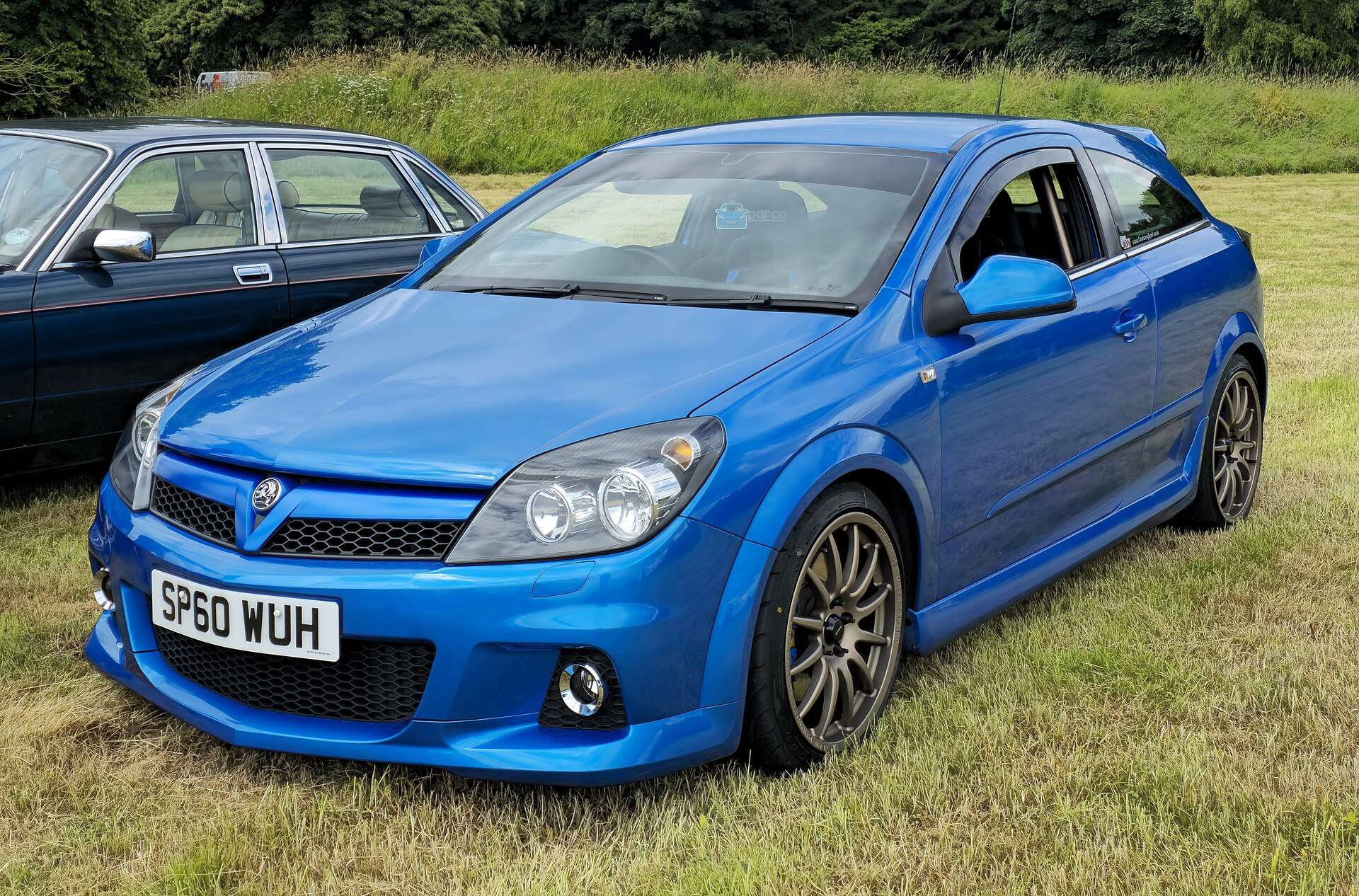
Featured photo: Calreyn88 / Wikimedia Commons, CC BY-SA 4.0. Resized; displayed cropped.
VXR is Vauxhall’s performance badge, associated with turbocharged hot hatchbacks, thundering V8s and some wonderfully unlikely family cars. Most people recognise the Astra and Corsa VXR, but the story also includes a lightweight sports car, two people carriers and a pick-up with a rather different idea of a working day.
What does VXR stand for?
VXR is commonly explained as Vauxhall Racing. More precisely, the name was derived from VX Racing, Vauxhall’s British Touring Car Championship team. It links the company’s performance road cars with its racing identity, rather than describing an engine or a particular type of drivetrain. [1]
On a production Vauxhall, the badge generally identified a dedicated performance model with more power and changes to its suspension, brakes, styling and cabin. The details varied considerably: a Corsa VXR and a VXR8 shared an attitude, but very little hardware.
There is also a distinction between a complete VXR model and a normal Vauxhall fitted with VXR styling accessories. A spoiler, bodykit or badge does not give an ordinary Corsa the engine and chassis of a Corsa VXR.
The history of Vauxhall VXR
Vauxhall launched VXR in 2004, during a successful period for its touring-car programme. The new badge gave the company a recognisable performance family, building on the enthusiasm already associated with names such as GTE and GSi. [1]
VXR could draw on several parts of the General Motors world. Many European models were closely related to the Opel Performance Center cars sold as OPCs overseas. The Australian V8s came through Holden and Holden Special Vehicles, while Lotus and Triple Eight also formed part of the wider engineering and motorsport story. It would be misleading, though, to suggest that every VXR was developed by the same team. [2]
The range expanded rapidly. By 2007, Vauxhall was applying the badge to everything from a compact MPV to a rear-wheel-drive V8 saloon. Later arrivals brought four-wheel drive, limited-slip differentials and increasingly powerful engines.
Every Vauxhall VXR model at a glance
The list below covers the production model families, including the VXR8 estate and pick-up. Special editions are explained beneath it. Launch years identify each model’s arrival rather than the registration date of every surviving example.
| Model | UK arrival | Engine and character |
|---|---|---|
| VXR220 | 2004 | 2.0 turbo; mid-engined roadster |
| Monaro VXR | 2004 | 5.7 and 6.0 V8; rear-drive coupé |
| Astra VXR H | 2005 | 2.0 turbo; three-door hot hatch |
| Vectra VXR | 2005 | 2.8 turbo V6; hatchback and estate |
| Zafira VXR | 2005 | 2.0 turbo; seven-seat MPV |
| Meriva VXR | 2006 | 1.6 turbo; compact MPV |
| Corsa VXR D | 2007 | 1.6 turbo; three-door hot hatch |
| VXR8 saloon | 2007 | 6.0 and 6.2 V8; later supercharged versions |
| Insignia VXR | 2009 | 2.8 turbo V6; four-wheel drive |
| VXR8 Maloo | 2011 UK range announcement | 6.2 V8; Australian performance pick-up |
| Astra VXR J | 2012 | 2.0 turbo; GTC-based hot hatch |
| VXR8 Tourer | 2013 | 6.2 V8; rear-drive estate |
| Corsa VXR E | 2015 | 1.6 turbo; second Corsa VXR generation |
Timeline sources: Vauxhall’s tenth-anniversary chronology, contemporary brochures and launch material. The Maloo had earlier show appearances and import history; 2011 refers to its inclusion in the announced UK range. [3] [4] [5]
Vauxhall VXR220
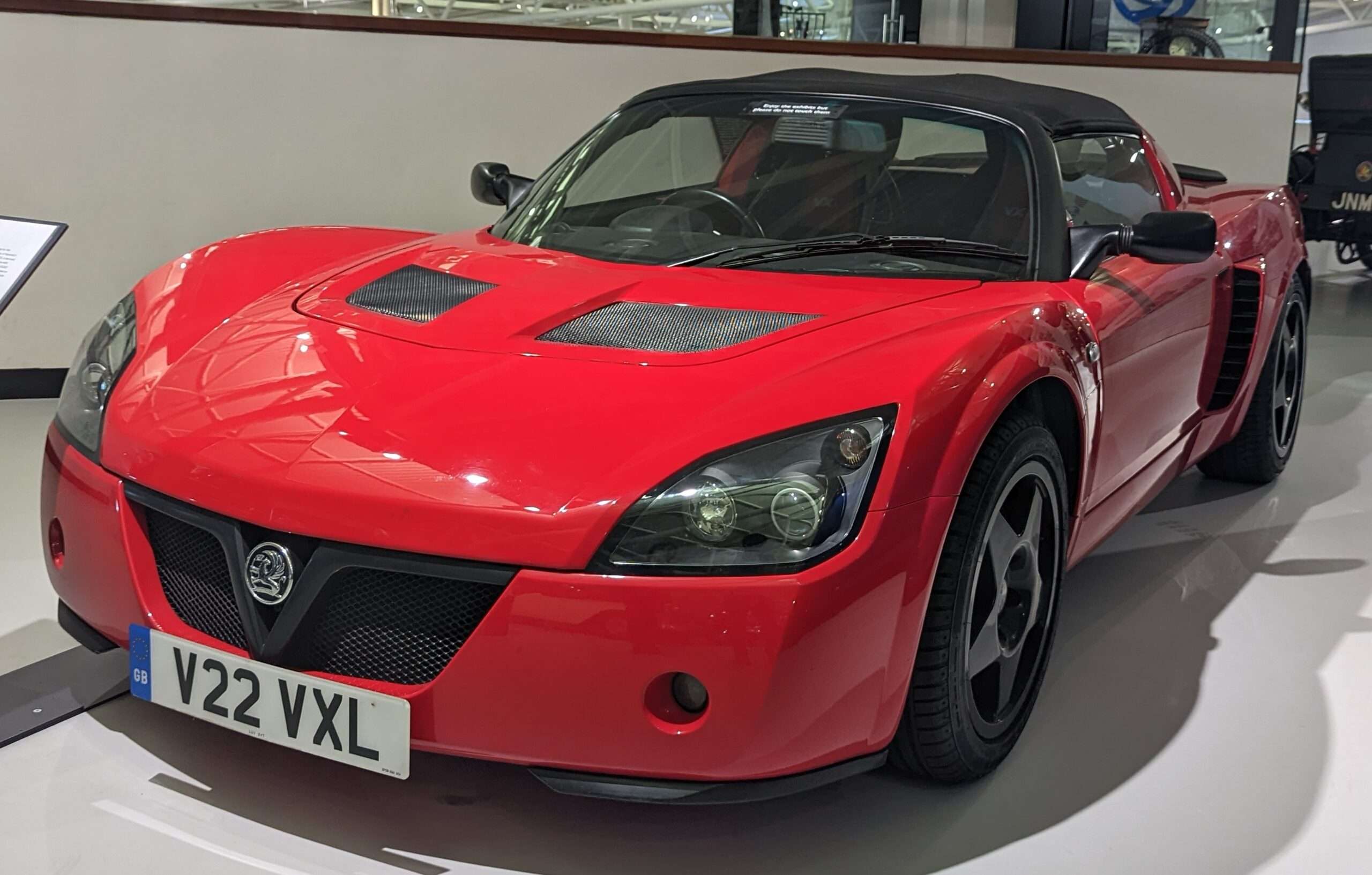
The first chapter was also one of the most focused. Based on the VX220 Turbo, the VXR220 combined a mid-mounted 2.0-litre turbo engine with a lightweight, two-seat roadster body.
Vauxhall quoted 220hp and a 0–60mph time of just 4.2 seconds. Engine, cooling and chassis changes made this a proper performance derivative. Vauxhall identifies its pre-production VXR220, numbered VXR-000, as the first car to wear the badge. [6]
It established that VXR could mean something much more serious than a sportier bumper.
Vauxhall Monaro VXR
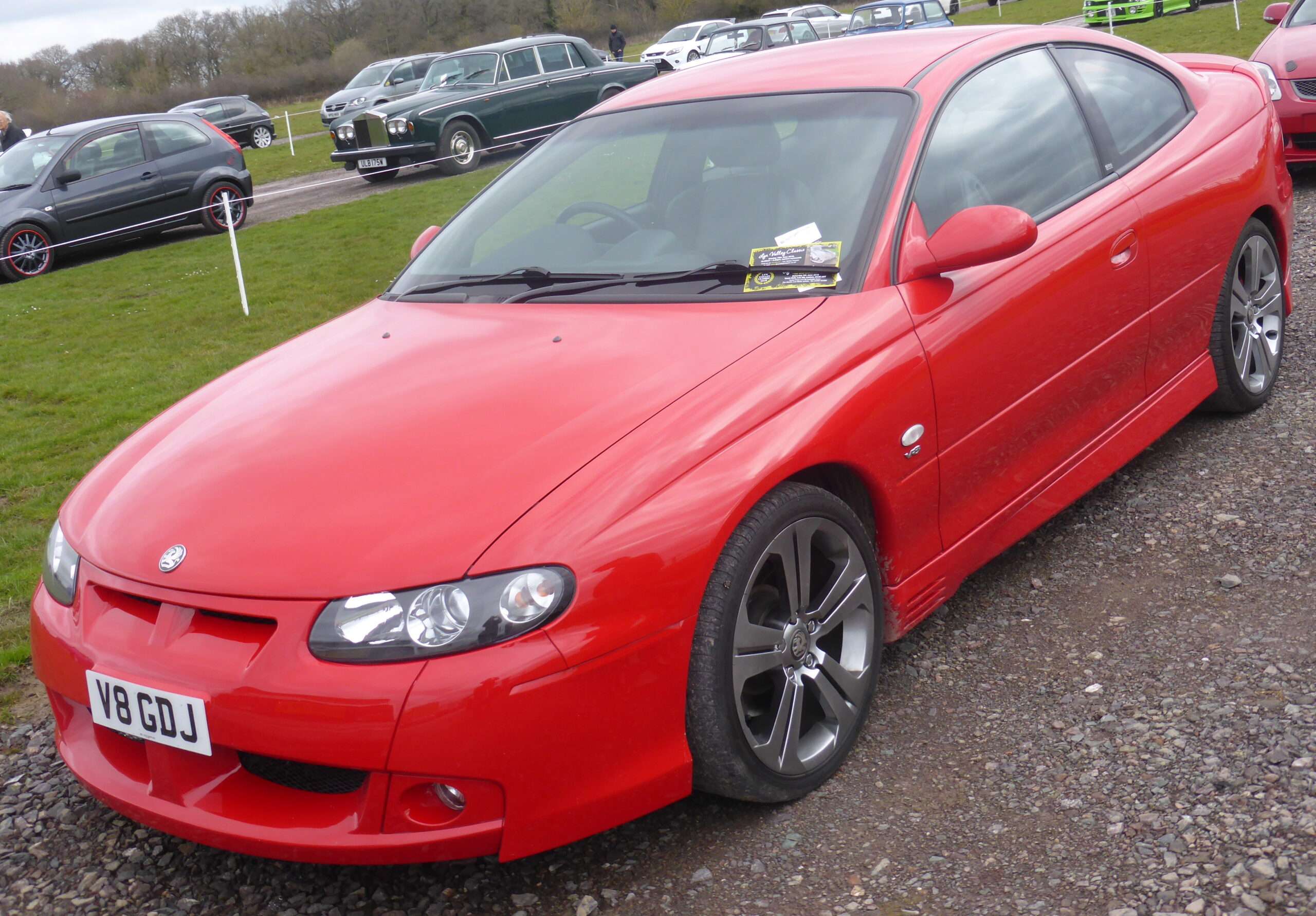
The Monaro supplied the Australian accent. This large, rear-wheel-drive coupé was based on HSV’s interpretation of the Holden Monaro, with a manual gearbox and a V8 soundtrack.
The initial VXR used a 5.7-litre V8; the later 6.0-litre version raised the stakes again. It gave Vauxhall a muscle-car flagship quite unlike its European hatchbacks. Crucially, not every Vauxhall Monaro was a VXR: the badge identified the hotter version. [1] [2]
The limited-run Monaro VXR500 went further, adding a supercharger to the 6.0-litre engine for a quoted 500PS. It was a memorable way to send off the big coupé. [7]
Vauxhall Astra VXR
Astra H VXR
For many enthusiasts, this is the defining VXR. Launched in 2005 and based on the three-door Astra Sport Hatch, it paired a 2.0-litre turbocharged engine producing 240PS with front-wheel drive and a six-speed manual gearbox. Recaro seats and assertive styling helped give it an identity of its own. [2]
Notable editions included the Nürburgring Edition, with white paint, distinctive graphics and a Remus exhaust; the red-and-black VXRacing Edition; and the Arctic Edition, with its white-and-black colour scheme. These were derivatives of the Astra H VXR, rather than additional generations. [8] [9] [10]
Astra J VXR
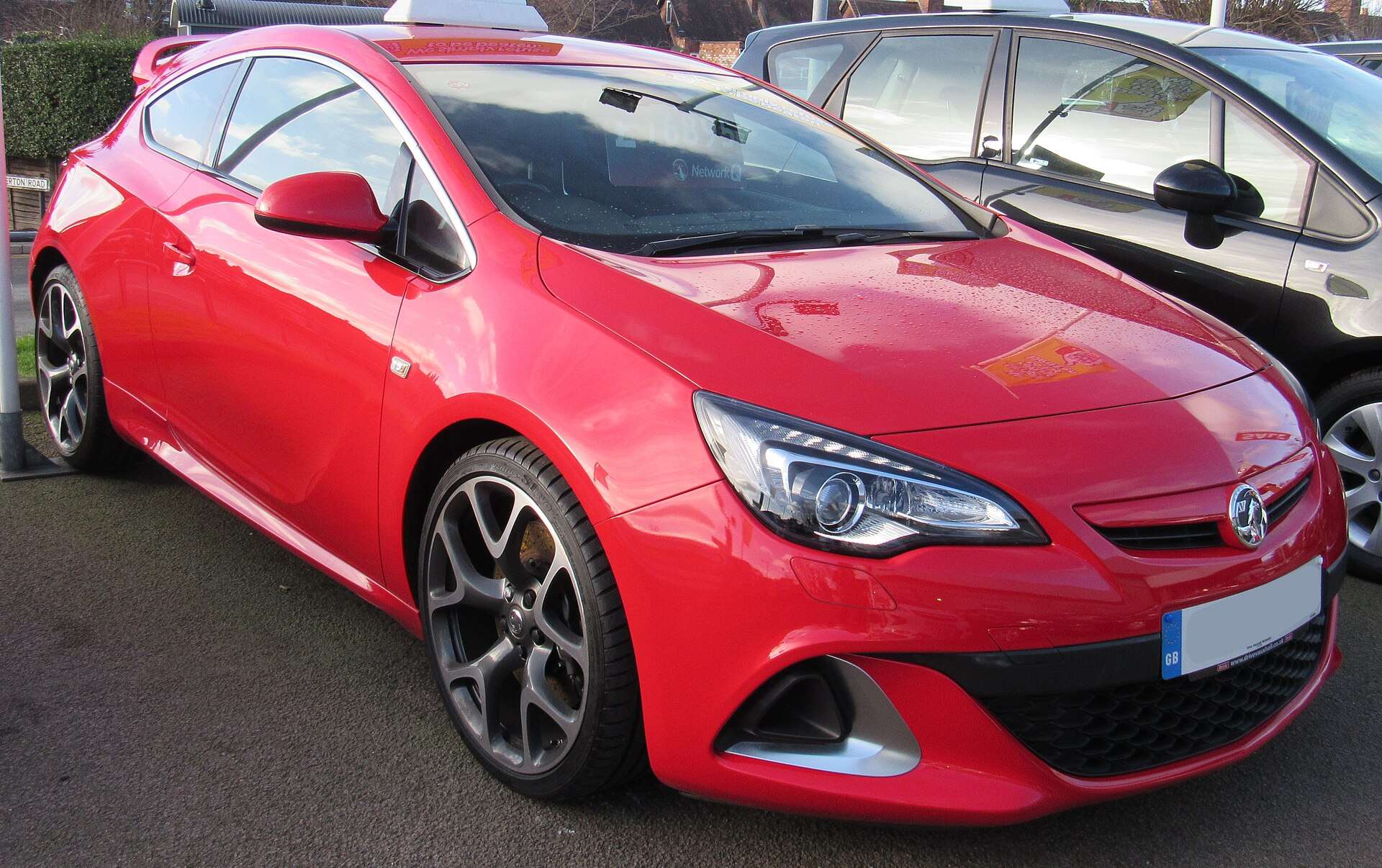
The second Astra VXR arrived in 2012, based on the three-door GTC. Power increased to 280PS, accompanied by 400Nm of torque.
Its mechanical limited-slip differential, HiPerStrut front suspension and Brembo brakes were central to the package. This was a substantial engineering effort aimed at making a powerful front-wheel-drive hatch work effectively through corners. There was no production Astra K VXR to follow it. [11]
Love cars you don’t see every day?
Get forgotten cars, surprising motoring stories and the most interesting finds from Unusual Cars by email.
Free to join. No spam. Unsubscribe whenever you like. See our privacy policy.
Vauxhall Vectra VXR
The Vectra VXR put a turbocharged 2.8-litre V6 into a familiar family-car shape. Available as a hatchback or estate, it initially produced 255PS before an upgrade to 280PS for the 2007 model year. [7]
The later hatchback had an official 0–60mph time of 6.1 seconds and a 161mph maximum. Uprated brakes, adaptive damping and Recaro seats helped distinguish it from everyday Vectras. The estate added the appeal of serious pace with room for a family’s luggage. [12]
Vauxhall Zafira VXR

A seven-seat people carrier might seem an unlikely candidate, but the Zafira VXR was thoroughly committed to the idea. It used a 240PS 2.0-litre turbo engine, a six-speed manual gearbox and lowered sports suspension.
Vauxhall quoted 0–60mph in 7.2 seconds. It also retained the Flex7 seating arrangement, making this a performance car that could accommodate more than the usual number of passengers. Its combination of family practicality and hot-hatch power remains one of the badge’s most entertaining applications. [13]
Vauxhall Meriva VXR

The Meriva VXR took the same thinking into an even smaller MPV. Its 1.6-litre turbo engine produced 180PS, backed by a six-speed manual gearbox, firmer suspension and Recaro front seats.
It retained the useful flexibility of the ordinary Meriva while adding performance that its tall body scarcely suggested. Of all the European VXRs, it is perhaps the clearest example of Vauxhall being willing to try something unusual. [13]
Vauxhall Corsa VXR
Corsa D VXR

The first production Corsa VXR arrived in 2007. Its 1.6-litre turbo engine produced 192PS, giving the small three-door hatchback a much more aggressive personality.
The Arctic, VXRacing and Blue editions offered different combinations of appearance and equipment. The Nürburgring and Clubsport versions brought more substantial changes. [9] [14] [15]
The Nürburgring Edition, launched in 2011, raised output to 205PS and added a mechanical limited-slip differential, upgraded brakes and revised suspension. The Clubsport followed in 2014, carrying the more focused theme forward. [5] [16]
Corsa E VXR
A second Corsa VXR arrived in 2015 with 205PS from another 1.6-litre turbo engine. The official figures were 0–60mph in 6.5 seconds and a 143mph maximum.
The optional Performance Pack added a limited-slip differential, larger brakes, 18-inch wheels and upgraded suspension. It is an important specification distinction between examples of this generation. [5] [17]
Vauxhall Insignia VXR

Launched in 2009, the Insignia VXR combined a 325PS turbocharged 2.8-litre V6 with four-wheel drive. Buyers could choose a saloon, hatchback or Sports Tourer estate.
It brought a different character to the range: a larger, more substantial performance car with considerable long-distance appeal. The later VXR SuperSport removed the usual 155mph restriction, with a quoted maximum of up to 170mph depending on specification. That figure should not be applied indiscriminately to every body style and gearbox combination. [18] [19]
Vauxhall VXR8

The VXR8 succeeded the Monaro as Vauxhall’s Australian V8 flagship in 2007, replacing the coupé format with a four-door saloon. Early cars had a 6.0-litre V8, followed by 6.2-litre versions.
The family encompassed different HSV-derived specifications, including later E3 cars and special-order ClubSport versions. The Bathurst and supercharged Bathurst S added further variety, while the later GTS brought a supercharged 6.2-litre engine producing 576PS. [20] [21] [22]
The final VXR8 GTS-R raised output to 595PS and 740Nm. Announced in 2017 as Australian Commodore production approached its end, it was the most powerful production Vauxhall to that date. It gave the V8 branch of the family a suitably extravagant farewell. [22]
VXR8 Tourer
The VXR8 Tourer deserves its own mention. Announced in 2013, this Australian estate paired a 431PS 6.2-litre V8 with rear-wheel drive and a choice of manual or automatic transmission.
It offered the attraction of a V8 performance car with a vast luggage compartment. It is also a separate car from the European-built Insignia VXR Sports Tourer, despite the similar-sounding names. [4]
VXR8 Maloo
The Maloo was the pick-up member of the family: an Australian ute with two seats, a load bed and a V8 up front.
Vauxhall included it in the special-order VXR8 range. Its significance is less about competing with conventional work trucks and more about extending the muscle-car formula into a shape almost nobody else offered in Britain. A complete account of VXR needs room for it, even if it is technically a commercial vehicle. [21]
What about the Astra VXR Extreme?
The Astra VXR Extreme, shown in 2014, explored a more radical direction with over 300PS, extensive weight-saving measures and a track-oriented specification.
Contemporary publicity discussed a possible limited production run, but it did not become a regular production Vauxhall. It belongs in VXR’s history as a concept, rather than in the production-model list. [23] [24]
What happened to VXR?
The original VXR line-up faded out during the late 2010s. The Australian V8 story ended with the closure of local Commodore production, while the European performance models were not directly replaced by new VXR generations. [22]
As of November 2026, Vauxhall’s newer performance direction uses GSE branding. The company explicitly links the new Corsa GSE with the heritage of the earlier Corsa VXR. That makes GSE part of the continuing fast-Vauxhall story, while remaining a distinct badge. [5]
Why VXR still matters
The badge’s appeal lies in the variety of cars it covered. It could mean a small turbocharged hatchback, a serious mid-engined roadster, a seven-seat family car or an Australian V8 with a load bed.
The Astra and Corsa made VXR familiar, but the Meriva, Zafira, Monaro and Maloo made it memorable. Together, they created a performance family with an unusually broad definition of what a fast Vauxhall could be.
Love cars you don’t see every day?
Get forgotten cars, surprising motoring stories and the most interesting finds from Unusual Cars by email.
Free to join. No spam. Unsubscribe whenever you like. See our privacy policy.
Explore more Unusual Cars feature articles →
Sources and fact checking
Researched 12 November 2026; reviewed and illustrated 13 November 2026. PS is metric horsepower and is not numerically identical to bhp. Performance figures are contemporary manufacturer claims. Some archive brochures contain later revisions; launch years are cross-checked against Vauxhall’s anniversary chronology.
- HSV launch announcement, June 2004
- Vauxhall VXR brochure, 2005
- Vauxhall tenth-anniversary release, archived reproduction
- VXR8 Tourer manufacturer release, reproduced by Ultimatecarpage
- Vauxhall Corsa GSE press information and Corsa performance history
- Vauxhall VXR220 heritage release
- Vauxhall Vectra and Monaro VXR power upgrades, reproduced release
- Astra VXR Nürburgring brochure
- Astra and Corsa VXRacing brochure
- Vauxhall VXR brochure including Astra Arctic
- Vauxhall VXR brochure, 2014
- Vauxhall VXR brochure, October 2007
- Vauxhall VXR brochure, August 2007
- Corsa VXR Arctic brochure
- Corsa brochure including Blue Edition
- VXR price guide including Corsa Clubsport
- Vauxhall Corsa VXR 2015 brochure, archive copy
- Insignia VXR launch release, reproduced
- Insignia VXR SuperSport manufacturer release, reproduced
- VXR8 Bathurst manufacturer release, reproduced
- VXR brochure including ClubSport, Wagon and Maloo
- Vauxhall VXR8 GTS-R announcement, 2017
- Astra VXR Extreme manufacturer release, reproduced
- Contemporary Astra VXR Extreme concept coverage