In this article
- What were GTE and GSi?
- The key families at a glance
- Astra Mk1 GTE: the early hot-hatch challenge
- Astra Mk2 GTE: not every GTE was a 16-valve
- Nova GTE to Nova GSi: a real naming transition
- Cavalier GSi 2000: the badge moves up a class
- Astra Mk3 GSi and the Mk4 turbo revival
- Corsa GSi: two very different interpretations
- Vectra GSi: performance in a business-car body
- Zafira GSi Turbo: the most unusual family member
- Insignia GSi: petrol, diesel and all-wheel drive
- GTE, GSi, VXR and GSE: related, not interchangeable
- Vauxhall GTE and GSi questions answered
- Why the older badges deserve their own history

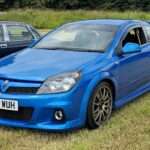
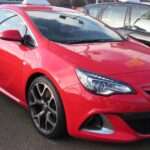
Before VXR, a fast Vauxhall might have worn GTE or GSi badges. Those names belonged to small hatchbacks, discreetly muscular saloons, V6 family cars and even a turbocharged people carrier. Their appeal was not that they resembled exotic machinery. It was that something recognisably ordinary had been given a much more interesting job. [1] [2]
The history is less straightforward than “GTE became GSi, then GSi became VXR”. Different model lines changed at different times, and GSi returned after VXR had already established itself. Understanding that overlap makes the cars easier to identify—and much more interesting to read about.
What were GTE and GSi?
GTE and GSi were Vauxhall sporting-model badges, used for particular performance derivatives rather than one universal engine or chassis specification. The Astra GTE established the name in Vauxhall’s early-1980s hot-hatch range. GSi subsequently appeared on cars including the Cavalier, Nova, Corsa, Astra, Vectra and Zafira. [3] [1]
The names also need a UK perspective. Opel and Vauxhall did not always apply the same badges to equivalent cars at the same time. The original 1988 Vauxhall-Opel brochure, for example, describes the British Astra performance models as GTEs. Importing a continental Opel model name into a UK history can therefore create a car that was never actually sold here under that description. [4]
The key families at a glance
| Model family | The important chapter |
|---|---|
| Astra Mk1 GTE | The 1983 hot hatch that established the Vauxhall GTE formula. [3] |
| Astra Mk2 GTE | Eight-valve and 16-valve versions, with a convertible also carrying the badge. [4] |
| Nova GTE and GSi | A small-car performance line that changed names with the 1990 facelift. [1] |
| Cavalier GSi 2000 | GSi reaches the family-saloon class in the late 1980s. [1] |
| Astra GSi | The Mk3 performance model, followed by the turbocharged Mk4 GSi. [5] [6] |
| Corsa GSi | The 1993 original and a very different 2018 revival. [1] |
| Vectra GSi | A V6-powered executive-car interpretation. [7] |
| Zafira GSi Turbo | The performance people carrier. [2] |
| Insignia GSi | The later all-wheel-drive revival, including petrol and diesel versions. [8] |
These are model families, not a claim that every year, bodystyle or market version shared the same specification.
Astra Mk1 GTE: the early hot-hatch challenge
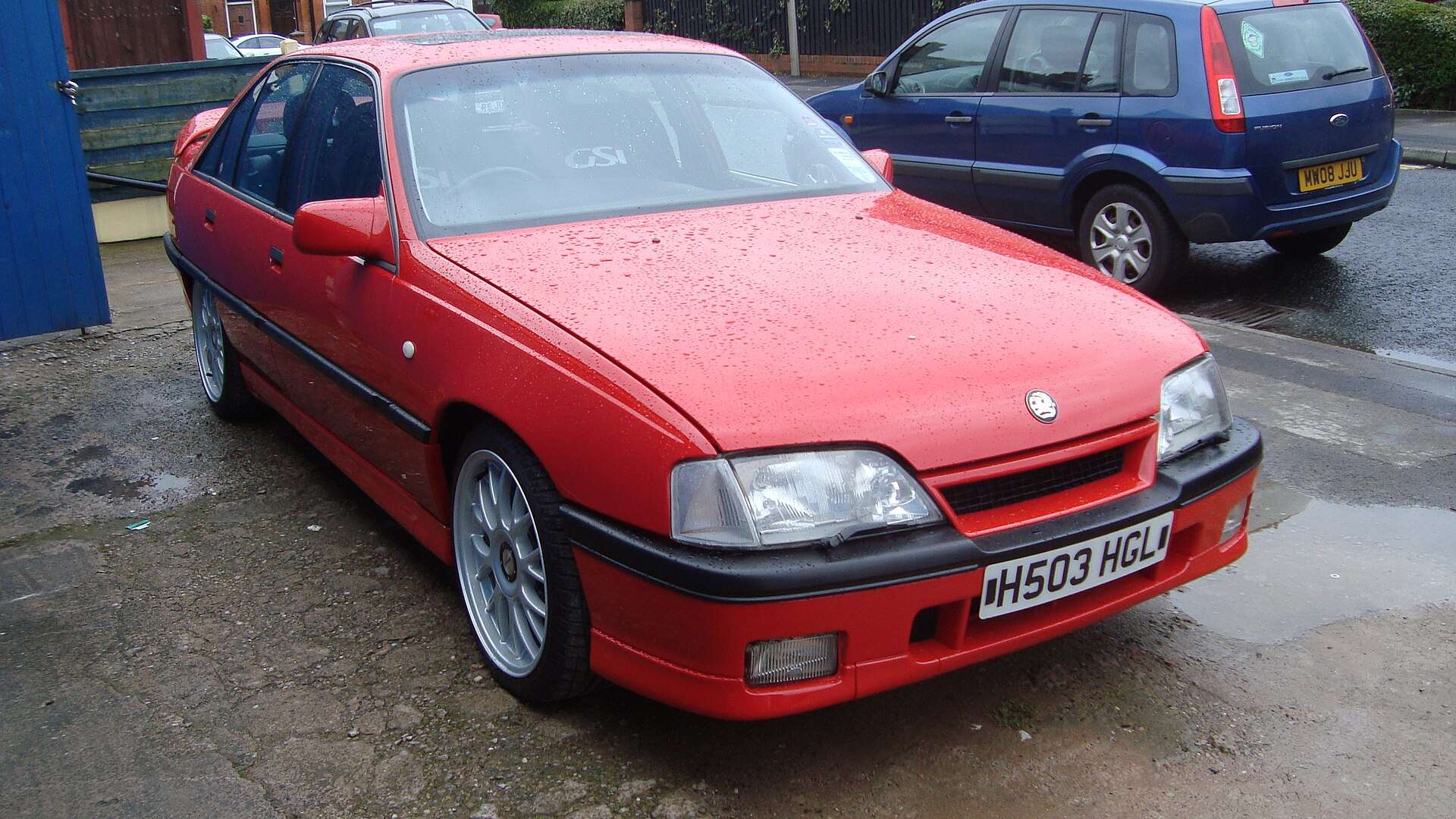
The first Astra GTE arrived in 1983 with a fuel-injected 1.8-litre engine and a coordinated set of changes to the car’s running gear and appearance. Vauxhall’s heritage description records work on the suspension, tyres and transmission, not merely a more powerful engine. [3]
That is an important starting point. The GTE was meant to be understood as a complete sporting derivative. Its visual identity helped buyers recognise the package, but the badge was not the package itself.
Its short place in the Mk1 Astra story also helps explain why it can be overlooked. The better-known aerodynamic Mk2 and its later 16-valve version tend to dominate memories of the name. The earlier car deserves recognition as a separate chapter, not simply as an old shape for the same model.
Astra Mk2 GTE: not every GTE was a 16-valve
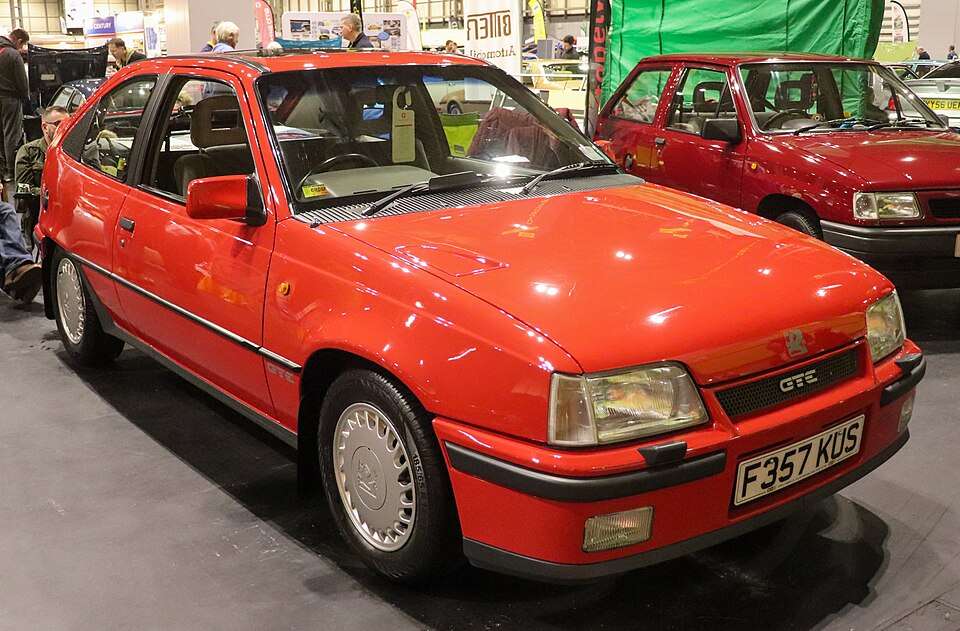
The Mk2 carried the GTE idea into a very different body. By summer 1988, Vauxhall’s own range brochure distinguished an eight-valve GTE hatchback, the new 16-valve hatchback and a GTE convertible. That alone makes “Astra GTE” too broad a description for a precise specification. [4]
The brochure quoted 156 PS for the new 2.0-litre 16-valve engine, equivalent to roughly 154 bhp. It is a small but useful correction to the habit of repeating a power number while silently changing its units. PS and bhp are close, but they are not identical. [4]
The 16-valve car is the version that tends to dominate the legend, but an earlier eight-valve GTE should not be dismissed as an incorrectly specified 16-valve. It is a different factory derivative. Equally, a later engine conversion does not change the car’s original build identity.
For a surviving example, establish the original model, the engine now fitted and the history of any changes. That approach is more useful than relying on a digital dashboard, a set of wheels or the colour of a cam cover.
Nova GTE to Nova GSi: a real naming transition
The Nova provides one of the clearest examples of the change from GTE to GSi. Vauxhall’s history identifies the 1.6-litre GTE as the sporting model before the 1990 facelift, after which the performance derivative carried the GSi name. [1]
The attraction was the scale of the car. It brought the idea into a compact hatchback rather than a large-engined saloon or coupé. In a history dominated by bigger power figures, that makes the Nova a useful reminder that a performance model can be defined partly by how little car the engine has to move.
The facelift also explains why appearance alone is not enough to establish authenticity. Nose panels, bumpers and engines can be changed. The correct question is whether the car began life as the derivative being claimed, not whether its current appearance matches a familiar photograph.
Cavalier GSi 2000: the badge moves up a class
Vauxhall’s own GSi retrospective traces the name’s first UK outing to the Mk3 Cavalier era in 1988. The GSi 2000 gave the familiar family saloon a performance identity distinct from ordinary fleet-market versions. [1]
Its significance is different from the Nova’s. Here, the appeal lay in retaining the shape and usefulness of a larger everyday car while making the specification more ambitious. The same badge could therefore serve two related but different audiences.
It is also a reminder not to compress all fast Cavaliers into one model. A model name should be paired with the engine and drivetrain actually fitted; later tuning, conversions and visually similar parts do not remove those distinctions. An accurately described car is more interesting than one made artificially impressive by blending several specifications together.
Astra Mk3 GSi and the Mk4 turbo revival
Vauxhall’s Astra history records the Mk3 GSi in the early 1990s. It carried the sporting role into the next generation rather than continuing the GTE name unchanged. [5]
The later Mk4 GSi, introduced in 2002, took a different route with a turbocharged 2.0-litre engine. Vauxhall’s modern heritage material identifies it as a significant step in the line that eventually led towards VXR. [6]
The change in engine approach matters more than the continuity of three letters. A naturally aspirated earlier GSi and the later turbocharged car do not become equivalent because both are Astras. Their appeal, mechanical character and ownership requirements need to be considered in their own contexts.
This is also why “GSi was just the old name for VXR” is an incomplete explanation. The cars belong to a connected performance history, but the badge changes were not a universal, simultaneous rename of one fixed specification.
Love cars you don’t see every day?
Get forgotten cars, surprising motoring stories and the most interesting finds from Unusual Cars by email.
Free to join. No spam. Unsubscribe whenever you like. See our privacy policy.
Corsa GSi: two very different interpretations
The original Corsa GSi arrived in 1993 with a 1.6-litre 16-valve engine. It continued the small-car sporting role after the Nova era. [1]
The 2018 Corsa GSi was a different proposition. Its engine was a 150 PS 1.4-litre turbo, while the chassis drew on the standard Corsa VXR’s underpinnings and Koni Frequency Selective Damping. Vauxhall explicitly described an open differential; the car should not be assumed to carry the limited-slip hardware associated with more specialised VXR specifications. [9]
That makes it a particularly useful car for understanding badge history. The revived GSi was not a 1990s formula recreated mechanically, nor was it simply a full-power VXR under another name. Its identity rested on combining a less powerful engine with a more ambitious chassis.
A good comparison therefore asks what the model was trying to offer, rather than declaring it successful or unsuccessful solely because another Corsa had more power.
Vectra GSi: performance in a business-car body
The Vectra carried GSi into another generation of larger family cars. By 2002, the new-generation GSi used a 3.2-litre V6, with a chassis specification developed for the heavier, more powerful installation. A contemporary first drive records the engine and the model-specific suspension changes. [7]
This is a different interpretation from the small GSi hatchbacks. The attraction is a more substantial, refined road car with extra performance, not a lightweight track-oriented special. That distinction should be preserved rather than judging every GSi against the same imagined brief.
The generation is particularly important when researching a Vectra GSi. Earlier cars and the later 3.2-litre version should not be combined into a single specification sheet simply because the badge remained familiar.
Zafira GSi Turbo: the most unusual family member
The Zafira GSi Turbo may be the clearest expression of the unexpected-fast-car idea. The AA’s original 2001 first drive describes a seven-seat MPV with a turbocharged 2.0-litre engine, a five-speed manual gearbox, uprated springs and dampers, larger front brakes and Recaro seats. [2]
The people-carrier body was not incidental. It was the reason the car was unusual. The GSi treatment added performance without discarding the practical format that had made the ordinary Zafira useful.
It also deserves to be distinguished from the later Zafira VXR. They belong to successive chapters of Vauxhall’s fast-MPV story, not two names for the same car. The surprising body style is shared; the exact model and engineering specification are not. [10]
Insignia GSi: petrol, diesel and all-wheel drive
The Insignia GSi was revealed in 2017 and reached UK showrooms in 2018. Vauxhall’s UK launch information listed a 260 PS petrol and a 210 PS diesel, with Grand Sport and Sports Tourer bodies. The package included all-wheel drive and a performance-focused chassis specification. [11] [8]
That range is important. GSi did not mean petrol-only, and it did not prescribe a single engine across the car’s life. Later UK material described a 230 PS petrol GSi. Mixing figures from different stages creates an inaccurate specification for a car that never existed in that form. [12]
The Insignia also shows why the GSi revival was more than nostalgia. The badge was being used for a contemporary interpretation of the practical performance car, with a different drivetrain and technology from its earlier namesakes.
GTE, GSi, VXR and GSE: related, not interchangeable
VXR became the better-known umbrella for Vauxhall’s performance range, but it did not erase the earlier names from history. GSi returned on selected models, while the newer GSE designation has been used for another phase of performance development. Vauxhall explicitly connects its electric Mokka GSE with the legacy of GTE and GSi. [10] [6]
The correct way to connect these stories is through their purpose, not by pretending their specifications are interchangeable. A GSi is not automatically a Nürburgring Edition, and an OPC specification from another market cannot be assumed to match a UK Vauxhall without checking it.
For the next part of the story, our Vauxhall VXR history covers the VXR model families and their special editions.
Vauxhall GTE and GSi questions answered
Were all Astra GTEs 16-valve cars?
No. Vauxhall’s contemporary range included eight-valve GTEs and a convertible as well as the 16-valve hatchback. [4]
Did the Nova GTE become the Nova GSi?
The sporting Nova changed to the GSi name with the 1990 facelift. That is a genuine model-line transition, but it should not be treated as a universal date when every Vauxhall changed badges. [1]
Is the 2018 Corsa GSi the same as a Corsa VXR?
No. It used a 150 PS 1.4-litre turbo engine and a chassis drawing on VXR development, rather than the full VXR powertrain. [9]
Were GSi models always petrol-powered?
No. The UK Insignia GSi launch range included a diesel. [8]
Why the older badges deserve their own history
VXR may be the easiest name to remember, but it does not explain how Vauxhall built its performance reputation. GTE and GSi connect the small hot hatch, the fast family saloon and the unlikely sporting people carrier. Taken together, they tell a much broader story than a badge on the back of an Astra.
Love cars you don’t see every day?
Get forgotten cars, surprising motoring stories and the most interesting finds from Unusual Cars by email.
Free to join. No spam. Unsubscribe whenever you like. See our privacy policy.
Sources and further reading
- Vauxhall: Corsa GSi press kit (2018)Manufacturer UK technical information and GSi history.
- The AA: Zafira 2.0 GSi Turbo first drive (December 2001)Original contemporary first-drive report; PDF archive access can be intermittent.
- Vauxhall heritage: Astra GTE Mk1Manufacturer heritage record.
- Vauxhall-Opel: UK range brochure, Summer 1988Original manufacturer brochure preserved by a specialist archive; PDF.
- Vauxhall: Astra press information and history (2026)Manufacturer press information with historical background.
- Vauxhall: Mokka GSE press information and heritage (2026)Manufacturer release used for its historical background.
- Auto Express: contemporary Vectra first drive (June 2002)Original contemporary road-test reporting.
- Vauxhall: Insignia GSi UK pricing and specifications (2018)Manufacturer UK model information.
- Vauxhall: Corsa GSi powertrain announcement (2018)Manufacturer technical announcement.
- Unusual Cars: What Does VXR Mean? The History of Every Vauxhall VXRExisting companion feature; internal cross-reference, not independent primary evidence.
- Vauxhall: Insignia GSi reveal (2017)Manufacturer announcement.
- Vauxhall: revised Insignia press kit (2021)Manufacturer technical information.