
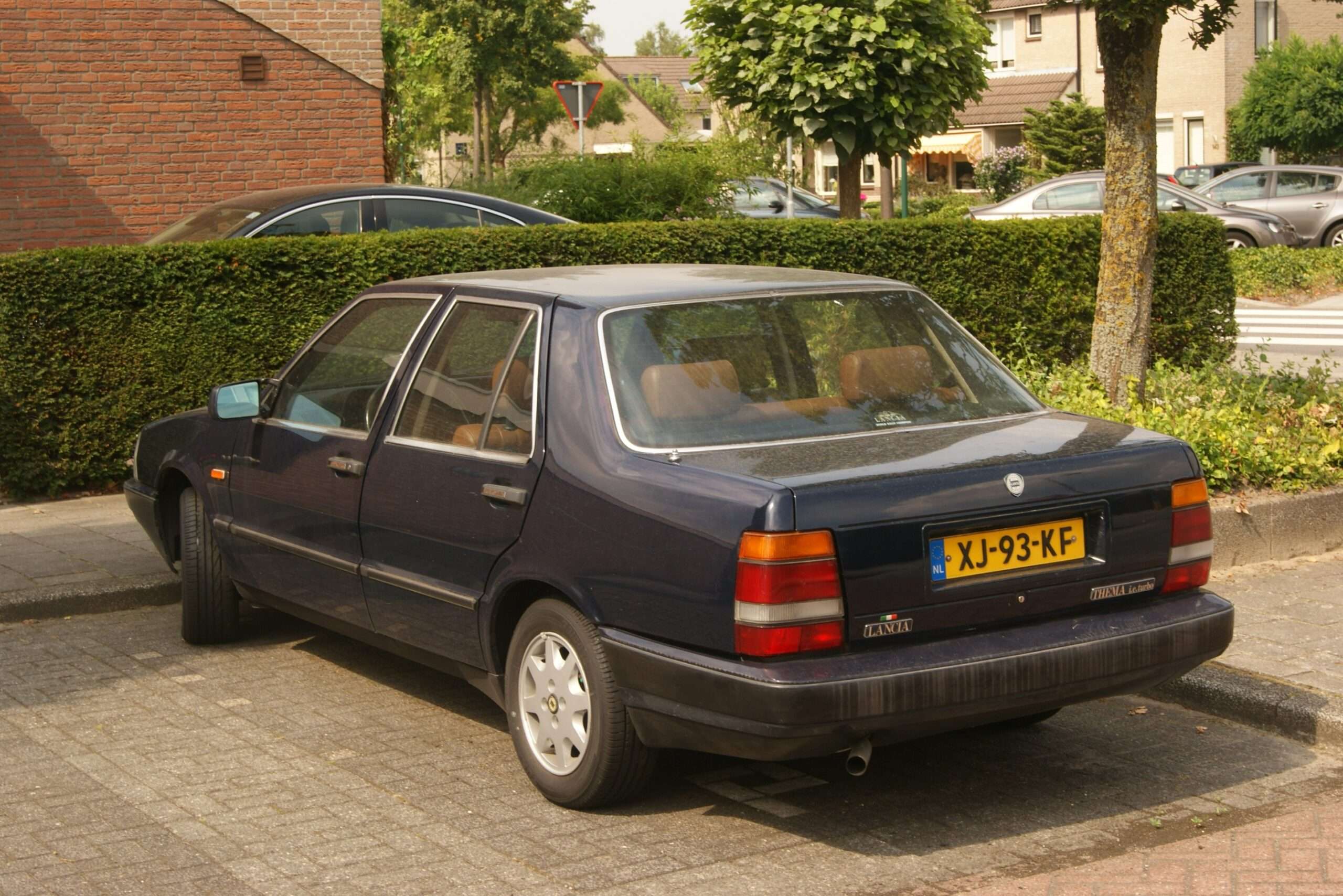
The Lancia Thema Turbo 16V is an understated, fast Italian executive car from the period when Lancia still paired a handsome Pininfarina-style silhouette with serious turbocharged performance. A good one is rare and deeply appealing; a neglected one can hide corrosion, electrical faults and expensive model-specific parts problems.
What is the Lancia Thema Turbo?
Introduced in 1984, the Thema was Lancia’s large executive saloon and part of the Type Four family, sharing its platform architecture with the Fiat Croma, Saab 9000 and Alfa Romeo 164. The cars were not simply rebadges: each maker gave the shared project its own styling, engines, suspension settings and identity. The Thema brought Italian design and a particularly broad engine range to a class then dominated by German and Swedish saloons.
The turbocharged two-litre models are the ones enthusiasts seek out. Earlier cars used an eight-valve engine; later versions brought a 16-valve turbo engine closely related in concept to the period Lancia/Fiat twin-cam family. The result was a discreet, front-wheel-drive four-door that could cover ground far more quickly than its conservative shape suggests.
Thema Turbo 16V specifications at a glance
| Feature | Guide |
|---|---|
| Generation | First-generation Lancia Thema (Type Four platform) |
| Relevant Turbo 16V period | Late 1980s to mid-1990s, depending on market |
| Engine | 1,995cc turbocharged four-cylinder, 16 valves |
Lancia Thema Turbo photo gallery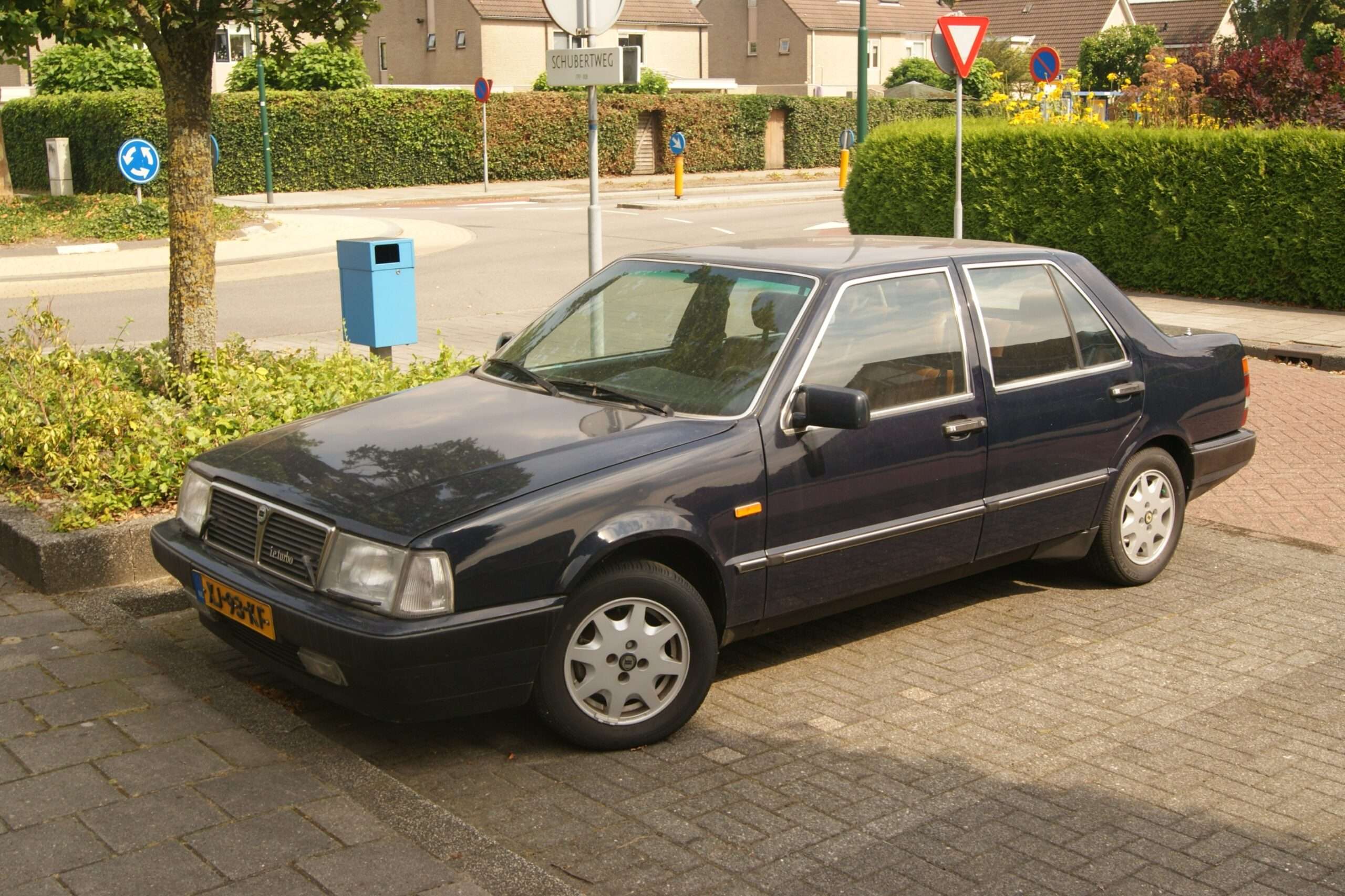 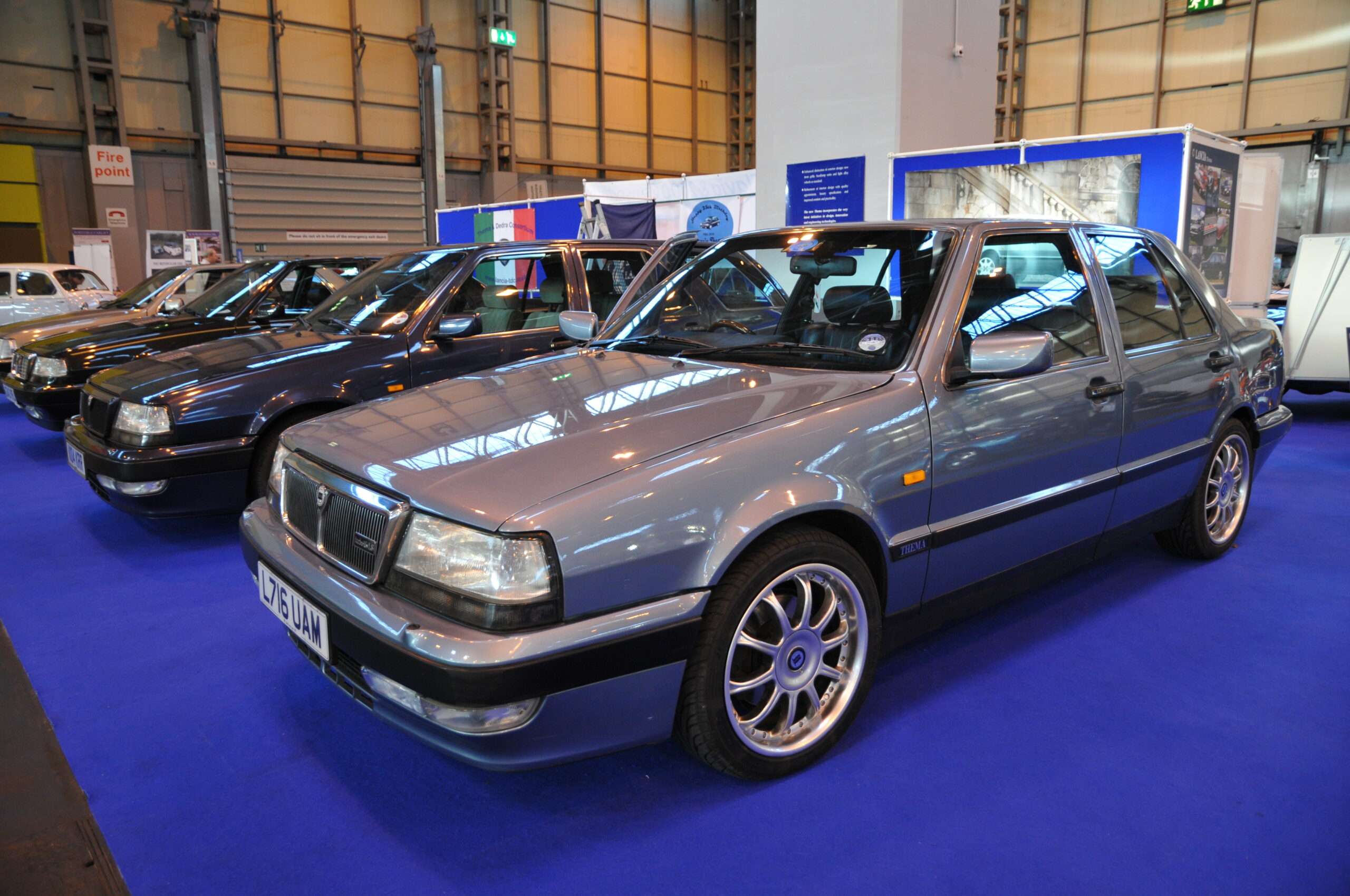 | Usually around 185PS for the Turbo 16V; some later-market specifications are quoted differently |
| Layout | Front engine, front-wheel drive |
| Body styles | Saloon; estate availability and engines vary by market |
Numbers in adverts often mix 8V, 16V, Turbo, LX, LS and later revisions. Verify the exact engine code, registration year and country specification against the car itself rather than assuming every ‘Thema Turbo’ has the same output or equipment.
Why the Thema Turbo matters
A proper long-distance car
Its appeal is not simply peak power. The Thema was designed around comfort, space and high-speed touring, so the Turbo 16V combines a relaxed cabin with strong mid-range performance. It is an unusual alternative to a contemporary Saab 9000 Turbo or BMW 5 Series.
Discreet Italian character
The boxy, clean-lined shape is easy to overlook beside a Delta Integrale or Thema 8.32, but that is part of the charm. A well-kept Turbo has an almost stealthy quality: a practical saloon with period turbo response and a very individual badge.
Which Thema Turbo are you looking at?
Be precise. A listing title can be misleading, especially where old adverts, imported cars and engine swaps are involved. The eight-valve turbo, the naturally aspirated 16V and the Turbo 16V are different propositions. Check the V5C, chassis number, engine details, factory literature and the car’s physical specification. If the seller calls the car a ‘Turbo 3’ or uses an unfamiliar trim name, ask for documentation before treating it as a special factory edition.
Lancia Thema Turbo 16V buying checklist
1. Body condition comes first
Look beyond fresh paint. Inspect sills, jacking points, floorpan edges, wheel arches, suspension mounting areas, front valance, boot floor, door bottoms and the lower windscreen area. Water ingress can also damage trim, wiring and the cabin floor. A clean-looking car with no restoration photographs or invoices deserves a thorough inspection.
2. Check the cooling and turbo system cold
Ask to see the car from cold. Look for coolant staining, poor hose routing, smoke, oil leaks, overheating history and evidence of neglected servicing. The turbocharger, oil supply, intercooler plumbing where fitted and engine-management sensors need to be coherent and properly installed. A smooth warm engine is reassuring, but it does not replace a documented record of maintenance.
3. Test the gearbox, clutch and steering
On the road, the car should select gears cleanly, pull evenly and stop straight. Watch for clutch slip under boost, crunchy synchromesh, wheel wobble, heavy steering, driveshaft vibration or a car that pulls sharply under acceleration. A big front-wheel-drive turbo saloon can have some period character, but it should not feel loose or unpredictable.
4. Take electrics seriously
Test every switch, window, central-locking function, blower setting, warning light, instrument and air-conditioning control. Italian executive cars of this age can suffer from tired connections, water ingress and previous-owner repairs. A few small faults are normal on a survivor; a whole list of non-working systems suggests the car has been deferred rather than maintained.
5. Protect the interior and source parts before you need them
Thema-specific trim, lights, switches, badges and interior fabrics can be harder to find than routine mechanical service parts. Look closely at dash condition, seat wear, headlining and the completeness of the switchgear. A complete, honest interior is often more valuable than a cheaply retrimmed car with missing details.
Ownership advice
A Thema Turbo is best enjoyed as a carefully maintained classic rather than a cheap daily driver. Use a specialist who understands period Italian turbo systems, keep an organised history file and deal with minor cooling, corrosion or electrical issues before they become major jobs. The right car offers a rare combination of comfort, character and usable performance—without looking like every other 1980s or 1990s executive saloon.
Frequently asked questions
How powerful is a Lancia Thema Turbo 16V?
Most references quote approximately 185PS for the late Turbo 16V, but regional and model-year variations exist. Establish the specific car’s exact engine before relying on an advert figure.
Is the Thema Turbo a good first classic?
Only if it is a sound, well-documented example and you can access an appropriate specialist. It is more complex than a basic classic saloon, and model-specific trim can take patience to source.
What is the biggest risk when buying one?
Buying on looks alone. Structural corrosion, cooling-system neglect and incomplete electrical repairs can be far more expensive than a modest cosmetic defect.
Image credit
1989 Lancia Thema i.e. Turbo photograph: Niels de Wit, CC BY 2.0, via Wikimedia Commons.

.jpg)