UNUSUAL CARS MODEL GUIDE
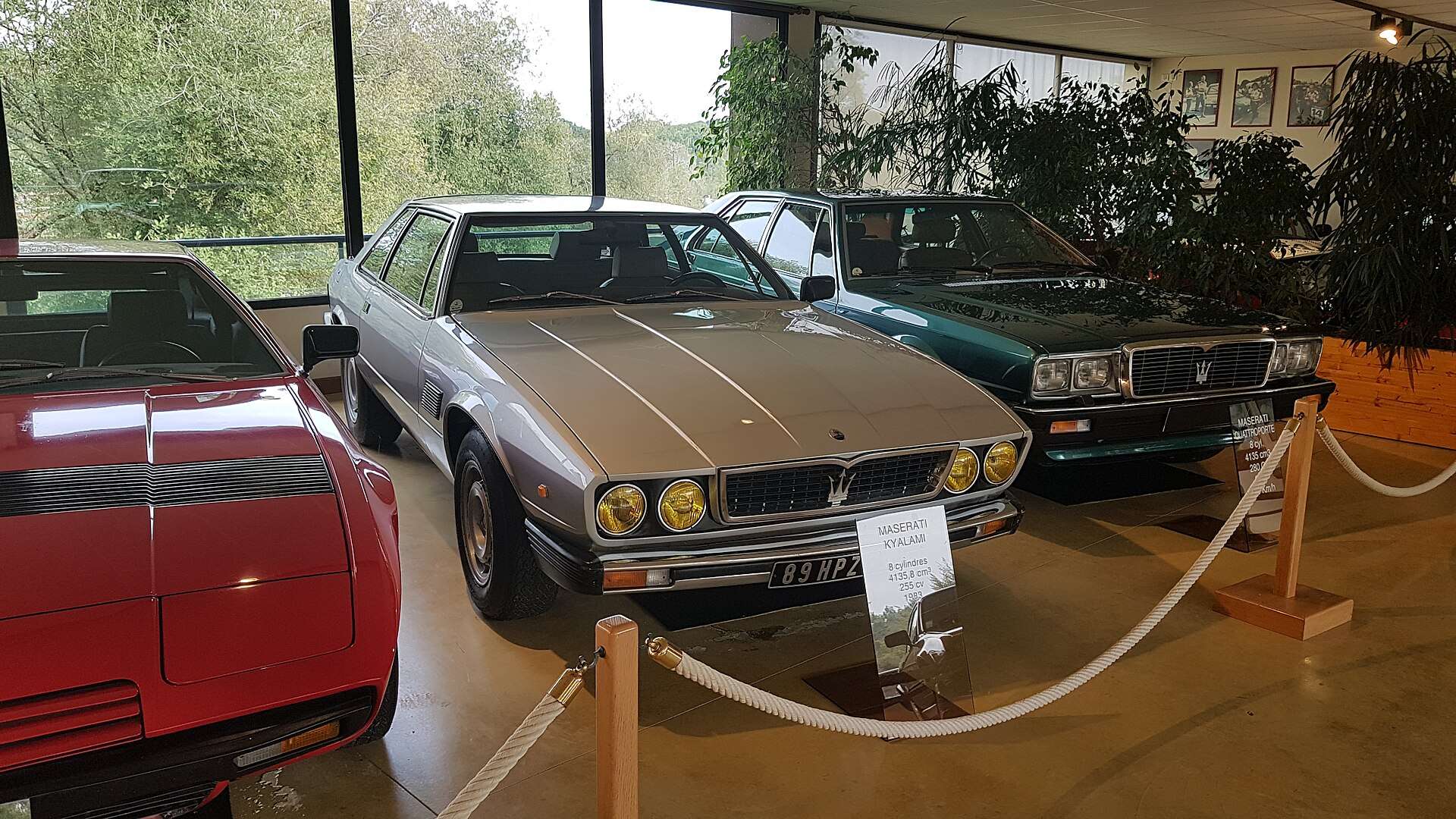
The Maserati Kyalami was a four-seat V8 coupé built from 1976 to 1983. It was the first new model of the Alejandro de Tomaso era and the last Maserati coupé to use the company’s traditional quad-cam V8, combining a De Tomaso Longchamp-derived platform with Pietro Frua’s extensive restyling.
Quick answer: the Kyalami is rarer than its restrained shape suggests. Buy for condition, provenance and completeness: corrosion, cooling, carburettor tuning, steering and suspension wear, scarce trim and the quality of earlier repairs can all outweigh the difference between the 4.2 and 4.9-litre engines.
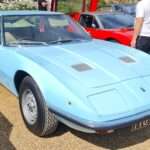
Featured image: blue Maserati Kyalami. Photograph by Lucas P, CC BY-SA 3.0, via Wikimedia Commons; locally hosted.
De Tomaso foundations, Maserati identity
After Alejandro de Tomaso took control of Maserati, the company needed a new grand tourer quickly. The De Tomaso Longchamp supplied the steel platform and basic hard points, but Frua revised the front and rear, glasshouse details and interior presentation. Most importantly, Maserati replaced the Longchamp’s Ford V8 with its own all-alloy four-cam engine.
The result was quieter and less theatrical than the Khamsin it effectively followed, but it offered four proper seats, strong performance and traditional Maserati mechanical character. Its name came from the South African circuit where a Maserati-powered Cooper won the 1967 South African Grand Prix.

4.2 and 4.9 specifications
| Version | Engine | Factory output | Factory count |
|---|---|---|---|
| Kyalami 4.2 | 4,136cc V8 | 265hp | 125 |
| Kyalami 4.9 | 4,930cc V8 | 280hp | 75 |
Maserati’s specification tables list 200 cars by version, while its narrative describes total production as about 210. The honest summary is therefore “about 200”. Both versions were quoted at 240km/h. A ZF five-speed manual and Borg-Warner three-speed automatic were available.
Love cars you don’t see every day?
Get forgotten cars, surprising motoring stories and the most interesting finds from Unusual Cars by email.
Free to join. No spam. Unsubscribe whenever you like. See our privacy policy.
Body and structural inspection
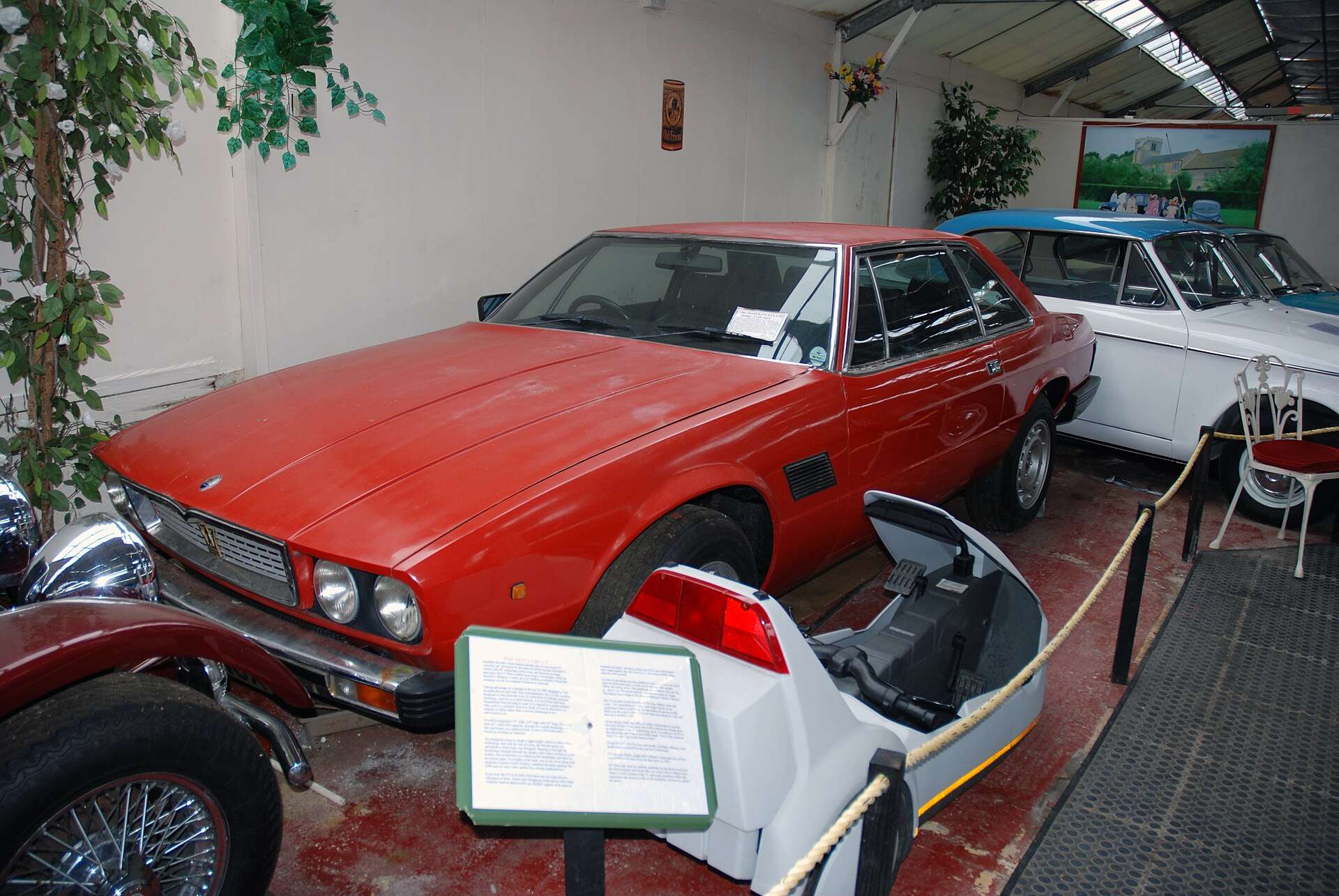
The steel platform demands a full underside and cavity inspection. Concentrate on sills, floors, jacking points, front and rear suspension mounts, wheelarches, bulkhead, screen surrounds, boot floor and the seams between repaired panels. Check door alignment and the structure around the heavy doors.
Low production makes lamps, bumpers, grilles, glass and cabin trim difficult to source. A complete but tired car can be a better restoration basis than a cosmetically bright example missing unique pieces. Ask for photographs and measurements from any substantial body restoration.
V8, cooling and fuel system
Start the engine cold and confirm quick oil pressure, clean exhaust, stable idle and an even response from the four Weber carburettors. Inspect timing chains, ignition, pumps, tanks, fuel lines and every part of the cooling system. Overheating, low hot oil pressure or heavy smoke can signal a major rebuild.
Long periods of storage encourage stale fuel, hardened seals and cooling corrosion. A specialist should run compression and leak-down tests where history is unclear and examine service invoices for more than repeated cosmetic work.

Transmission, suspension and brakes
The five-speed manual should warm into clean shifts without jumping out of gear; the automatic should select promptly and change without excessive flare. Check clutch, propeller shaft, differential and mounts for noise or vibration.
The Kyalami uses independent front suspension and a De Dion rear arrangement. Worn bushes, ball joints, steering joints and dampers can produce imprecision that should not be excused as age. Test the power steering for leaks and consistent assistance, and inspect the four-wheel disc brakes, tyres and wheels as a complete system.
Cabin, right-hand drive and ownership
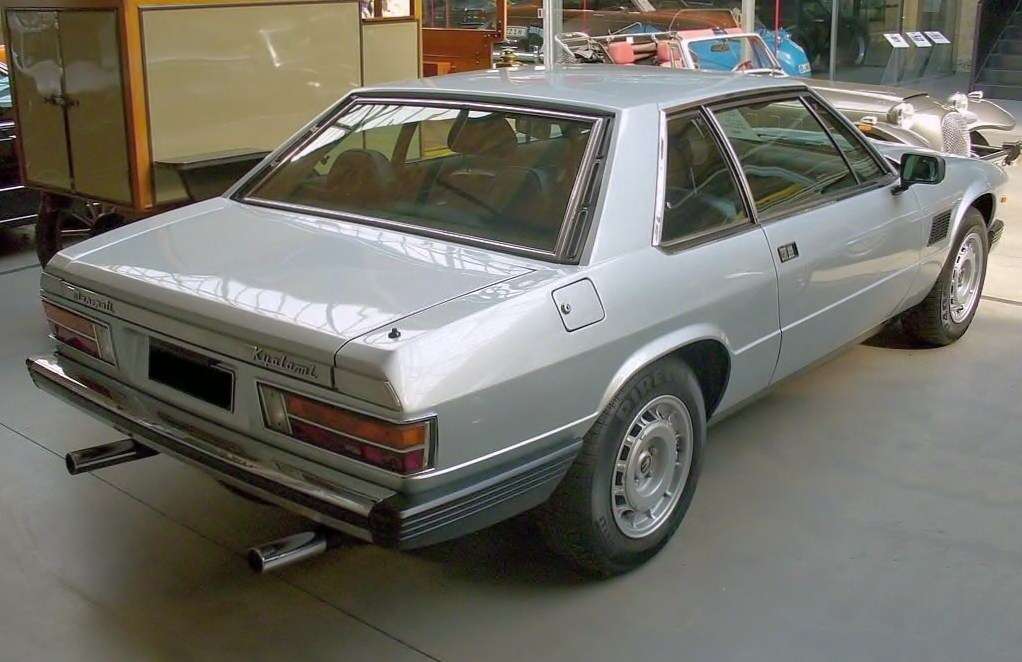
Check leather, veneers, instruments, switches, electric windows, ventilation and air conditioning. Trim shared with the Longchamp is not always identical, and improvised replacements can be hard to reverse. Electrical grounds and aged connectors deserve particular attention.
Right-hand-drive cars were supplied in Britain, but numbers were small. Confirm the original specification and any conversion through chassis records. The best Kyalami is a documented, regularly exercised and complete car supported by a marque specialist; rarity makes neglected examples unusually expensive to correct.
Sources and further reading
- Maserati Classiche: Kyalami
- Classic & Sports Car: Kyalami and Longchamp compared
- Honest John Classics: Maserati Kyalami overview
- Supercar Nostalgia: Kyalami historical and technical guide
Continue the Maserati story
Explore the complete Maserati hub. Continue with the Maserati Ghibli II and Maserati Quattroporte V.
Frequently asked questions
What is the Maserati Kyalami based on?
It uses the De Tomaso Longchamp’s steel platform and basic hard points, but Pietro Frua restyled it and Maserati installed its own quad-cam V8.
How many Maserati Kyalamis were built?
Maserati’s tables list 125 4.2-litre cars and 75 4.9-litre cars, while its narrative says about 210; describing production as about 200 acknowledges the discrepancy.
Which engines did the Kyalami use?
It used Maserati’s 4,136cc or 4,930cc four-cam V8, rated at 265hp and 280hp respectively.
Was the Maserati Kyalami sold in the UK?
Yes. Right-hand-drive examples reached Britain, although total production and UK availability were both very limited.
What should be checked before buying one?
Inspect the steel structure, V8 and cooling system, carburettors, gearbox, steering, De Dion rear suspension, brakes, electrics, rare trim and documented identity.