UNUSUAL CARS MODEL GUIDE
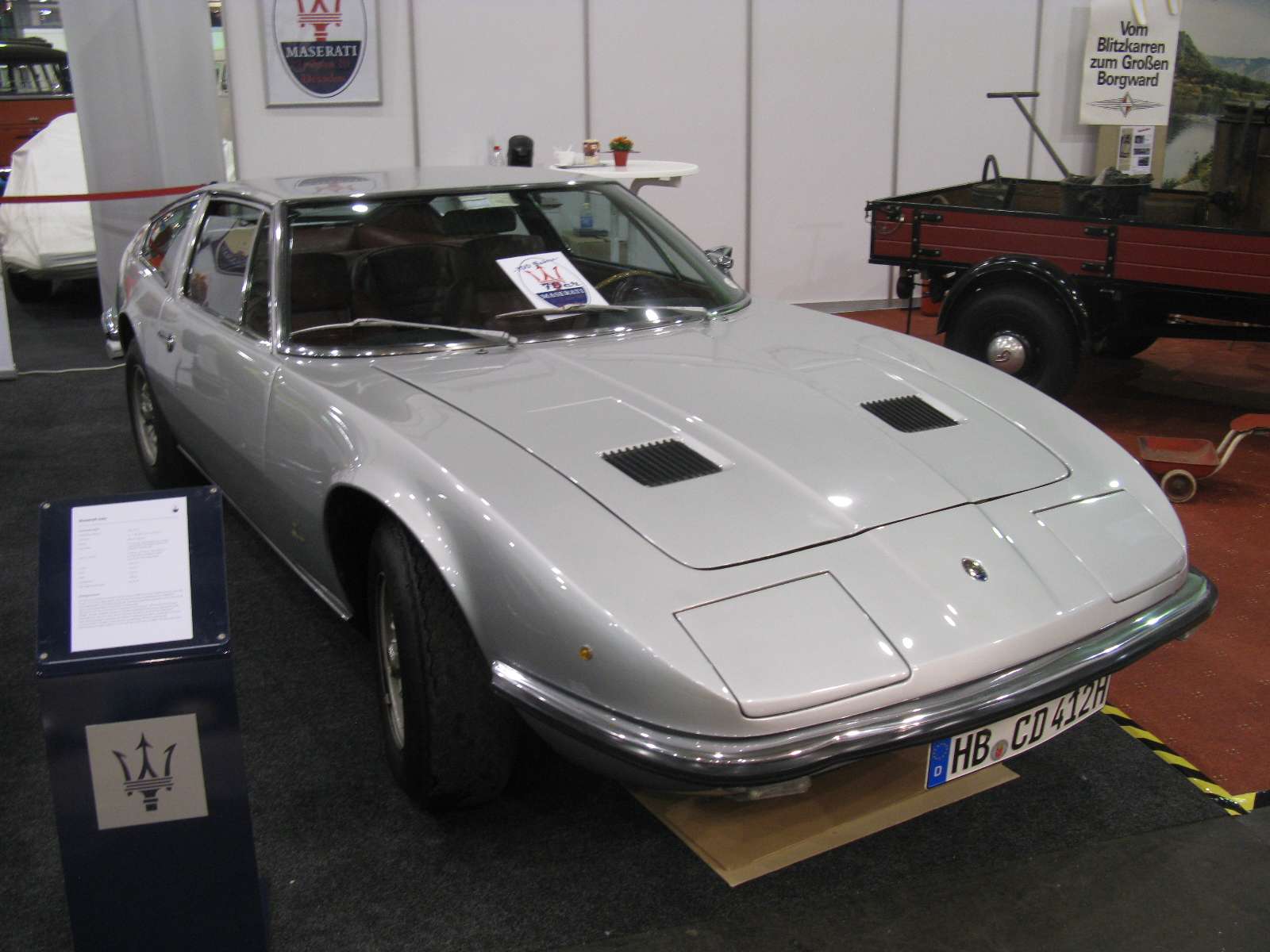
The Maserati Indy was a Vignale-bodied four-seat grand tourer produced from 1969 to 1975. It combined genuine rear accommodation and hatchback practicality with Maserati’s quad-cam V8, a five-speed ZF gearbox and performance approaching the more overtly sporting Ghibli.
Quick answer: the Indy is one of the most usable classic Maseratis, but restoration quality is decisive. Inspect its unitary steel structure for corrosion, confirm the 4.2, 4.7 or 4.9-litre identity, test the engine and cooling system thoroughly, and understand whether the brakes are conventional or the later Citroën high-pressure type.
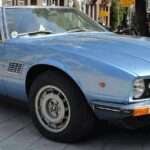
Featured image: light-blue 1970 Maserati Indy. Photograph by MrWalkr, CC BY-SA 4.0, via Wikimedia Commons; locally hosted.
From the Vignale prototype to production
Vignale displayed the original four-seat proposal at the 1968 Turin Motor Show, and Maserati launched the production Indy at Geneva in 1969. The name commemorated Maserati’s victories in the Indianapolis 500 in 1939 and 1940.
The fastback body offered more than style. Its large rear hatch opened onto a useful luggage area, and the higher roof allowed adults to use the rear seats more convincingly than in many contemporary 2+2s. Leather upholstery, electric windows, reclining front seats and a heated rear window reinforced its role as a long-distance GT.

4.2, 4.7 and 4.9-litre versions
| Version | Engine | Factory output | Production |
|---|---|---|---|
| Indy 4200 | 4,136cc V8 | 260hp | 436 |
| Indy 4700 | 4,719cc V8 | 290hp | 367 |
| Indy 4900 | 4,930cc V8 | 300hp | 299 |
Maserati’s current total is 1,102 cars. The 4.7 joined the range in 1970 and the 4.9 arrived in 1971, becoming the sole engine from 1973. A ZF five-speed manual was standard and a three-speed Borg-Warner automatic optional. Power steering was also available.

Love cars you don’t see every day?
Get forgotten cars, surprising motoring stories and the most interesting finds from Unusual Cars by email.
Free to join. No spam. Unsubscribe whenever you like. See our privacy policy.
Body structure and corrosion
The Indy was Maserati’s first production car with a unitary body structure, reinforced by a front subframe. Examine sills, floors, jacking points, front suspension mounts, subframe attachment areas, rear wheelarches, hatch and windscreen surrounds, door bottoms and the luggage floor. Cosmetic paint can hide expensive structural work.
Check door and hatch alignment, glass fit and the condition of bumpers, lights and Vignale-specific trim. Restoration photographs, measurements and invoices are more persuasive than fresh paint. Accident damage around the long nose and pop-up headlamps can be particularly difficult to correct.

Engine, cooling and transmission
The all-alloy quad-cam V8 should start cleanly from cold, build oil pressure promptly and hold temperature in traffic. Check compression, timing-chain noise, carburettor balance, ignition, fuel delivery and signs of coolant or oil leakage. Cars that have stood unused may need more than a routine service.
The ZF manual should select without baulking once warm, while the optional automatic should engage promptly and shift cleanly. Listen for differential and wheel-bearing noise, and inspect propeller-shaft joints, engine mounts and exhaust clearances.
Brakes, suspension and 1973 changes
The Indy uses independent front suspension and a live rear axle on leaf springs. Worn bushes, dampers, ball joints and steering components can make it wander; a properly sorted car should feel stable and progressive rather than vague.
From 1973 the Indy adopted Citroën high-pressure braking and standard air conditioning. Identify which braking system is fitted and have it checked by someone familiar with that exact arrangement. On every car, inspect discs, calipers, hoses, wheel bearings, tyres and the operation of the pop-up lamps.

Cabin, identity and choosing an Indy
Dashboard coverings, instruments, switches, seats and hatch trim are difficult to replace correctly. Test every electrical function and air-conditioning component. Verify chassis and engine numbers against factory records, particularly where a car has been restored, converted between left- and right-hand drive or fitted with a different engine.
The 4.2 is the original specification, the 4.7 balances performance and early-car character, and the 4.9 offers the strongest factory output. Condition, completeness and documented specialist care matter more than capacity alone.

Sources and further reading
- Maserati: Indy 50th anniversary and factory specifications
- Stellantis Media: first customer Indy delivery
- Hagerty UK: Maserati Indy history and owner perspective
- Bonhams: Maserati Indy model history
Continue the Maserati story
Explore the complete Maserati hub. Continue with the Maserati 3500 GT and GTI and Maserati Biturbo and Spyder.
Frequently asked questions
Why is it called the Maserati Indy?
The name commemorates Maserati’s victories in the Indianapolis 500 in 1939 and 1940.
How many Maserati Indys were built?
Maserati records 1,102 cars between 1969 and 1975: 436 with the 4.2-litre V8, 367 with the 4.7 and 299 with the 4.9.
Is the Maserati Indy a four-seater?
Yes. It was designed as a practical four-seat grand tourer and provides more usable rear space and luggage access than many contemporary 2+2s.
Which engine is best?
The 4.9 has the highest factory output, but a complete, correctly restored and well-maintained 4.2 or 4.7 can be the better car.
What should be inspected before buying an Indy?
Inspect the unitary structure, front subframe, V8 and cooling system, gearbox, differential, suspension, braking system, electrics, trim, identity and restoration history.