UNUSUAL CARS MODEL GUIDE
The Maserati MC12 Stradale was a 630hp, V12 road car built in 2004 and 2005 to support Maserati’s return to international GT racing. Only 50 road cars were produced—25 in each year—and their Ferrari Enzo-derived architecture was transformed by a much longer Maserati body, revised aerodynamics and racing purpose.
Quick answer: the MC12 is best understood as the road-going homologation counterpart to the successful MC12 GT1, not as a rebodied Enzo. It shares core architecture and its 5,998cc V12 with Ferrari’s flagship, but its dimensions, body, aerodynamic priorities, tuning and competition story are distinctly Maserati.
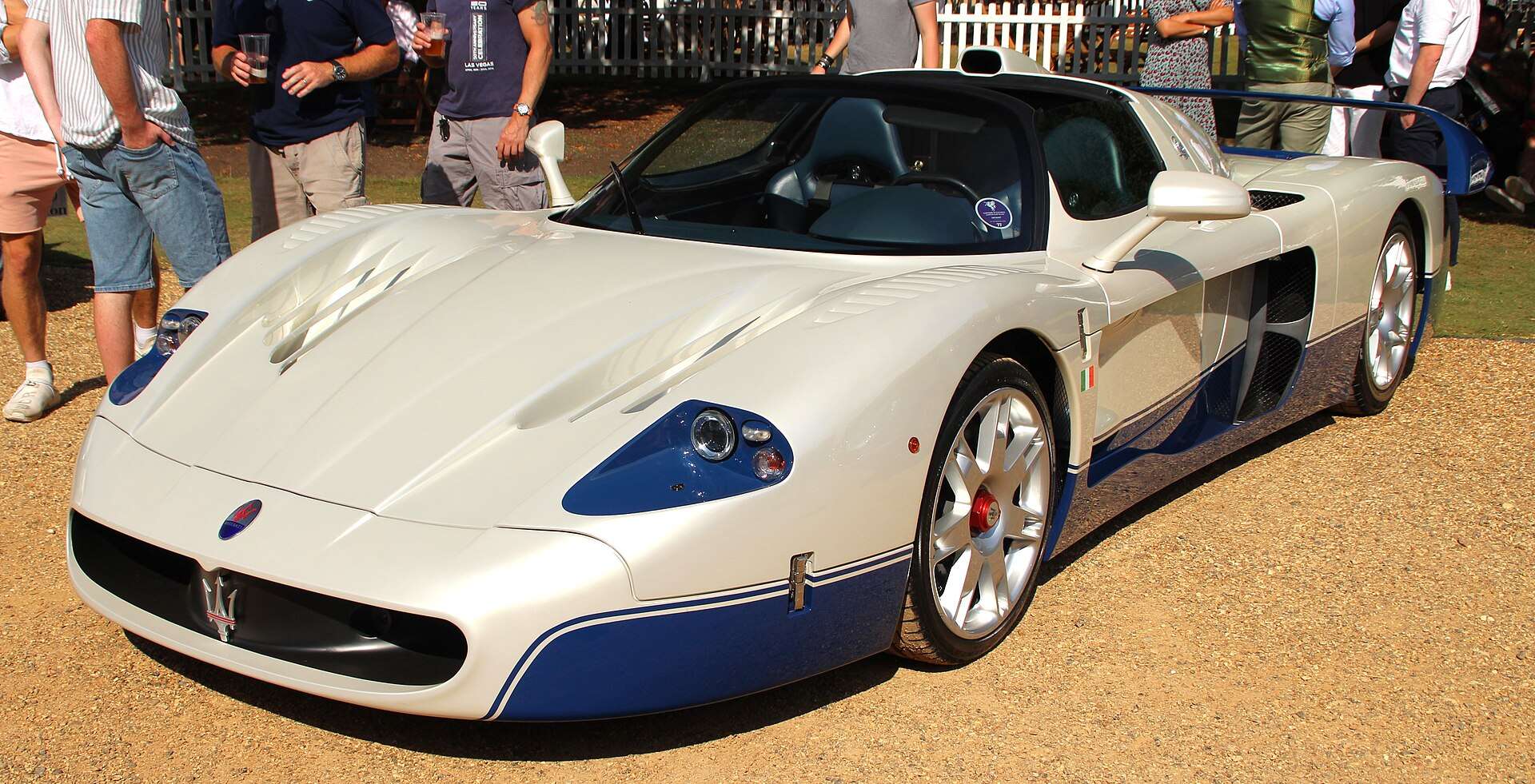
Featured image: white-and-blue 2004 Maserati MC12 Stradale. Photograph by MrWalkr, CC BY-SA 4.0, via Wikimedia Commons; locally hosted.
Why Maserati built the MC12
Maserati had been absent from factory-backed international circuit racing for 37 years. The MC12 programme provided a route back through the FIA GT Championship. A limited run of road cars supplied the homologation basis while the GT1 version was developed to compete against established endurance-racing machinery.
The road car’s name is literal: MC stands for Maserati Corse and 12 identifies the cylinder count. Every Stradale wore pearl white with blue accents, a reference to the colours used by American entrant Briggs Cunningham and associated with Maserati’s earlier Birdcage racers.
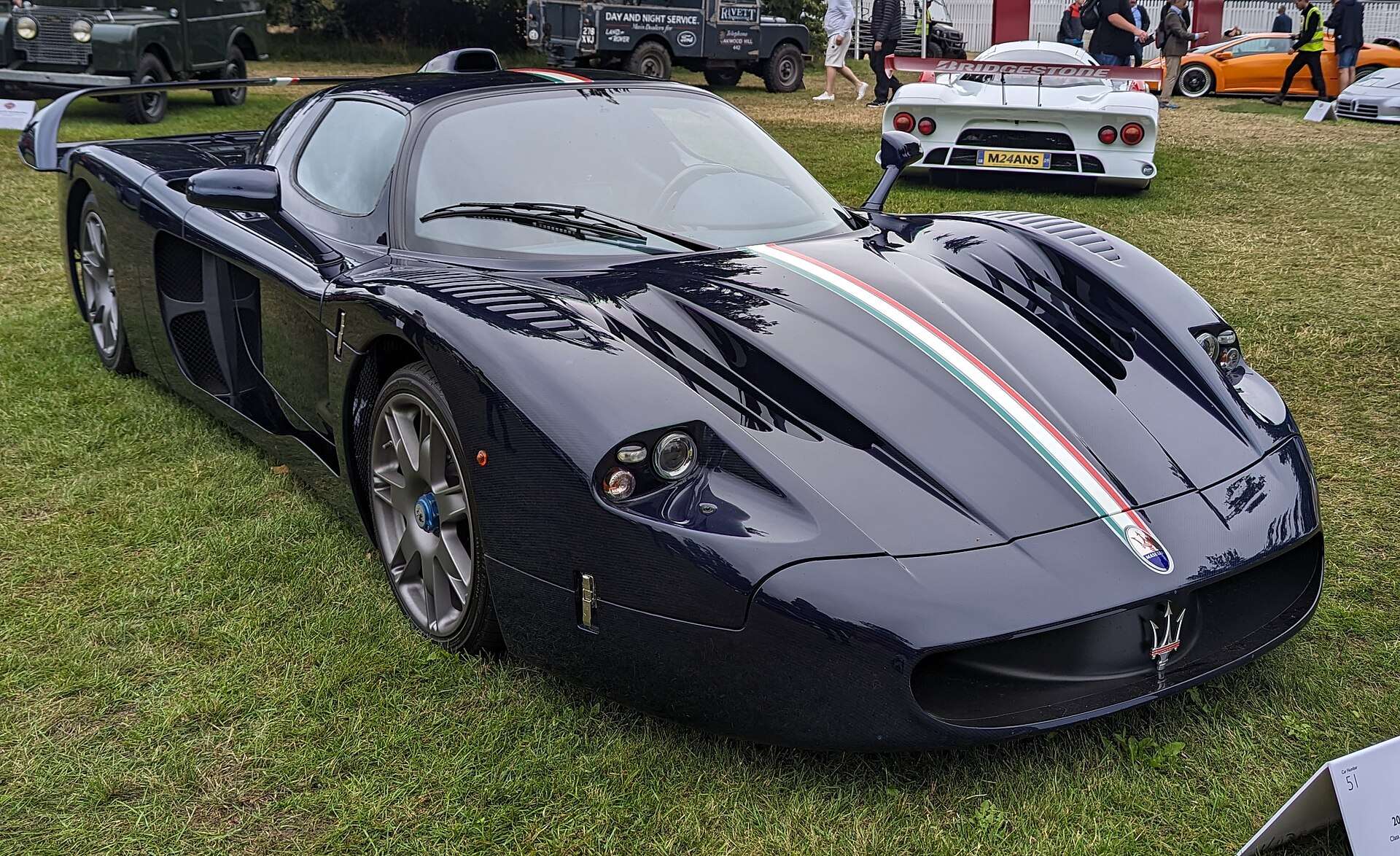
MC12 Stradale specifications
| Item | Factory figure |
|---|---|
| Production | 2004–2005; 50 road cars |
| Model code | M144 |
| Engine | 5,998cc 65-degree V12, dry sump |
| Power | 630hp at 7,500rpm |
| Transmission | Six-speed Cambiocorsa automated manual |
| Chassis | Carbon-fibre and Nomex honeycomb monocoque with aluminium subframes |
| Kerb weight | 1,335kg |
| Factory top speed | 330km/h |
The engine sits longitudinally behind the cabin and drives through a rear transaxle. Pushrod-operated suspension, carbon-ceramic brakes and a removable roof panel underline how far the MC12 sits from a conventional road-going Maserati GT.

Love cars you don’t see every day?
Get forgotten cars, surprising motoring stories and the most interesting finds from Unusual Cars by email.
Free to join. No spam. Unsubscribe whenever you like. See our privacy policy.
How it differs from the Ferrari Enzo
The shared starting point matters, but so do the differences. Maserati lengthened the wheelbase and created an entirely new carbon body with a long nose, extended tail, roof intake and fixed rear wing. The wind-tunnel-led form was intended to generate stability and downforce for the racing derivative.
The MC12 is longer and wider than the Enzo, with reduced rear visibility and a more compliant road-car suspension tune. Its V12 makes less peak power than the Enzo’s, but the car’s identity comes from the way Maserati repurposed the architecture for GT competition rather than from a road-car specification contest.

The GT1 racing programme
The MC12 GT1 first appeared in 2004 and became one of the defining cars of its category. Maserati records 22 race victories and 14 championship titles between 2004 and 2010, including Constructors’, Drivers’ and Teams’ honours and three victories in the Spa 24 Hours.
Its success was not administratively simple. The body’s width and length generated eligibility debate, and the car initially competed without scoring manufacturer points in some events. Once accepted, however, the MC12 proved durable and aerodynamically effective over long distances.
Versione Corse
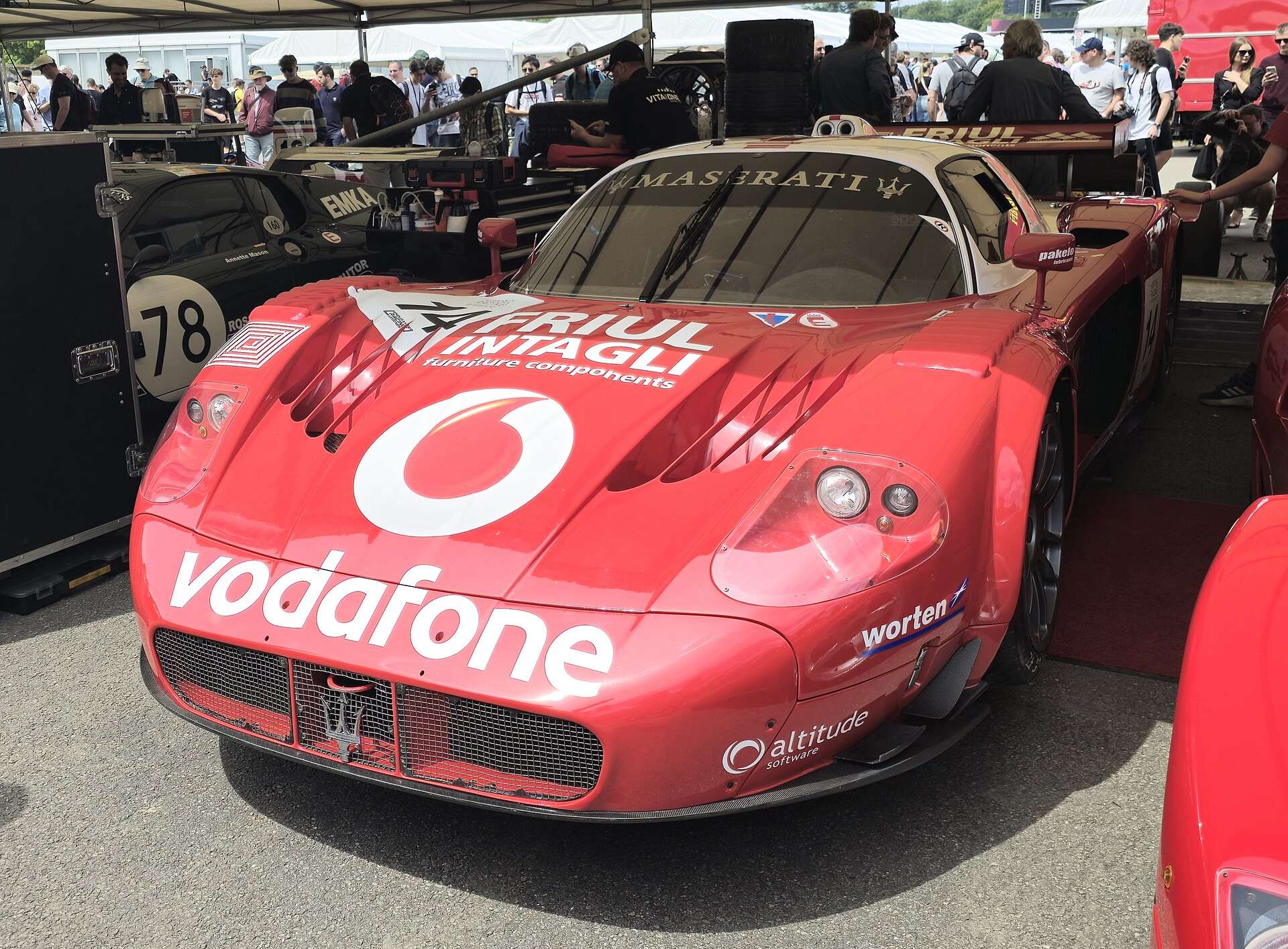
Maserati revealed the MC12 Versione Corse in 2006 as a track-only customer car. It was related more closely to the racer than the Stradale, without road homologation and with a higher-output V12. Only 12 customer examples were offered, adding another distinct branch to the MC12 story.
A Versione Corse should never be described as one of the 50 Stradales. Likewise, competition chassis, development cars and later road conversions require exact documentation rather than loose production claims.

Authentication and preservation
An MC12 transaction belongs at the highest level of specialist due diligence. Maserati Classiche documentation, chassis identity, build records, ownership chain, accident history and originality must all be checked. The car’s carbon structure, body panels, centre-lock hardware, brakes, suspension and model-specific trim demand factory-level knowledge.
Mechanical inspection should include the dry-sump V12, automated transmission and clutch, fuel cells and lines where applicable, cooling, hydraulics, electronic systems and tyre age. Long-term static display is not evidence of health: recommissioning must be planned around fluids, seals, tanks and safety-critical components.

Sources and further reading
- Maserati Classiche: MC12 Stradale
- Maserati: MC12 production and racing record
- MotorTrend: period MC12 road test and technical comparison
- evo: MC12 Versione Corse review
Continue the Maserati story
Explore the complete Maserati hub. Continue with the Maserati Shamal and Maserati 3200 GT.
Frequently asked questions
How many Maserati MC12 road cars were built?
Maserati built 50 MC12 Stradales: 25 in 2004 and 25 in 2005.
Is the Maserati MC12 based on the Ferrari Enzo?
Yes. It uses Enzo-derived carbon structure, V12 and transmission architecture, but Maserati substantially changed the body, dimensions, aerodynamics, tuning and purpose.
Why was the MC12 created?
The Stradale provided the road-going homologation basis for Maserati’s return to international GT racing with the MC12 GT1.
What engine does the MC12 use?
It uses a 5,998cc, 65-degree, dry-sump V12 producing a factory-rated 630hp at 7,500rpm.
Is the MC12 Versione Corse road legal?
The Versione Corse was sold as a track-only customer car and is separate from the 50 road-going Stradales.