UNUSUAL CARS MODEL GUIDE
The Maserati Merak was a mid-engined 2+2 produced from 1972 to 1983. It adapted the Bora’s Giugiaro shape around the compact Maserati V6 developed for the Citroën SM, creating a lighter and more practical rival to the Ferrari Dino 308 GT4 and Lamborghini Urraco.
Quick answer: the Merak is not merely a smaller Bora. Early, SS and 2000 GT versions differ materially, while hidden corrosion and neglected engines can make restoration uneconomic. Inspect the front suspension structure, fuel-tank enclosures, V6, hydraulics and model identity.
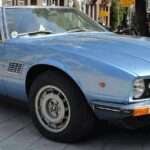
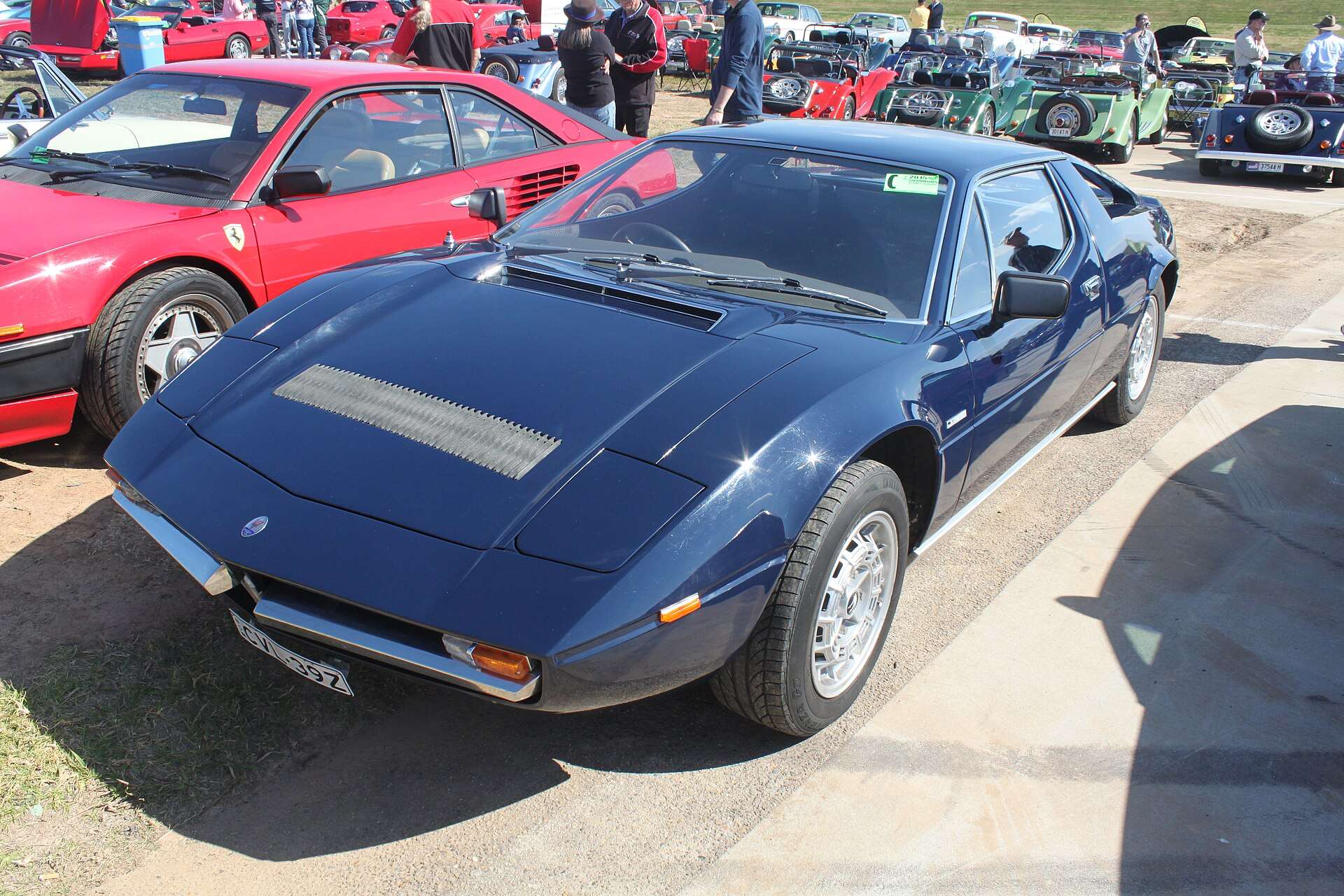
Featured image: blue Maserati Merak SS. Photograph by Jeremy from Sydney, Australia, CC BY 2.0, via Wikimedia Commons; locally hosted.
From Bora to Merak
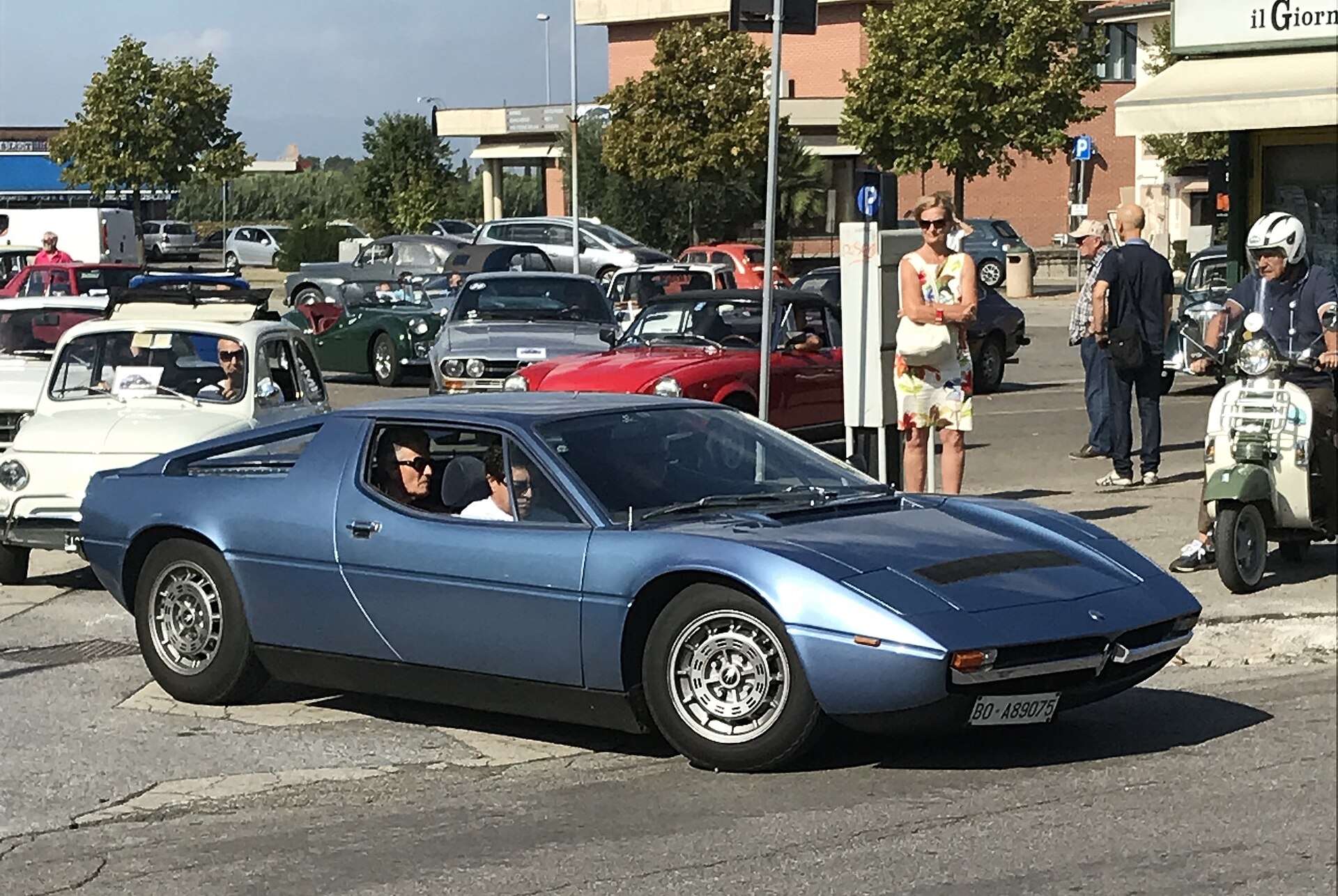
Giugiaro retained the Bora’s windscreen, doors and central proportions but replaced its full glass tail with an open rear deck and flying buttresses. The shorter V6 left enough space for two small rear seats, while a large front luggage compartment gave the Merak unusual everyday usefulness for a 1970s exotic.
The original Merak used many Citroën components, including hydraulic brakes and headlamp operation. After Alejandro de Tomaso took control of Maserati, later cars moved toward more conventional controls and cabin fittings.

Merak, SS and 2000 GT
| Version | Years | Engine | Power | Factory count |
|---|---|---|---|---|
| Merak | 1972–1975 | 2,965cc V6 | 190hp | 830 |
| Merak SS | 1976–1982 | 2,965cc V6 | 220hp | 787 |
| Merak 2000 GT | 1980–1982 | 1,999cc V6 | 159hp | 200 |
The SS combined more power with reduced weight and detail changes. The two-litre 2000 GT was created for Italy’s tax system and is identified by specific trim, including a dark body stripe. Maserati describes total production as about 1,830; its derivative figures add to 1,817, so totals should be presented with that qualification.

Love cars you don’t see every day?
Get forgotten cars, surprising motoring stories and the most interesting finds from Unusual Cars by email.
Free to join. No spam. Unsubscribe whenever you like. See our privacy policy.
Hidden corrosion is the decisive check
The most dangerous corrosion can be concealed. Lift the front-boot carpet and inspect the inner wings and front suspension mounting structure. At the rear, examine the enclosures around the fuel tanks, sills, floors, rear structure and suspension pick-ups. A tidy exterior does not prove structural health.
Only a specialist familiar with Meraks should assess major repairs. Ask for photographs of any restoration, check panel fit and ensure drainage and heat shielding have not been blocked or omitted.

V6, transmission and hydraulics
The four-cam 90-degree V6 can cover high mileage when maintained, but infrequent use brings risks. Classic & Sports Car highlights sodium-filled exhaust valves as a critical preventative concern because a failed valve can destroy the engine. Establish whether they have been replaced and by whom.
Check timing components, cooling, oil pressure, carburettor balance and hot starting. The Citroën-derived five-speed transaxle should select cleanly. On early cars, inspect hydraulic pressure, fluid and every component; later De Tomaso-era specifications must not be assumed without checking the actual car.
Cabin, originality and UK-market cars
Early cars can have the Citroën single-spoke steering wheel and SM-style instruments, while later cars use a more conventional Maserati dashboard. Confirm that trim matches the chassis period. Seats, glass, lamps, louvres and buttress panels are costly to source.
Right-hand-drive Meraks were supplied in Britain, particularly in SS form. Verify any conversion and match the chassis number to factory information. Complete history and recent use matter more than an optimistic mileage claim.

Sources and further reading
- Maserati Classiche: Merak
- Classic & Sports Car: Maserati Merak buyer’s guide
- Hagerty UK: significant Maseratis
Continue the Maserati story
Explore the complete Maserati hub. Continue with the Maserati Bora and Citroën SM.
Frequently asked questions
Is the Maserati Merak related to the Bora?
Yes. It shares major body architecture and styling themes, but uses a V6, revised rear structure and small rear seats.
What is the Merak SS?
The SS is the lighter, 220hp development introduced in 1976.
How many Meraks were built?
Maserati describes production as about 1,830; its current derivative figures list 830 standard cars, 787 SS models and 200 two-litre cars.
Where does a Maserati Merak rust?
Critical areas include the front suspension mountings and inner wings beneath the boot carpet, plus the structures surrounding the rear fuel tanks, sills and floors.
What engine precaution matters most?
Buyers should establish whether the original sodium-filled exhaust valves have been replaced and commission compression, cooling and oil-pressure checks.