Fiesta XR2 Mk2 buying verdict
Start with a straight, documented shell. The Mk2’s 1.6 CVH and five-speed gearbox make it an appealing old Ford to use, but the plastic kit and tidy paint can hide repairs that cost more than the mechanical service. A usable driver with clear repair evidence and correct parts deserves a closer look than a lower-mileage car whose sills and mounts cannot be assessed.
Decide whether you want a collector-standard original or a driver. The original specification and scarce trim matter more if you intend to show or preserve it. A reversible change with parts supplied is a different cost from a later engine, altered suspension and missing interior. Get a written list of changes, establish what is fitted and get insurance on that basis.
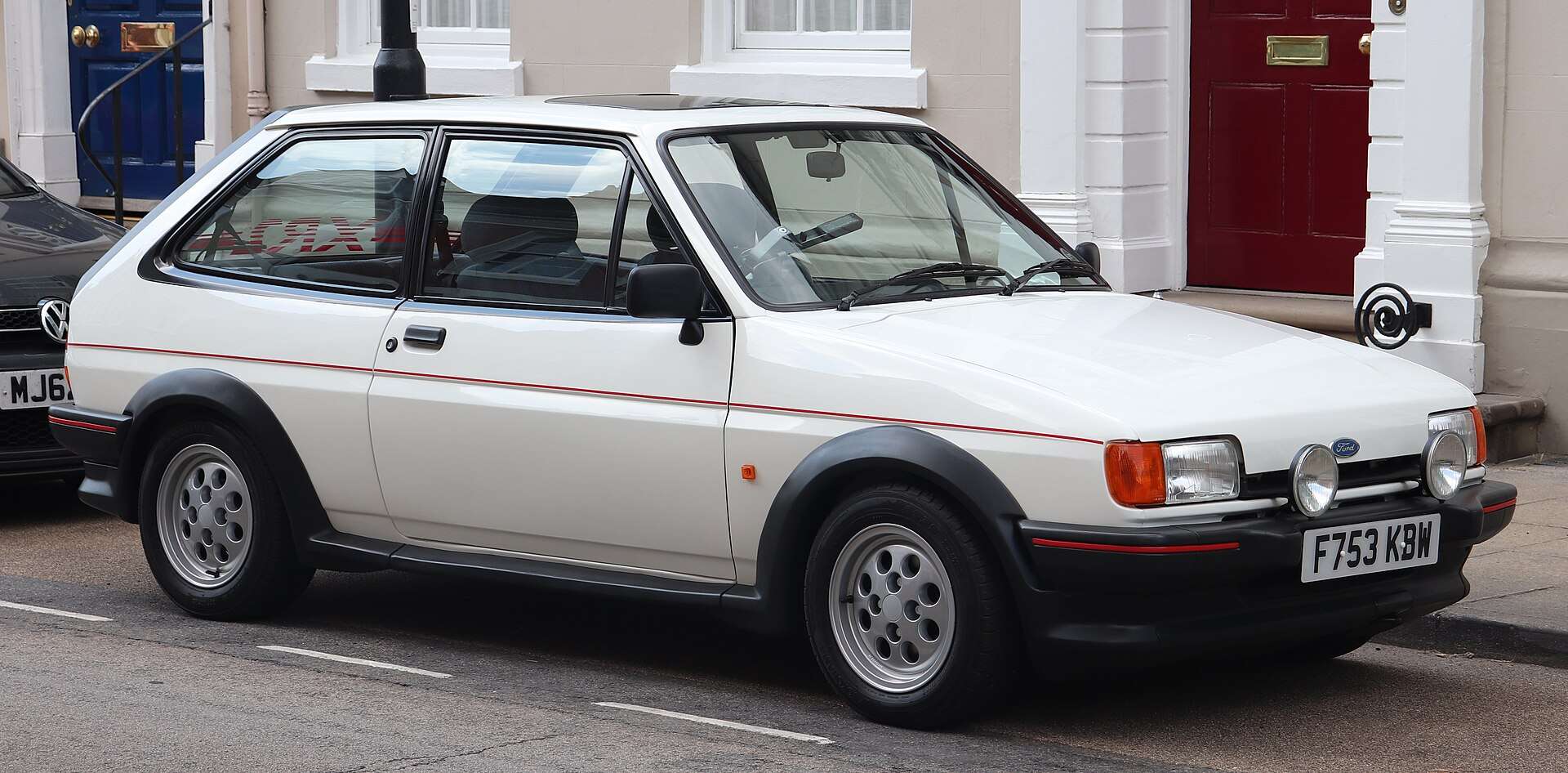
Featured photograph by Vauxford, Wikimedia Commons, CC BY-SA 4.0.
Identify a genuine Mk2 and the fitted CVH
Ask for the chassis and build details, stamped number photos, registration, early photographs and the timing records. Compare the engine details with invoices and check whether the engine or gearbox was replaced. A registration date can be a poor guide to the parts installed, particularly when the CVH components changed during production. Record whether the belt, tensioner and pump match an early or late arrangement.
Look for the correct body kit, bumpers, lamps, wheels and interior, then compare markings and fixings against period material. Original parts can have been repaired or replaced over the years. If an example is advertised as unusually original, ask what supports the claim, and make missing parts and incorrect fitment explicit in the valuation. Check that included wheels and trim are usable and that clips, brackets and fasteners can be sourced.

UK sale evidence and how to adjust an offer
Mathewsons reports £18,900 for a 1988 XR2 in August 2026. The catalogue describes 37,000 miles. Read the description and photographs and confirm how fees apply when comparing it with a different auction or an asking price. The result is for one example. Compare a rough or incomplete car with examples of similar specification and condition, and put a realistic cost on the work to get it to the standard you want.
Build a price file with the date, stated mileage and support, original equipment, known structural work and immediate service needs. Separate asks, confirmed sold results and projects. A higher asking price can make sense where a body specialist can verify earlier repairs and the car is complete. A large restoration invoice helps identify scope and workmanship. It does not tell you what you will recover on resale.
Shell inspection: get behind the kit
Inspect front inner wings, chassis legs, suspension tops and the front panel. Compare both sides for old welding, damaged seams and misalignment. Ask which work was undertaken and what photographs show the bare structure. If a seller describes work as cosmetic, ask the body shop which panels and mounts were involved. Outer paint and panel gaps alone cannot prove the condition of a covered seam.
Move along the sills and jacking areas. With permission inspect accessible floor and footwell edges and get the garage to look behind or around the kit without causing damage. Note access limits. An outer sill repair with good adjacent structure can be quoted, while corrosion extending into an inner sill or attachment needs a different scope. Ask who removes and refits the kit and whether old fasteners or plastic clips will need replacing.
Finish with the rear arch lips and inner arches, the boot and spare-wheel well, rear suspension mounts and brake pipes. Check for water around windows, the tailgate and sunroof where fitted. Compare photos of both sides and request a written estimate for access, welding, panels, corrosion protection and paint. If the car was painted shortly before sale, ask for records of its condition beforehand. A garage should be able to say what it cannot establish without removing trim.

Cold CVH start, carburettor and cooling
Ask the seller to demonstrate a genuine cold start. Note how the carburettor and choke behave and whether the idle settles progressively as it warms. Ask for the carburettor and ignition details, including any conversion or replacement. A flat spot, fuel smell or hot-start problem can have several causes. Ask the workshop to check fuelling, ignition, air leaks and related equipment for the symptom you observed.
Warm the car fully and observe temperature in normal use and after a stop. Ask how often coolant is topped up and whether any fan or radiator work was done. Check for fresh drips and repeat the hot start. If temperature or coolant is a concern, get a separate cooling diagnosis before agreeing that a pump or belt job will fix it. Do not try to reproduce an overheating fault on a long drive.
Check warm five-speed gear selection and clutch take-up. Record whether a noise follows gear, revs or road speed and whether it changes under power and overrun. Have the workshop inspect mounts, linkage, joints and wheel bearings before ordering a gearbox or clutch. Check straight braking and steering where safe. If brakes or suspension were changed, identify the actual components and request alignment and clearance checks.

Early and late CVH maintenance costs
Burton Power lists its early CVH timing kit at £84.95 and compatible early pump at £35.70. The late kit is £73.50 and the listed late pump £28.20. Compare the references with the fitted engine and parts. Ask whether the quote includes the belt, tensioner, pump, coolant and any hardware. If the last timing service was recorded without scope or mileage, get the next one quoted before purchase.
The fitted examples use Village Classic Cars’ published £90 hourly rate including VAT. Labour hours are illustrative allowances, with parts, consumables, availability and exact fitment to be confirmed by the workshop.
| Job | Parts basis | Worked fitted allowance |
|---|---|---|
| Early CVH timing kit and compatible pump | £120.65 | £390.65–£570.65 with 3–5 hours, plus any omitted fluids and hardware |
| Late CVH timing kit and compatible pump | £101.70 | £371.70–£551.70 with 3–5 hours, plus any omitted fluids and hardware |
| Initial carburettor, cooling or hot-start investigation | 1–2 hours at £90 | £90–£180 before repair parts |
Hidden costs and a worked offer
Suppose a cheaper Mk2 is £750 below a similar car with better records, needs the late timing job and has a repeatable hot-start problem. Using the upper timing figure and one hour of diagnosis leaves £108.30 before coolant and any repair. Get the actual estimate and confirm the cause before treating that gap as a saving. For a car with unclear sill repair scope, make the offer conditional on the lift inspection.
Budget for brake and tyre work after storage, correct alternator fitment and charge testing, corrosion near attachments, and broken trim clips. Ask the garage what it can source and what requires a donor or repair. If a project must be trailered, get a collection quote and confirm workshop access. At handover record the engine and fitted brake details and the spare parts included.
Mk2 XR2 viewing checklist
- Confirm the identity, early or late CVH parts and timing invoice.
- Get structural photographs including sill access and the rear arches and mounts.
- Start cold, warm it fully, check carburettor response and repeat the hot start.
- Get separate written costs for service, unresolved faults, metalwork and missing trim.
Mk2 XR2 sale comparison and bodywork quote
| UK example | Published figure | What a buyer can use it for |
|---|---|---|
| 1988 XR2, Mathewsons, August 2026 | £18,900 reported sold | Catalogue describes 37,000 miles. Use as a specific low-mileage example. |
| 1989 XR2, Mathewsons, October 2026 | £11,000 reported sold | A separate Mk2 result. Compare the car’s photos, records and condition before using the difference in an offer. |
Two cars, two lift reports
Imagine a tidy Mk2 with recent paint, a replacement arch and limited photos, and a less glossy car with an invoice for a repaired sill and clear pictures of the inner steel. Ask to see both on a lift. On the first, ask what the arch work included and whether the panel behind the kit can be inspected without damage. On the second, ask whether the scope reached the nearby jacking area or mounting, then check the adjacent steel and the protection applied. If the garage can establish scope on one and can only guess on the other, the two cars carry different risk even at the same price.
Get the body shop to write two lines for access and for repair. The access line should cover removal of trim and what it can assess after removal. The repair line should explain the steel affected, sourcing, welding, protection and paint blend, plus who reinstalls the body kit. Ask what happens if the repair goes past the visible area. If the kit is brittle, find out who carries the cost of broken fixings and which originals are still obtainable.
Check doors and rear hatch for smooth closing, water marks and the fit of seals. Compare paint edges and gaps on both sides before looking for a single fault. A seller who can show a dated alignment check and earlier photos makes it easier to judge whether an odd gap is cosmetic or part of a larger repair. Have the shop say what could require a jig or further measurement and how that changes the first quote.
CVH warm running and clutch quote in practice
A carburetted CVH that idles cleanly cold but smells of fuel after parking needs a report of what happens fully warm and on restart. Describe the ambient and engine conditions, whether the choke has returned and how long the car sat. Ask the workshop to inspect hoses and actual carburettor and ignition fitment and to check the cause before selling a replacement carburettor. If the current setup differs from the invoice, order and adjust to the installed combination.
Autodoc’s Mk2 XR2 LUD catalogue showed a KAWE 954101 clutch kit at £81.49 with an application cut-off of January 1986. Use that only after confirming gearbox, clutch dimensions and exact fitment. With 4–6 illustrative hours at £90, it gives £441.49–£621.49 before fluids or other parts. If a pedal issue is the reason for the estimate, ask the mechanic to confirm the release and cable arrangement and which pieces are included before authorising a clutch.
If the belt and cooling work are due on an early car and the clutch is slipping, the illustrative upper amounts for the two jobs are £570.65 and £621.49. Together that is £1,192.14 before extras, if the workshop confirms both scopes and no shared time. If a cleaner car costs £1,100 more and needs neither job, the cheaper example already exceeds the gap before any body repair. Get a written estimate for the actual car and compare the first-year position.
Plan a first service and keep the correct parts information
Have the garage note the CVH timing and pump arrangement, carburettor and ignition, fitted front brakes, alternator mounting and pulley and wheel and tyre details. Ask for a photo of any labels that will be hidden after reassembly. If the vehicle has stood, check tyres by age and condition, brake operation and fluid state before putting it into regular service. Record any checks the garage wants repeated after the first few journeys.
At collection confirm that the receipt lists the car and agreed original or spare pieces. Ask the seller for the before-and-after bodywork photos in usable form. Add the independent report, quotes and exact parts references to the folder. This is useful whether you are preserving an original car or want a reliable driver with some period modifications.
Additional Mk2 market and maintenance sources
What to ask a body shop before committing to a Mk2
Give the shop the photos of previous repairs, the locations the seller has described and the parts currently fitted. Ask it to explain which areas are visible now, how it would remove the kit if necessary and what it can say about the inner structure before committing to a fixed repair. For a car that needs access work before inspection, agree with the seller who pays for that access and how the car will be reassembled if you decline to buy.
For a rear arch repair, ask about the outer panel, inner lip and the point where they join. Check what paint or seam protection is included and whether the fit of the original kit can be preserved. For a sill repair, ask how the jacking points, floor edges and underlying steel will be assessed. If the quote describes only an outer skin and the report shows deeper corrosion, ask for a revised scope. Take a price based on the defined work, with a separate allowance for any work that cannot yet be confirmed.
If two cars are both painted, compare the paperwork and the current fit of doors, hatch, kit and trim. Get the repaired areas checked and ask whether the workshop can verify alignment. An old repair with a clear scope and good protection may be easier to budget than recent paint with no pictures and a seller who has not owned the car long. Look at the shell first and decide what you need from the engine after the structure makes sense.
What a CVH invoice should actually identify
Check for the engine identity, date, mileage, part numbers and scope. A belt invoice may include the belt and tensioner and say nothing about cooling. Ask whether a pump and coolant were fitted and whether the seller has a separate radiator, hose or fan invoice. If there is an active coolant complaint, ask for a test plan before using a timing service as a repair estimate.
Ask about any replacement carburettor, manual or automatic choke setup and ignition changes. If the symptom only appears when warm, repeat the road drive and hot stop with the seller before arranging a workshop visit. Record the fuel level and conditions so the shop can look for supply or ignition problems. A simple return visit can establish whether a symptom is repeatable and whether the shop has enough information to quote.
Before collection check who supplies the right parts for the fitted CVH, gearbox and brakes. Ask how long replacements take if the catalogue lists several options. Collect the keys, receipts and original parts promised, and confirm what the car can do safely before arranging the drive home. If a stored example needs tyres, fluid and brake checks first, book the garage or get a recovery quote instead of relying on a short demonstration.
Love cars you don’t see every day?
Get forgotten cars, surprising motoring stories and the most interesting finds from Unusual Cars by email.
Free to join. No spam. Unsubscribe whenever you like. See our privacy policy.
Frequently asked buying questions
When did Mk2 XR2 timing fitment change?
Burton’s early kit reference ends around January 1986 and its late reference starts around that transition. Use the supplier’s listings and the fitted engine and pump arrangement, since first registration and engine swaps can make a date-based order unreliable.
Can you assess the sills without removing the body kit?
A lift inspection can establish a great deal, but access varies. Ask the inspector to identify what remains concealed and what further access would cost. Look for earlier photographs taken during repair and before paint.
What does a warm starting fault tell you?
It tells you when to reproduce the problem. Check carburettor, choke, ignition, electrical connections and the relevant fuel or cooling equipment as appropriate. Quote the diagnosed cause separately from service parts.
Should I pay more for a low-mileage Mk2?
Use the mileage file, shell and trim condition together. Recent use and a documented service can matter more to a driver than a low reading. Compare individual results and price the work each car needs to be usable.
Maintenance parts on eBay UK
Affiliate disclosure. We may earn a commission from qualifying eBay purchases. Match the exact engine, chassis and installed parts before ordering.
UK sale, parts and workshop sources
- Mathewsons: 1988 Mk2 XR2 sale result
- Burton Power: early CVH parts
- Burton Power: late CVH parts
- Village Classic Cars: published workshop labour rate
For a side-by-side overview of all three generations, see the Fiesta XR2 and XR2i comparison.
More Fiesta XR buying guides
- Ford Fiesta XR2i Mk3 Buying Guide: 1.6 CVH vs 1.8 Zetec
- Ford Fiesta XR2 Mk1 Buying Guide: Crossflow, Rust and UK Costs
Service parts and maintenance shopping checklist
Use these Ford Fiesta XR2 Mk2 searches to compare parts availability. A search result is not a fitment guarantee: confirm the exact vehicle specification and original part numbers before ordering.
| Maintenance item | What to check before buying | eBay parts search |
|---|---|---|
| Timing belt kits | Confirm engine code and the diagnosed scope with a specialist. Check tensioners, guides, seals and associated parts; this is not a universal replacement interval. | Compare timing belt kits on eBay |
| Water pumps | Identify the failed component first; match engine and housing references, seals and the correct coolant specification. | Compare water pumps on eBay |
| Alternators | Match the original part number, output rating, electrical connector and pulley; check exchange surcharges. | Compare alternators on eBay |
| Clutch kits | Match engine and transmission codes and flywheel type; confirm release hardware, seals and installation requirements. | Compare clutch kits on eBay |
| Brake parts | Match axle, fitted brake assembly, dimensions and wear sensors; compare a complete axle set and confirm whether hardware is included. | Compare brake parts on eBay |
Affiliate disclosure: we may earn a commission from qualifying eBay purchases, at no additional cost to you. Listing prices are for the advertised contents only; fitting, diagnosis, fluids and associated work may cost extra. Check availability, seller reputation and returns terms.
Ford Fiesta XR2 Mk2 for sale on eBay UK

See more Ford Fiesta XR2 Mk2 cars on eBay UK
Love cars you don’t see every day?
Get forgotten cars, surprising motoring stories and the most interesting finds from Unusual Cars by email.
Free to join. No spam. Unsubscribe whenever you like. See our privacy policy.