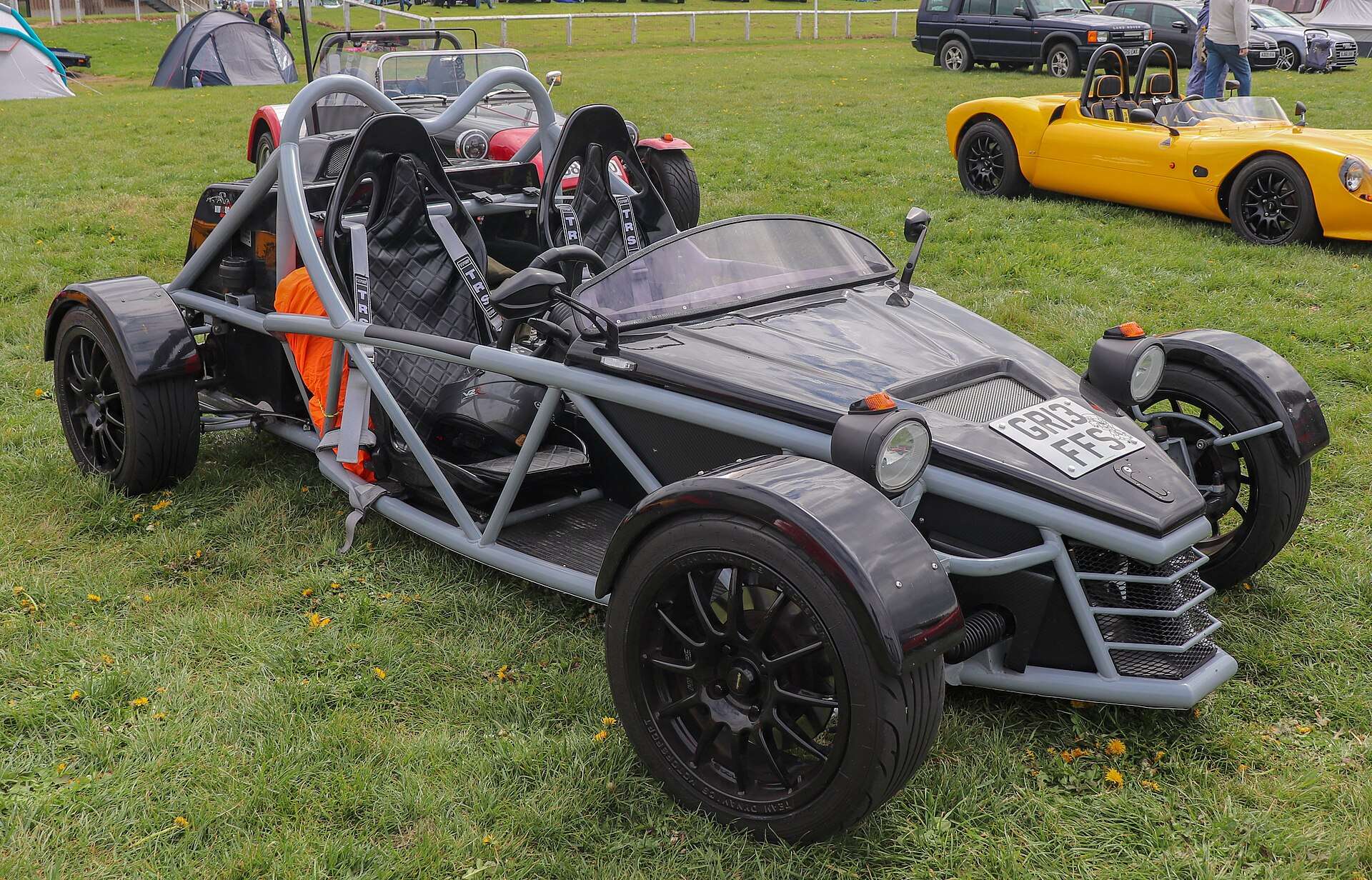
The MEV Rocket puts much of its engineering on display. Its exposed-frame appearance and minimal bodywork create a very different experience from an enclosed sports car, while the mid-engined layout gives it a distinct identity within the MEV family.
It is an appealing choice for a buyer who enjoys mechanical simplicity in appearance, but the lack of conventional body panels should not be confused with a lack of engineering complexity. Suspension setup, powertrain installation and the condition of the frame deserve close attention.
Rocket versus Exocet
MEV’s own history describes the original Rocket as a Ford Focus-based project, with the prototype completed towards the end of 2006. The engine sits behind the occupants. This separates it from the front-engined, Mazda MX-5-based Exocet, despite the shared manufacturer and exposed-frame theme.
The designer’s account also records varied engine installations over the model’s life. Consequently, a Rocket badge does not establish the exact powertrain. Ask whether the example follows an early Focus-based specification or uses a later conversion, and obtain details of the work.
The frame is the starting point
Inspect the exposed chassis closely, then view the underside on a lift. Check joints, suspension mounting areas, seat and belt attachments, engine supports and sections where water or dirt may collect. A fresh coating is attractive, but ask what preparation and repair work preceded it.
Look for signs of impact, unexplained repairs and modifications made after the original build. Request photographs and invoices for significant work. The fact that much of the frame is visible helps inspection, but it does not replace a competent structural assessment where there is uncertainty.
Check the mounting of cycle wings and other small body sections. Loose fittings and cracks can be minor jobs, but they should be identified before they cause further damage or detach.
Assess the mid-engined installation
Identify the engine and gearbox precisely, including any internal modifications or management changes. Inspect mounts, driveshafts, gear linkage and clutch operation. Ask how service items are accessed and what has to be removed for routine work.
Check fuel lines, wiring and coolant pipes for secure support and clearance from heat and moving parts. Obtain the wiring information and relevant donor documentation. A neatly finished exposed car should be straightforward to inspect; unexplained loose wiring deserves attention rather than being accepted as part of the minimalist look.
Start cold and let the car reach normal operating temperature. Check hot restarting after the drive. Look for a stable temperature and ask about any history of coolant loss or overheating. A larger radiator or extra fan is not proof that the original cause of a problem has been resolved.
Suspension setup matters more than appearance
Ask for the spring and damper specification, wheel and tyre sizes and any alignment reports. A low ride height or very wide tyre is not automatically an improvement. Check clearance through steering and suspension movement and look for uneven tyre wear.
A road car needs to work on imperfect surfaces, so assess it at normal speeds before drawing conclusions from its performance. Steering should be predictable and braking consistent. Investigate sharp changes of direction over bumps, pronounced vibration or unexpected pulling.
If the seller has altered the setup for track use, establish what would be needed to suit your intended roads. Budget for a knowledgeable specialist to check the car rather than adjusting components at random.
Road or track: be honest about your plans
For road use, try the driving position, mirrors and controls with the clothing you expect to wear. Check access and whether the cockpit offers sensible protection from hot components and road spray. Minimal bodywork means weather exposure is a genuine ownership consideration.
For track use, check the particular organiser’s requirements before buying. A purposeful-looking roll structure, harness or seat should not be assumed suitable for every event. Ask about previous track use, maintenance intervals and any repairs, and have the relevant equipment inspected by someone qualified.
Think about storage, luggage and transport as well. A car that is delightful for an hour may need a very different plan for a wet weekend away.
What makes a good used Rocket?
Look for evidence that the builder finished the development process: a coherent parts list, reliable starting, stable temperatures and documented setup. Regular use can provide useful history, but it must be backed by maintenance rather than simply an assertion that the car is driven often.
Price an unfinished or recently converted example according to the work still to be proved. The cost of sorting cooling, wiring and suspension can outweigh savings on the purchase price. A well-developed Rocket offers a distinctive, exposed style of sports-car motoring; the right one should inspire confidence in its engineering as well as excitement at its appearance.
Paperwork and useful next steps
Match the vehicle identity to its documents, check the build history and ensure any engine or structural changes are properly recorded. If the history is unclear, resolve it before purchase. For broader background, read our UK kit-car registration guide and donor-vehicle guide. Explore more models in the Kit Cars hub.
Why the exposed design changes the inspection
A Rocket makes its frame part of the styling, which is useful for a buyer but can also be distracting. Bright paint, polished brackets and neatly arranged mechanical parts create a strong first impression. Work methodically through the load-bearing structure and installations before deciding whether the presentation reflects the quality beneath it.
MEV’s historical account describes the transfer of manufacturing licences and records Road Track Race ceasing trading in early 2015. A used car’s manufacturer, kit generation and build date therefore matter when seeking documentation or replacement bespoke parts. An old website or brochure should not be treated as evidence of current stock or support.
Ask the seller to identify the source of the chassis and the build information used. If the car has been extensively modified, establish which parts remain from that original package. Keep those distinctions clear when contacting a supplier: the name Rocket alone may not identify the mounting, suspension or body part you need.

What first-hand builds reveal
Mark Hancox’s Derby Makers diary describes buying a Mk1 Focus in 2011 and receiving his Rocket kit in 2013. Even fitting the floor involved making a template, learning riveting and constructing a suitable trolley. His account emphasises the time spent preparing donor components. It is a useful corrective to the idea that a donor-based car is necessarily a quick assembly exercise.
The Jetpower build diary documents a 1.6-litre Focus donor, a different radiator arrangement, an adapted gear selector and individually installed instruments. It also records resolving erratic speed and engine-speed readings. Those details belong to that build; they are not instructions to copy its wiring or control modifications. They show why a finished car needs a usable record of its individual solutions.
For an unfinished project, ask what has actually been tested. “Engine runs” does not establish that the gear change, brakes, cooling or instruments work together. Price the remaining integration and commissioning separately from the visible assembly. A project with many expensive parts can still require substantial fabrication and diagnosis.
Inspecting tubes, joints and mounting areas
Examine the frame in good light, including the lower surfaces and sections hidden by seats, floors or covers. Look for damaged coating, corrosion, distortion and repairs. Ask about any area whose finish differs from its surroundings. A fresh powder coat can be excellent preservation, but photographs of the bare structure beforehand make its history easier to assess.
Pay close attention to suspension attachments and powertrain supports. Increased engine output or a major change in torque can alter the demands on the installation. Have a specialist assess any reinforcement or relocated mounting rather than assuming additional metal automatically makes the structure better.
Enjoy cars you don’t see every day?
Get unusual car stories, kit-car guides and interesting finds from Unusual Cars by email.
Free to join. Unsubscribe whenever you like. Read our privacy policy.
Inspect floor attachment and the condition of its edges. Loose fasteners, fretting or damaged panels need investigation, especially around the seating area. Check that added brackets have a clear purpose and that holes or alterations have not been made casually in important frame members.
Ask about incidents as well as racing. A road impact, a kerb strike or damage while loading onto a trailer can affect alignment without leaving an obvious large body panel dent. The open design makes some damage easier to see, but a dimensional check may still be needed where the history is uncertain.
Seats, harnesses and getting in
Try entering and leaving without using unsuitable components as steps or handholds. Once seated, check pedal reach, steering clearance and visibility with the clothing you normally intend to wear. The car should fit you while properly restrained, not only while sitting loosely in the cockpit for a photograph.
Inspect the seats, runners if fitted, and restraint mountings as a complete system. A competition-style harness is not automatically appropriate simply because it looks purposeful. Its installation and compatibility with the seat and intended use need to be assessed by someone competent. Do not infer rollover protection from the appearance of a hoop or cage alone.
Check that a passenger can avoid hot exhaust components and moving parts when entering or leaving. Identify where bags or loose clothing could come close to machinery. An exposed car requires sensible separation and protection, not just a warning from the previous owner to be careful around a particular corner.
Donor engines and later conversions
Record the engine and gearbox codes before discussing service parts or performance. A Focus donor description can cover different capacities and installations, while later conversions may have very little in common with the initial specification. Ask for the history of the engine itself as well as the Rocket’s build.
Check timing-drive maintenance, fluids and other service requirements against the exact engine. A new kit registration does not make a used donor engine new. Likewise, a low odometer reading may describe the completed Rocket rather than the mileage already covered by its powertrain.
For modified engines, obtain details of the management system, calibration and supporting work. A dyno sheet is useful context but not proof that the cooling, fuel system or driveline will remain reliable in sustained use. Look for a coherent installation and evidence of trouble-free use after the final changes.
Assess the car at low speed as well as under gentle acceleration. Predictable throttle response, a manageable clutch and reliable hot starting make a road car more enjoyable than a specification that only feels convincing at high revs. Choose the package that suits your journeys rather than buying an output figure.
Cooling and heat management
The distance between the rear-mounted engine and front cooling equipment makes pipe routing and support important. Follow accessible runs and inspect joints, protective sleeves and areas close to the cockpit. Look for abrasion, unsupported weight and fittings that are difficult to inspect once the car is assembled.
Ask the owner to explain the filling and bleeding arrangement and the normal fan behaviour. Observe the car from cold through a road test and subsequent idle period. Repeated topping-up, unexplained temperature fluctuations or coolant stains need a diagnosis. A larger radiator is not a substitute for establishing why an earlier setup struggled.
Inspect heat shielding around the exhaust, wiring, fuel components and any nearby body sections. Look for discoloured paint, hardened hoses or melted protection. Check that air filters and intake ducting are securely mounted and have suitable clearance. An exposed engine still has local hot areas that can damage adjacent components.
After the drive, inspect again for leaks and contact marks. Do not touch hot components or open a pressurised cooling system. A short wait and a careful visual check can reveal faults that were not apparent when the car was cold on the seller’s driveway.

Gear change, driveshafts and controls
Check every gear and reverse, first as appropriate while stationary and then during a controlled drive. Watch whether the lever or cables move excessively under load. A shift that needs a special technique may have an adjustment problem, worn components or a more substantial fault; identify the cause before purchase.
Inspect cable routing and brackets for secure support and clearance from heat. Where parts have been fabricated, ask who made them and whether the arrangement has changed since the car first ran. A written record of cable lengths, end fittings and component sources is valuable when a replacement is needed.
Check driveshaft boots for splits and escaped grease, and ask whether the shafts are standard donor items or specialist assemblies. Unexplained vibration deserves investigation. Do not assume that it is normal for a lightweight car simply because more mechanical noise reaches the occupants.
Operate the throttle and clutch through their range and ensure movement is unobstructed. Inspect pedal stops and accessible connections without disturbing adjustments. Controls should work consistently for the next owner, not depend on remembering a particular workaround that the builder has learned to tolerate.
Brakes and suspension setup
Ask for the brake specification and any setup information, especially where a balance-bar pedal assembly or non-standard calipers are fitted. Such equipment requires appropriate installation and adjustment. It should not be altered casually during a viewing or used to compensate for an unresolved fault elsewhere.
Inspect flexible hoses at steering and suspension extremes with suitable assistance. Look for tension, rubbing or contact with tyres. Check the handbrake arrangement and the security of cables. Familiar donor parts may need different routing in the Rocket, and that integration is part of the build quality you are buying.
For suspension, record the spring rates if known, damper type, ride heights and recent alignment settings. Confirm whether the setup was intended for road or circuit use. A specialist can help assess whether the combination is suitable; copying another car’s settings without checking hardware and use can create more uncertainty.
During a normal-speed test, the car should respond consistently rather than darting unpredictably or requiring constant corrections. Investigate uneven tyre wear and any sign of body or wing contact. Wider tyres and lower suspension are choices with consequences, not automatic upgrades.
Electrical finishing and instrument accuracy
Check that fuses and relays are identifiable and accessible, and that the battery is securely retained. Look for protected cable edges and connections suited to an exposed environment. A bundle of wires that looks tidy from above may still be vulnerable where it passes through a panel or alongside a moving component.
Confirm that the speedometer, rev counter, temperature display and warning lights behave plausibly. The Jetpower diary’s instrument issues illustrate that installing a digital display does not end with making it illuminate. Sensors, signal compatibility and wiring must all work together. Obtain the relevant manuals and calibration notes with the car.
Ask how a future workshop would diagnose a starting or charging problem. A circuit diagram and labelled connectors can save hours of investigation. Undocumented immobiliser or management changes are a reason to budget for specialist attention, even if the car happens to start reliably during the viewing.
Living with a minimalist car
Consider weather exposure, storage and luggage honestly. Try the mirrors and any wind protection at ordinary road speeds, and assess the effect of noise and airflow on comfort. A short enjoyable drive does not establish that you will want to use the car for an all-day journey.
Check how the car will be stored and transported. If trailer use is planned, establish suitable loading clearance and approved attachment points with competent advice. Do not attach straps to convenient-looking suspension or body parts without knowing whether they are appropriate.
Keep the car clean enough that damage, leaks and loose fittings remain visible. After wet use, inspect exposed electrical connections and dry the cockpit appropriately. Regular checks are especially useful where so much of the machinery is accessible, but avoid disturbing safety-critical adjustments without the necessary knowledge.
Choosing the right Rocket
Compare examples by structural condition, completeness, documented setup and the quality of their operating systems. A restrained specification that starts, cools, steers and brakes consistently is a stronger purchase than an ambitious conversion still waiting for development. Ask for an independent inspection when fabrication or major changes exceed your experience.
After purchase, establish a baseline service record and begin with short journeys. Resolve faults methodically and change one aspect of the setup at a time where practical. The Rocket’s appeal is its direct connection between driver and machinery; the best example lets you enjoy that connection because the underlying engineering has already been properly sorted.
Sources and further reading
- Mark Hancox: first-hand Rocket build diary
- Jetpower: detailed Focus-based Rocket build
- MEV: Rocket design history
- MEV: company background
Photograph: Vauxford / Wikimedia Commons, CC BY-SA 4.0. Displayed at a reduced size; hub thumbnail may be cropped. The pictured car illustrates the model, not a vehicle offered for sale.
Kit cars for sale on eBay UK
Browse kit cars from different makers, from unfinished projects to road-going builds.

Browse more kit cars on eBay UK
Enjoy cars you don’t see every day?
Get unusual car stories, kit-car guides and interesting finds from Unusual Cars by email.
Free to join. Unsubscribe whenever you like. Read our privacy policy.