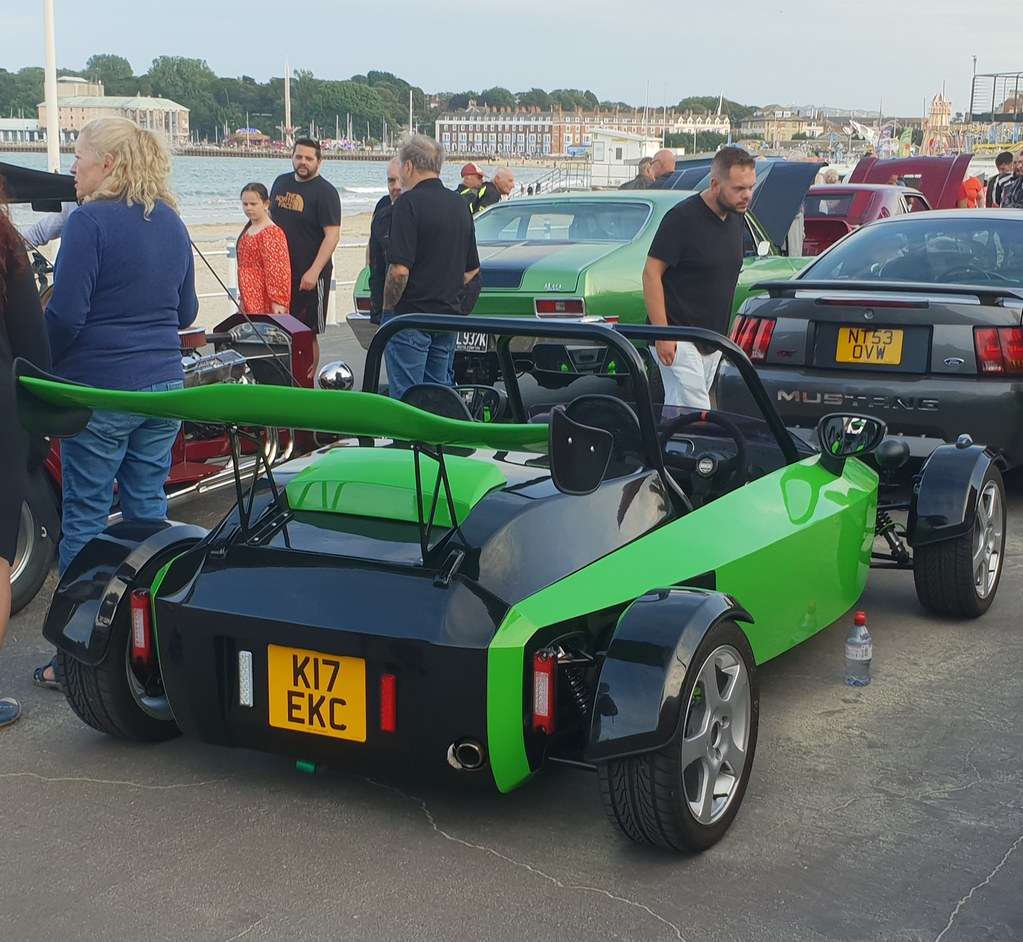
The MEV Sonic 7 offers a particularly satisfying kit-car idea: take familiar Ford mechanical components and place them inside something that looks and feels completely different. It has the exposed front wheels and low seating position associated with lightweight sports cars, but the engine sits behind the occupants. Its bodywork also gives it a distinct identity, rather than simply repeating the traditional Seven outline. For someone interested in the less familiar corners of British motoring, that is an appealing combination.
Buying one requires looking beyond the novelty. The Sonic's Ford origins can help with identifying service parts, yet they do not make the complete car a Focus with a different body. Cooling, gear selection, wiring, suspension and body access all depend on the kit and its builder. The best examples make those systems work together convincingly. This guide explains the design, separates historical specifications from current ownership questions and identifies the details worth examining before choosing a completed Sonic or an unfinished project.
The idea behind the Sonic 7
MEV's own history describes the Sonic as a response to buyers who liked the Rocket's mechanical layout but wanted more bodywork and weather protection. The design retained the Focus-based, mid-engined approach and wrapped it in a more enclosed shape. The company explains that its long body curves developed from a pattern formed over the Rocket chassis. It was intended as a contemporary alternative to conventional Seven-style cars. [1]
That relationship is useful background, but it should not encourage casual assumptions about interchangeable parts. Identify the actual chassis, build period and body specification of a car before ordering anything. A seller may describe it as mechanically related to a Rocket, but that does not establish that a particular panel, screen or later component will fit. The most valuable starting point is the original order and build information for the specific vehicle you are considering.
A design with more than one chapter
Period reporting places the Sonic's introduction in 2009 and records later stewardship by Exo Sports Cars and Equilibrium Kit Cars. A 2018 road test described an Equilibrium example using a Ford Zetec engine and Mk1 Focus donor components. These are historical milestones, not confirmation of present production or parts availability. Before buying a project, establish who can currently supply its model-specific components and obtain a definite answer about the parts you need. [2]
This is a common challenge with interesting low-volume cars: useful websites can remain online long after the arrangement they describe has changed. An old kit price or an order button in an archive should not become your purchasing budget. Save historical information because it can help identify a build, but separate it from a current quotation. A complete used car and a newly supplied kit are different propositions even when they share a model name.
What the Focus contributes
Exomotive's historical Sonic page lists a 2.0-litre Zetec engine and manual transmission alongside donor driveshafts, hubs, cooling components, controls and electrical equipment. Its details concern the US offering, including US donor years, and should not be applied automatically to British Focus generations. The page explicitly says Exomotive stopped distributing the Sonic and other RTR kits in January 2013. [3]
The practical lesson is to identify fitted components by their actual references. “Focus-based” is a useful introduction, not a complete parts catalogue. Ask for the engine code, gearbox identification and records of any changes. If the owner retained donor paperwork, photographs or labels, preserve them. Ordering by the Sonic's registration number alone may not produce the correct service part, particularly where the car combines donor items with specialist components or later modifications.
Understanding the mid-engined layout
The engine's position changes the ownership questions. Access behind the seats matters, as do the routes taken by coolant pipes, electrical wiring and controls. Ask the seller to demonstrate how the engine cover is opened or removed, and how routine work is performed. Can you inspect fluid levels, reach service items and examine belts without dismantling unrelated parts? A striking body should not conceal an installation that nobody can comfortably maintain.
Mid-engined packaging also makes it worth investigating heat separation between the power unit and occupants. Check bulkheads, seals, insulation where fitted and the routing of hot components. Look for damage or staining rather than assuming a warm cockpit is inevitable. The aim is not to judge the design from one feature in isolation. It is to see whether this particular builder has considered the way the car will be used, serviced and stored.
Start with the chassis
The historical package used a triangulated steel spaceframe. On a used car, condition and alterations matter more than an old promotional stiffness claim. Inspect suspension mounting areas, engine supports, seat and restraint attachments and the sections vulnerable to grounding or trapped dirt. Look for distorted brackets, cracked coatings and corrosion. Have inaccessible areas checked professionally rather than deciding that clean visible tubes establish the condition of the entire structure.
Compare the physical car with build photographs where possible. If the engine has changed, find out what happened to its mounts, cooling, exhaust and controls. Any structural repair needs a clear history and an appropriate assessment. Ask who carried out fabrication and whether drawings or invoices survive. A seller's confidence is not a substitute for evidence, but a well-documented alteration may be easier to evaluate than an apparently original car whose past is unknown.
Rear suspension and donor components
Inspect the rear assembly as a system. Identify the uprights, hubs, driveshafts and joints, then check their compatibility and condition with specialist help where needed. Look for leaking boots, damage, insecure fasteners and signs of parts contacting each other. Do not assume the donor's original installation can be used as a direct visual template after its components have been incorporated into a different chassis.
Request alignment records and the setup specification used by the owner. A car can acquire unsuitable geometry through well-meant adjustments or a change of wheel and tyre combination. Ask why settings were changed and whether the result was measured. If the seller describes a handling characteristic that requires constant correction, treat it as a reason for investigation. The fact that a car is light and direct should not make unexplained instability an accepted feature.
Engine health and maintenance history
Arrange to see the engine cold, with the seller's agreement. Check the service record against the fitted engine rather than relying on a generic interval quoted for “a Zetec”. Observe the start, idle and warm-up, looking for persistent smoke, leaks or unusual sounds. Any concern should be assessed by someone familiar with the particular engine and installation. A cold start can reveal useful information, but it cannot replace an informed inspection.
Ask how the car has been used during the last few years. Low mileage can mean gentle use, but it can also mean long periods standing. Find out when fluids, filters, belts and hoses were last attended to, and how the car was recommissioned after storage. An engine that runs sweetly for a short viewing may still need overdue time-based maintenance. Price that work honestly rather than interpreting a clean dipstick as a complete health report.
Gear selection deserves a proper demonstration
Moving a drivetrain into a different position makes the quality of its controls important. Ask the owner to demonstrate selection of every forward gear and reverse, first stationary where appropriate and then during a safe, permitted road test. Note whether selection changes as the vehicle warms. A vague or obstructed change deserves a diagnosis, not an assumption that the gearbox itself is necessarily worn out.
Enjoy cars you don’t see every day?
Get unusual car stories, kit-car guides and interesting finds from Unusual Cars by email.
Free to join. Unsubscribe whenever you like. Read our privacy policy.
Have cables, linkages, brackets and clearances inspected if the shift is unsatisfactory. Identify whether the problem concerns adjustment, component condition or the design of the installation. Check clutch operation at the same time, including access for maintenance and the absence of leaks where a hydraulic system is fitted. A car can feel much more finished when its everyday controls work cleanly, even without any increase in power or cosmetic improvement.
Cooling pipes, radiator and airflow
The cooling system should be assessed throughout its route. Inspect pipe supports, joints, protection at bulkheads and clearance from moving or hot parts. Ask how the system is filled and bled, and whether the owner has written down the procedure. It is particularly useful to know how access works when the car is fully assembled rather than judging a neat-looking radiator in isolation.
Observe warm-up, fan operation and a hot restart. Ask whether the car has been used in traffic as well as on open roads. A system that copes with airflow at speed may behave differently while stationary. If the temperature is erratic or coolant is being lost, investigate before purchase. Avoid opening the system hot or accepting repeated top-ups as normal maintenance. A clear explanation supported by repair records is preferable to a collection of improvised workarounds.
Electrical integration and diagnostics
Establish which engine management system is installed and whether its wiring is documented. If donor electronics remain, ask what was retained, altered or removed and how the security system is handled. Exomotive's historical donor list included the diagnostic socket, but the presence and operation of diagnostics must be checked on the actual car. A plug in the dashboard does not guarantee useful communication. [3]
Inspect cable support, fusing, earth connections and protection where wires pass through panels. Ask about any switches whose purpose is not obvious. A neatly labelled fuse box and a readable diagram can save considerable time when a small fault appears. If an aftermarket ECU is fitted, find out who calibrated it, whether the map is available and which workshop can support it. That information should accompany the car rather than remain in a previous owner's memory.
Body panels and special parts
Check the bodywork for cracks around fixings, evidence of impact and panels that no longer sit naturally. Open and close the engine cover and bonnet with the owner. Inspect catches, hinges, stays and supports. A panel that needs force to fit may have damaged mountings or an alignment problem, not merely a stiff latch. Make sure its position remains secure once the car is driven.
Confirm the availability of unique parts before negotiating around damage. A mechanically serviceable project can still become inconvenient if its missing screen or body panel is difficult to replace. Ask for the dimensions, part identity and supplier information behind any proposed substitute. Generic statements that fibreglass is easy to repair do not account for the time needed to reconstruct a missing shape or match an aged finish. Completeness can justify paying more for a sound example.

More bodywork does not mean an ordinary convertible
The Sonic was conceived to offer more protection than the exposed Rocket, but that is a relative comparison. Inspect the actual screen, side protection and roof arrangements, if any. Ask to see them fitted. Check your sight lines, the effect on entry and exit and the practicality of carrying the equipment when it is removed. Do not assume a car photographed in sunshine will meet your expectations for a wet journey.
Try the cockpit wearing the clothing you would drive in. Check pedal reach, steering clearance and mirror coverage with restraints correctly secured. Think about your passenger too. A driving position that suits the builder may not suit someone of different proportions. Any proposed seat alteration should be assessed for its effect on control reach, visibility and protection rather than treated as a simple upholstery decision. Comfort is a useful safety and usability consideration, not an indulgence.
Tyres, brakes and steering
Identify the wheel and tyre specification, read tyre age markings and inspect for damage. A lightly used kit can have substantial tread remaining on old rubber. Determine whether the tyres suit road use in the weather you expect to encounter. Changes of wheel size or offset also deserve checking for clearance and compatibility throughout steering and suspension movement, not only while the car is parked.
Inspect braking components, pipe routes and pedal operation, and have unexplained pulling or inconsistent response diagnosed. Steering joints and mounts should be checked for play and security. During a lawful demonstration, assess how predictably the car responds at ordinary speeds. Avoid forming a judgement entirely from a rapid straight-line run. A well-built Sonic should convince you through the consistency of its controls, not require you to overlook every awkward behaviour because the acceleration feels exciting.
Paperwork and identity
For a registered car, compare the identification on the vehicle with its documents and investigate any inconsistent engine or vehicle details. Ask for approval and build records where available. An unfinished car needs its own assessment against current DVLA registration guidance and DVSA approval requirements; the donor's documents do not settle the finished vehicle's status. [4]
Beyond the registration file, compile a service identity for the car. Record engine and gearbox references, consumable part numbers, wiring information and bespoke components. Preserve the original build guide even where later modifications have superseded parts of it. Add notes explaining what changed. This is how a rare kit becomes manageable for future maintenance: each owner contributes to the knowledge rather than forcing the next person to identify the whole car again.
How to assess an unfinished Sonic
Begin with a complete parts inventory and a sober account of the work already performed. Identify missing model-specific items first. Check whether the drivetrain has been proven running and whether its control electronics are present. An attractive painted shell can conceal a long list of jobs involving wiring, fuel, cooling and road equipment. Ask the seller to demonstrate progress rather than estimate a percentage complete.
Get current quotations for the tasks beyond your own skills, including fabrication, setup, inspection and transport. Examine stored parts for deterioration and confirm that supplied items actually belong to the kit. Keep a contingency for discovering incompatible or defective components. A worthwhile project is one whose remaining work you understand. It is much harder to budget for a collection of assumptions, especially when historical supplier information is mistaken for a present-day guarantee of support.
Power figures and sensible expectations
Historical advertising presented a wide range of possible outputs and performance claims. Those figures describe proposed or particular configurations, not a standard shared by every Sonic. Ask for evidence specific to the car when power is used to justify a price. More importantly, establish whether its tuning supports clean starting, progressive response and reliable temperature control in the conditions you intend to use it.
For a road purchase, drivability may matter more than the highest number on a rolling-road printout. Assess low-speed manoeuvring, the ability to maintain a steady speed and the noise level on a longer stretch. If track use is planned, investigate the organiser's noise and safety requirements separately. A car that is enjoyable and accepted at your intended venue is more valuable to you than one whose specification is impressive but inconvenient to use.
The first season with a Sonic
After purchase, establish a baseline before changing the specification. Service the engine appropriately, inspect the running gear and record the geometry and tyre information. Familiarise yourself with access panels and the cooling procedure. Make sure recovery can be arranged for a low vehicle and that the person transporting it understands suitable loading and securing points. Preparation is easier when the car is at home than when it has stopped somewhere unfamiliar.
Keep early journeys varied but manageable. Learn how the cockpit feels, what you need to carry and whether any small practical changes would make it easier to use. When altering the setup, record one change at a time and preserve previous settings. A rare car rewards this kind of ownership because your understanding steadily improves. It also creates a much better handover file if you eventually decide to move to another project.
Is the Sonic 7 a good choice?
The Sonic suits an enthusiast drawn to clever donor-car transformations and a shape that stands apart from the usual lightweight roadster. Its mid-engined layout and more enclosed body provide a clear identity. The buying decision should centre on the condition of the chassis, the quality of the installation and the availability of the specific parts needed to keep it complete. Familiar mechanical origins help, but they cannot compensate for unfinished development.
Look for a car that is documented, comfortable enough for your plans and straightforward to demonstrate from cold start to hot restart. Ask precise questions about every non-standard detail. When the answers are convincing, the Sonic can offer something particularly appealing: ordinary-car components assembled into an unusual sports car with its own character. That is a better reason to buy one than an old performance promise or a bargain price attached to an incomplete set of parts.
Kit cars for sale on eBay UK
Browse kit cars from different makers, from unfinished projects to road-going builds.

Browse more kit cars on eBay UK
Enjoy cars you don’t see every day?
Get unusual car stories, kit-car guides and interesting finds from Unusual Cars by email.
Free to join. Unsubscribe whenever you like. Read our privacy policy.
Sources and further reading
- MEV Sonic 7 history — original concept and relationship to the Rocket.
- Totalkitcar's 2018 Sonic report — historical chronology and first-person road-test context; old prices are not current quotations.
- Exomotive's historical Sonic page — former US distributor's component list and explicit distribution end date. UK donor identification must be checked separately.
- DVLA kit-conversion guidance and DVSA IVA overview.
Explore more models in the Unusual Cars Kit Cars hub.
Featured photograph: Front three-quarter view of the 2022 Equilibrium Sonic 7. Andrew Bone, CC BY 2.0.