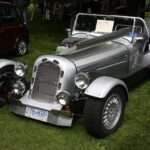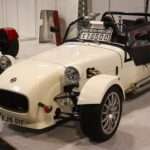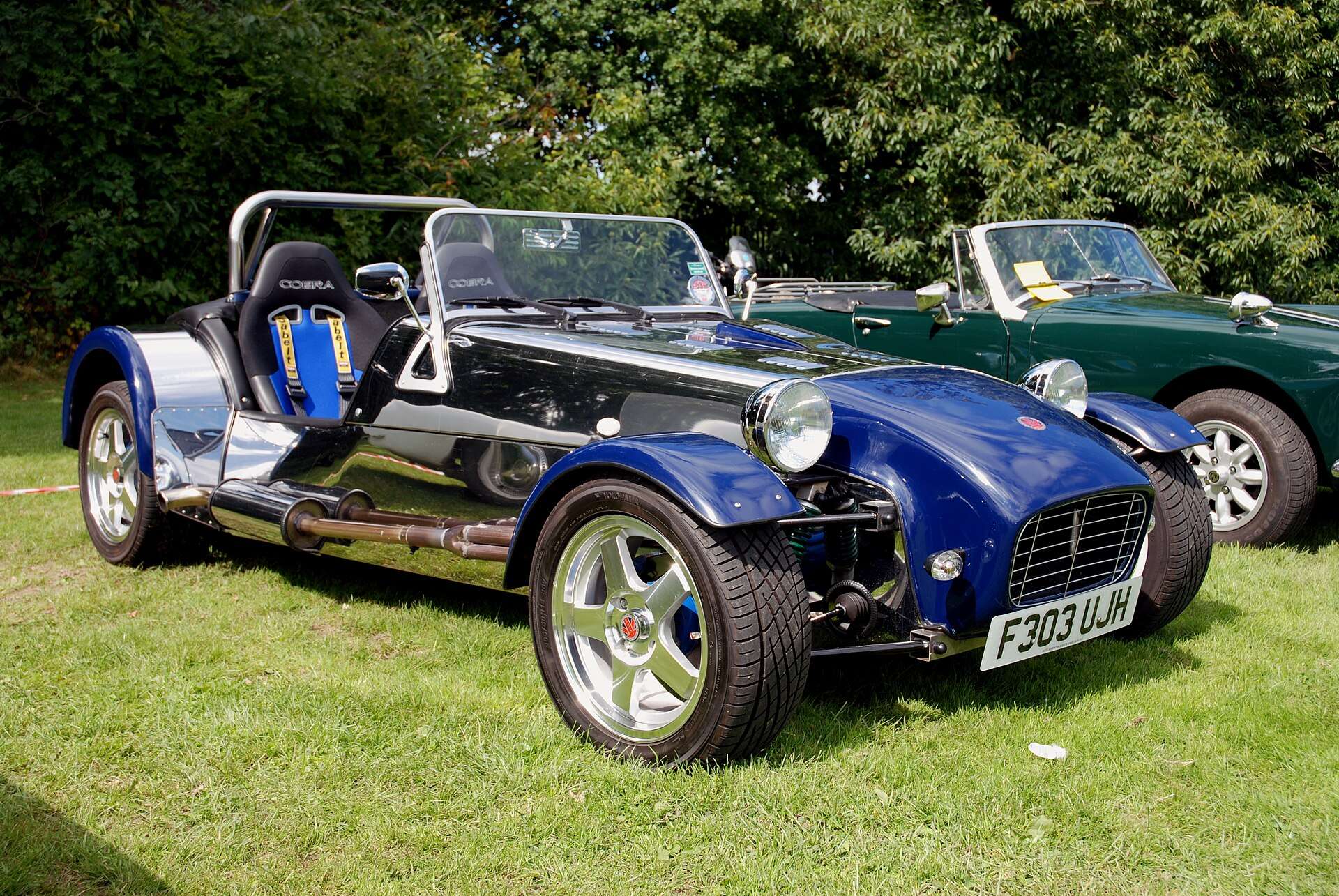
The Robin Hood 2B brought home-built sports-car ownership within reach of enthusiasts working with modest budgets and familiar Ford components. Today its attraction is still clear: an individual, open sports car with a substantial owner knowledge base. The important question is how well the particular example was assembled and developed.
Not every Robin Hood has the same chassis
The UK Kit Car Club’s model archive distinguishes the 2B from earlier folded-sheet monocoque Robin Hoods. The 2B uses a tubular spaceframe and was conceived around Ford Sierra donor components. This matters because generic descriptions of “the stainless-steel Robin Hood chassis” can obscure major differences between models.
Front suspension also varied. The archive identifies sliding-pillar cars, wishbone-equipped versions and the SubK/2B4 arrangement. Establish which you are viewing before assessing its condition or ordering replacements. A conversion from one layout to another needs documentation and competent inspection; the mere presence of wishbones does not establish that the installation is correct.
Understanding the 2B family before choosing a car
A Robin Hood badge is only the start of identifying what you are buying. The club archive places the 2B’s arrival alongside the introduction of SVA in 1998 and describes round-tube construction with separate body panels. That separates it from the earlier sheet-built cars, even when both have polished sides and a similar nose. A registration year alone will not settle the question: a kit can be completed long after its original purchase, and its registration may reflect donor history.
Ask for a photograph with the bonnet removed before travelling. Then compare the chassis and suspension with the club’s model pages. Early sliding-pillar cars, wishbone-equipped 2B Plus examples and the strut-based SubK/2B4 are materially different starting points. The latter’s raised front mounting structures are a useful identification clue. An advert calling a car simply a “2B with upgraded suspension” leaves too much unanswered. Establish the original arrangement, what has changed and whether the records belong to this chassis.
This is why buying by finish or quoted horsepower can be misleading. Two equally shiny cars might offer very different servicing requirements and adjustment possibilities. Decide whether you want an original configuration to understand and maintain, a documented conversion that has already been developed, or a project you intend to re-engineer. Each can be a legitimate choice, but they need different budgets and levels of expertise. Do not pay a finished-car premium for a development programme.

Steering racks and conversions: check what actually fits
The club’s steering notes identify more than one rack installation, including Metro-derived and later Escort-derived arrangements. They also explain that the chassis mountings, column connections and track-rod extensions differ. Treat that as a warning against ordering a replacement merely because a supplier lists it for a Seven-style car. Photograph the mounting feet, input shaft, joints and extensions, and record any identification marks before seeking a match.
On a viewing, turn the steering gently from lock to lock with the seller’s permission and watch the moving components. Look for contact with the chassis, hoses, wiring or bodywork, and for a column joint working at an awkward angle. Check whether the rack moves relative to its mounts when the steering is loaded. A small movement at the steering wheel can originate in several places; identify it instead of assuming that a new rack will cure everything.
A wishbone conversion should have a coherent explanation behind it. Ask who supplied the components and fitted the brackets, whether instructions survive, and what measurements were taken afterwards. Fresh paint can make a conversion look finished while concealing unresolved geometry. A competent kit-car specialist should assess mounting integrity and suspension movement if you cannot establish these yourself. A short, smooth-road test does not reveal how the car behaves when one wheel encounters a bump.
Rear suspension: the Sierra connection goes beyond the differential
The Sierra rear assembly brings together the differential, trailing arms, hubs, shafts and brakes. The club records both early donor-spring arrangements and later coilovers, including replacements for original Zimmeride units. It also distinguishes push-in shafts commonly associated with drum-braked assemblies from bolt-on Lobro-jointed versions with discs, and notes shaft-length variations. These details explain why a box of miscellaneous Sierra parts is not necessarily a complete or compatible spare rear end.
Inspect the rear with the car safely supported by someone equipped to do so. Check the beam, mounting areas and surrounding structure for corrosion or repair, then look for split joint boots and evidence of contact between rotating parts and nearby brackets. Ask whether the differential ratio has been identified from reliable markings or records. A ratio chosen for a donor saloon may feel quite different in a kit with another engine, gearbox or tyre size.
When considering replacement dampers, give the supplier the existing dimensions and installation details. The name on the damper is not enough to establish suitability. Mounting position, spring rate and available travel matter together. A very stiff rear end can feel controlled on a smooth demonstration route yet become tiring on broken surfaces. Keep a record of the initial settings so changes are reversible, and have alignment checked after significant suspension work.
Pinto power and later engine conversions
Owner records include traditional Pinto and Type 9 installations as well as cars converted to other engines. A useful first question is whether the engine is the one used when the car was originally completed. If it has changed, ask for a list of the associated work rather than just an engine receipt. Mounts, sump, induction, exhaust, cooling, clutch operation and wiring all influence whether the conversion works as a complete installation.
For a Pinto-powered example, request a genuinely cold start and evidence of routine maintenance, including the timing belt. Listen for abnormal mechanical noise and watch how the oil-pressure indication behaves without treating an unverified dashboard gauge as a precision instrument. A claimed performance camshaft or cylinder-head upgrade needs identification and supporting paperwork. A smooth, tractable engine with a known specification is usually a more useful road-car purchase than an impressive claim that nobody can explain.
Carburettor installations deserve attention to fuel delivery and throttle operation. Look for a positive return, sensible cable routing and secure linkage. Ask whether the car has been set up under load and whether the seller has a dated tuning record. Persistent hesitation, backfiring or an unreliable idle should be diagnosed before purchase rather than accepted as an unavoidable feature of an older engine. Those symptoms do not identify a single fault on their own.
A club discussion about replacing a Pinto with an ST170 illustrates how an apparently simple swap can raise questions about bellhousing, clutch, fuel system and cooling. It is an owner’s experience, not a universal conversion recipe. On a converted car, ask the builder to explain those interfaces. An engine that starts in the driveway still needs clean hot restarting, dependable cooling and proper calibration under real driving conditions.
Gearbox, propshaft and ground clearance
Check every gear during a sensible road test and listen both on power and on the overrun. Note whether the clutch takes up progressively, whether the gear lever interferes with the cockpit, and whether the transmission makes unusual noises once warm. A replacement gearbox can involve more than sourcing a used unit if mounts, tunnel access or the propshaft have been altered around the original installation.
Look under the car for the lowest rigid component. On an engine-swapped or lowered 2B, the sump, bellhousing or exhaust may sit below the line you first notice from the side. Evidence of repeated impacts needs investigation. If a sump has been shortened, ask who modified it and how the oil pickup and capacity were addressed. Ground clearance is a practical purchase issue if your route includes speed cushions, steep driveways or uneven access roads.
Enjoy cars you don’t see every day?
Get unusual car stories, kit-car guides and interesting finds from Unusual Cars by email.
Free to join. Unsubscribe whenever you like. Read our privacy policy.
For a custom propshaft, documentation from its maker is valuable. Ask about its specification and balancing, particularly when a different gearbox has been fitted. Vibration that appears with road speed should not be dismissed as normal kit-car character. Wheels, tyres, joints and driveline installation can all contribute; an inspection is preferable to buying several speculative replacement parts.

Body panels reveal how carefully a 2B was assembled
The original body combined GRP mouldings with thin metal panels that required substantial forming and fitting by the builder. The club’s bodywork page describes a GRP nose and wings, with approximately 0.8mm mild-steel or stainless sheets elsewhere. That construction makes panel edges, fixings and joins useful inspection points. A polished surface says little about how securely the panel is attached or whether the edges have been finished safely.
Check bonnet fit and fastening, cycle-wing brackets and the attachment of rear arches. Look for cracks around stressed GRP mounting points and for tyre contact inside the wings. Ask the seller to remove the bonnet as they normally would for servicing; awkward access or fragile fittings can make routine maintenance disproportionately frustrating. Inspect any removable tunnel panels too, because access to the gearbox and wiring matters after the car leaves the workshop.
Examine the floor and bulkhead junctions for loose fixings, water entry and previous repairs. Fresh carpet should not prevent inspection of seat mounts or obscure corrosion beneath a donor component. Minor cosmetic imperfections are often less concerning than a beautifully trimmed interior that cannot be inspected. Distinguish work that simply improves appearance from work required to make the structure and controls sound.
Driving position, pedals and weather equipment
The club describes early builds using Sierra controls and instruments, with later owners adopting different dashboards, pedal boxes and seats. That variety means cockpit suitability cannot be judged from the model name. Sit in the actual car with the seat adjusted correctly, fasten the belt and check whether you can fully operate the clutch and brake without stretching or trapping your leg against the steering wheel.
Wear the footwear you expect to use. Check space between pedals and whether the throttle can be operated independently without catching the brake. Inspect seat and runner security, and make sure the restraint arrangement suits the seat and mounting locations. A small steering wheel may improve thigh clearance but can also change effort and obscure instruments. Test the whole driving position instead of evaluating each accessory separately.
If touring is part of the plan, ask to see the roof and side screens fitted. Inspect visibility, fastening, wiper sweep and the practicalities of getting in and out. Folded weather gear in a bag may be incomplete or belong to an earlier windscreen arrangement. Check where luggage can be carried without obstructing controls or pressing on hot components. A dry-weather toy and a car intended for weekends away can justify different compromises.
Cooling and electrics: test beyond the first start
Allow enough time at a viewing to assess the car fully warm. A clean cold start is encouraging but will not expose every cooling or charging problem. Observe the temperature indication, fan operation and restart after a short stop. Ask how the radiator and expansion arrangement were selected, especially after an engine change. Do not open a hot cooling system; unexplained overheating needs proper diagnosis.
Follow the visible wiring from the battery through its protection and distribution. Look for secure earth connections, protected bulkhead crossings and wires kept away from the exhaust or moving steering parts. Switch on lights, indicators, wipers and other fitted equipment individually. A labelled fuse layout and a diagram are worth having because donor colours and connector positions may no longer describe a modified loom.
Consider future service access as well as immediate function. Can the battery be removed, fuses reached and common connections inspected without dismantling the dashboard? A documented, accessible installation will save time when an intermittent fault appears. Conversely, several abandoned wires or unexplained switches suggest that you should understand the electrical work before agreeing a price.
Which 2B makes the most sense for a first owner?
For someone entering kit-car ownership, a usable example with an identifiable suspension arrangement and a complete maintenance file is easier to evaluate than an unfinished conversion. That does not necessarily mean buying the newest registration or the most powerful engine. Consider how much of the car you can understand at the viewing, which jobs require specialist help and whether those specialists can support the fitted components.
A sliding-pillar car with clear history should be assessed on its actual condition and behaviour, while a wishbone car should not escape scrutiny simply because its layout sounds more familiar. If your intention is to convert the former, obtain a complete quotation before comparing its price with an already developed example. Include the associated rack, brackets, dampers, alignment and inspection work where required. Buying the configuration you already want can be more economical than rebuilding a cheaper car around a different plan.
Paperwork, parts support and a realistic purchase budget
Check that the physical chassis identity matches the registration documents and that the stated vehicle description makes sense. For an unfinished donor-based car, consult the current DVLA kit-converted guidance rather than assuming that an old Sierra logbook guarantees an age-related registration. DVLA requires evidence for the relevant route, including component provenance and approval where applicable. Resolve uncertainty before committing money to a project.
Kit Spares lists 2B-related suspension, brake and fuel-system items, which is a useful starting point when assessing missing components. A catalogue listing is not a promise of immediate availability or compatibility with every variant. Contact the supplier with photographs and measurements before treating a missing bracket or obsolete assembly as a minor expense. Existing owners and the club can help identify unfamiliar arrangements, but obtain professional assessment where structural integrity is in question.
Build a purchase budget in three parts: the car itself, the work required before dependable use, and improvements that can wait. Include transport, inspection, tyres, fluids and any confirmed repair costs. Avoid counting the seller’s original expenditure as present value. An unfinished kit with expensive parts may still cost more to complete than a less glamorous, proven road car. The strongest 2B purchase is one whose specification, condition and remaining jobs you can explain clearly.
Inspect the suspension as a system
Ask who selected the springs and dampers, what ride height was used and whether alignment has been measured. Check for binding, damaged brackets and inadequate clearance through the steering range. A low stance may look attractive but reduce useful travel or leave the sump vulnerable.
The club archive describes use of the Sierra rear beam and trailing-arm assembly and notes variation in brakes, driveshafts and dampers. Record these components before buying service parts. A receipt stating simply “Sierra rear axle” may not resolve which joints or shafts the car requires.
Build quality is the buying decision
Inspect welds, brackets, seat and belt mounts, floor security and steering-column support. Have questionable structural work assessed by someone familiar with the design. Stainless panels do not make all the underlying components corrosion-proof. Examine areas hidden behind trim and the condition of mild-steel donor parts.
Look for protected wiring, securely mounted fuel lines, appropriate hose routing and a properly supported exhaust. Check that the cooling fan operates after warm-up. A tidy dashboard is less important than a clear, serviceable electrical installation behind it.
During a test drive, assess steering return, straight-line braking and behaviour over uneven surfaces. The car should not require constant correction to maintain its line. Diagnose unusual handling before treating it as a cheap upgrade opportunity.
Finished car or abandoned project?
A road-registered, documented example generally makes the total job easier to understand. An incomplete project needs an inventory, a realistic mechanical assessment and a clear route through the applicable approval and registration process. An old donor logbook is not proof that the completed kit can use that identity.
Compare purchase price with the cost of finishing, transporting, testing and correcting the car. Small missing items accumulate quickly, especially when earlier work must be undone. Buy the 2B for its accessible character and the pleasure of understanding it, while allowing a proper budget for inspection and setup.
Sources and further reading
Model construction and variant information: club bodywork archive and interior and controls. Parts reference: Kit Spares 2B catalogue. Registration: DVLA kit-converted guidance. Owner experience: Pinto-to-ST170 conversion discussion.
Featured photograph: allen watkin, CC BY-SA 2.0, resized. Photographs illustrate individual examples and do not establish the specification of another car.
Further technical references: club model archive; front suspension and steering; rear suspension.
More buying and building advice
Explore our Kit Cars hub, donor-vehicle guide, used-car inspection checklist and UK registration and IVA guide.
Kit cars for sale on eBay UK
Browse kit cars from different makers, from unfinished projects to road-going builds.

Browse more kit cars on eBay UK
Enjoy cars you don’t see every day?
Get unusual car stories, kit-car guides and interesting finds from Unusual Cars by email.
Free to join. Unsubscribe whenever you like. Read our privacy policy.