
IN-DEPTH BUYING GUIDE · UK ROAD CARS
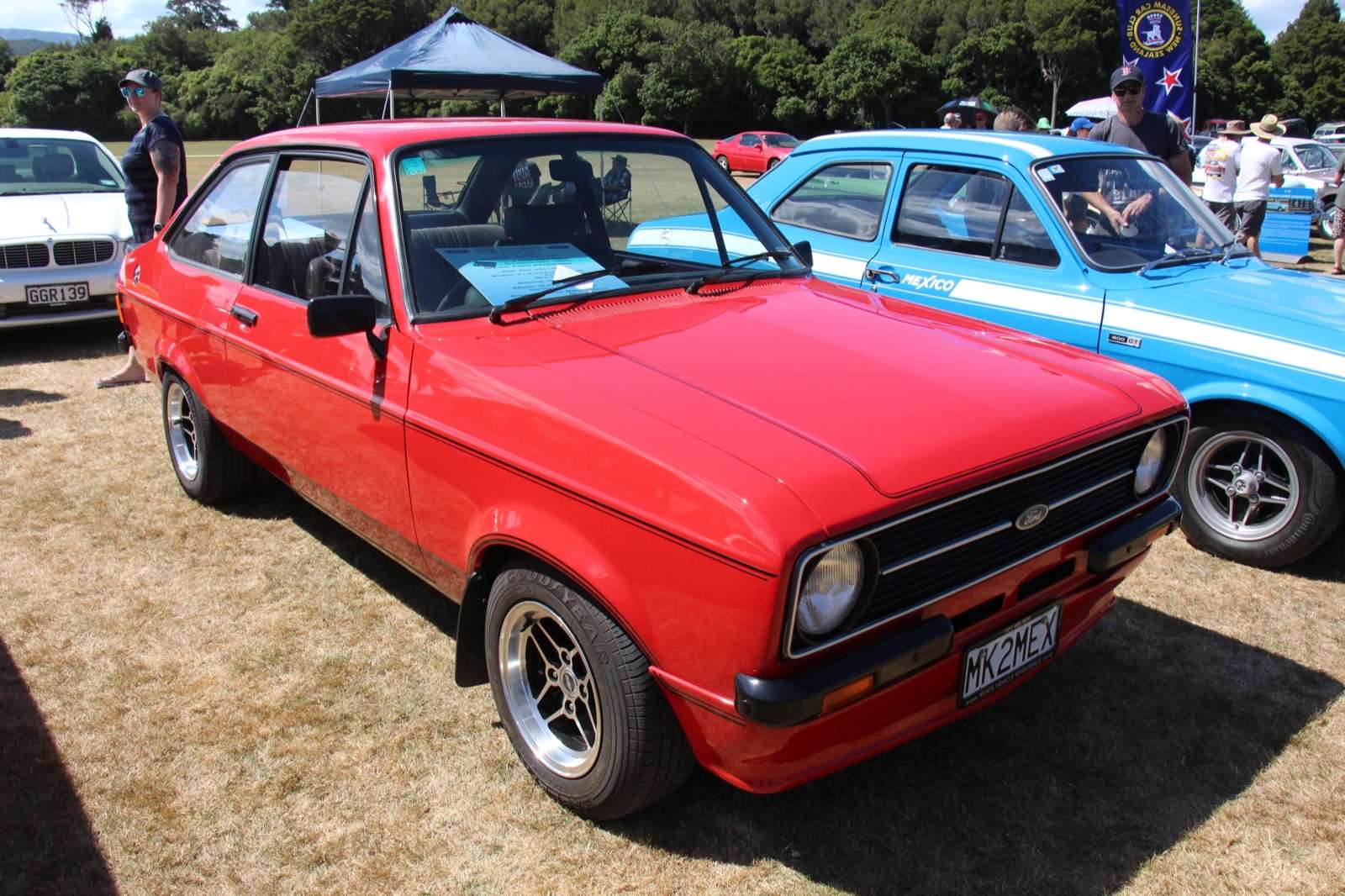
The Ford Escort Mk2 Mexico and RS2000 offer two versions of the same appealing idea: a compact rear-wheel-drive Ford with straightforward mechanicals, competition connections and enough character to make an ordinary journey memorable. Buying one now is principally an exercise in identifying the shell, understanding its restoration and establishing what remains of its original specification. The engine is only one part of that decision.
The buying verdict
Buy the best documented, structurally sound car you can inspect properly. The Mk2 Mexico uses a 1.6-litre overhead-cam Pinto; the RS2000 uses the 2.0-litre Pinto. A flat-front car, a sloping RS nose, stripes and a set of alloys are clues, not authentication. A modified driver can be an excellent purchase when its identity, engineering and price are described honestly.
Mk2 Mexico versus RS2000: decide what you are buying
This guide concerns the 1970s rear-wheel-drive Mk2, not the later front-wheel-drive RS2000 and not the Mk1 Mexico. The Mk1 Mexico’s Kent crossflow engine and AVO-era background should not be carried across to a Mk2 inspection. Read our Mexico Mk1 and Mk2 history for the development story, then use the checks below on the actual car.
| Candidate | Starting specification | Buying priority |
|---|---|---|
| Mk2 RS Mexico | 1.6-litre Pinto, manual gearbox, familiar flat-front shape | Factory identity, correct engine specification and evidence behind any claimed originality |
| Mk2 RS2000 | 2.0-litre Pinto, distinctive extended nose on normal production examples | Shell condition, nose and panel repairs, completeness and original versus modified specification |
| Period or modern modified car | May use another Pinto, different gearbox, axle, brakes or suspension | Build quality, documentation, insurance acceptance and parts identification |
| Tribute or competition shell | Appearance and equipment may imitate a road RS | Accurate description, provenance and a price appropriate to the actual car |
Choose a Mexico because you want that model and can substantiate it, rather than because rarity automatically makes it the better driver. Choose an RS2000 because its specification and character suit your use, rather than because the nose seems to guarantee authenticity. For frequent use, a carefully assembled car with sensible documented changes may fit better than a highly original example whose preservation dominates every decision.
Restored, original and modified describe different things. A restored genuine RS can have substantial replacement metal. An apparently untouched car can conceal old repairs. A tribute can be accurately represented and enjoyable. Put those facts in the description and comparison sheet before discussing price. Do not allow an attractive paint colour to blur the categories.

Prices: compare evidence before assigning a value
There is no useful single price for a “good Mk2”. Build a comparison from current cars of the same model, steering configuration, identity status, restoration standard and level of modification. Record asking price, date, mileage evidence, body report, service due and what is included. A project with a valuable identity is a different proposition from a complete tribute, even when both wear similar stripes.
A recent Car & Classic Mexico search illustrates the spread: a Peterborough dealer advertised a two-owner, RSOC-registered RS Mexico at £37,995; another dealer advertised a 1978 1.6 at £59,995. A third Mk2 Mexico was advertised at £62,500 with a 2.0-litre engine and six-speed gearbox. These are seller descriptions and asking prices, not verified sales or proof of authenticity. The modified car should not establish the price of an untouched 1.6.
The same search also returned an RS1800. This is why a marketplace headline count is not a count of directly comparable Mexicos. Read each advertisement and exclude cars that do not match the comparison. Do not average an exceptional collector car, a competition build and an ordinary driver to manufacture a market value.
Once the inspector has identified the work, compare the purchase price plus written fitted quotations with the best usable alternative. Shared maintenance due on both cars cancels out; the difference is what matters. An unresolved sill repair, unidentified drivetrain or unavailable interior component cannot be valued reliably from a seller’s small allowance.
Identity and authenticity: start before the viewing
Ask for the registration, VIN, V5C details, service file and clear photographs of identification areas. Compare the recorded model, engine capacity and history with the car being sold. Look for continuity across old MOTs, invoices, photographs and previous sale descriptions. A registration document describes the record; it does not independently authenticate every panel, engine or badge fitted today.
The Ford RS Owners Club has separate model registrars for the Mk2 Mexico and Mk2 RS2000. Discuss what evidence and inspection support are available for the particular car. Establish what any club letter or registration actually confirms, when it was issued and whether subsequent work changes the position. Do not represent club membership itself as a certificate for the car.
Have an experienced model inspector assess identification markings, construction details and repair history together. Ask which features can support the claimed specification and which can be reproduced. Fresh paint, replacement panels or a repaired stamping area need an explanation and photographs. Avoid publishing or relying on a simplistic “one code proves everything” rule: a convincing plate can be transferred or reproduced.
Re-shelling and extensive restoration require particular care. Request evidence of the starting vehicle, replacement shell, work undertaken and how the completed car was documented. Check the description with your insurer and, where necessary, the relevant registration authority before paying. If the seller cannot explain the identity consistently, leave the deposit uncommitted until an independent specialist has resolved it.
Engine numbers and casting details should be recorded alongside the installed capacity, cylinder head, induction and ignition. A 2.0 Pinto in a Mexico is a modification, not the original 1.6 simply because both engines look related. Ask for evidence supporting claims such as “matching numbers”, “original shell” or “period rally history”. Each is a separate claim with its own documents.
What to ask a seller for remotely
- Underside photographs before any recent coating, plus the restoration album if one exists.
- Invoices identifying structural panels, paint work, engine, gearbox, axle and brakes.
- Cold-start availability and permission for a lift inspection.
- The precise list of modifications and any original parts supplied with the car.
- Evidence behind club registration, ownership history and special provenance.
- Details of parts waiting to be fitted, incomplete work and faults that recur.
Rust, accident damage and restoration quality
A tidy Escort body can absorb more money than its simple shape suggests. Begin with the structure rather than the shiny outer panels. Inspect front strut towers and adjacent reinforcement, inner wings, bulkhead, chassis rails, crossmember mountings, sill structures, floors and jacking areas. Have the inspector distinguish a cosmetic outer repair from deterioration involving load-bearing metal and suspension alignment.
Look at both sides of each accessible repair. A neat visible weld does not establish the condition behind an overlapping patch. Ask where old metal was removed, how adjoining sections were assessed and what corrosion protection was applied internally. Fresh underseal is neither proof of a bad repair nor proof of a good one; photographs and access are what make it assessable.
Work rearwards through seat and belt mounting areas, rear floor, spring hangers and surrounding structure, wheel tubs and the boot. Check wells and seams for standing-water evidence and repairs that extend beyond what the seller described. Brake and fuel pipes, tank mounting and the exhaust route belong in the same inspection because their condition can affect the work needed to make the car usable.
Open and close both doors, bonnet and boot. Compare gaps and latch behaviour, and inspect the screen surrounds, roof gutters, scuttle and lower panel edges. Ask the body specialist to investigate asymmetry, creases or unexplained reinforcement. Panel fit can be affected by workmanship, accident damage or structural movement; the price of a replacement door seal does not resolve the cause.
On an RS2000, inspect the nose, its fit and supporting metal rather than treating replacement nose components as merely decorative. On either model, investigate flares, enlarged wheel openings and evidence of competition alterations. A car returned to standard-looking bodywork may retain different mounting points or hidden repairs. Restoration photographs can explain that history more effectively than a polished engine bay.
How to read a restoration file
Ask for photographs before stripping, during metalwork and before paint. Relate them to dated invoices and the actual shell. An album showing immaculate finished panels contains less structural information than clear pictures of the sill, floor and rail repairs. Confirm who carried out welding and paint, and whether the owner can explain the work in sequence.
For a project, obtain a staged body quotation: investigation and stripping first, agreed metalwork next, then preparation, paint, protection and reassembly. Identify what remains provisional. Consumables, glass removal, trim clips, seals and adjustment can be real costs even when a panel price looks modest. If the body shop cannot inspect the hidden areas, it cannot honestly guarantee the final bill.

The Pinto engine: cold start, lubrication and cooling
The shared Pinto architecture makes servicing approachable, but it does not make all parts interchangeable. Establish the actual engine capacity, head and ancillary arrangement first. If the car has a replacement engine, the registration year may no longer identify the correct belt, pump, ignition or clutch. Photograph component markings with permission and give them to the workshop before requesting a parts quote.
Ask for a genuinely cold start. Observe how the owner starts a carburetted engine, how quickly it settles and whether there is persistent noise, smoke or fluid leakage. A brief uneven idle on an unfamiliar choke arrangement needs context; a seller repeatedly revving it hard to conceal poor running needs a different conversation. Ask the mechanic to reproduce symptoms rather than diagnosing the engine from a phone video.
Inspect service evidence for oil changes and timing work. Pinto top-end condition deserves attention, including the lubrication supply to the camshaft when a specialist considers an internal inspection necessary. Tapping, poor performance or visible wear can have more than one cause. Obtain a diagnosis and written scope before budgeting only for a replacement cam or blaming a carburettor.
A timing-belt invoice should identify the fitted engine, belt, tensioner, date and mileage. Ask the mechanic what schedule is appropriate to that installation and its current use. An old low-mileage belt has still aged. A receipt for a loose kit proves a purchase, not installation, and the correct 2.0 RS2000 kit should not automatically be ordered for the 1.6 Mexico.
Check radiator, hoses, pump area, thermostat housing and the actual fan arrangement. Look for residue and ask about coolant loss, overheating and changes to the cooling system. During the warm drive, watch stability and repeat a hot restart after a short stop. If temperature or warning indications become concerning, end the test and arrange diagnosis instead of assuming an electric fan conversion will cure it.
Love cars you don’t see every day?
Get forgotten cars, surprising motoring stories and the most interesting finds from Unusual Cars by email.
Free to join. No spam. Unsubscribe whenever you like. See our privacy policy.
Carburettors, fuel system and ignition
Record the installed carburettor, manifold, distributor and any electronic ignition. An engine with twin carburettors, a different cam or a modified cylinder head needs setup information appropriate to that combination. A smooth demonstration idle does not establish correct operation under load, and a large bill for tuning parts does not establish that they work well together.
Inspect visible fuel hoses, connections and routing, and ask the workshop to assess any improvised pump or wiring installation. Investigate fuel smells before driving. A stored car may need a fuel-system assessment as part of recommissioning; do not keep trying to start one with a leak. Ask whether the quoted repair includes identifying the source and checking associated lines.
Check starting, charging and ignition behaviour cold and hot. A slow crank can involve battery condition, connections, starter or engine condition, while a charging warning deserves testing before an alternator is ordered. Inspect modifications for suitable wiring, protection and secure mounting. Modern electric fans, lights or steering assistance can change the electrical load; an attractive compact alternator may not be the right output.
Gearbox, clutch, axle and steering
Identify the installed gearbox rather than assuming every four-speed unit is original or every five-speed conversion is equivalent. Ask for the conversion invoice, mounting details, propeller-shaft work and the intended ratios. Tunnel alterations or changed crossmembers belong in the structural inspection. A modification can improve usability while reducing originality, so assess both its engineering and its effect on the price.
Try normal selection from cold and again warm. Note baulking in a particular gear, bearing noise, jumping out of gear, an obstructive change or clutch drag. Have the inspector separate linkage, clutch release, mounts and internal gearbox findings. A new clutch kit does not necessarily address every cause of difficult selection.
During suitable ordinary driving, listen for axle noise under light load and on overrun, and note vibration or clunks. Inspect leaks, joints, mounts and any axle changes. A seller’s description of “LSD fitted” should be supported by specification and service evidence; it is not a diagnosis of whatever noise the rear of the car makes.
Inspect steering joints, rack mounting, struts, bushes and suspension attachment points. If the car has different springs, adjustable dampers, lowered ride height or larger wheels, ask who established its settings. A geometry check follows correction of worn or damaged components. It does not compensate for a distorted shell or incompatible parts.
Brakes and tyres: identify what is fitted
Record calipers, disc dimensions, rear-brake arrangement and any conversion hardware. “RS2000 brakes” in an advert is not enough for ordering parts on a modified Escort. Inspect hoses, pipes, wheel cylinders where fitted, handbrake operation and fluid history. Have the car checked on a lift before using an enthusiastic road test as an assessment.
Check all tyre dates, condition, size and load/speed suitability, including the inner shoulders. Period-looking wheels may carry old tyres with plenty of tread. Establish wheel condition, correct fixings and clearance throughout steering and suspension movement. Add alignment and tyres to a suspension quotation when they are needed to complete the job.
Interior, trim and electrical equipment
Compare seats, instruments, door cards, console and other trim with the claimed version and build. Source rare missing items before assuming you can restore the cabin gradually. A worn but complete interior can be a clearer proposition than a newly trimmed one built from incorrect components. Ask what original parts are included and inspect them rather than valuing unopened boxes from a list.
Operate lights, indicators, wipers, washer, heater fan, horn and every fitted gauge. Check that warning lamps perform their expected checks and do not disappear simply because bulbs are missing. Ask the specialist to investigate inconsistent readings, modified looms, poor earths and added accessories. Electrical diagnosis is separate from buying a set of switches.
Look for damp carpets, boot moisture and evidence of leaks around glass and seals. Trace the water path and assess the metal underneath. A recent carpet or seal invoice does not establish that the shell is dry. Where a repair requires glass or interior removal, have access and refitting priced explicitly.
Maintenance costs: parts, labour and fitted work
Use the following checked supplier references as examples of scope, not a universal service price. Burton Power lists FT1045K, a Gates belt with INA tensioner for the 1.8/2.0 Pinto, at £59.95 including the VAT-inclusive/exclusive price pairing shown on its page. The listed RS application includes the Mk2 2.0 RS2000; it is not a blanket 1.6 Mexico recommendation.
Its ALTKITSO compact 40-amp alternator conversion is advertised at £368.50, with bracket, belt and connector. That is a conversion package, not the expected price of an ordinary replacement alternator. Match the electrical demand, pulley alignment and installation before comparing it with a lower-priced direct replacement. The relevant eBay searches below retain the specific model and engine.
| Common job | Checked cost reference | What the fitted quotation must cover |
|---|---|---|
| 2.0 Pinto belt and tensioner | Burton FT1045K: £59.95 advertised parts price | Exact engine, installation, tensioning, inspection and associated parts; pump is not included in this named kit |
| Alternator replacement or conversion | Burton 40A conversion package: £368.50; ordinary units are a different scope | Diagnosis, correct output, mounts, belt, wiring and charging check |
| Classic-car workshop labour | Village Classic Cars publishes £75 plus VAT: £90/hour including VAT | A rate reference only; it does not supply a Mk2 job time or a purchase inspection |
| Welding, drivetrain repair or recommissioning | Individual quotation required | Access, investigation, parts, labour, consumables, tax, protection and reassembly |
Compare RS2000 timing kits · Compare matching alternators.
How to turn these figures into a useful budget
Ask for a complete fitted quote for the identified car. Multiplying a generic hourly rate by an invented number of hours creates false precision. A workshop may include inspection, consumables and follow-up checks differently from another. Compare the written totals and exclusions, not only the price beside the word “service”.
For example, if a seller offers a discount because the belt is overdue, the £59.95 parts reference is not the amount to deduct. Obtain the fitted quote, establish whether other overdue or diagnosed work shares access, and compare with the alternative car’s maintenance position. If a cooling fault is still unexplained, keep its diagnosis separate rather than assuming the belt visit will resolve it.
For a restored car returning to regular use, agree a baseline service and a list of items to inspect after the first period of use. For a long-stored project, price recovery, fuel and cooling assessment, brakes, tyres and electrical checks before planning a drive home. Keep the evidence with date and mileage so the next owner can distinguish work completed from parts purchased.
Model-specific eBay service-parts table
Affiliate disclosure: we may earn a commission from qualifying eBay purchases at no extra cost to you. Searches are starting points, not fitment guarantees. Check the installed engine and components, seller, kit contents and returns. Prices are supply-only unless a listing explicitly states otherwise.
| Service item | Fitment and buying check | eBay parts comparison |
|---|---|---|
| RS2000 timing belt kit | Confirm 2.0 Pinto and installed drive; a belt/tensioner kit does not necessarily include a pump. | Compare rs2000 timing belt kit |
| Mexico timing belt kit | Match the 1.6 Pinto specifically; do not order a Mk1 Kent timing-chain kit or assume 2.0 fitment. | Compare mexico timing belt kit |
| Oil and air filters | Identify installed carburettor and air-cleaner housing, especially on modified cars. | Compare oil and air filters |
| Spark plugs and ignition | Match head, distributor and ignition conversion; plug choice may differ on a tuned engine. | Compare spark plugs and ignition |
| Water pump and thermostat | Match pump length, fan arrangement, housing and hose route. | Compare water pump and thermostat |
| Alternator | Confirm output, mounting, pulley, connector and electrical load; conversion kits are a different scope. | Compare alternator |
| Starter motor | Match gearbox, flywheel and installed starter specification. | Compare starter motor |
| Clutch kit | Confirm input-shaft spline, flywheel, release arrangement and any gearbox conversion. | Compare clutch kit |
| Brake service parts | Measure installed front brakes and identify the actual rear assembly before buying. | Compare brake service parts |
| Steering and suspension | Check mounting metal and installed struts, arms and modifications first. | Compare steering and suspension |
| Cooling hoses | Check engine and radiator connections; generic silicone kits may not match conversions. | Compare cooling hoses |
| Door and screen seals | Match body and seal profile; investigate water damage underneath trim as well. | Compare door and screen seals |

Modified Pintos: understand the whole installation
Burton’s technical guide distinguishes earlier Cortina/RS2000-type Pintos from later Sierra versions, including later block markings and other differences. It also identifies cam geometry and matching valvetrain components as important considerations. For a buyer, the consequence is simple: ask the engine builder to identify the actual assembly and specification rather than accepting “Pinto rebuilt” as a complete description.
Ask whether the invoice covers the head, cam and followers, lubrication components, compression specification, induction and ignition setup. If work was split between several people, establish who checked the finished combination. A rolling-road printout can document one session, but does not establish structural condition, cold starting, fuel-system safety or suitability for long road journeys.
Record the sump, oil pickup, dipstick arrangement, engine mounts and exhaust clearance where an engine has been replaced. Ask the inspector whether the installation works as a system. A component intended for another Pinto application can fit one part of the engine while creating a clearance or measurement problem elsewhere. Confirm actual parts before assembling an online shopping basket.
Hidden ownership costs
Correct trim and finishing: missing seats, instruments, wheels or model-specific details can cost more to replace than routine service items. Check actual availability and condition, including whether used trim needs refurbishment. A complete car can be worth paying more for when originality matters, even if a project comes with a lower engine-rebuild estimate.
Restoration access and reassembly: welding and paint estimates should explain glass, interior, wiring and pipe removal where required. Ask what happens if more corrosion appears after stripping. Reassembly, adjustment, seals, clips and protection are part of a finished repair. A cheap outer panel does not establish the cost of returning the car to a safe, dry condition.
Workshop and transport time: obtain a booking date and recovery quote, especially for a non-running or long-stored car. Village Classic Cars’ published page explicitly distinguishes mechanical work from longer restoration queues and does not offer purchase inspections. Use the right supplier for each task rather than assuming a published hourly rate also buys an immediate slot or an authentication service.
Modification consequences: a five-speed conversion, different axle, larger wheels or electrical assistance may change parts requirements and insurance. Keep photographs, component numbers and setup information. If the original parts are included, assess their condition and whether they would actually permit a return to standard specification.
Use and preservation: consider secure dry storage, routine exercise, fuel-system care during lay-up and periodic inspections of repaired areas. A car that only makes short show journeys still ages. Keep maintenance, roadworthiness, preservation and optional upgrades as separate budget lines so cosmetics do not consume the money reserved for necessary work.
A practical Mk2 Escort viewing checklist
Before travelling
- Identify Mexico, RS2000, tribute or modified car and obtain the paperwork behind the description.
- Request restoration and underside photographs, not only exterior pictures.
- List engine, gearbox, axle, brakes and suspension changes and check insurance acceptance.
- Arrange a cold start, warm drive and an independent lift inspection.
- Ask a model specialist or relevant registrar what evidence is useful for authenticity assessment.
At the car
- Compare identification, paperwork and the seller’s account; investigate unexplained discrepancies before a deposit.
- Inspect towers, rails, bulkhead, sills, floors, rear mounting areas and the quality of previous repairs.
- Check panel alignment, glass seals, RS2000 nose condition and inaccessible areas requiring further inspection.
- Record fitted engine and ancillary details, belt evidence, cold-start behaviour and leaks.
- Inspect tyres, brake and fuel pipes and modified wiring before committing to a road test.
- Test trim, instruments, lights, heater, wipers, locks and evidence of damp.
During and after the drive
- Use normal legal driving to assess clutch, gear selection, temperature, steering and brakes.
- Note noises by gear, speed, load and overrun so the specialist can reproduce them.
- Repeat the hot start and inspect for fresh fluid leakage or smells.
- Get a written distinction between confirmed defects, maintenance due and items still needing diagnosis.
- Compare the final purchase-and-repair proposition with a better example, counting overlapping work once.
Buy, investigate or walk away?
A sensible purchase: the identity is supported, the shell has been inspected, the specification is understood and the price allows for written maintenance and repair scopes. A few honest cosmetic defects need not make it a poor car. Clear evidence and a transparent seller make ownership easier to plan.
Investigate before proceeding: the car has a promising structure but an unexplained engine change, a noisy drivetrain, hidden repairs or incomplete restoration evidence. Obtain the right assessment before assigning a discount. A conditional offer is more useful than pretending every unknown is a minor job.
Leave it: identity remains inconsistent, necessary inspection is refused, a structural concern cannot be assessed or the sale only works financially if a string of unresolved faults turns out cheaply. There will be another Escort. Rare specification does not make inaccessible evidence less important.
Ford Escort Mk2 Mexico and RS2000 questions
Does the Mk2 Mexico use the Mk1’s crossflow engine?
No. The Mk2 Mexico’s original engine is the 1.6 Pinto overhead-cam unit. The Mk1 Mexico uses a Kent crossflow. Identify the car and actual engine before applying maintenance or buying parts.
Is a Mexico with a 2.0 Pinto still original specification?
A 2.0 conversion changes its original 1.6 specification. That does not automatically make it a bad driver, but the modification needs documenting and reflecting in the description, insurance and comparison price.
Does an RS2000 nose prove authenticity?
No. Assess the shell, identification and records with a model specialist. Body components, badges and stripes can be changed, and a genuine car may also have substantial replacement metal.
Should I pay more for a restored car?
Only when the evidence and inspection justify the standard and scope of restoration. A documented structural repair is more useful than an unexplained shiny underside. Compare completeness and future work as well as appearance.
Is a five-speed gearbox a problem?
It is a modification to assess. Check the installation, mountings, propeller shaft, clearances, ratios and paperwork. It may suit road use but should not be sold as unchanged factory specification.
Can I budget from the price of a timing kit?
The kit is only the named parts. Obtain a fitted quote for the actual engine and any diagnosed associated work. Do not assume a 2.0 kit also covers a 1.6 Mexico.
Ford Escort Mk2 Mexico and RS2000 cars for sale
Compare current advertisements for complete cars on eBay UK. Asking prices are not completed sale results. Check identity, condition and history before contacting a seller.
Affiliate disclosure: we may earn a commission from qualifying purchases.

Love cars you don’t see every day?
Get forgotten cars, surprising motoring stories and the most interesting finds from Unusual Cars by email.
Free to join. No spam. Unsubscribe whenever you like. See our privacy policy.


