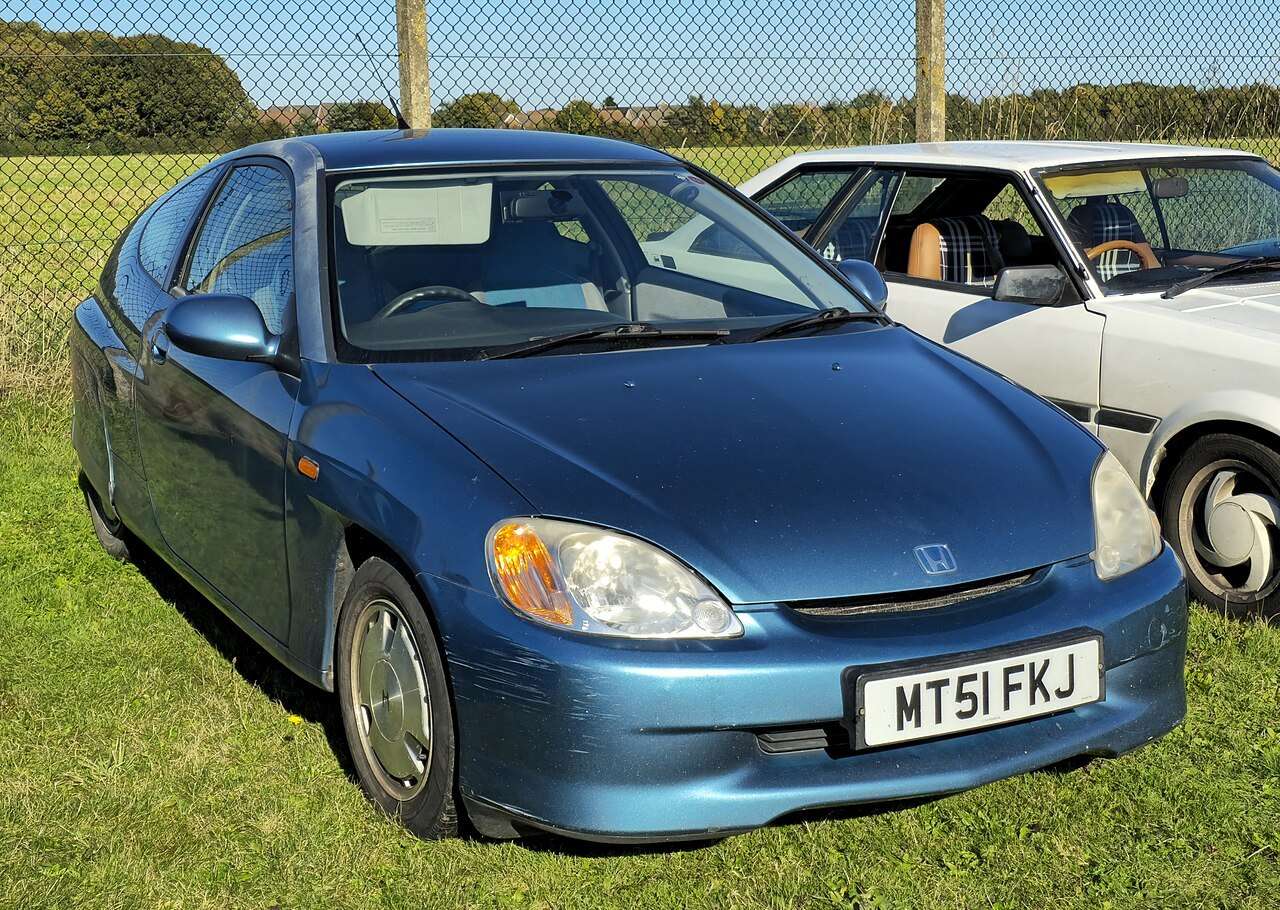
The first Insight was Honda’s attempt to treat fuel economy as a whole-car engineering problem. A tiny engine, aluminium structure and covered rear wheels gave it a shape that still makes modern hybrids look conventional.
1. The ZE1 was a two-seater
Honda kept the cabin short and the tail tightly drawn. That gave the first Insight a brief very different from the later four-door and five-door cars that reused the name.
2. The structure was aluminium
Honda used an aluminium body structure to cut mass. That mattered because the low fuel-consumption target depended on moving less car as well as extracting more from its petrol engine.
3. The petrol engine had just three cylinders
The 1.0-litre engine formed the heart of the powertrain. Electric assistance made that little engine more flexible, while Honda’s lean-burn strategy helped certain manual versions achieve their economy figures.
4. The motor fitted between engine and gearbox
Integrated Motor Assist put a compact electric machine in line with the petrol engine. It supplied torque when needed and recovered energy on deceleration, all without an external charging cable.
Love cars you don’t see every day?
Get forgotten cars, surprising motoring stories and the most interesting finds from Unusual Cars by email.
Free to join. No spam. Unsubscribe whenever you like. See our Privacy Policy.
5. You could shift a hybrid yourself
The early Insight used a five-speed manual. A CVT also appeared in some markets, so the clutch pedal is part of the original story without being a feature of every ZE1.
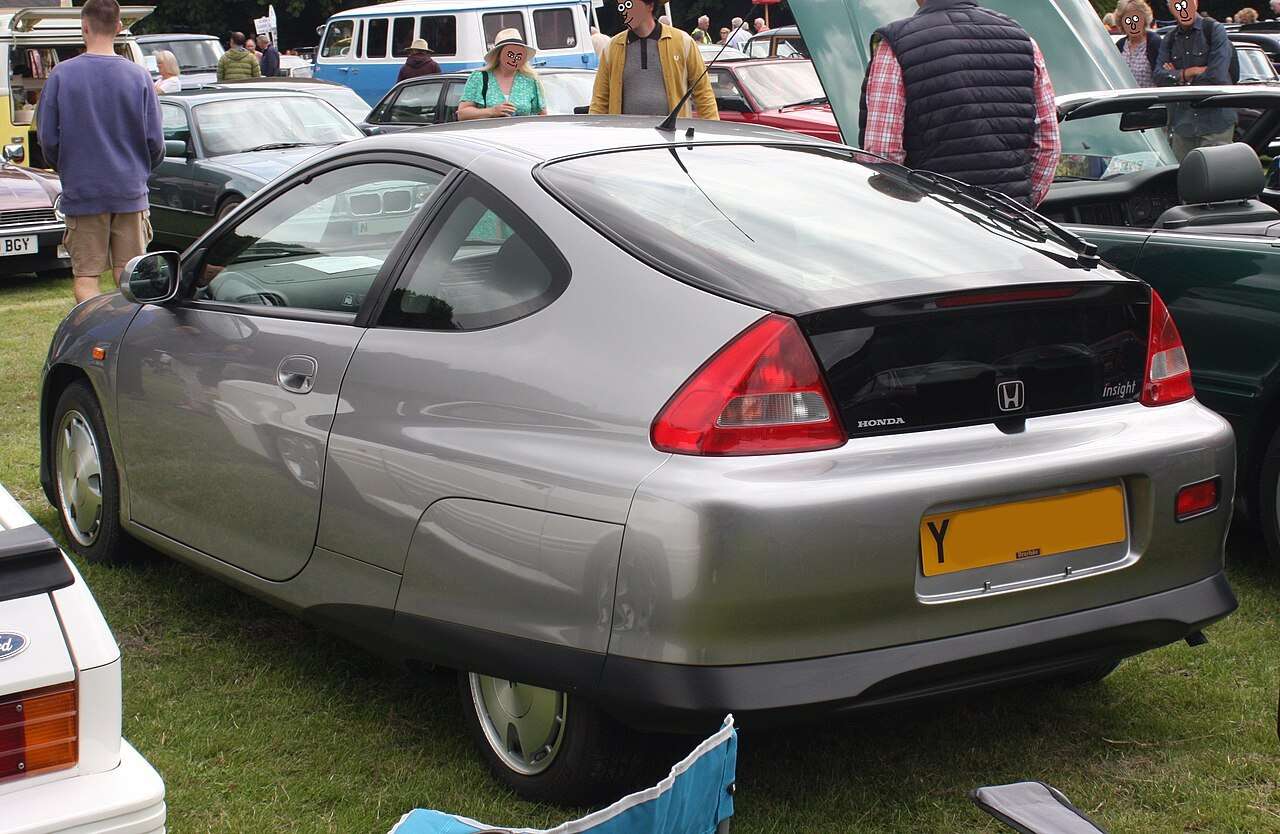
6. Those rear wheel covers helped airflow
The covered wheel openings reduced disturbance on the way to the tail. Along with its narrow rear track and tapered body, they helped Honda achieve a quoted drag coefficient of 0.25.
7. The battery was nickel-metal hydride
The pack supported electric assistance and stored recovered energy. It was relatively small by present hybrid standards, which suited a car designed around light weight and modest demands.
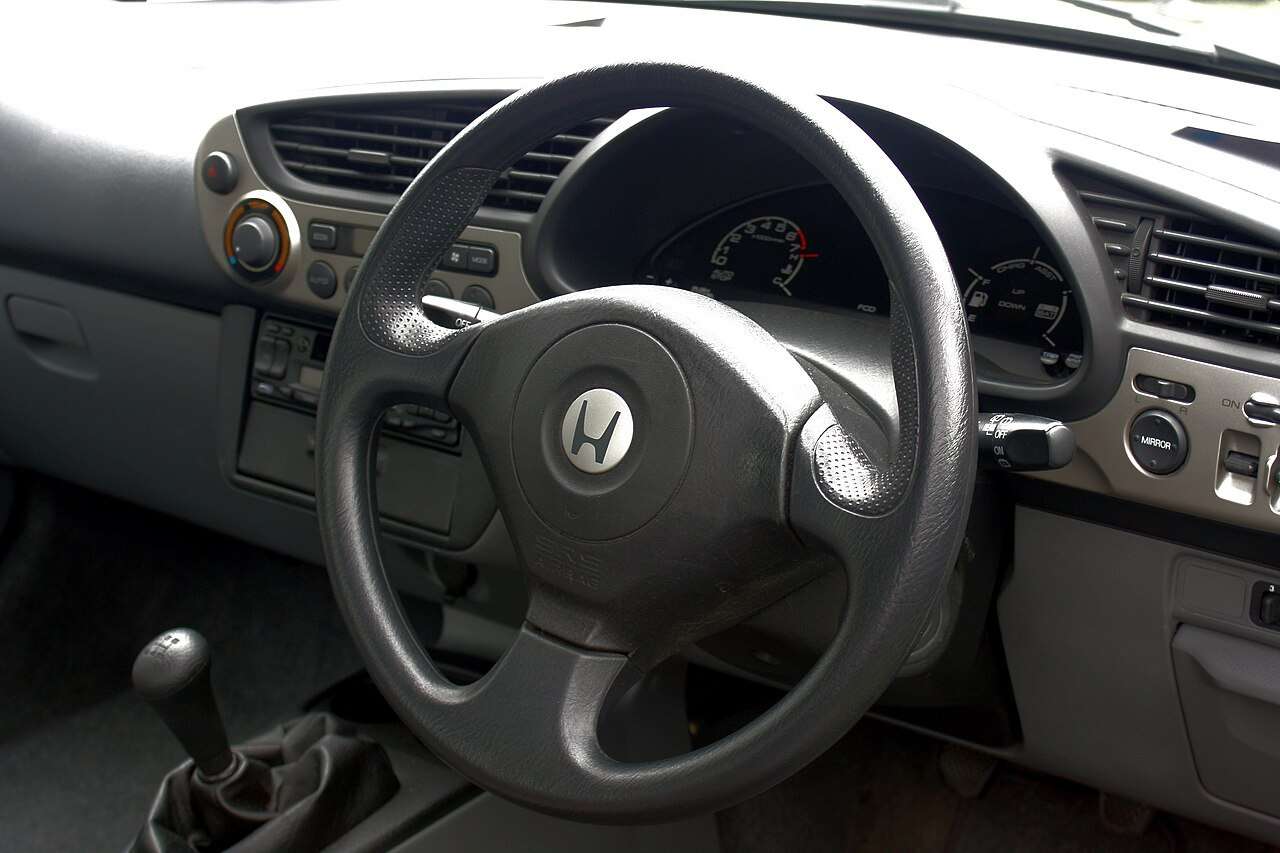
8. The instruments taught drivers what the system was doing
The display made assist and regeneration visible and encouraged a more deliberate style of driving. The engineering was unusual for 1999, but the dashboard gave drivers an immediate way to understand it.
9. It beat Honda’s sporty hybrid to market by a decade
The CR-Z later revisited the idea of a manual hybrid coupé. The original Insight’s economy-first design is the useful starting point for explaining where the CR-Z’s recipe came from.
10. Market figures need their original context
Honda’s launch economy claims used specific test cycles and configurations. Comparing a European manual brochure with a Japanese or North American rating requires looking at both the gearbox and the test cycle.
Read how Honda revisited the manual hybrid with the CR-Z.
Explore more 10 Things articles
Browse the Unusual Cars 10 Things hub.
Sources and further reading
Featured image: Blue Honda Insight ZE1. Photo by Calreyn88 via Wikimedia Commons (CC BY-SA 4.0, resized).
Join the Unusual Cars Club
Get more forgotten performance cars, surprising motoring stories and new 10 Things articles by email.
Free to join. No spam. Unsubscribe whenever you like. See our Privacy Policy.