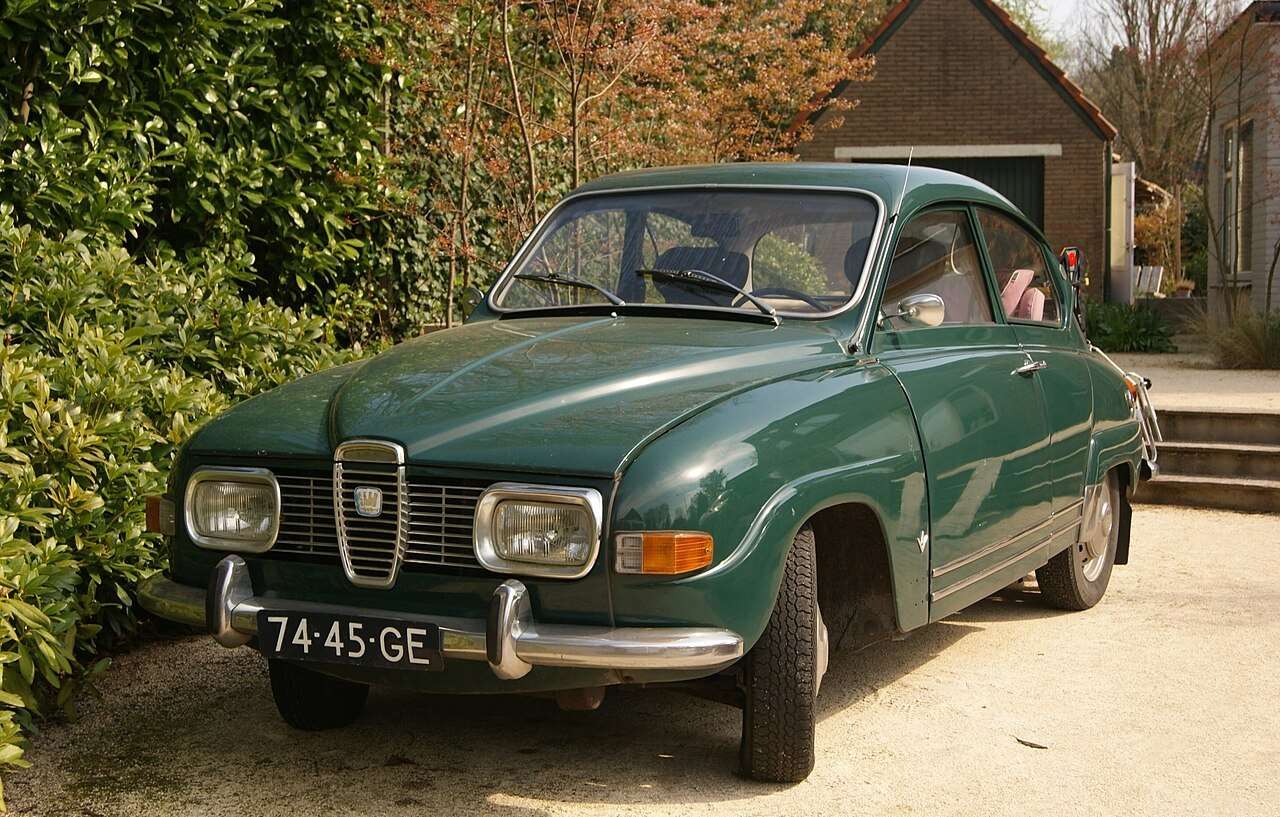
The Saab 96 still looked like a little teardrop when Saab gave it a four-stroke engine. The replacement came from Ford and changed the way the familiar Swedish car sounded, drove and could be sold.
1. The two-stroke came first
The 96 was already in production before the V4 arrived for the 1967 model year. The swap was a major change inside an established model rather than a launch of the 96 name.
2. Its new engine was related to a Ford Taunus
Saab used Ford’s Cologne V4, developed for the Taunus 12M programme. Its short layout was a useful fit in the nose of a car designed around a compact three-cylinder engine.
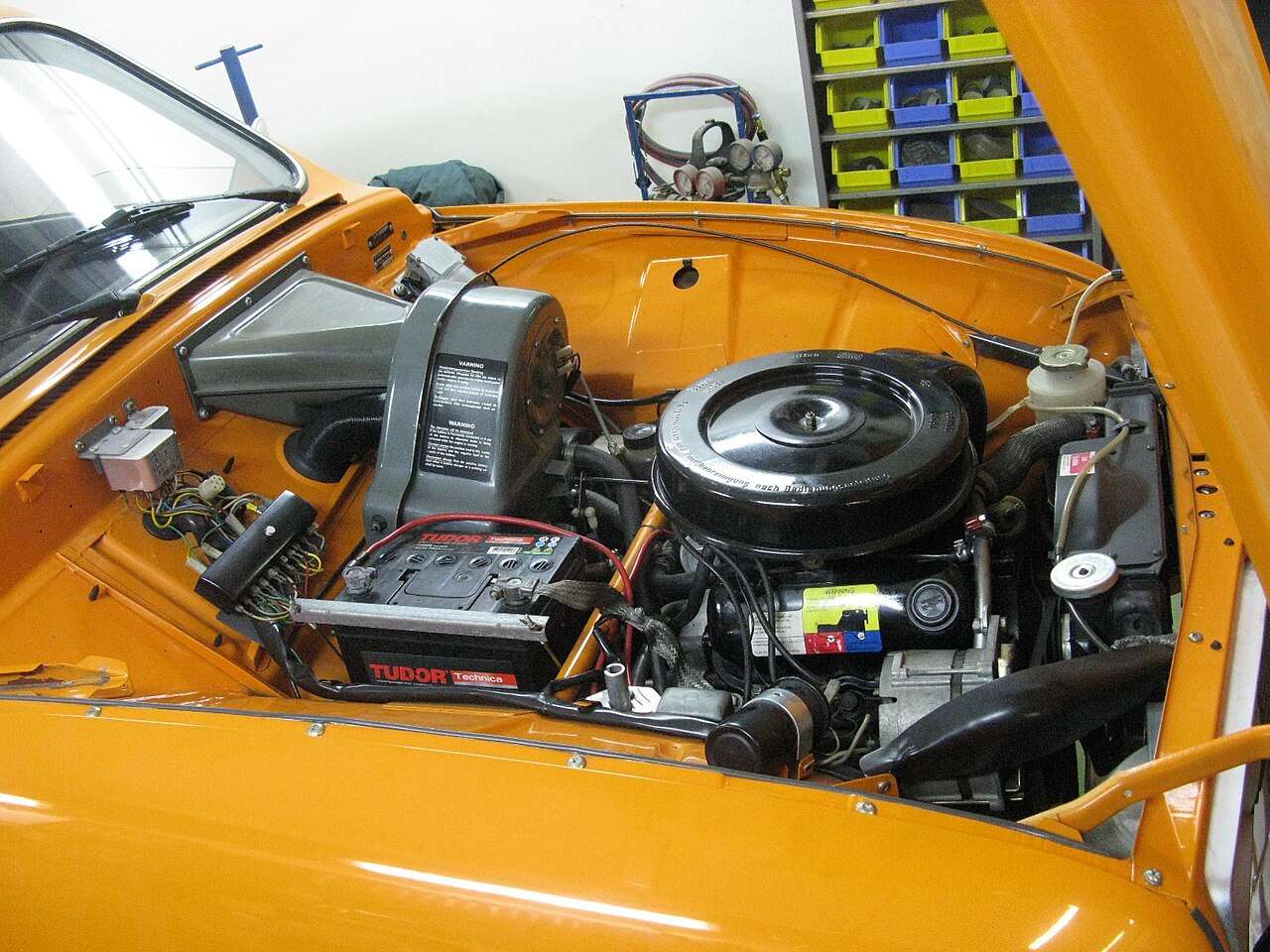
3. It displaced 1,498 cc in familiar European form
The normal European V4 was a 1.5, with outputs that changed over the run. North American specifications can tell a different story, so a figure needs its market and year attached.
4. Front-wheel drive stayed
The new engine did not change the layout that helped make the 96 distinctive. Saab kept the front wheels doing the pulling and retained the four-speed column change.
Love cars you don’t see every day?
Get forgotten cars, surprising motoring stories and the most interesting finds from Unusual Cars by email.
Free to join. No spam. Unsubscribe whenever you like. See our Privacy Policy.
5. The freewheel survived the engine swap
The transmission still offered a freewheel function familiar to Saab two-stroke drivers. With it engaged, lifting off allowed the car to coast without the usual effect of engine braking.
6. It arrived alongside the two-stroke in some markets
The V4 did not immediately erase all the older 96s from the catalogue. The overlap is the reason that a mid-to-late 1960s registration alone does not always tell you which motor is fitted.
7. The estate got the same idea
The related Saab 95 gained the V4 too. The mechanical change therefore took in the car that carried the luggage as well as the streamlined two-door saloon.
8. Saab kept it in rallying
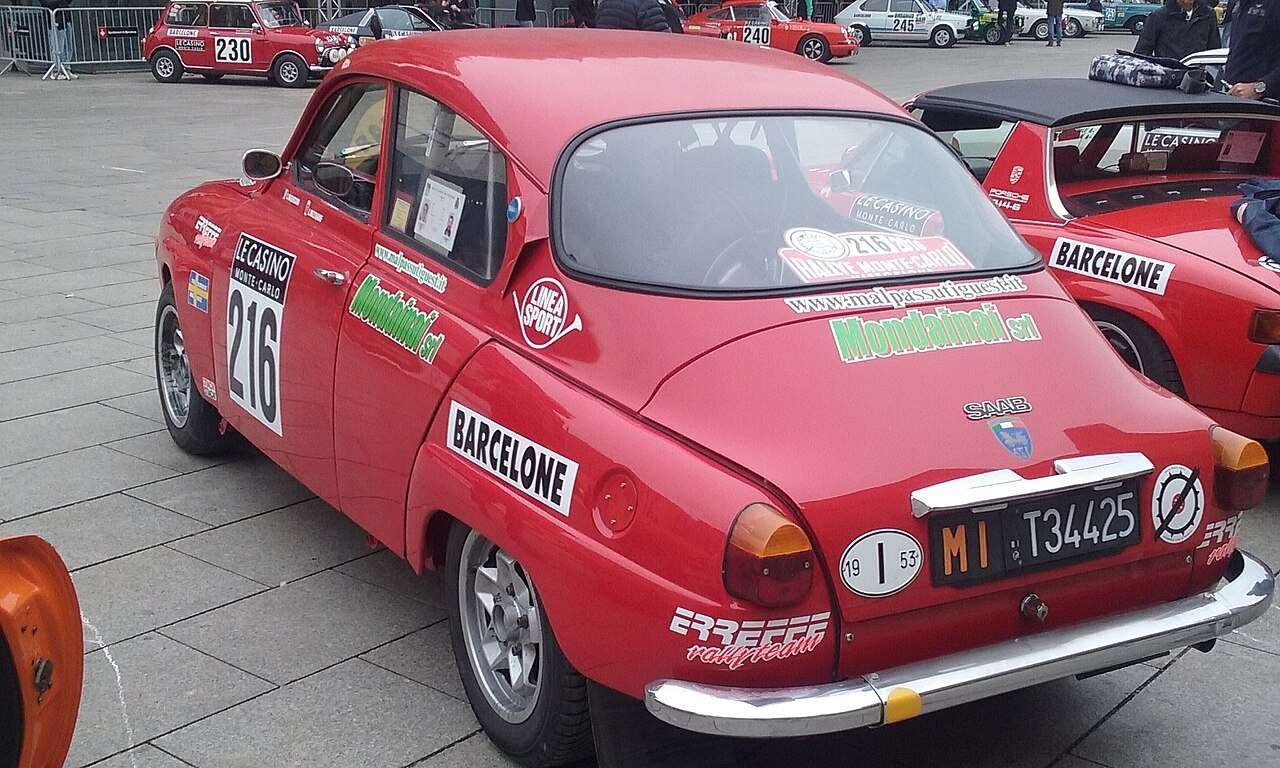
The V4 carried the 96 shape into another phase of the works rally programme. That is a separate chapter from the earlier, famous two-stroke 96 victories.
9. The details kept changing
Trim, lighting and bumper details evolved through the 1970s. The model-year archive is more useful than guessing age from the teardrop silhouette that stayed throughout.
10. It lasted to the end of the 1970s
The final model year was 1980. The V4 carried an outline with roots in Saab’s earliest cars through a period when its newer saloons already looked very different.
10 Things You Probably Didn’t Know About the Saab 99 Turbo.
Explore more 10 Things articles
Browse the Unusual Cars 10 Things hub.
Sources and further reading
Featured image: Green 1968 Saab 96 V4. Photo by Niels de Wit from Lunteren, The Netherlands via Wikimedia Commons (CC BY 2.0, resized).
Join the Unusual Cars Club
Get more forgotten performance cars, surprising motoring stories and new 10 Things articles by email.
Free to join. No spam. Unsubscribe whenever you like. See our Privacy Policy.