A Mazda MX-5 already provides a pleasing recipe for a sports car: an engine at the front, driven rear wheels and controls that encourage you to enjoy an ordinary road. The Roadrunner SR2 takes the idea in a different direction. Instead of retaining the Mazda's body and everyday equipment, it uses donor running gear in a purpose-built lightweight package. The result sits among Britain's Seven-style kit cars, but the individual build can make it feel very different from its neighbours.
The SR2 deserves attention if you are looking beyond Caterham and Westfield. It also deserves a careful inspection. A Mazda badge on the engine is not a guarantee that the finished car has been assembled, maintained or set up properly. This guide explains the SR2's appeal, the importance of identifying its exact specification and the checks that help distinguish a sorted road car from a project whose development is still being passed to the next owner.
What is the Roadrunner SR2?
Roadrunner Racing describes the SR2 as a Seven-inspired car with a powder-coated round-tube chassis and fibreglass bodywork. Its published page gives a kerb weight of 560kg. Treat that as a figure for the manufacturer's advertised specification, not a weighbridge certificate for every SR2. Engines, transmissions, wheels, screens and accessories can materially change the completed vehicle. [1]
That last point is central to understanding the model. The overall shape suggests a recognisable formula, but a kit-car name covers a collection of owner decisions. Ask which chassis package was bought, which donor supplied the mechanical components and which parts changed during the build. Separate those answers from modifications made later. A history that explains the car's evolution is valuable because it gives you a way to maintain it without repeatedly working backwards from unknown components.
Why the Mazda donor makes sense
Owner build records document SR2s using Mk2 MX-5 donors, including builds with forced induction. Those accounts are useful evidence of actual combinations, but they are individual examples rather than instructions to assume every Mazda component is interchangeable. Establish the donor generation, engine version, gearbox, differential and brake arrangement on the car in front of you. [2]
The practical advantage of a well-planned donor build is familiarity. Routine service items can often be identified through the original engine and running gear, while the kit supplies the structure and packaging. The difficulty arises when a car uses several generations of parts without a record. A folder that identifies the fitted components is therefore worth more than a vague assertion that “everything is MX-5”. It tells you what to order and which workshop information is actually relevant.
Do you want a road car or a track car?
Decide before shopping. A road-focused SR2 needs comfortable controls, predictable behaviour, useful mirrors and a specification that remains enjoyable when the surface is imperfect. A track-focused build may prioritise tyres, restraint systems and access for maintenance. Neither approach is inherently better, but the wrong one can make a purchase frustrating. A passenger ride should include the circumstances you expect to encounter, rather than only the route on which the seller likes showing the car off.
Be specific about practical demands. Will you drive to events or transport the car? Will a passenger regularly come along? Do you need a windscreen, weather equipment or luggage capacity? Does your garage entrance suit the ground clearance? An SR2 that is excellent for a dry Sunday sprint may be a poor choice for a long motorway journey followed by a weekend away. Budgeting to change that character later is harder than buying a suitable example initially.
The chassis beneath the body
A clean engine bay is encouraging, but the structure deserves the first serious inspection. Examine the chassis tubes, joints, suspension brackets and engine and differential mountings. Look for damage from grounding, distorted attachments, cracked coatings and corrosion emerging around fixings. Areas hidden by bodywork or floor panels may require a professional inspection rather than a quick look from the driveway.
Ask for build-stage photographs showing the bare chassis. Compare mounting locations and major components with the finished car, particularly after an engine conversion. A change of powerplant can require more than a different pair of engine mounts. Cooling, exhaust, fuel, wiring and transmission arrangements all need to remain coherent. If there are unexplained cut tubes or repairs near a loaded mounting point, pause the purchase until somebody qualified can assess the work and its implications.

Suspension specification and adjustment
The SR2 has been marketed with highly adjustable suspension, and owners have documented differing setups, including pushrod arrangements. Identify what is fitted instead of relying on a brochure photograph or a model name. Check wishbones, joints, dampers, spring platforms and mounting brackets for condition, security and compatibility. A specialist should examine the working clearances if there is any doubt. [3]
Ask for the latest geometry settings. Adjustable components are useful only when someone knows where to set them, and a car can change significantly after different wheels, tyres or ride heights are introduced. Find out whether the setup was intended for road use, a particular circuit or a previous driver's weight. Do not turn adjustment knobs during a viewing to see whether an unpleasant handling characteristic disappears. Diagnose the underlying condition before trying to tune around it.
Reading an owner's build record
A good build diary explains decisions as well as displaying progress. Look for records of donor assessment, professional fabrication, wiring, alignment and the work carried out before road use. Photographs should help you understand access to the mechanical components. Check whether the person selling the car built it or acquired it later, and whether information has been lost between owners.
Be wary of apparently precise claims without supporting context. “Rebuilt engine” might mean a documented specialist rebuild or simply cleaning and fitting gaskets. “Professionally wired” should identify who did the work and ideally include diagrams. “Fully sorted” is a conclusion, not evidence. A modest car accompanied by clear, specific records is often easier to judge than a more exciting specification described entirely in superlatives. It can also be easier to resell honestly when your priorities change.
Evaluating the Mazda engine
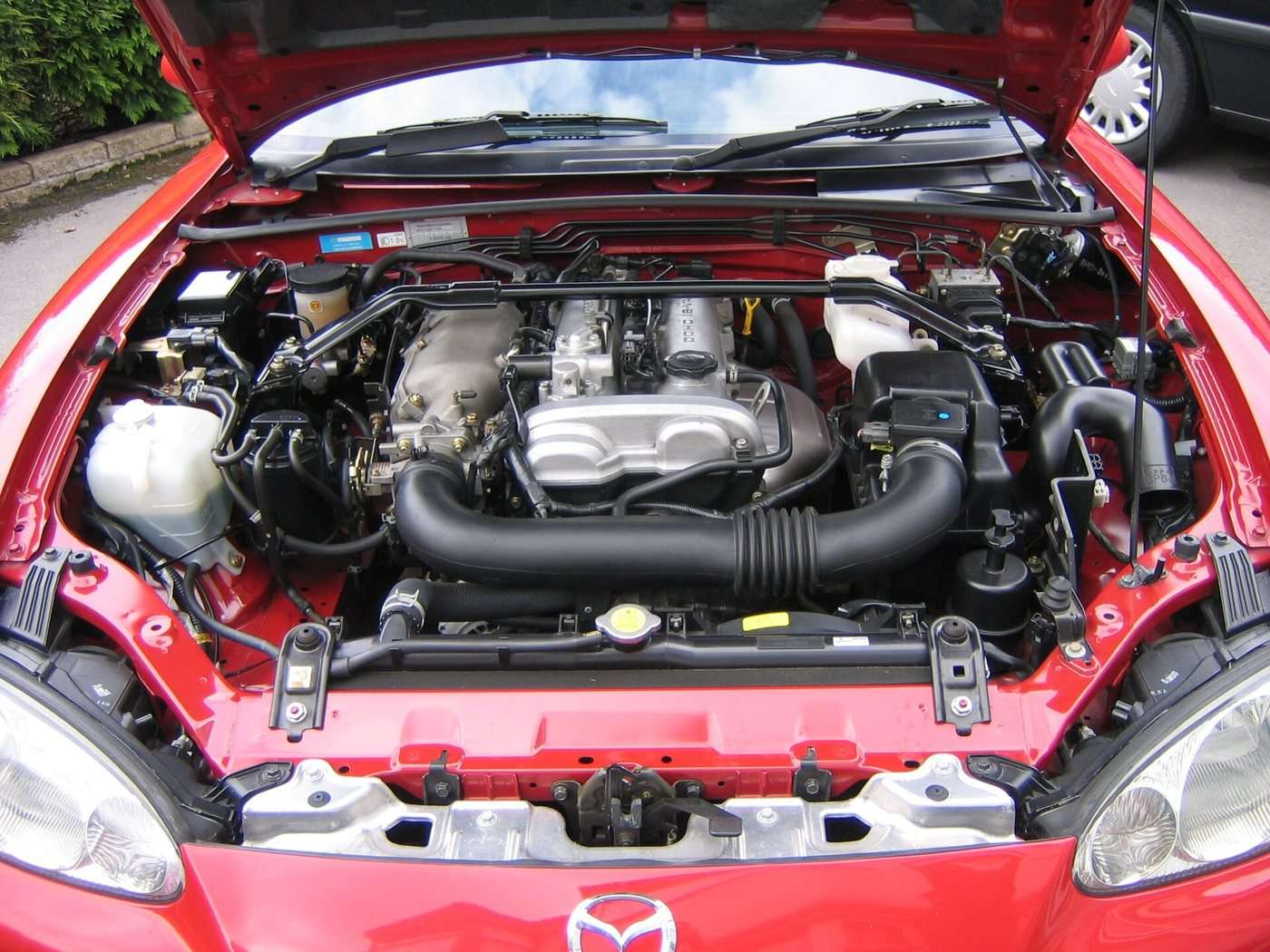
Ask to see a genuine cold start and establish the engine's identity before interpreting noises or service requirements. Inspect for leaks, damaged wiring, unsupported hoses and signs that access has been sacrificed to cosmetic presentation. Listen during warm-up and have persistent smoke, unusual mechanical noise or contaminated fluids investigated by a specialist familiar with the fitted engine. The donor's original reputation cannot diagnose an individual installation.
Establish when the engine was last serviced and what work is due by time as well as mileage. A kit car may travel little while its fluids, rubber parts and belts continue ageing. Ask how long it has stood, whether it was run during storage and what preparation followed. Compression or leak-down testing may be useful where the history or symptoms justify it, but should be interpreted professionally rather than used as a single pass-or-fail shortcut.
Turbocharged and supercharged examples
Forced induction can transform the character of an SR2, but it also increases the importance of system integration. Request the specification of the conversion and the evidence supporting its calibration. A dyno sheet should identify the car and conditions well enough to be useful. It does not replace inspection of fuel supply, cooling, charge plumbing, mounting strength or the condition of the underlying engine.
Enjoy cars you don’t see every day?
Get unusual car stories, kit-car guides and interesting finds from Unusual Cars by email.
Free to join. Unsubscribe whenever you like. Read our privacy policy.
Ask what changed to accommodate the additional performance. Investigate the clutch, differential, driveshafts, tyres and brakes, and distinguish a planned package from successive attempts to cure problems. A seller who describes sensible limitations is more reassuring than one who suggests the engine could make much more power after a simple adjustment. For a first lightweight sports car, a well-developed naturally aspirated example may offer plenty of involvement with fewer unknowns to manage.
The V8 exception
V8-engined SR2s exist, but they should be treated as distinct builds rather than evidence that every SR2 has the same capability or weight. One documented owner's car used a GM LS2 and Tremec transmission; the owner described a much heavier and more powerful vehicle than the manufacturer's basic published figures. That is a useful illustration of how far individual specifications can diverge. It is not a universal SR2 performance specification. [4]
If considering a large-engine car, obtain specialist advice on the whole installation. Check structure, driveline, cooling, exhaust heat, brake balance and the practical ability to service the engine. Consider whether the appeal is the engine itself or the way you intend to use the car. A build that makes a memorable short demonstration may still impose compromises you would not choose for frequent road driving. Buy the complete experience rather than a cylinder count.
Gearbox, differential and driveline
Identify the gearbox and differential, including their ratios where records exist. Ask what has been reconditioned and which parts remain donor mileage unknowns. Inspect mountings and check for leaks, contact marks and abnormal movement. Any propshaft alteration should have a credible fabrication history. A professional inspection is particularly worthwhile if the paperwork contains no explanation of how a non-standard engine and transmission were integrated.
During a suitable demonstration, listen for changes between acceleration, steady load and overrun. A stripped-down car makes more mechanical sound audible, but that is not a reason to dismiss a clunk or vibration without investigation. Check selection of all gears and reverse, and ask whether the behaviour changes when hot. If you dislike the gearing on an ordinary journey, understand the cost and compatibility of changing it before assuming that a different differential will solve everything.
Cooling during real use
The engine needs to remain comfortable when the vehicle is stationary as well as moving. Observe a proper warm-up and fan cycle, followed by a hot restart. Inspect coolant pipes, clips and mounting points, especially where components move relative to the chassis. Look for rubbing, heat damage and poorly protected edges. Never open a hot cooling system to investigate a concern.
Ask about the longest journeys and hottest conditions the car has experienced. The answer is context rather than proof, but it can expose a build used only for brief outings. Track use adds a different pattern of demands, so establish what instrumentation and servicing support that use. Resist accepting a manual fan switch as evidence that the cooling problem has been solved. Find out how the normal system operates and why any extra control was added.
Braking and steering checks
Check the actual braking components and pedal arrangement against the build records. Inspect hose clearance throughout steering and suspension movement, fluid leaks, pipe support and the handbrake installation. The fact that components originated on a heavier production car does not automatically establish correct balance or pedal feel in this application. Have an unfamiliar system assessed rather than relying on assumptions about donor suitability.
Steering should be examined for secure mounting, play, interference and consistent movement. During a permitted road test, note whether the car tracks predictably and whether braking introduces a pull. Worn tyres or alignment errors can produce symptoms, but so can more serious problems. Do not let an enthusiastic seller normalise behaviour you cannot explain. A properly investigated issue may be straightforward; an ignored one can spoil both confidence and the ownership budget.
Bodywork, screens and everyday contact points
Fibreglass condition needs interpretation. Inspect cracks around mounting holes, fasteners and stressed edges, and ask whether a mark followed impact or simple movement. Check that the bonnet and other removable panels locate securely without being forced. Body repair may be feasible, but matching an aged gelcoat finish and replacing model-specific components can require more work than the initial photograph suggests.
Sit in the car with the harness properly adjusted. Assess pedal spacing, reach, mirror coverage and the ability to operate switches. Check that seats and restraints are attached appropriately, with professional advice where necessary. If fitted, try weather equipment and consider whether it creates new visibility or access problems. An apparently simple accessory such as a screen can affect the experience considerably; establish exactly what is supplied and what is currently available for the chassis.
Buying a project instead of a completed car
An unfinished SR2 should be valued as an inventory plus documented work, not as a nearly finished road car merely because it stands on wheels. Obtain the original kit list and account for the unique components. Check loose parts for corrosion and storage damage. Ask whether the engine has been proven running, whether the electrical system is complete and whether any fabricated items still need commissioning.
Calculate the professional work you will require, including transport, mechanical checks, alignment and approval preparation. Leave room for parts discovered to be incorrect rather than merely missing. If the seller has only a donor registration document, investigate the finished vehicle's route independently. The project can still be worthwhile, but it should be purchased with a realistic list of remaining tasks. Enthusiasm is useful; a spreadsheet and a complete box inventory are useful too.
Documents and road use
Compare the vehicle's identity, recorded specification and supporting history before purchase. For a car already on the road, ask for its approval history where available and investigate any discrepancy between the physical car and the documents. For a new build, use current DVLA guidance and the DVSA approval information rather than assuming another owner's registration outcome will apply. [5]
Keep legal documents separate from the practical component list, but retain both. The latter should identify parts such as wheel bearings, filters, belts and brake components by fitted reference. Include invoices for fabrication and notes explaining non-standard wiring. Obtain an insurance quotation using the actual engine and modifications before committing to buy. The aim is a car whose identity, maintenance needs and intended use are understood from the outset.
Running costs and choosing sensibly
The cheapest advertised SR2 is not necessarily the least expensive route into ownership. Compare condition, documentation and the cost of correcting unsuitable features. Tyres, professional alignment, a cooling repair and overdue servicing can absorb an apparent bargain quickly. Treat asking prices as context, not proof of market value, and avoid comparing an unfinished project directly with a tested, registered car that has a complete history.
Your time also has value. If you enjoy development work, a car needing carefully defined improvements may suit you. If your priority is using it during occasional free weekends, a better-sorted example may make more sense. Establish parts supply for the model-specific items before purchase, especially panels and suspension components. Confirmation from a present supplier is more useful than an old forum assurance that anything can be obtained.
The first weeks of ownership
Create a baseline before altering the car. Record tyre specification and pressures, ride height, damper settings and service information. Have safety-critical systems inspected and resolve outstanding issues. Learn the starting and shutdown procedures, check recovery arrangements and make sure routine maintenance can be done with the access and tools available to you. A low car may need more planning than an ordinary hatchback when it cannot move under its own power.
Then use it. Short, varied journeys can tell you about heat, noise, seating and luggage compromises without turning the first trip into an endurance test. Change one thing at a time when improving the setup, and retain the previous settings. The best ownership record explains what was changed and why. That approach helps preserve the SR2's appeal: a simple-looking car that rewards careful thought about the details beneath its bodywork.
Should you buy an SR2?
The Roadrunner is worth considering when you want a lightweight car with scope for individual specification and an interesting alternative to the established names. The Mazda-based approach provides a clear starting point, but the quality of the finished build remains decisive. Choose a coherent package, a comfortable cockpit and evidence of careful development. A car that works convincingly at normal speeds is a stronger foundation than one that relies on spectacular claims.
Spend the inspection time on structure, running gear, cooling and documentation. Make sure its intended use matches yours. If those pieces fit, the SR2 offers a satisfying way to enjoy the familiar ingredients of a front-engined, rear-drive sports car in a much more exposed and personal form. You should leave a viewing knowing how the car was assembled, what it needs next and why this particular example belongs in your garage.
Kit cars for sale on eBay UK
Browse kit cars from different makers, from unfinished projects to road-going builds.

Browse more kit cars on eBay UK
Enjoy cars you don’t see every day?
Get unusual car stories, kit-car guides and interesting finds from Unusual Cars by email.
Free to join. Unsubscribe whenever you like. Read our privacy policy.
Sources and further reading
- Roadrunner Racing SR2 — manufacturer's specification and gallery.
- SR2 owner's build thread — first-person account, not a universal build specification.
- SR2 and Vortx owner discussion — individual ownership experience; historical costs are not current estimates.
- SR2 owner's account of a V8 build — configuration-specific evidence.
- DVLA kit-conversion guidance and DVSA IVA information.
Explore more models in the Unusual Cars Kit Cars hub.
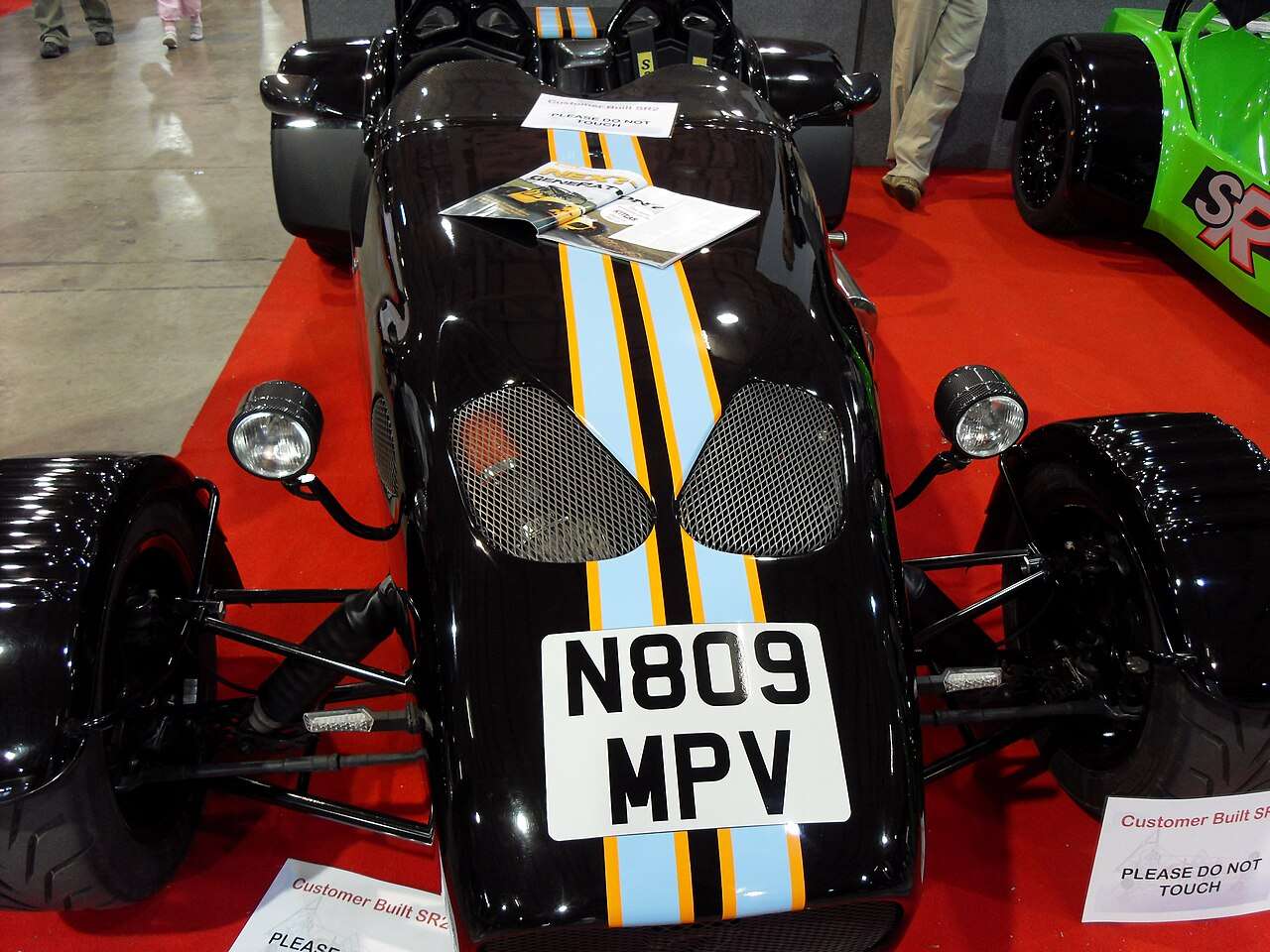
Featured photograph: Roadrunner SR2 at Stoneleigh, front view by Father.Jack, CC BY 2.0. Resized for display.