The Renault Wind was a two-seater with a roof that turned over in one piece. That unusual decision gave a little French roadster a boot you could still use with the roof down.
1. The roof rotated as one solid panel
The hardtop pivots backwards into its stowed position. You can understand much of the engineering by watching the roof move through one cycle. It is a very different sight from the multiple sections and hinges of many contemporary coupé-cabriolets.
2. Renault quoted a 12-second cycle
The company made the 12-second opening time a central part of its launch pitch. The British brochure also quotes 12 seconds for closing. This was a roof designed to be easy to use on an ordinary short journey.
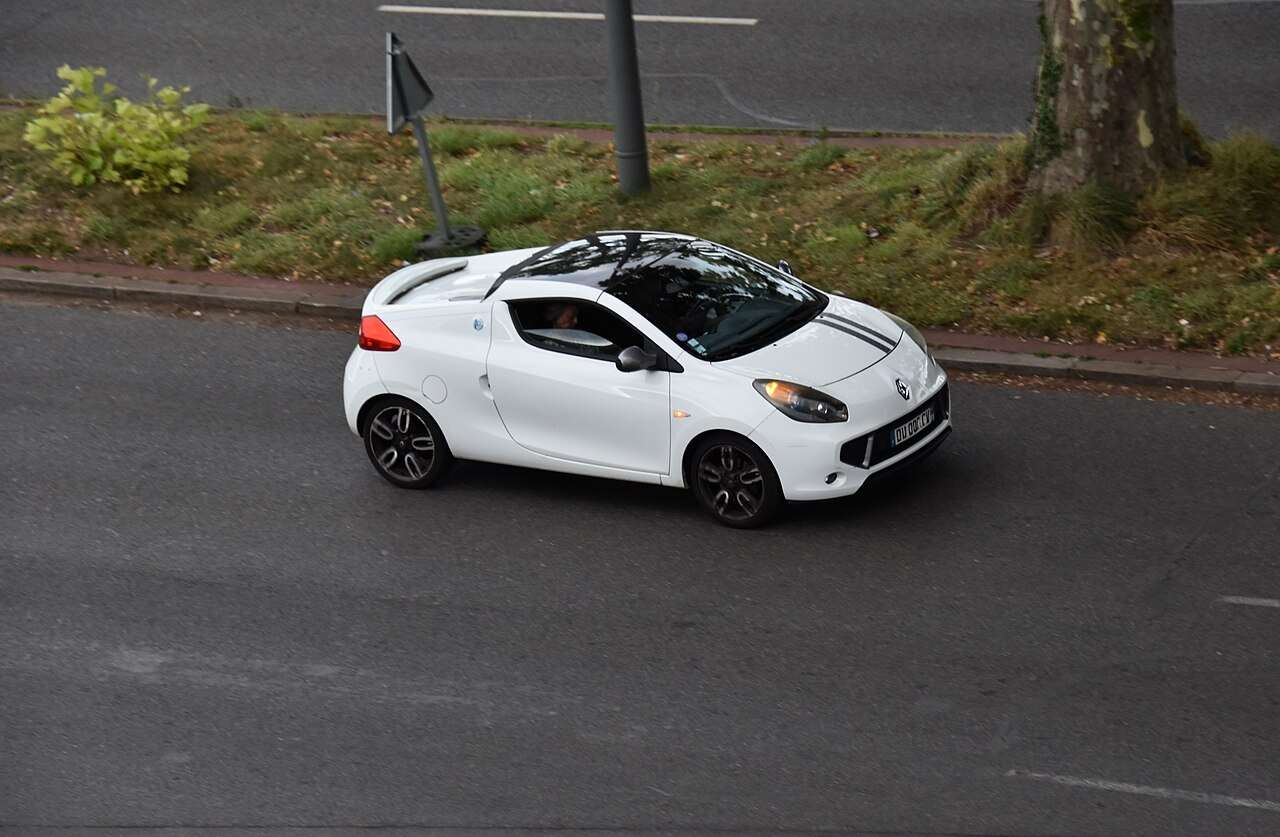
3. Opening the roof left you with the same boot space
Renault quoted 270 litres by the VDA method with the roof up or down. That was a consequence of the way it stored the panel separately from your bags. It is the strongest reason to care about the roof design beyond its novelty.
4. It measured only 3.83 metres
The production Wind combined two seats and a short body with that useful boot. The proportions made it easy to place in town. Renault presented it as something you could use altogether more often than a weekend-only roadster.
Love cars you don’t see every day?
Get forgotten cars, surprising motoring stories and the most interesting finds from Unusual Cars by email.
Free to join. No spam. Unsubscribe whenever you like. See our Privacy Policy.
5. Its first public showing took place in Geneva
Renault announced the production version for the 2010 Geneva Motor Show. The unusual roof gave journalists something concrete to demonstrate on the stand. This is the production car that British dealers sold later that year.
6. The smaller engine used a turbo
The UK range included the 1.2 TCe 100. The bigger 1.6 was a naturally aspirated alternative. Capacity alone tells you relatively little about why those two engines drive differently.
7. The 1.6 was good for 133 PS
The 1.6-litre option used a 16-valve engine and gave the car a different character from the turbo 1.2. Renault Austria quoted 9.2 seconds to 100 km/h for that version. The larger engine rewarded going further up the rev range.

8. The launch included a numbered Collection edition
The Collection used an individual number and a gloss-black roof as part of its presentation. Those details give you more to look for than a badge. Check the specification for your market because the launch allocations differed.
9. Gordini stripes came later
Renault announced a Wind Gordini at Geneva in 2011. Its distinctive trim and stripe treatment followed the wider Gordini revival. The name is great for identifying a version, but check the engine separately when comparing two cars.
10. The roof explains the styling from behind
The high rear deck looks unusual with the roof up. Watching the solid roof disappear behind the occupants makes sense of the space Renault allowed for it. The mechanisms and the shape were part of the same decision.
Read about the Renault Twingo Mk1.
Explore more 10 Things articles
Browse the Unusual Cars 10 Things hub.
Sources and further reading
- Renault’s 2010 Swiss launch announcement
- Original UK Renault Wind brochure
- Renault Austria technical launch release
- Renault 2011 Geneva material covering the Wind Gordini
Featured image: A 2011 Renault Wind in Britain. Photo by Andrew Bone via Wikimedia Commons (CC BY 2.0, resized).
Join the Unusual Cars Club
Get more forgotten performance cars, surprising motoring stories and new 10 Things articles by email.
Free to join. No spam. Unsubscribe whenever you like. See our Privacy Policy.